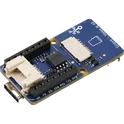
Grove Vision AI Module V2
It is an MCU-based vision AI module powered by Arm Cortex-M55 & Ethos-U55. TensorFlow and PyTorch frameworks are supported. Compatible with Arduino IDE and no code model deployment and immediate visualization of identification results with SenseCraft AI.... show more23 Uses
2 Stars

Grove Vision AI
It is an MCU-based vision AI module powered by Arm Cortex-M55 & Ethos-U55. TensorFlow and PyTorch frameworks are supported. Compatible with Arduino IDE and no code model deployment and immediate visualization of identification results with SenseCraft AI.... show more1 Use
0 Stars
ESP32 Robot Controller | AI Design Review Tutorial [Example]
Spot the mistake! Learn how to use AI to conduct a design review on an ESP32-based control board. This project is ideal for autonomous or radio-controller robots featuring inputs for sensors, encoders, and a Flysky RC receiver, plus an I2C display for configuration.... show more3 Uses
0 Stars
ESPRSSO32 Smart Scale AI Auto Layout [Example]
Learn how to use AI Auto Layout on this ESP32 Espresso Smart Scale! In one click you’ll see AI Auto Layout perform magic. Pay close attention to how we recommend creating rulesets, zones, and fanouts. By copying the setup in this example on your own project, you’ll have a fully routed board in no time!... show more2 Uses
0 Stars
tripo ai invitation code get 89% off + 600 free credit
Welcome to your new project. Imagine what you can build here.... show more0 Uses
0 Stars
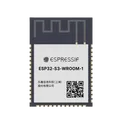
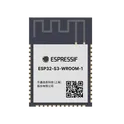
ESP32-S3-WROOM-1-N16R8
Bluetooth, WiFi 802.11b/g/n, Bluetooth v5.0 Transceiver Module 2.4GHz PCB Trace Surface Mount The ESP32-S3-WROOM-1-N16R8 is a high-performance Wi-Fi + Bluetooth Low Energy (BLE) module developed by Espressif Systems. It is built around the ESP32-S3 SoC, featuring a dual-core Xtensa LX7 32-bit processor running up to 240 MHz. This module integrates 16 MB Flash memory and 8 MB PSRAM, making it suitable for memory-intensive applications such as AI, image processing, and advanced IoT systems. It also includes an onboard PCB trace antenna, RF circuitry, crystal oscillator, and power management components—allowing designers to quickly integrate wireless connectivity into compact embedded designs. Key Features Processing & Memory Dual-core Xtensa LX7 CPU, up to 240 MHz 384 KB ROM, 512 KB SRAM + 16 KB RTC SRAM 16 MB Flash (Quad SPI) 8 MB PSRAM (Octal/Quad SPI) Connectivity 2.4 GHz Wi-Fi (802.11 b/g/n) Bluetooth 5 (LE) + Mesh support Integrated PCB antenna Peripherals & Interfaces Up to 36 GPIOs Interfaces: UART, SPI, I2C, I2S, PWM, ADC, USB OTG Built-in USB Serial/JTAG support Supports touch sensors, timers, watchdogs, CAN (TWAI) Electrical Characteristics Supply voltage: 3.0 V – 3.6 V TX power: up to ~20.5 dBm RX sensitivity: ~-103.5 dBm Operating temp: −40 °C to +65 °C (typical) Advanced Capabilities Optimized for AI acceleration (vector instructions) Suitable for voice recognition, image processing, and edge AI Low-power modes for battery-operated devices| Typical Applications IoT devices and sensor hubs Smart home & home automation AIoT (voice/image recognition) Industrial automation & monitoring Wearables and health devices USB-connected embedded systems #Module #RF-Transceiver #ESP32-S3... show more2.5k Uses
6 Stars
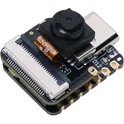
Seeed Studio XIAO ESP32S3 Sense
Seeed Studio XIAO ESP32S3 leverages dual-core ESP32S3 chip, supporting both Wi-Fi and BLE wireless connectivities, which allows battery charge. It integrates built-in camera sensor, digital microphone. It offers 8MB PSRAM, 8MB FLASH, and external SD card slot. All of these make it suitable for embedded ML, like intelligent voice and vision AI. #SeeedStudio #xiao... show more555 Uses
21 Stars
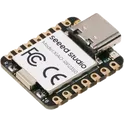
Seeed Studio XIAO RP2350
The XIAO RP2350 packs the power of the Raspberry Pi RP2350 (switchable architecture of dual Arm Cortex-M33 cores running at 150MHz with FPU, and dual open-hardware Hazard3 RISC‑V cores, enhanced security and encryption) into the classic XIAO form factor. Measuring just 21x17.5mm, it features 19 multifunction GPIOs, an RGB LED, and a Battery Management System with ultra-low power consumption of 27μA, battery power supply, and direct battery voltage measurement. Thanks to the XIAO ecosystem, the XIAO RP2350 is compatible with a wide range of add-ons, including displays, LED matrix, Grove modules, CAN Bus, Vision AI sensors, and mmWave sensors. With native support for MicroPython, C, and C++, the XIAO RP2350 is perfect for developers of all levels looking to create compact, battery-powered applications for smart control, wearables, DIY keyboards, and more.... show more34 Uses
5 Stars
ESP32-S3-WROOM-2-N32R16V
Bluetooth, WiFi 802.11b/g/n, Bluetooth v5.0 Transceiver Module 2.4GHz PCB Trace Surface Mount The ESP32-S3-WROOM-2-N32R16V is a powerful dual-core microcontroller module that integrates wireless connectivity, large memory, and hardware acceleration for AI and signal processing tasks. It is particularly suited for applications requiring edge AI, voice recognition, and high-speed data processing, while still maintaining low power consumption. Dual-core Xtensa LX7 CPU Up to 240 MHz Includes vector instructions for AI and DSP workloads Wi-Fi 2.4 GHz (802.11 b/g/n) Bluetooth 5 (LE) N32 → 32 MB external Flash R16 → 16 MB PSRAM Built for memory-intensive applications #commonpartslibrary #transceiver #wireless #rf... show more145 Uses
1 Star
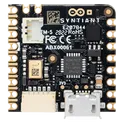
Arduino Nicla Voice
The Arduino Nicla Voice packs machine-learning capabilities on the edge into a tiny fingerprint. Implement always-on speech recognition with the Nicla Voice. The board integrates a dedicated Neural Decision Processor Syntiant NDP 120 able to run multiple AI algorithms at the same time. Leverage the built-in microphone, nRF52832 microcontroller, Bluetooth Low Energy module, 6-axis IMU and 3-axis magnetometer to create your own wireless sensor network for machine learning applications with low power consumption capabilities.... show more9 Uses
1 Star
STM32MP257FAI3
MPU with Dual Arm Cortex-A35 @1.5GHz, Cortex-M33 @400MHz, 3xEthernet (2+1 switch), 3xFD-CAN, LVDS/DSI, H.264, 3D GPU, AI/NN, Secure Boot, Cryptography, DRAM enc/dec, PKA The STM32MP257FAI3 is a high-performance microprocessor from STMicroelectronics' STM32MP2 series, integrating dual 64-bit Arm Cortex-A35 cores running at up to 1.5 GHz, a Cortex-M33 real-time core, and a Cortex-M0+ low-power management core. It is designed for advanced industrial, edge AI, machine vision, HMI, IoT gateway, and multimedia applications requiring Linux-class processing alongside deterministic real-time control. The device features AI acceleration, 3D graphics, video encoding/decoding, extensive connectivity, advanced security, and support for high-speed external memory. Key Features Dual-core 64-bit Arm Cortex-A35 CPU operating up to 1.5 GHz Arm Cortex-M33 real-time processor with TrustZone and FPU support Arm Cortex-M0+ low-power coprocessor for autonomous operation Integrated NPU (Neural Processing Unit) delivering up to 1.35 TOPS AI performance 3D GPU and hardware video encoder/decoder acceleration Supports DDR3L, DDR4, and LPDDR4 external memory up to 4 GB Multiple display interfaces including MIPI-DSI, LVDS, and parallel RGB USB 2.0 Host and USB 3.0 Dual-Role with embedded PHYs PCI Express interface with integrated 5 Gbps PHY Up to three Gigabit Ethernet interfaces with TSN and IEEE 1588 support Extensive connectivity: I2C, I3C, SPI, UART, USART, CAN FD, SDMMC, SAI, and SPDIF Hardware cryptographic accelerators including AES, SHA, RSA, ECC, PKA, and True RNG Secure boot, TrustZone security, tamper detection, and resource isolation framework Multiple low-power operating modes for energy-efficient designs Available in fine-pitch BGA packages for high-density embedded systems. #STM32MP257FAI3 #STM32MP2 #STMicroelectronics #CortexA35 #CortexM33 #EdgeAI #EmbeddedLinux #IndustrialAutomation #MachineVision #HMI #IoTGateway #MPU #PCIe #USB3 #GigabitEthernet #TrustZone #EmbeddedSystems #ArtificialIntelligence #LinuxProcessor #IndustrialIoT #CommonPartsLibrary #IntegratedCircuit #Microprocessor #STM32MP2... show more35 Uses
1 Star
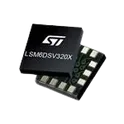
LSM6DSV320XTR
6-axis IMU (inertial measurement unit) with high-g accelerometer, embedded AI, and sensor fusion for high-end applications, car crash detection Accelerometer, Gyroscope, Magnetometer, 6 Axis Sensor I2C, SPI Output #CommonPartsLibrary #IntegratedCircuit #Sensor #Transducer #Motion-Sensor #IMUs #LSM6... show more32 Uses
0 Stars
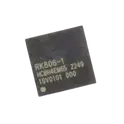
RK806-1
QFN-68(7x7) Power Management - Specialized ROHS The RK806-1 is a multi-channel PMIC designed to deliver and manage power for modern embedded platforms. It integrates multiple high-efficiency DC-DC buck converters, LDO regulators, and a configurable power sequencing controller in a compact QFN-68 package. It is tightly coupled with Rockchip SoCs and is responsible for generating stable voltage rails for CPU cores, GPU, DDR memory, and peripheral blocks. ⭐ Key Features ⚡ 1. High-Integration Power Architecture Multiple synchronous buck converters (high-current rails for CPU/GPU) Several LDO regulators for low-noise analog and IO domains Supports dynamic voltage scaling (DVS) for performance optimization 🔌 2. Wide Output Capability Output voltage range: ~0.5 V to 3.4 V per channel Designed for modern low-voltage SoC power domains Supports both high-current and low-noise power rails 🧠 3. Programmable Power Sequencing OTP / register-configurable power-up & power-down sequence Ensures safe startup for multi-rail SoCs Supports synchronized sequencing with multiple PMICs 📡 4. Digital Control Interface I²C and SPI interface for configuration and control Real-time voltage adjustment per processor demand Register-based control for power modes and telemetry 🛡️ 5. Protection & Reliability Features Over-voltage protection (OVP) Over-current protection (OCP) Thermal shutdown protection Soft-start for inrush current control ⚙️ 6. Efficiency & Performance Optimizations High-frequency switching (~MHz range) for smaller external components Fast transient response for CPU load changes Low standby current for power-sensitive designs 📦 7. Package & Integration QFN-68 (7×7 mm) compact package High thermal efficiency for dense PCB layouts Minimal external components required 📌 Typical Applications Single-board computers (SBCs) AI edge computing devices Tablets and industrial embedded systems Consumer electronics using Rockchip SoCs (e.g., RK3588 platforms) #commonpartslibrary #integratedcircuit #powermanagement... show more38 Uses
0 Stars
MIMXRT685SFVKB
ARM® Cortex®-M33 RT-600 Microcontroller IC 32-Bit Dual-Core 300MHz External Program Memory 176-VFBGA (9x9) The RT600 is a family of dual-core microcontrollers for embedded applications featuring an Arm Cortex-M33 CPU combined with a Cadence Xtensa HiFi4 advanced Audio Digital Signal Processor CPU. The Cortex-M33 includes two hardware coprocessors providing enhanced performance for an array of complex algorithms. The family offers a rich set of peripherals and very low power consumption. The Arm Cortex-M33 is a next generation core based on the ARMv8-M architecture that offers system enhancements, such as ARM TrustZone® security, single-cycle digital signal processing, and a tightly-coupled coprocessor interface, combined with low power consumption, enhanced debug features, and a high level of support block integration. The ARM Cortex-M33 CPU employs a 3-stage instruction pipe and includes an internal prefetch unit that supports speculative branching. A hardware floating-point processor is integrated into the core. On the RT600, the Cortex-M33 is augmented with two hardware coprocessors providing accelerated support for additional DSP algorithms and cryptography. The Cadence Xtensa HiFi 4 Audio DSP engine is a highly optimized audio processor designed especially for efficient execution of audio and voice codecs and pre- and post-processing modules. It supports four 32x32-bit MACs, some support for 72-bit accumulators, limited ability to support eight 32x16-bit MACs, and the ability to issue two 64-bit loads per cycle. There is a floating point unit providing up to four single-precision IEEE floating point MACs per cycle. The RT600 provides up to 4.5 MB of on-chip SRAM (plus an additional 128 KB of tightly-coupled HiFi4 ram) and several high-bandwidth interfaces to access off-chip flash. The FlexSPI flash interface supports two channels and includes an 32 KB cache and an on-the-fly decryption engine. The RT600 is designed to allow the CortexM33 to operate at frequencies of up to 300 MHz and the HiFi4 DSP to operate at frequencies of up to 600 MHz. Key Features Dual-core architecture with Arm Cortex-M33 CPU and Cadence Xtensa HiFi4 DSP Cortex-M33 operating at up to 300 MHz HiFi4 DSP operating at up to 600 MHz Up to 4.5 MB on-chip SRAM 128 KB DSP tightly coupled memory (TCM) FlexSPI interface supporting Quad/Octal SPI Flash with execute-in-place (XIP) High-speed USB 2.0 Host/Device with integrated PHY Digital microphone (DMIC) interface supporting up to 8 channels Multiple I2S, SPI, I²C, UART, SDIO, and I3C interfaces 12-bit ADC with up to 1 MSPS sampling rate Hardware cryptography acceleration (AES, SHA, RSA, ECC) Arm TrustZone® security technology Secure boot and physically unclonable function (PUF) key storage Multiple low-power operating modes for battery-powered applications Up to 147 GPIOs depending on package option 176-pin VFBGA package (9 mm × 9 mm) Typical Applications Voice-controlled smart devices Audio processing and DSP systems Smart speakers and soundbars Industrial HMI and control panels Edge AI and machine learning applications IoT gateways and connected devices Wearable and portable electronics #NXP #iMXRT685 #RT600 #CortexM33 #HiFi4DSP #Microcontroller #EmbeddedSystems #EdgeAI #VoiceRecognition #AudioProcessing #IoT #IndustrialAutomation #SecureMCU #MachineLearning #MCUDesign... show more3 Uses
0 Stars
IS66WVH64M8DBLL-166B1LI
PSRAM (Pseudo SRAM) Memory IC 512Mbit HyperBus 166 MHz 36 ns 24-TFBGA (6x8) The IS66/67WVH64M8DALL/BLL are 512Mb Dual Die device containing two units of 256Mbit Pseudo Static Random Access Memory, organized as 64M words by 8 bits. The device supports a HyperBus interface, Very Low Signal Count (Address, Command and data through 8 DQ pins), Hidden Refresh Operation, and Automotive Temperature Operation, designed especially for Mobile and Automotive applications Key Features 512-Mbit (64M × 8) HyperRAM™ PSRAM High-speed HyperBus interface Clock frequency up to 166 MHz Fast 36 ns access time Single-ended clock architecture with reduced pin count Operating voltage range: 2.7 V to 3.6 V Industrial temperature range: −40°C to +85°C Low-power volatile memory solution Surface-mount 24-TFBGA (6 mm × 8 mm) package Suitable for graphics, AI edge devices, networking, and embedded systems requiring large external memory capacity. #CommonPartsLibrary #IntegratedCircuit #HyperRAM #PSRAM #ISSI #MemoryIC #HyperBus #EmbeddedSystems #IndustrialElectronics #IoT #HighSpeedMemory #BGA #VolatileMemory #EdgeComputing #HMI #ElectronicsDesign... show more2 Uses
0 Stars
OSD6254-1G-IPM
The OSD6254-1G-IPM is a high-performance System-in-Package (SiP) from Octavo Systems that integrates the Texas Instruments AM6254 processor, 1 GB DDR4 memory, power management circuitry, and essential passive components into a compact 9 × 14 mm BGA package. Featuring a quad-core Arm Cortex-A53 processor with an integrated Cortex-M4F real-time core, it provides a highly integrated solution for industrial automation, IoT gateways, edge AI, HMI, and embedded Linux applications while significantly reducing PCB design complexity and time-to-market. Key Features: Quad-core Arm Cortex-A53 processor (up to 1.4 GHz) Integrated Arm Cortex-M4F real-time co-processor (up to 400 MHz) 1 GB DDR4 memory integrated within the SiP Integrated PMIC and required passive components Rich peripheral interfaces including Ethernet, USB, PCIe, CAN, UART, SPI, I²C, I²S, and SD/MMC Industrial operating temperature range: −40°C to +85°C Compact 9 × 14 mm, 500-ball BGA package Reduces PCB complexity, BOM count, and development time Optimized for embedded Linux, industrial control, HMI, IoT gateway, and edge AI applications #OctavoSystems #OSD6254 #AM6254 #ArmCortexA53 #CortexM4F #SystemInPackage #EmbeddedProcessor #IndustrialAutomation #EdgeAI #IoT #EmbeddedLinux #BGA... show more1 Use
0 Stars
LSM6DSV16BXTR
6-Axis Inertial Measurement Unit (IMU) with Embedded Sensor Fusion and AI Features – Advanced motion-sensing IC combining a 3-axis digital accelerometer and 3-axis digital gyroscope, designed for wearables, TWS earbuds, smartphones, gaming devices, robotics, IoT products, motion tracking, vibration detection, and low-power embedded applications. The STMicroelectronics LSM6DSV16BXTR also includes an integrated temperature sensor and supports I²C, I3C, and SPI digital interfaces. The device features triple accelerometer and gyroscope channels, embedded sensor-fusion processing (SFLP), a Machine Learning Core (MLC), Finite State Machine (FSM), adaptive self-configuration, and Qvar sensing, enabling advanced motion classification, gesture detection, orientation tracking, power management, and AI-assisted sensor processing. Its high-performance motion-tracking mode can operate at approximately 0.6 mA, supporting always-on low-power applications. The LSM6DSV16BXTR uses a compact 14-pin LGA package measuring 2.5 × 3.0 × 0.74 mm, supports −40°C to +85°C operation, and is an active, volume-production device. #STMicroelectronics #LSM6DSV16BXTR #LSM6DSV16BX #IMU #Accelerometer #Gyroscope #MotionSensor #SensorFusion #MachineLearningCore #MLC #IoT #Wearables #TWS #Robotics #EmbeddedSystems... show more5 Uses
0 Stars
ESP32-S3
2.4 GHz Wi-Fi® + Bluetooth® 5 SoC – High-performance dual-core Xtensa® LX7 wireless System-on-Chip (SoC) for IoT devices, smart home products, industrial automation, AIoT, wearable electronics, HMI systems, and embedded wireless applications. Operates at up to 240 MHz with 512 KB on-chip SRAM and supports external SPI Flash and PSRAM. Integrates Wi-Fi 802.11 b/g/n (2.4 GHz) and Bluetooth® 5 (LE) with Long Range and 2 Mbps PHY, delivering up to +21 dBm transmit power and 150 Mbps maximum Wi-Fi data rate. Features native USB 2.0 OTG, AI vector instructions for machine learning acceleration, 30 GPIOs, SPI, I²C, I²S, UART, RMT, LCD/Camera interface, TWAI® (CAN-compatible), PWM, ADC, capacitive touch sensing, AES-128/256, SHA, RSA, ECC, HMAC, Flash encryption, Secure Boot, and a True Random Number Generator (TRNG) for secure embedded applications. Operates from a 3.0 V to 3.6 V supply, over a −40°C to +105°C temperature range, and is housed in a 56-pin QFN (7 × 7 mm) package. #EspressifSystems #ESP32S3 #WirelessSoC #WiFi #Bluetooth5 #DualCore #XtensaLX7 #USBOTG #AIoT #IoT #SecureBoot #FlashEncryption #EmbeddedSystems... show more3 Uses
0 Stars
ESP32-S3-PICO-1-N8R2
Wi-Fi® 4 + Bluetooth® 5 LE System-in-Package (SiP) MCU – Highly integrated 2.4 GHz wireless System-in-Package (SiP) featuring an ESP32-S3 dual-core Xtensa® LX7 microcontroller for IoT devices, smart home products, AIoT, edge computing, industrial automation, HMI, wearable devices, and embedded wireless applications. Operates at up to 240 MHz with 8 MB embedded Flash and 2 MB embedded PSRAM, eliminating the need for external memory and reducing PCB size. Supports Wi-Fi 802.11 b/g/n and Bluetooth® 5 LE (including Long Range and 2 Mbps PHY), with up to +20 dBm transmit power and 150 Mbps Wi-Fi data rate. Features native USB 2.0 OTG, vector instructions for AI acceleration, 45 programmable GPIOs, SPI, I²C, I²S, UART, USB, RMT, LCD/Camera interface, PWM, TWAI® (CAN), ADC, touch sensing, AES-XTS, SHA, RSA, ECC, HMAC, secure boot, Flash encryption, and a true random number generator (TRNG) for secure embedded applications. Operates from a 3.0 V to 3.6 V supply, over a −40°C to +85°C temperature range, and is housed in a compact 56-pin QFN (7 × 7 mm) package. #EspressifSystems #ESP32S3PICO1N8R2 #ESP32S3 #WirelessMCU #SystemInPackage #WiFi #Bluetooth5LE #DualCore #XtensaLX7 #USBOTG #AIoT #EmbeddedSystems... show more3 Uses
0 Stars
XVF3800-QF60B-C
Voice Processor IC for far-field voice capture and audio processing, integrating AI, DSP, control, and I/O functions in a single device. It supports up to four PDM microphones, USB and I²S audio interfaces, operates with 3.3 V I/O, and is housed in a 60-pin QFN package, with integrated voice-processing functions including acoustic echo cancellation, beamforming, and post-processing. #XMOS #VoiceProcessor #AudioDSP #FarFieldVoice #PDMMicrophone #USBAudio #I2S #QFN60 #3V3IO #EmbeddedAudio... show more2 Uses
0 Stars
RV1103G1
QFN-88(9x9) Microcontrollers (MCU/MPU/SOC) ROHS Vision Processor SoC for embedded AI vision and image-processing applications, integrating a single-core 32-bit ARM Cortex-A7 processor with NEON/FPU, a built-in NPU delivering up to 0.5 TOPS (INT4/INT8/INT16), 32 KB instruction cache, 32 KB data cache, and 128 KB L2 cache. The RV1103G1 System-in-Package includes 512 Mb DDR2 memory and supports interfaces including USB, SD/MMC, SPI, UART, I²C, PWM, MIPI-CSI, Ethernet MAC/PHY, and an integrated audio codec in a QFN-88 (9 × 9 mm) package. #VisionProcessor #SoC #ARMCortexA7 #NPU #AIProcessor #EmbeddedVision #DDR2 #MIPICSI #Ethernet #USB #QFN88 #Rockchip... show more0 Uses
0 Stars
TDA4VM88TGCALFR
System On Chip (SOC) IC It integrates multiple processing units including CPUs, DSPs, AI accelerators, and GPU into a single chip to handle vision processing, deep learning, sensor fusion, and real-time control in automotive and industrial systems. • C7x floating point, vector DSP, up to 1.0GHz, 80 GFLOPS, 256 GOPS • Deep-learning matrix multiply accelerator (MMA), up to 8 TOPS (8b) at 1.0GHz • Vision Processing Accelerators (VPAC) with Image Signal Processor (ISP) and multiple vision assist accelerators • Depth and Motion Processing Accelerators (DMPAC) • Dual 64-bit Arm® Cortex®-A72 microprocessor subsystem at up to 2.0GHz – 1MB shared L2 cache per dual-core Cortex®- A72 cluster – 32KB L1 DCache and 48KB L1 ICache per Cortex®-A72 core • Six Arm® Cortex®-R5F MCUs at up to 1.0GHz – 16K I-Cache, 16K D-Cache, 64K L2 TCM – Two Arm® Cortex®-R5F MCUs in isolated MCU subsystem – Four Arm® Cortex®-R5F MCUs in general compute partition • Two C66x floating point DSP, up to 1.35GHz, 40GFLOPS, 160GOPS • 3D GPU PowerVR® Rogue 8XE GE8430, up to 750MHz, 96GFLOPS, 6Gpix/sec • Custom-designed interconnect fabric supporting near max processing entitlement Memory subsystem: • Up to 8MB of on-chip L3 RAM with ECC and coherency – ECC error protection – Shared coherent cache – Supports internal DMA engine • External Memory Interface (EMIF) module with ECC – Supports LPDDR4 memory types – Supports speeds up to 4266MT/s – 32-bit data bus with inline ECC • General-Purpose Memory Controller (GPMC) • 512KB on-chip SRAM in MAIN domain, protected by ECC #CommonPartsLibrary #IntegratedCircuit... show more2 Uses
0 Stars
![ESP32 Robot Controller | AI Design Review Tutorial [Example]](https://img-cdn.flux.ai/eyJidWNrZXQiOiJncmF2aXRvbi1lbGVjdHJpYy1zeW1ib2xzIiwia2V5IjoiZG9jdW1lbnRfYXNzZXRzL1RodW1ibmFpbC1FU1AzMi0tMS0tZTNjNjM0OGEtYjEzMy00YjliLWEyYTItMzY1MGNiMjgyYWJiLnBuZyIsImVkaXRzIjp7InJlc2l6ZSI6eyJ3aWR0aCI6MTI0LCJoZWlnaHQiOjEyNCwiZml0IjoiY29udGFpbiIsImJhY2tncm91bmQiOnsiciI6MCwiZyI6MCwiYiI6MCwiYWxwaGEiOjB9fX0sIm91dHB1dEZvcm1hdCI6IndlYnAifQ==)
![ESPRSSO32 Smart Scale AI Auto Layout [Example]](https://img-cdn.flux.ai/eyJidWNrZXQiOiJncmF2aXRvbi1lbGVjdHJpYy1zeW1ib2xzIiwia2V5IjoiZG9jdW1lbnRfYXNzZXRzL0VTUFJFU1NPMzJfU21hcnRfU2NhbGVfM0RfVGh1bW5haWwtY2QxNTI2NjItNjdjMi00MTk4LWJmNjUtNDJiZDk5N2E0ODYyLnBuZyIsImVkaXRzIjp7InJlc2l6ZSI6eyJ3aWR0aCI6MTI0LCJoZWlnaHQiOjEyNCwiZml0IjoiY29udGFpbiIsImJhY2tncm91bmQiOnsiciI6MCwiZyI6MCwiYiI6MCwiYWxwaGEiOjB9fX0sIm91dHB1dEZvcm1hdCI6IndlYnAifQ==)


Page 1 of 5
Next