

June 20, 2023
20+ Amazing Flux Copilot Prompts for Hardware Design

Share


✨ Updates:
We’ve engineered even more powerful Copilot prompts tailored to different areas that matter most to engineers. Read more
We’ve been so amazed with the ways you’ve used Copilot to brainstorm, debug, and conduct part research that we’ve compiled some of our favorite prompts you can copy and paste, or modify for your own use!
Copilot prompts are natural language inputs given to a custom-trained large language model (LLM) specifically designed to understand the principles and methodology of electronics engineering, circuit design, schematic design and PCB design.
For example, if the prompt is
How would I connect ILI9341 and SPI TFT LCD?
Try it now
the model will generate an answer in a human-like manner based on the prompt. And because Copilot lives inside the PCB design tool, not only it provides direct feedback, advice, analysis, and with your approval - it can take action, through a simple chat interface. With just press of a button, Copilot can connect components together.
The future of hardware design is already here with Flux Copilot, offering a new and faster way for hardware engineers to work, making it more fun as well. Learn more about Flux Copilot.
Feel free to share your favorites with the community.
Copilot can help get you started quickly by understanding the requirements and providing guidance.

@copilot here's a block diagram I've been working on. Can you suggest ICs I might use to implement this in Flux?

@copilot I'd like to build a smart curtain that opens or closes based on the amount of sunshine I want to enter my room. How would you approach designing this? Please ask me questions to help with the development.

@copilot I'm designing a PCB for a medical device that measures heart rate and temperature. Can you give me the list of components I will need?

@copilot I'd like to build geeky wristwatch with LED display. How would you approach building this? Please ask me questions to help me design this.
Copilot can connect complex parts for you, explore design options, and provide a bill of materials for a target project.
@copilot can you choose 4 digital pins on the ATMega328P-AU that I have here to use as GPIO given that I am already using some pins for reset, the external clock, UART, and I2C.
@copilot, how should I connect RP2040 and TFT LCD?
@copilot, how would I connect these two HDMI connectors as a pass through?
@copilot, how would I connect these parts to make the LED flash at 1kHz?

@copilot here's a plot of the charging profile of U2. What charging phase would it be in at 3.2V?
Copilot can understand datasheets and reference them in its responses. This means you get more accurate responses when asking Copilot questions about specific parts.
@copilot what's the max voltage I can supply to U2?
@copilot can U2 withstand intense operating temperatures even without a heatsink?
@copilot what is the maximum frequency I can reach without an external crystal on U6?
@copilot I'm a firmware engineer. How do I configure an interrupt on a pin for U4?
@copilot what are the clock requirements for U4?
Copilot answers questions about how to use Flux by referencing our documentation. So, instead of getting stuck and searching documentation, you can stay in the flow and get the help you need without leaving your project!
@copilot how do I connect ground to these components?
@copilot I can't find part on the library what do I do?
@copilot how do I know my projects are safe and private?
@copilot what resistor do I need to limit the current on LED1 while being driven by U1?
@copilot can you help me debugging this circuit, and help me understand if there's any problems?
@copilot can you check all my components in my schematic and tell me if I am missing any manufacturer part number fields?
@copilot how would I decrease the distance between my ground fill and my vias?
Copilot can provide valuable recommendations to optimize your design based on constraints and specifications.
@copilot please review this block diagram and compare it to my project, is there anything I'm missing?
@copilot what components do I need to power a 30w speaker to this audio driver amplifier?
@copilot can you suggest a suitable ADC for microphone pickup going through an Arduino Uno?
@copilot can I use U1 to make a 20db gain op-amp?
@copilot I want to build a PCB that uses a solar panel to charge a single cell LiPo battery. I want to measure ambient pressure with a microcontroller and send that over WiFi. What are all the components I would need?
Copilot can offer tailored suggestions and analyze tradeoffs based on your project goals, constraints, and specifications.
@copilot can you suggest an alternative to C1 that meets the same specs but is more cost-effective?
@copilot are there any alternatives to U2 that have better availability?

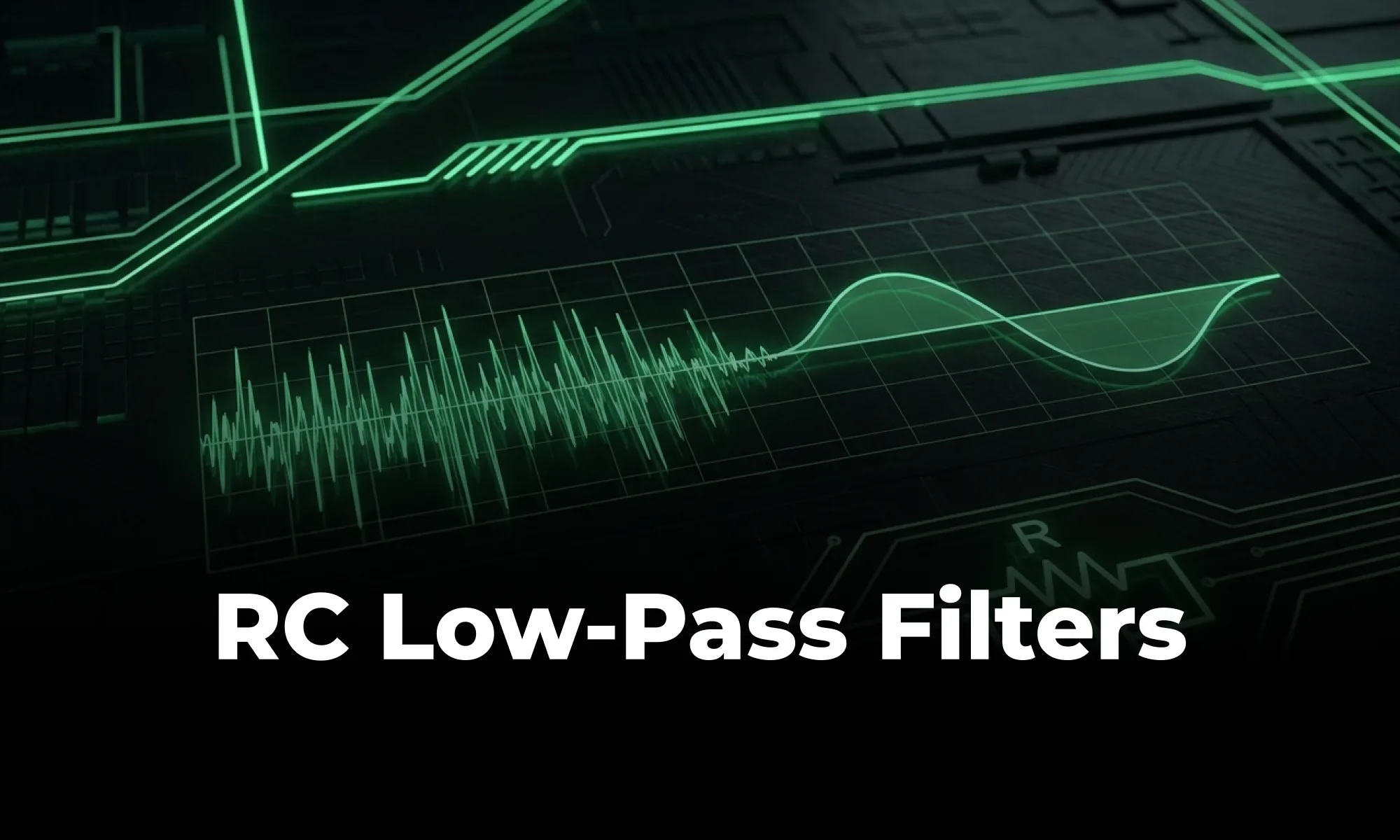
Explains how RC low-pass filters attenuate high-frequency signals using a resistor and capacitor, with the cutoff frequency formula, component selection trade-offs, and PCB layout best practices.


Covers how reflow ovens solder SMT components through preheat, soak, reflow, and cooling stages, with common defects and how PCB layout decisions impact manufacturing yield.

Gerber files are the universal 2D vector format that bridges PCB design and fabrication. This guide covers what each layer file contains, how to export and verify a complete manufacturing package, and the common mistakes that cause production delays.

A pi filter is a three-element passive CLC network that provides stronger ripple and EMI suppression than a single capacitor. This guide covers topology selection, component derating, resonance damping, and PCB layout best practices.

Tantalum capacitors offer high capacitance density in a tiny footprint but demand strict polarity and voltage derating. This guide explains how they compare to ceramics and aluminum electrolytics, common failure risks, and how to select and place them safely.
PCBA turns a bare PCB into a functional circuit by mounting and soldering components. This guide breaks down the assembly workflow, SMT vs through-hole methods, required manufacturing files, and common defects to avoid.

ERC checks schematic-level electrical issues while DRC checks PCB layout rules -- engineers run ERC before layout and DRC during or after routing.

The complete hardware design workflow covers requirements, schematic capture, PCB layout, validation, prototyping, and manufacturing.


