


Try Flux for free

Motor controllers are at the heart of innovation in automation, driving the performance of machines and devices across various industries. From precise robotic arms to efficient electric vehicles and dynamic HVAC systems, motor controllers enable these applications to operate with optimal speed, torque, and direction control. By integrating advanced electronics with sophisticated software, motor controllers interpret user commands and environmental inputs to deliver precise motor function.
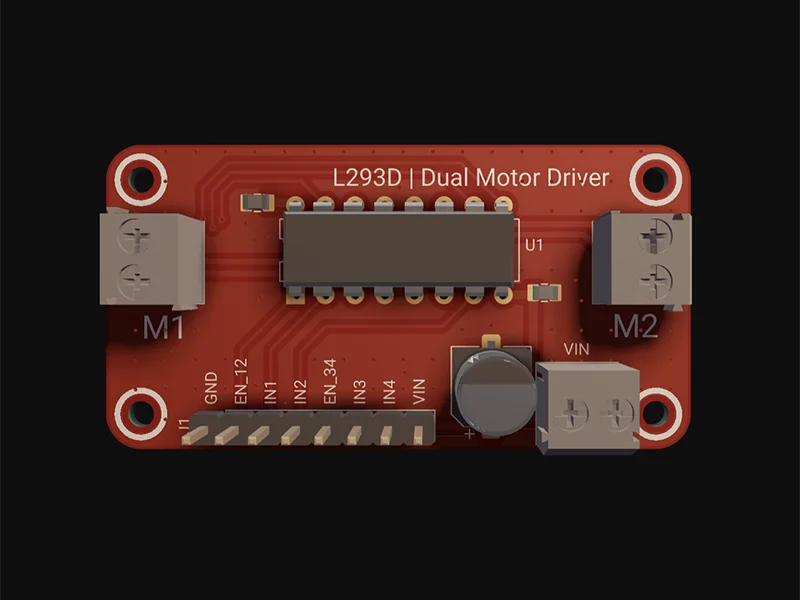
Motor controllers are the backbone of any motor-driven system, housing the electronics that control motor functions. Designing a robust motor controller PCB is crucial, involving careful consideration of the circuit's power requirements, thermal management, and reliability.
In this guide, we’ll walk you through how to kickstart your motor controller project and explain why using Flux makes the process smoother and more efficient for building these essential systems. With Flux, you’ll benefit from features that simplify PCB design, making it easier to create professional motor controllers from start to finish. Whether you’re designing for small appliances or large industrial machines, Flux provides the tools and resources to ensure your motor controllers meet rigorous performance and reliability standards.
The first step in designing your motor controller is to clearly define its requirements and specifications based on its intended use and operational demands. Key factors to consider include:
By defining these parameters, you create a solid foundation for your motor controller project.
The next step is to select the key components that will drive your motor controller. These typically include:
Motor Driver Chip (e.g., L298N): This chip directly controls the motor by managing power delivery based on input signals. It's essential for simpler motor control applications.
Compatibility with Main MCU: Ensure that the motor driver chip is compatible with the main microcontroller unit (MCU) that will be issuing control commands. This compatibility is crucial for seamless communication and effective control.
Sensors: Position, speed, and current sensors provide feedback for closed-loop control.
Power Supply: Design the power management subsystem to provide stable power to the controller electronics.
Choosing the right components sets the stage for a functional, efficient, and durable motor controller.
In Flux, creating a new project is straightforward—everything you need is ready to go! Plus, all public projects, parts, and modules can be forked and built upon with a single click.
Ready to dive in? We’ve prepared resources to help you get started quickly:
Flux offers ready-made templates to jumpstart your design, tailored for various motor types and control strategies.
{{motor_templates="/p/content-library"}}
To get inspired or see how others have built their motor controller projects, check out our example projects showcasing a variety of designs, from simple DC motor drivers to complex multi-axis CNC controllers.
{{motor_projects="/p/content-library"}}
Watch our in-depth video tutorials that guide you through the process of designing motor controller PCBs, from component selection to final layout.
{{universal-tutorial-video="/p/content-library"}}
Join our Slack community of PCB designers and motor control enthusiasts. Share ideas, ask questions, and get feedback on your designs in real-time.
Access detailed articles and documentation that cover everything from advanced motor control techniques to troubleshooting tips.
Flux empowers you to design professional motor controllers without the hassle. With intuitive tools, expert guidance, and a community to back you up, building your next motor-driven project has never been easier. Try Flux for free today and start designing.


