USB Security Token
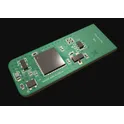
This design implements a USB security token powered by an STM32 microcontroller. The device is engineered for compactness and efficient PCB integration while ensuring robust security features. Key elements of the design include: - **Microcontroller Core:** A STM32F103T8U6 serves as the primary processing unit, handling USB communication and security protocols. - **USB Interface:** A USB-A plug provides connectivity to the host. Dedicated net portals ensure proper routing of the VBUS, D+, D–, and ground signals. - **Power Regulation:** A low-dropout regulator supplies a stable 3.3V operating voltage, ensuring low noise and proper current supply to the microcontroller and peripherals. - **Signal Conditioning and EMI Filtering:** An EMI filter is used to maintain signal integrity and reduce interference while preserving the security token’s functionality. - **Synchronous Elements:** A ceramic resonator is incorporated to provide a precise clock source for USB data transfer and microcontroller operations. - **Additional Components:** Surface-mount resistors, capacitors, and LED indicators are deployed to ensure proper conditioning, decoupling, and status feedback. Their compact 0402 packages facilitate a highly integrated design. - **Connectivity and Net Portals:** Custom net portals are used throughout the schematic to streamline connectivity and PCB layout, keeping the design modular and easy to modify. This USB security token is designed with industry-standard components and robust connectivity to ensure secure, reliable operation in portable security applications. #USBToken #STM32 #PCBDesign #SecurityTechnology #PortableSecurity #Microcontrollers #USBInterface #PowerRegulation #EMIProtection #CompactDesign... show more0 Uses
255 Comments
30 Stars
[Example] Simulation of Astable Multivibrator Circuit
A simulated blinking LED circuit using an astable multivibrator a.k.a "flip-flop" as a square wave generator. It also includes PCB layout of the project.... show more0 Uses
99 Comments
15 Stars

LED Animation
This is a project with an animation of LED lights on a board created in flux!! #led #js #flux #stm... show more0 Uses
15 Comments
11 Stars

sf-hackathon-2023-bee-hotel-R0.5
Check out the winning project at the SF climate hardware hack! This project intends to bring smart IoT capabilities to homes for native bees so that more people can provide them housing and we can all participate in citizen science to gather more information about the bees! Requirements: -Daytime Operation Only -Track Bee Input/Output Directionality -Connects to House via WiFi Features: -MPPT Solar Power Conditioning -96% efficient IR LED Drive Next Version Feature Wants: Microphone!... show more0 Uses
1 Comment
11 Stars
SmokeSensor_ShieldCompetition
Arduino Uno shield used to monitor chimney smoke and provide feedback to stove. This shield powers the Arduino using TEGs and a battery. This shield provides power to an LED, fans, and a light sensor used to detect light intensity.... show more0 Uses
0 Comments
11 Stars
Semestral E.P
Este circuito tiene la función de controlador para cuatro circuitos de tiras de luces LED múltiple, donde se usarán convertidores reductores, ya que es el mas simple de los controladores de conmutación (tipo Buck) y en este circuito esta aplicado ya que el voltaje de la carga nunca supera el 85% del voltaje de la alimentación y es capaz de regular la potencia AC de entrada y convertirlo para los 4 voltajes de salidas en DC, con el objetivo de alimentar las 4 tiras de luces LED. Este circuito convertidor reductor generalmente usa un MOSFET de potencia para cambiar el voltaje de alimentación a través de un inductor y las cargas que son las tiras de luces LED en serie. El inductor se utiliza para almacenar energía cuando se enciende el MOSFET, está esta energía se utiliza para proporcionar la corriente a las tiras de luces LED (las cuales tienen un consumo de 350 mA) cuando se apaga el MOSFET. Un diodo a través de las tiras LED y el circuito proporciona una ruta de retorno para que la corriente durante el tiempo de apagado del MOSFET.... show more0 Uses
0 Comments
10 Stars
Portable Audio DSP
Portable Audio DSP project utilizing multiple ICs, capacitors, resistors, and LEDs for advanced audio processing and control. Designed for embedded audio applications with ESP32, ADC, DAC, and interface components. #audioDevices #DSP #ADC #audio #DAC... show more0 Uses
43 Comments
8 Stars
RP2040 - Only AI
RP2040 Dual TLC5940 High-Current LED Driver Board... show more0 Uses
106 Comments
6 Stars

Ouija Board
First in the world hands-free Otherside communication device! You need only the board, spirit or ghost don't need to move the ouija anymore. Symbols will light up from the inside so you will be able to read your messages and spirit or ghost just need to turn on a red bottom entry LED. Two MEMS microphones allow your interlocutor to clearly hear your questions. WiFi connectivity gives you an opportunity to "dial" without a Medium anytime anywhere. And it has Bluetooth as well, because: "Everything is better with Bluetooth"! This board is powered by a single 10440(AAA) LiFePO4 battery that gives you up to 2 hours of seance. Designed by Vasyl Skral... show more0 Uses
32 Comments
6 Stars
sf-hackathon-2023-bee-hotel-R0.5
Check out the winning project at the SF climate hardware hack! This project intends to bring smart IoT capabilities to homes for native bees so that more people can provide them housing and we can all participate in citizen science to gather more information about the bees! Requirements: -Daytime Operation Only -Track Bee Input/Output Directionality -Connects to House via WiFi Features: -MPPT Solar Power Conditioning -96% efficient IR LED Drive Next Version Feature Wants: Microphone!... show more0 Uses
0 Comments
6 Stars
ESP32-S3-WROOM-1 Reference Design
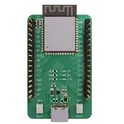
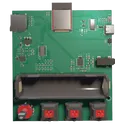
This project is a reference project for ESP32-S3-WROOM-1 to develop your IoT ideas. The board has 3 LEDs, USB C for firmware, EN and BOOT buttons, and 2 IO connectors for development #IoT #WiFi #MCU #RF #ESP32 #referenceDesign #project... show more0 Uses
145 Comments
6 Stars
8x8 Display with IMU V2
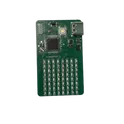
Mixed Voltage Arduino Nano Integration Example on a 4 Layer PCB Changelog/TODO: -Breakout the SPI Bus in a 2.54mm header in a snap off manner -add an IMU -Reorder the rows of the LEDs Tutorials: https://circuitdigest.com/microcontroller-projects/interfacing-max7219-led-dot-matrix-display-with-arduino... show more0 Uses
14 Comments
6 Stars
83 Keyboard
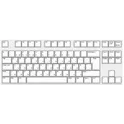
A 83 key keyboard, Norwegian QWERTY/DVORAK ISO style. It's of course possible to use other languages, as the MX cherry switches will accept keycaps with whatever language you need. It uses 83 1N4148 diodes and three LED's for caps lock,scroll lock, and QWERTY/DVORAK. It also needs pin headers that accepts the pins from a Teensy++2.0... show more0 Uses
5 Comments
5 Stars

Smart system for a greenhouse
This project is a 6-output irrigation control board with pump and other device support. It features 8 connectors, 2 GPIO pins each, and a GC9A01A display. The board is powered by an STM32L073V8T6 microcontroller and has 6 LEDs connected to GPIO pins. #irrigationcontrol #STM32 #GPIO #GC9A01A #LEDs.... show more0 Uses
4 Comments
5 Stars
Strangest LED Blinker TestSite
Project Overview: This project is an enhanced LED blinking circuit that goes beyond a simple 555 timer-based design. It incorporates additional features such as random blinking patterns, speed control, and a start/stop function. The project utilizes a microcontroller, such as an Arduino or Raspberry Pi, to control the blinking patterns, speed, and start/stop functionality. LED Blinking: The board features a total of 8 LEDs that blink in various random patterns. When the board is powered on, even before user interaction, the LEDs start blinking randomly, creating an eye-catching display. Each LED has its own current-limiting resistor to ensure proper current flow and prevent damage. The microcontroller is programmed to generate random blinking patterns for the LEDs, ensuring that the LEDs do not blink in a predictable or sequential order. This random blinking adds an element of unpredictability and visual interest to the project. Speed Control: The board includes two speed control buttons that allow the user to adjust the blinking speed of the LEDs. Button 1 is designated as the "fast" button, increasing the blinking speed when pressed, while Button 2 is designated as the "slow" button, decreasing the blinking speed when pressed. The speed control provides a range of blinking speeds, from a slow, gradual blink to a rapid, strobe-like effect. The microcontroller monitors the state of the speed control buttons and adjusts the blinking speed accordingly. Start/Stop Functionality: A third button serves as a start/stop control. When pressed, it toggles the blinking of the LEDs on or off. This allows the user to freeze the blinking pattern at any desired moment or resume the blinking when desired. The microcontroller handles the start/stop functionality by turning the LEDs on or off based on the state of the start/stop button. Manual Speed Adjustment: In addition to the speed control buttons, the board includes a potentiometer or variable resistor. This component allows the user to manually adjust the blinking speed of the LEDs by turning the knob or sliding the control. The manual speed adjustment provides more precise and customizable control over the blinking speed compared to the preset speeds of the buttons. The microcontroller reads the analog value from the potentiometer and adjusts the blinking speed accordingly. Power and Connectivity: The board is powered through a USB-C or USB-micro B connector, allowing it to be easily connected to a power source such as a computer or wall adapter. A voltage regulator may be included to ensure a stable and appropriate voltage supply to the components. A power switch is incorporated to conveniently turn the board on or off.... show more0 Uses
224 Comments
4 Stars

Biskuit AI: Project Showcase
Kitchen LED Strip Motion & Ambient-Light Controller with 12 V PWM Dimming, PIR Sensor, Ambient Light Sensor, MCU Control, Buck Regulator, and Protection Circuits (TVS, PTC Fuse, Reverse-Polarity Diode) #KitchenLEDController #MotionDetection #AmbientLightSensor... show more0 Uses
56 Comments
4 Stars
On Air Modular V1
Build your own Modular LED Sign! This design prioritizes accessibility which means that the BoM can be ordered on Amazon and that everything was designed with solder-ability in mind. NOTE: This board is still an unfinished prototype that has not been built and verified. Operating Instructions: 1. [Important!] Power your buck converter and adjust the output voltage to 1.5V output before attempting to power the LEDs. If you cannot power the buck converter, just turn the potentiometer counterclockwise to its maximum setting.... show more0 Uses
16 Comments
4 Stars

Q4-2022-Dogfooding-On Air-markwu2001-Remix-R1
IMPORTANT NOTICE: Hey, I opened editing permissions and this doc is broken, see the frozen version here: https://www.flux.ai/markwuflux/on-air-markwu2001-remix-r1-backup-freeze-0b49 R1 changes: -Changed LED part to Red LEDs -adjusted resistor value of buck converter -Changed source for USB-C Connector -Removed exposed soldermask on buck converter with negative soldermask expansion -Order with black soldermask Modified by markwu2001: - Adjustable Brightness, - 85-90% Drive Efficiency - <5W Operation (Can use 5V 1A Plug) This project can be purchased from LCSC Original Description: Daddy's second circuit board. A sign to let my wife know when I'm on a call. Activates with a slide switch and is powered by USB-C.... show more0 Uses
3 Comments
4 Stars
Blinking LED Demo
This is NOT the new user onboarding example project... show more0 Uses
1 Comment
3 Stars
LoRa soil monitor Reference Design
This is a LoRa soil monitor Reference Design. It uses a STM32L031G6U6S microcontroller and a RFM95W-915S2 LoRa transceiver, integrated with sensor interfacing and LED indicators. Communication occurs via USART and SPI. The system is powered using a battery. #referenceDesign #simple-embedded #stm #template #reference-design... show more0 Uses
14 Comments
3 Stars
Alternative Olive Ecto Goggles
Cree un cargador de baterías para salidas de 5v, 7v, 9v y 12v con un LED que indique qué salida se está utilizando. Con un dip switch y que utiliza una pantalla o LEDS para indicar el nivel de carga de la batería o si está cargando o no, que cuando la batería esté cargada a la mitad emite un sonido y cuando termina de cargar emite de nuevo el sonido y que deje de cargar automaticamente... show more0 Uses
12 Comments
3 Stars
[Example] Simulation of Astable Multivibrator Circuit
A simulated blinking LED circuit using an astable multivibrator a.k.a "flip-flop" as a square wave generator. It also includes PCB layout of the project.... show more0 Uses
9 Comments
3 Stars
Water Level Indicator
Daddy's first PCB. Measures the water level of a potted plant, displays the level using LEDs.... show more0 Uses
29 Comments
3 Stars
ESP32 Music Player Reference Design
This project comprises a design for an ESP32 based Music Player. It consists of components like ESP32-WROOM-32E for RF/WIFI/MCU functionalities, PCM5102 for audio processing, CH340C for USB to UART communication, and acts as a robust and efficient system for music playback operations. Various supporting components such as capacitors, resistors, LEDs, buttons, etc., further enhance the performance. #referenceDesign #project #ESP32 #ESP32WROOM #RF #WIFI #MCU #music #MP3 #player #referenceDesign #simple-embedded #espressif #reference-design #polygon... show more0 Uses
1 Comment
3 Stars
![[Example] Simulation of Astable Multivibrator Circuit](https://img-cdn.flux.ai/eyJidWNrZXQiOiJncmF2aXRvbi1lbGVjdHJpYy1zeW1ib2xzIiwia2V5IjoiZG9jdW1lbnRfYXNzZXRzL3NpbXVsYXRlZC10aHVtYi0yYjExNjc0Mi01NjY4LWRkMDYtYjdkZC05YWExMTZhODMwZjYucG5nIiwiZWRpdHMiOnsicmVzaXplIjp7IndpZHRoIjoxMjQsImhlaWdodCI6MTI0LCJmaXQiOiJjb250YWluIiwiYmFja2dyb3VuZCI6eyJyIjowLCJnIjowLCJiIjowLCJhbHBoYSI6MH19fSwib3V0cHV0Rm9ybWF0Ijoid2VicCJ9)

Page 1 of 193
Next