Chat
Welcome to Flux
Treat Flux like your intern. Tell it what you'd like to build and it'll get to work. You can also ask it questions, brainstorm ideas, and teach it your preferences. Learn More
Explain project
Write a project description
Find schematic issues
Create a test plan
Simulate a circuit
Prepare for Manufacturing
Component Selection Workflow
New Subsystem Wizard
Write I2C initialization code
Generate firmware skeleton
can you give any alternative of this transistor in smd

1y
For replacing the 2N2222 transistor in your ESP32-H2 Relay Board project with an SMD (Surface-Mount Device) alternative, a good choice would be the 2N2222A in an SOT-23 package. The 2N2222A is essentially the same as the 2N2222 in terms of functionality and specifications but comes in a surface-mount package suitable for more compact and modern PCB designs.
When selecting an SMD transistor, ensure it meets the following criteria as your project involves controlling a relay and may interface with other components that require certain specifications:
- Collector-Emitter Voltage ($V_{CE}$): Should be sufficient to handle the voltage levels in your project.
- Collector Current ($I_C$): Must be capable of handling the current requirements for driving the relay and any other loads connected to the transistor.
- Gain (hFE/Beta): Should have a comparable gain to ensure that the base current provided by driving circuits (like the ESP32-H2 or other control circuits) is sufficient to switch the transistor fully on.
Given the specifications of your project, the 2N2222A in an SOT-23 package fits well for general switching and amplification needs similar to the 2N2222 but in a smaller, surface-mount form factor. Always check the datasheet of the specific manufacturer's part you plan to use to ensure it meets your project's requirements, including thermal considerations and pinout compatibility.
Here's a general connection guideline assuming you're using the 2N2222A (SOT-23) as a replacement:
- Connect the Base (Pin 1 of the SOT-23) to the control signal, possibly through a resistor similar to how Q1:B is connected.
- Connect the Emitter (Pin 3 of the SOT-23) to ground (GND) or the reference point similar to Q1:E.
- The Collector (Pin 2 of the SOT-23) would go to the relay's coil or other load, similarly to Q1:C.
Make sure to review your circuit design in Flux for any necessary adjustments due to the footprint difference between the though-hole 2N2222 and the SOT-23 2N2222A.
1y
3
give me any smd alternative to this diode
1y
For replacing the 1N4007 diode in your project with a Surface-Mount Device (SMD) alternative, you can consider the M7 diode (SMD version of the 1N4007), which is very popular and widely used in various applications. The M7 diode provides similar electrical characteristics to the 1N4007, such as a maximum repetitive reverse voltage of 1000V and a forward current of 1A, which should be suitable for most applications originally designed with the 1N4007 in mind.
Here are some details about the M7 diode:
- MPN: M7 (also known as S1M)
- Package: DO-214AC (SMA)
- Peak Repetitive Reverse Voltage: 1000V
- Max Forward Current: 1A
- **Max Forward Voltage (at1A): 0.7V
- Manufacturer: Various
Remember to check the footprint of the M7 diode against your current PCB layout in Flux to ensure compatibility, as SMD components have different physical sizes and pad arrangements compared to their through-hole counterparts.
1y
4
C3
Capacitance
10uF
RST
U2
12V
3V3
Reviews

- Wirelessly connects nets on schematic. Used to organize schematics and separate functional blocks. To wirelessly connect net portals, give them same designator. #portaljharwinbarrozo43.0M
- Wirelessly connects power nets on schematic. Identical to the net portal, but with a power symbol. Used to organize schematics and separate functional blocks. To wirelessly connect power net portals, give them the same designator. #portal #powerjharwinbarrozo11.4M
- A generic fixed resistor ideal for rapid circuit topology development. Its footprint automatically adapts based on the selected package case code—supporting 0402, 0603, 0805, 1203, and many other standard SMD packages, as well as axial horizontal and vertical configurations. Save precious design time by seamlessly add more information to this part (value, footprint, etc.) as it becomes available. Standard resistor values: 1.0 ohm, 10 ohm, 100 ohm, 1.0k ohm, 10k ohm, 100k ohm, 1.0M ohm 1.1 ohm, 11 ohm, 110 ohm, 1.1k ohm, 11k ohm, 110k ohm, 1.1M ohm 1.2 ohm, 12 ohm, 120 ohm, 1.2k ohm, 12k ohm, 120k ohm, 1.2M ohm 1.3 ohm, 13 ohm, 130 ohm, 1.3k ohm, 13k ohm, 130k ohm, 1.3M ohm 1.5 ohm, 15 ohm, 150 ohm, 1.5k ohm, 15k ohm, 150k ohm, 1.5M ohm 1.6 ohm, 16 ohm, 160 ohm, 1.6k ohm, 16k ohm, 160k ohm, 1.6M ohm 1.8 ohm, 18 ohm, 180 ohm, 1.8K ohm, 18k ohm, 180k ohm, 1.8M ohm 2.0 ohm, 20 ohm, 200 ohm, 2.0k ohm, 20k ohm, 200k ohm, 2.0M ohm 2.2 ohm, 22 ohm, 220 ohm, 2.2k ohm, 22k ohm, 220k ohm, 2.2M ohm 2.4 ohm, 24 ohm, 240 ohm, 2.4k ohm, 24k ohm, 240k ohm, 2.4M ohm 2.7 ohm, 27 ohm, 270 ohm, 2.7k ohm, 27k ohm, 270k ohm, 2.7M ohm 3.0 ohm, 30 ohm, 300 ohm, 3.0K ohm, 30K ohm, 300K ohm, 3.0M ohm 3.3 ohm, 33 ohm, 330 ohm, 3.3k ohm, 33k ohm, 330k ohm, 3.3M ohm 3.6 ohm, 36 ohm, 360 ohm, 3.6k ohm, 36k ohm, 360k ohm, 3.6M ohm 3.9 ohm, 39 ohm, 390 ohm, 3.9k ohm, 39k ohm, 390k ohm, 3.9M ohm 4.3 ohm, 43 ohm, 430 ohm, 4.3k ohm, 43K ohm, 430K ohm, 4.3M ohm 4.7 ohm, 47 ohm, 470 ohm, 4.7k ohm, 47k ohm, 470k ohm, 4.7M ohm 5.1 ohm, 51 ohm, 510 ohm, 5.1k ohm, 51k ohm, 510k ohm, 5.1M ohm 5.6 ohm, 56 ohm, 560 ohm, 5.6k ohm, 56k ohm, 560k ohm, 5.6M ohm 6.2 ohm, 62 ohm, 620 ohm, 6.2k ohm, 62K ohm, 620K ohm, 6.2M ohm 6.8 ohm, 68 ohm, 680 ohm, 6.8k ohm, 68k ohm, 680k ohm, 6.8M ohm 7.5 ohm, 75 ohm, 750 ohm, 7.5k ohm, 75k ohm, 750k ohm, 7.5M ohm 8.2 ohm, 82 ohm, 820 ohm, 8.2k ohm, 82k ohm, 820k ohm, 8.2M ohm 9.1 ohm, 91 ohm, 910 ohm, 9.1k ohm, 91k ohm, 910k ohm, 9.1M ohm #generics #CommonPartsLibraryjharwinbarrozo1.5M
- A generic fixed capacitor ideal for rapid circuit topology development. You can choose between polarized and non-polarized types, its symbol and the footprint will automatically adapt based on your selection. Supported options include standard SMD sizes for ceramic capacitors (e.g., 0402, 0603, 0805), SMD sizes for aluminum electrolytic capacitors, and through-hole footprints for polarized capacitors. Save precious design time by seamlessly add more information to this part (value, footprint, etc.) as it becomes available. Standard capacitor values: 1.0pF, 10pF, 100pF, 1000pF, 0.01uF, 0.1uF, 1.0uF, 10uF, 100uF, 1000uF, 10000uF 1.1pF, 11pF, 110pF, 1100pF 1.2pF, 12pF, 120pF, 1200pF 1.3pF, 13pF, 130pF, 1300pF 1.5pF, 15pF, 150pF, 1500pF, 0.015uF, 0.15uF, 1.5uF, 15uF, 150uF, 1500uF 1.6pF, 16pF, 160pF, 1600pF 1.8pF, 18pF, 180pF, 1800pF 2.0pF, 20pF, 200pF, 2000pF 2.2pF, 22pF, 220pF, 2200pF, 0.022uF, 0.22uF, 2.2uF, 22uF, 220uF, 2200uF 2.4pF, 24pF, 240pF, 2400pF 2.7pF, 27pF, 270pF, 2700pF 3.0pF, 30pF, 300pF, 3000pF 3.3pF, 33pF, 330pF, 3300pF, 0.033uF, 0.33uF, 3.3uF, 33uF, 330uF, 3300uF 3.6pF, 36pF, 360pF, 3600pF 3.9pF, 39pF, 390pF, 3900pF 4.3pF, 43pF, 430pF, 4300pF 4.7pF, 47pF, 470pF, 4700pF, 0.047uF, 0.47uF, 4.7uF, 47uF, 470uF, 4700uF 5.1pF, 51pF, 510pF, 5100pF 5.6pF, 56pF, 560pF, 5600pF 6.2pF, 62pF, 620pF, 6200pF 6.8pF, 68pF, 680pF, 6800pF, 0.068uF, 0.68uF, 6.8uF, 68uF, 680uF, 6800uF 7.5pF, 75pF, 750pF, 7500pF 8.2pF, 82pF, 820pF, 8200pF 9.1pF, 91pF, 910pF, 9100pF #generics #CommonPartsLibraryjharwinbarrozo1.5M
- A generic fixed inductor suitable for rapid circuit topology development. The footprint automatically adapts based on the selected package, supporting standard SMD sizes (e.g., 0402, 0603, 0805) as well as well-known inductor packages such as SDR1806, PA4320, SRN6028, and SRR1260. Standard inductor values: 1.0 nH, 10 nH, 100 nH, 1.0 µH, 10 µH, 100 µH, 1.0 mH 1.2 nH, 12 nH, 120 nH, 1.2 µH, 12 µH, 120 µH, 1.2 mH 1.5 nH, 15 nH, 150 nH, 1.5 µH, 15 µH, 150 µH, 1.5 mH 1.8 nH, 18 nH, 180 nH, 1.8 µH, 18 µH, 180 µH, 1.8 mH 2.2 nH, 22 nH, 220 nH, 2.2 µH, 22 µH, 220 µH, 2.2 mH 2.7 nH, 27 nH, 270 nH, 2.7 µH, 27 µH, 270 µH, 2.7 mH 3.3 nH, 33 nH, 330 nH, 3.3 µH, 33 µH, 330 µH, 3.3 mH 3.9 nH, 39 nH, 390 nH, 3.9 µH, 39 µH, 390 µH, 3.9 mH 4.7 nH, 47 nH, 470 nH, 4.7 µH, 47 µH, 470 µH, 4.7 mH 5.6 nH, 56 nH, 560 nH, 5.6 µH, 56 µH, 560 µH, 5.6 mH 6.8 nH, 68 nH, 680 nH, 6.8 µH, 68 µH, 680 µH, 6.8 mH 8.2 nH, 82 nH, 820 nH, 8.2 µH, 82 µH, 820 µH, 8.2 mH #generics #CommonPartsLibraryjharwinbarrozo15.8k
- An electrical connector acting as reusable interface to a conductor and creating a point where external circuits can be connected.Terminal
- 47 kOhms ±5% 0.125W, 1/8W Chip Resistor 0805 (2012 Metric) Automotive AEC-Q200 Thick Film #forLedBlinkjharwinbarrozo1.2M
- 10uF Capacitor Aluminum Polymer 20% 16V SMD 5x5.3mm #forLedBlink #commonpartslibrary #capacitor #aluminumpolymer #radialcanjharwinbarrozo1.2M
- Yellow 595nm LED Indication - Discrete 1.7V 1206 (3216 Metric) #forLedBlinkjharwinbarrozo1.1M


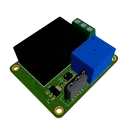
ESP32-H2 Relay Board qbfF
Properties
Pricing & Availability
Distributor | Qty 1 |
|---|---|
Digi-Key | $7.87–$8.44 |
LCSC | $5.62–$5.76 |
Mouser | $7.74 |
Controls
Welcome 👋
Flux helps you build PCBs faster with an AI teammate!
Create your account to collaborate, stay updated, fork your own version, and get instant answers from our AI agent.
zainey4
zainey4
copilot
zainey4
copilot
zainey4
copilot
zainey4
copilot
zainey4
copilot
- Drain to the relay coil's positive terminal.
- Source to ground.
- Gate through a resistor (to limit the current spike) connected to the optocoupler's output. The resistor can be around 1kΩ to 10kΩ.
Implementation Tips:zainey4
copilot
- Base Resistor ($R_{B}$) Value: Choose a ~360Ω or 370Ω resistor as the base resistor for the 2N2222 to drive the SRD-05VDC-SL-C. This will ensure the transistor is in saturation, allowing it to switch the relay effectively.
Additional Considerationzainey4
copilot
- Reliable Switching: The NPN transistor (e.g., 2N2222), driven correctly, ensures that the relay can be reliably switched on and off. By providing sufficient current to the relay coil that the direct GPIO pin or optocoupler output might not achieve, the transistor ensures that the relay is fully activated when needed.
- Increased Isolation: When used in conjunction with an optocoupler, the transistor further isolates the low-power control circuitry from the higher-power loads switched by the relay, enhancing safety.
- Protection for Control Circuitry: The transistor acts as a buffer between the control circuitry and the relay, protecting the former from potential high voltage or current spikes.
Benefits of Adding a Flyback Diode:- Voltage Spike Suppression: When the relay is deactivated, the collapsing magnetic field in the coil generates a high voltage spike that can damage the driving transistor and other components. The flyback diode (e.g., 1N4007) across the relay coil clamps these voltage spikes, protecting the components.
- Increased Component Lifespan: By suppressing voltage spikes, the diode reduces wear on the transistor and relay, potentially increasing the lifespan of these components.
Potential Considerations After the Addition:- Correct Component Orientation: Ensure the flyback diode is correctly oriented, with the cathode connected to the positive side of the relay coil and the anode to the negative side. Incorrect orientation will not provide the intended protection.
- Base Resistor Value: The calculated value for the base resistor ensures the transistor is saturated; however, confirm this value works as intended in your specific context. Component tolerances and variations in operating conditions can affect performance.
- Transistor Specifications: Verify that the chosen transistor meets all your requirements, including maximum collector current and collector-emitter voltage, to handle the relay coil's demands without issues.
Circuit Analysis for Potential Problems:- Power Supply Adequacy: Ensure your power supply can handle the additional current draw from the relay coil and has sufficient overhead for stable operation.
- Thermal Management: Check if the transistor or any other component heats up more than expected during operation, indicating excessive current or a potential mismatch in component specifications.
- Complete Activation/Deactivation: Test to ensure the relay reliably activates and deactivates in all expected operational scenarios, particularly under varying load conditions.
Conclusionzainey4
copilot
- Package: The MMBT2222A comes in an SOT-23 package, a popular small footprint surface-mount option.
- Collector Current: It can handle a collector current (Ic) of up to 600mA, making it suitable for a wide range of applications, including driving relays.
- Voltage Ratings: It has similar voltage ratings, with Vceo (collector-emitter voltage) around 40V, which is ample for most low to medium voltage applications.
- Gain (hFE): Its DC current gain (hFE) is within a similar range, ensuring it can be driven by low input currents similar to the 2N2222.
Considerations for Replacement:- Check the Pinout: Ensure that the pinout matches or is appropriately adapted to your circuit design. The SOT-23 package will have a different pin configuration than the TO-92.
- Thermal Performance: SMD components may have different thermal dissipation characteristics compared to their through-hole counterparts. Ensure the chosen SMD part can handle the thermal requirements of your application.
- Drive Characteristics: Verify the base current requirement and ensure that your drive circuit (optocoupler, microcontroller, etc.) can provide the necessary current to switch the transistor fully into saturation when necessary.
Example Connection for Relay Drive: