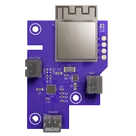
Battery Management System Design
Thought for 1 min 3 sec
To expand from a single-cell to a multi-cell BMS, you’ll need to:
-
Choose a multi-cell charger/BMS IC
- Swap out U1 (RT9525) for a dedicated multi-cell monitor/charger such as TI’s BQ76920 (up to 3 cells) or BQ76930 (up to 10 cells).
- These ICs integrate per-cell voltage sensing, over/under-voltage protection, and passive cell balancing.
-
Add cell-balance circuitry
- Each cell requires a bleed resistor network controlled by the BMS IC to equalize voltages.
- Place balancing MOSFETs or resistors and route individual cell sense lines back to the new BMS IC.
-
Revise voltage dividers and sense nets
- Replace your single VSYS sense resistor divider ([R3]/[R4]) with an array of dividers for each cell.
- Create separate nets (CELL1, CELL2, …) tied to the IC’s CELLx pins.
-
Upgrade connectors and insulation
- Use a higher-voltage pack connector rated for the total stack voltage (e.g., 12.6 V for 3 cells).
- Ensure creepage/clearance distances and high-voltage isolation for ESP32 level shifters or use an isolated ADC interface.
-
Adapt the power-rail architecture
- The TPS62160 input (VSYS) must handle the pack’s full voltage range; check its max VIN (36 V).
- Consider a pre-regulator or a higher-voltage buck if your cell count exceeds its rating.
-
Update firmware and GPIO assignments
- Map the new BMS status flags (OV, UV, CHG, DSG) to ESP32 GPIOs.
- Implement per-cell voltage monitoring and balancing commands in your firmware.
-
Layout and thermal considerations
- Based on Flux KB guidance, “when designing single-cell BMS, compare to 2-cell …” you must now prioritize “component placement to minimize high-voltage loop areas” and ensure copper spacing meets the pack’s max voltage.
- Distribute thermal vias under the BMS IC to dissipate balancing heat.
-
Safety and protection add-ons
- Add input reverse-polarity protection (Schottky or ideal diode) and a TVS array rated to the stack voltage.
- Include an NTC thermistor on each cell group (as supported by many multi-cell BMS ICs).
By following these steps—selecting a multi-cell BMS IC, routing individual cell sense/balance lines, upgrading connectors, and revising power rails—you’ll extend your design to reliably charge, monitor, and balance multiple cells.

can you change it for me?
Thought for 59 sec
Components to Add
Components to Remove
Table
| Part Name | Purpose | Manufacturer Part Number | Quantity | Footprint | Datasheet link |
|---|---|---|---|---|---|
| BQ7692000PWR | 3-cell battery monitor & balancer IC to replace the single-cell RT9525 and manage per-cell sensing and balancing | BQ7692000PWR | 1 | TSSOP-20 |
- U1
(RT9525 single-cell charger IC)