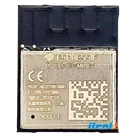
ESP32-C3-MINI Schematic Design
Worked for 3 mins 26 sec
I can design it, but this project is currently a view-only ESP32-C3-MINI-1-H4 part project, not an editable product schematic. I inspected it: it contains the module’s 61 terminals and no nets, so I can’t safely build the application schematic directly here unless you fork it or give edit access.
Recommended baseline schematic:
- ESP32-C3-MINI-1-H4 module
- USB-C connector for 5 V input and native USB programming
- AP2112K-3.3TRG1 LDO: 5 V → 3.3 V, 600 mA
- USB ESD protection on D+ / D−
- 5.1 kΩ CC pull-downs on USB-C CC1/CC2
- 3.3 V decoupling: 10 µF bulk + 100 nF close to ESP32 3V3
- EN reset circuit: 10 kΩ pull-up to 3V3 + 1 µF to GND + RESET button to GND
- BOOT button: GPIO9 to GND, with GPIO9 normally pulled high
- GPIO2 pull-up recommended for robust boot behavior
- GPIO18 / GPIO19 wired to USB D− / D+
- UART0 header: TXD0, RXD0, 3V3, GND
- GPIO expansion header for IO0–IO10 as available
- All module GND and exposed pad pins tied to GND
- All NC pins marked no-connect
Power budget basis: the ESP32-C3-MINI datasheet requires an external 3.3 V supply capable of at least 500 mA, so the 600 mA AP2112K is acceptable for a simple USB-powered board, with thermal dissipation around
(5 V - 3.3 V) × 0.5 A = 0.85 W at worst-case peak. That is high for small copper, so for sustained high Wi-Fi current I’d either add generous copper for the LDO or use a small buck regulator instead.Fork this project or open an editable project and I’ll implement the schematic directly.

Yes, I’ll fork the project; then implement the full schematic there.
Worked for 14 sec
Great. After you fork it, open the forked editable project and send me: “Implement the ESP32-C3 full schematic here.”
I’ll then build the actual schematic in that fork: USB-C power/programming, 3.3 V regulator, EN/BOOT/reset circuitry, USB ESD, decoupling, UART/GPIO headers, net labels, no-connects, and ERC cleanup.
Implement in fork
Add buck option
Keep USB-C native
Add beginner headers
Create documentation