Interface ICs
An interface IC is a type of integrated circuit that is designed to facilitate communication between two devices or systems. These devices are commonly used in electronic systems to enable the transfer of data and control signals between different components or subsystems. Some common use cases for interface ICs include connecting microcontrollers to peripherals such as sensors or displays, linking multiple processors together in a network, and enabling communication between devices using different communication protocols. Flux.ai has the world's largest community-driven public library of interface ICs, with footprints, symbols, datasheets, and simulation models. This library is a valuable resource for engineers and designers who need access to accurate and up-to-date information on these important components. Whether you are working on a new design project or simply looking to learn more about interface ICs, Flux.ai is an excellent resource to help you find the information you need.
PESD2CAN
8A@8/20us 54V 26.7V 24V SOT-23 ESD and Surge Protection ESD DIODE 24VWM 41VC SOT-23 PESD2CAN is a dual-line ESD protection diode designed to protect automotive Controller Area Network (CAN) bus interfaces from Electrostatic Discharge (ESD), surge events, and other transient voltage disturbances. It is housed in a compact SOT-23 package and provides protection for both CANH and CANL lines using a single device. Key Features Dual CAN bus line protection in a single SOT-23 package Maximum peak pulse power: 230 W (8/20 μs surge waveform) Low clamping voltage: 41 V at 5 A surge current Ultra-low leakage current: < 1 nA ESD protection up to 30 kV Compliant with IEC 61000-4-2 Level 4 ESD standard Compliant with IEC 61000-4-5 surge immunity standard AEC-Q101 qualified for automotive applications Reverse standoff voltage: 24 V Low capacitance (typically 25 pF) to minimize impact on CAN signal integrity Suitable for both high-speed and fault-tolerant CAN networks Typical Applications Automotive CAN bus networks Industrial CAN communication systems Automotive electronic control units (ECUs) CAN transceivers requiring ESD and surge protection Any differential communication interface exposed to external connectors Package SOT-23 (3-pin) Surface-Mount Device (SMD) package. #CommonPartsLibrary #Diode
214 Uses0 StarsCP2102N-A02-GQFN24
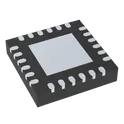
USB-to-UART Bridge CP2102N-A02-GQFN24 is a highly integrated USB-to-UART bridge controller from Silicon Labs. It provides a simple and cost-effective way to add USB connectivity to embedded systems by converting USB 2.0 Full-Speed communication into a standard UART interface. The device integrates the USB transceiver, oscillator, voltage regulator, and UART controller, minimizing external components and eliminating the need for USB firmware development. It is commonly used in microcontroller programming interfaces, industrial equipment, POS terminals, data loggers, and USB-to-serial adapters. Key Features USB 2.0 Full-Speed compliant (12 Mbps) interface. USB-to-UART bridge with data rates up to 3 Mbaud. Integrated USB transceiver; no external USB resistors required. Integrated oscillator; no external crystal required. On-chip 3.3 V voltage regulator. USB Battery Charger Detection (BC 1.2) support. Remote wakeup capability from USB suspend state. Low operating current of approximately 9.5 mA. Hardware and software flow control support. Internal configurable ROM for Vendor ID, Product ID, serial number, and USB descriptors. Royalty-free Virtual COM Port (VCP) drivers available for major operating systems. Operating temperature range: −40°C to +85°C. Compact 24-pin QFN (4 mm × 4 mm) package. Typical Applications USB-to-Serial adapters Microcontroller programming and debugging interfaces Industrial automation equipment Point-of-sale (POS) terminals Medical instruments Data acquisition and logging systems Embedded systems requiring USB connectivity #commonpartslibrary #integratedcircuit
221 Uses0 StarsCP2102N-A02-GQFN28R
USB-to-UART Bridge CP2102N CP2102N-A02-GQFN28R is a highly integrated USB-to-UART bridge controller from Silicon Labs that provides a simple and reliable interface between a USB host and an embedded system using a UART serial port. It eliminates the need for complex USB firmware development by handling all USB protocol functions internally and presenting a standard UART interface to the target device. The device is commonly used in microcontroller programming, debugging, industrial equipment, IoT devices, and USB-to-serial adapters. logging equipment Consumer and portable electronics Function: USB-to-UART Bridge Controller
98 Uses0 StarsBQ25895MRTWR
I²C Controlled Single Cell Fast Charger with MaxCharge™ Technology for High Input Voltage and Adjustable Voltage 3.1A Boost Operation The bq25895M is a highly-integrated 5-A switchmode battery charge management and system power path management device for single cell Li-Ion and Lipolymer battery. The devices support high input voltage fast charging. The low impedance power path optimizes switch-mode operation efficiency, reduces battery charging time and extends battery life during discharging phase. The I 2C Serial interface with charging and system settings makes the device a truly flexible solution. • High Efficiency 1.5-MHz Switch Mode Buck Charge – 93% Charge Efficiency at 2 A and 91% Charge Efficiency at 3 A Charge Current – Optimize for High Voltage Input (9 V / 12 V) – Low Power PFM mode for Light Load Operations • Boost Mode Operation with Adjustable Output from 4.5 V to 5.5 V – Selectable 500-KHz / 1.5-MHz Boost Converter with up-to 3.1 A Output – 93% Boost Efficiency at 5 V at 1 A Output – Support down-to 2.5V Battery – Support PWM only or PFM/PWM control for Light Load Efficiency • Integrated Control to Switch Between Charge and Boost Mode • Single Input to Support USB Input and Adjustable High Voltage Adapters – Support 3.9-V to 14-V Input Voltage Range – Input Current Limit (100 mA to 3.25 A with 50- mA resolution) to Support USB2.0, USB3.0 standard and High Voltage Adapters – Maximum Power Tracking by Input Voltage Limit up-to 14V for Wide Range of Adapters – Auto Detect USB SDP, CDP, DCP, and Nonstandard Adapters • Input Current Optimizer (ICO) to Maximize Input Power without Overloading Adapters • Resistance Compensation (IRCOMP) from Charger Output to Cell Terminal • Highest Battery Discharge Efficiency with 11-mΩ Battery Discharge MOSFET up to 9 A • Integrated ADC for System Monitor (Voltage, Temperature, Charge Current) • BATFET Control to Support Ship Mode, Wake Up, and Full System Reset • Flexible Autonomous and I 2C Mode for Optimal System Performance • High Integration includes all MOSFETs, Current Sensing and Loop Compensation • 12-µA Low Battery Leakage Current to Support Ship Mode • High Accuracy – ±0.5% Charge Voltage Regulation – ±5% Charge Current Regulation – ±7.5% Input Current Regulation #CommonPartsLibrary #IntegratedCircuit #PowerManagement
101 Uses0 StarsCPDT-12V
The CPDT-12V is an electromechanical relay designed for switching and control applications in industrial, automotive, consumer, and embedded electronic systems. Operating from a nominal twelve-volt coil supply, this relay provides reliable isolation between low-power control circuitry and higher-power loads. Its compact construction, robust contact mechanism, and dependable switching performance make it suitable for power distribution, automation controls, battery-powered equipment, protection circuits, and general-purpose switching applications. The relay incorporates a magnetic coil and mechanical contact assembly that enables safe control of AC or DC loads while maintaining electrical isolation between the control and load sides. Its durable design supports repeated switching operations and long service life in demanding environments. Features Electromechanical relay with nominal twelve-volt coil operation Provides galvanic isolation between control and load circuits Suitable for AC and DC load switching Reliable contact performance for power and signal applications Compact package for PCB mounting Low control power requirement Durable contact system for long operational life Fast switching response characteristics Compatible with industrial and embedded control systems Designed for automation, protection, and power management circuits Applications Industrial automation equipment Power control modules Battery-powered systems Automotive electronics Home appliance control circuits Smart energy management devices Security and alarm systems Embedded controller interfaces Motor and actuator switching General-purpose load control applications Electrical Characteristics Nominal coil voltage: twelve volts DC Electromagnetic actuation mechanism Isolated contact structure Designed for low-voltage control interfaces Supports switching of resistive and inductive loads Stable operation across specified environmental conditions Mechanical Characteristics PCB-mount relay construction Compact footprint for space-constrained designs Durable housing for electrical and mechanical protection Secure terminal arrangement for reliable soldering and connection Engineered for repeated switching cycles Environmental Characteristics Suitable for indoor industrial and commercial environments Resistant to normal operating vibration and mechanical shock conditions Designed for reliable operation across standard electronic equipment temperature ranges #commonpartslibrary #relay #electromechanicalrelay #switchingdevice #powermanagement #industrialautomation #controlsystems #pcbmount #automationelectronics #circuitprotection #embeddedsystems #industrialelectronics
55 Uses0 StarsNX3225GD 8.000MHZ STD-CRA-3
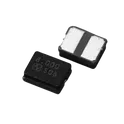
The NX3225GD 8.000MHz STD-CRA-3 is a surface-mount quartz crystal resonator designed to provide a stable and accurate clock reference for electronic circuits. It is housed in a compact ceramic package suitable for space-constrained applications and is optimized for low power consumption and reliable frequency generation. This crystal is commonly used in microcontrollers, wireless communication modules, industrial control systems, consumer electronics, IoT devices, and embedded systems requiring precise timing and frequency control. Features Fundamental mode quartz crystal resonator Nominal frequency of 8.000 MHz Compact surface-mount ceramic package High frequency stability and accuracy Low equivalent series resistance Suitable for low-power oscillator circuits Excellent aging characteristics RoHS-compliant construction Designed for automated SMT assembly processes Reliable operation across industrial temperature environments Electrical Characteristics Crystal type: Quartz Crystal Resonator Frequency: 8.000 MHz Oscillation mode: Fundamental Load capacitance: Standard load capacitance configuration Frequency tolerance: Standard precision grade Frequency stability: Industrial-grade stability performance Equivalent series resistance optimized for MCU and RF oscillator circuits Low drive level operation High insulation resistance Mechanical Characteristics Surface-mount package Ceramic hermetic enclosure Compact footprint suitable for high-density PCB layouts Compatible with standard reflow soldering processes Designed for automated pick-and-place assembly Applications Microcontroller clock generation Wireless communication devices Bluetooth and RF modules IoT and smart devices Industrial automation equipment Embedded control systems Consumer electronics Timing and synchronization circuits Sensor interface modules Portable battery-powered products Compliance RoHS compliant Lead-free package Environmentally friendly manufacturing standards Suitable for commercial and industrial electronic applications #commonpartslibrary #crystal #quartzcrystal #frequencycontrol #timingdevice #clocksource #oscillator #smtcomponent #embeddedsystems #wirelesscommunication #industrialelectronics #consumerelectronics #iotdevices #passivecomponents #electroniccomponents
31 Uses0 StarsAS7341-DLGM
11-Channel Spectral Sensor Frontend The AS7341-DLGM is a multi-channel spectral sensor developed by ams OSRAM, designed for advanced color measurement, spectral analysis, and ambient light sensing applications. The device integrates multiple optical channels covering visible and near-infrared wavelengths, enabling precise detection of light characteristics across a broad spectrum. Its compact surface-mount package, integrated analog front-end, and digital processing capabilities make it suitable for consumer electronics, industrial instrumentation, smart lighting systems, display calibration, agricultural sensing, and portable analytical devices. The sensor features highly sensitive photodiodes combined with optical filters that allow accurate spectral discrimination. Communication is performed through a standard digital interface, facilitating integration with microcontrollers, embedded systems, and IoT platforms. The AS7341 supports configurable measurement modes, programmable gain control, and interrupt functions for efficient system-level implementation. Key Features Multi-channel spectral sensing architecture Visible and near-infrared light detection capability Integrated optical interference filters High-sensitivity photodiode array Ambient light sensing functionality Advanced color measurement and analysis Programmable gain and integration settings Digital output with I²C communication interface Low-power operating characteristics Integrated interrupt and event detection functions Compact surface-mount package Suitable for portable and battery-powered designs High accuracy across varying lighting conditions Supports spectral identification and classification applications Optimized for display, lighting, and environmental monitoring systems Applications Color measurement instruments Spectral analysis equipment Smart lighting control systems Display color calibration Industrial automation sensors Agricultural monitoring devices Ambient light sensing applications Consumer electronics Wearable devices IoT sensing platforms Scientific and laboratory instruments Optical monitoring systems Electrical and Functional Characteristics Multi-channel optical sensing engine Digital signal processing architecture Configurable integration timing Adjustable sensitivity and gain control Low-noise measurement performance High dynamic range operation Fast measurement response capability Integrated spectral filtering technology Embedded register-based configuration Interrupt-driven event monitoring support Mechanical Characteristics Compact surface-mount package PCB-friendly footprint RoHS-compliant construction Suitable for automated assembly processes Optimized optical window design #commonpartslibrary #sensor #opticalsensor #spectralsensor #colorsensor #ambientlightsensor #amsosram #embeddedsystems #industrialelectronics #iot #measurement #environmentalsensing #consumerelectronics #smartlighting #electronicsdesign
38 Uses0 StarsLSM6DSOXTR
The LSM6DSOXTR is a low-power inertial measurement unit integrating a three-axis accelerometer and a three-axis gyroscope within a compact surface-mount package. Designed for motion tracking, gesture recognition, activity monitoring, and sensor fusion applications, the device incorporates embedded machine learning capabilities and programmable finite state machines to enable intelligent edge processing with reduced host processor workload. The sensor supports high-performance motion sensing while maintaining low power consumption, making it suitable for wearable devices, IoT products, industrial monitoring systems, smart home equipment, and portable electronics. Engineering Specification Device Type Six-axis inertial measurement unit featuring a three-axis accelerometer and three-axis gyroscope. Sensor Functions Motion sensing, orientation detection, vibration monitoring, gesture recognition, activity tracking, tilt sensing, and sensor fusion. Integrated Features Embedded machine learning core, finite state machine engine, sensor hub functionality, timestamp generation, event detection, and programmable interrupt generation. Communication Interface Supports digital communication through I²C, SPI, and I³C interfaces for integration with microcontrollers and embedded processors. Power Characteristics Optimized for low-power operation with multiple performance modes supporting battery-powered and always-on applications. Measurement Capabilities Provides configurable acceleration and angular rate measurement ranges with programmable output data rates and digital filtering options. Embedded Intelligence Includes on-chip machine learning and event classification capabilities to enable local data processing and reduce system power consumption. Package Style Compact surface-mount LGA package suitable for space-constrained electronic designs. Applications Wearable electronics, asset tracking devices, industrial sensors, robotics, smart appliances, navigation systems, handheld devices, health monitoring equipment, and IoT products. Manufacturer STMicroelectronics. Hashtags #LSM6DSOXTR #STMicroelectronics #IMU #MotionSensor #Accelerometer #Gyroscope #SensorFusion #MachineLearningCore #EmbeddedSystems #WearableElectronics #IndustrialAutomation #IoT #SmartDevices #MEMS #CommonPartsLibrary
93 Uses0 StarsSIM800L
The SIM800L is a compact quad-band GSM/GPRS cellular communication module designed for embedded wireless applications requiring voice, SMS, and packet data connectivity. It integrates a complete GSM/GPRS protocol stack and supports communication over standard cellular networks, enabling reliable remote monitoring, control, telemetry, asset tracking, and Internet of Things deployments. The module features low power consumption, a compact surface-mount package, and a UART-based AT command interface for straightforward integration with microcontrollers, processors, and embedded systems. It supports voice calls, SMS messaging, GPRS data transmission, and network services while providing flexible interfacing options for audio and peripheral connectivity. Designed for industrial and consumer electronic applications, the SIM800L delivers dependable wireless communication performance in compact and power-sensitive designs. Its broad network compatibility and extensive software support make it a widely adopted solution for GSM-based connected devices. Features Quad-band GSM/GPRS cellular connectivity Voice call functionality with integrated audio interface SMS text messaging support GPRS packet data communication capability Standard AT command interface UART serial communication interface Low-power operating modes Compact surface-mount package Embedded TCP/IP protocol support Real-time clock functionality DTMF detection and generation Caller identification support SIM card interface integration Antenna interface for cellular communication Wide operating temperature capability Suitable for battery-powered applications Applications Internet of Things devices Remote monitoring systems Wireless telemetry equipment Smart metering solutions Asset tracking systems Vehicle tracking devices Industrial automation equipment Security and alarm systems Wireless data loggers Remote control applications Point-of-sale terminals Embedded communication systems Electrical Characteristics GSM/GPRS cellular network operation Low-voltage power supply architecture Serial UART host interface Integrated RF transceiver SIM card support interface Audio input and output connectivity Low standby power consumption Hardware and software power management support Mechanical Characteristics Compact SMT module package PCB-mountable design Integrated RF connection interface Embedded system integration optimized Lightweight construction Compliance and Reliability GSM standard compliant GPRS standard compliant Industrial embedded communication suitable Designed for long-term operational reliability Compatible with standard cellular infrastructure #commonpartslibrary #wirelesscommunication #gsmmodule #gprs #sim800l #cellularmodule #iot #embeddedsystems #telemetry #wirelessconnectivity #industrialelectronics #communicationmodule #remotecontrol #trackingdevice #machinetomachine #smtmodule
43 Uses0 Stars