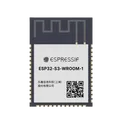
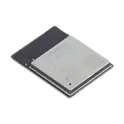
ESP32-S3-WROOM-1-N16R8
Bluetooth, WiFi 802.11b/g/n, Bluetooth v5.0 Transceiver Module 2.4GHz PCB Trace Surface Mount The ESP32-S3-WROOM-1-N16R8 is a high-performance Wi-Fi + Bluetooth Low Energy (BLE) module developed by Espressif Systems. It is built around the ESP32-S3 SoC, featuring a dual-core Xtensa LX7 32-bit processor running up to 240 MHz. This module integrates 16 MB Flash memory and 8 MB PSRAM, making it suitable for memory-intensive applications such as AI, image processing, and advanced IoT systems. It also includes an onboard PCB trace antenna, RF circuitry, crystal oscillator, and power management components—allowing designers to quickly integrate wireless connectivity into compact embedded designs. Key Features Processing & Memory Dual-core Xtensa LX7 CPU, up to 240 MHz 384 KB ROM, 512 KB SRAM + 16 KB RTC SRAM 16 MB Flash (Quad SPI) 8 MB PSRAM (Octal/Quad SPI) Connectivity 2.4 GHz Wi-Fi (802.11 b/g/n) Bluetooth 5 (LE) + Mesh support Integrated PCB antenna Peripherals & Interfaces Up to 36 GPIOs Interfaces: UART, SPI, I2C, I2S, PWM, ADC, USB OTG Built-in USB Serial/JTAG support Supports touch sensors, timers, watchdogs, CAN (TWAI) Electrical Characteristics Supply voltage: 3.0 V – 3.6 V TX power: up to ~20.5 dBm RX sensitivity: ~-103.5 dBm Operating temp: −40 °C to +65 °C (typical) Advanced Capabilities Optimized for AI acceleration (vector instructions) Suitable for voice recognition, image processing, and edge AI Low-power modes for battery-operated devices| Typical Applications IoT devices and sensor hubs Smart home & home automation AIoT (voice/image recognition) Industrial automation & monitoring Wearables and health devices USB-connected embedded systems #Module #RF-Transceiver #ESP32-S3... show more2.5k Uses
6 Stars
SIWG917Y111MGABAR
Bluetooth, WiFi 802.11b/g/n/ax, Bluetooth v5.4 Transceiver Module 2.4GHz Integrated, Chip Surface Mount Silicon Labs SiWG917 module is our lowest power Wi-Fi 6 plus Bluetooth LE 5.4, ideal for ultra-low power IoT wireless devices using Wi-Fi®, Bluetooth, Matter, and IP networking for secure cloud connectivity. It is optimal for developing battery operated devices that need long battery life. SiWG917 module includes an ultra-low power Wi-Fi 6 plus Bluetooth Low Energy (LE) 5.4 wireless CPU subsystem, and an integrated micro-controller (MCU) application subsystem, security, peripherals and power management subsystem all in a single 16 x 21.1 x 2.3 mm package. The wireless subsystem consists of a multi-threaded Network Wireless Processor (NWP) running up to 160 MHz, baseband digital signal processing, analog front end, 2.4 GHz RF transceiver and integrated power amplifier. The application subsystem consists of an ARM® Cortex®-M4 running up to 180 MHz, embedded SRAM, flash, ultra-low power sensor hub, and matrix vector processor. The ARM® Cortex®-M4 is dedicated for peripheral and application-related processing, while the NWP runs the wireless and networking stacks on independent threads, thus providing a fully integrated solution that is ready for a wide range of embedded wireless IoT applications. The modules come with modular radio type approvals for various countries, including USA (FCC), Canada (IC/ISED) and Japan (MIC), and are in compliance with the relevant EN standards (including EN 300 328 v2.2.2) for the conformity with the directives and regulations in EU and UK. KEY FEATURES • Wi-Fi 6 Single Band 2.4 GHz 20 MHz 1x1 stream IEEE 802.11 b/g/n/ax • Bluetooth LE 5.4 • Single chip Matter Over Wi-Fi Solution • ARM® Cortex® M4 Processor with FPU subsystem up to 180 MHz with rich set of Digital and Analog Peripherals. • Wi-Fi 6 Benefits: TWT for improved efficiency and longer battery life, MUMIMO/OFDMA for Higher Throughput, network capacity and low latency • Best in Class Device and Wireless Security • WLAN Tx power up to +17.5 dBm with integrated PA • Bluetooth LE Tx power up to +17 dBm with integrated PA • WLAN Rx sensitivity as low as -95.5 dBm • Wi-Fi 4 Standby Associated mode current: 71 μA @ 1-second listen interval • Embedded Flash option up to 8 MB/ optional external Flash up to 16 MB • Embedded PSRAM option up to 2 MB/ optional external PSRAM option up to 16 MB • Ultra-low power sensor hub peripherals • Matrix Vector Processor (MVP) • Embedded Wi-Fi, Bluetooth LE, Matter, and networking stacks supporting wireless coexistence • Three software-configurable MCU application memory options for sharing the RAM between the wireless, system, and application (192/256/320 KB) • Operating temperature: -40 to +85 ºC • Operating supply range: 3.0 to 3.63 V • Supply voltage for GPIOs: 1.71 to 3.63 V #WiFi6 #BluetoothLE54 #IoTModule #WirelessSoC #SiliconLabs #EmbeddedSystems #SmartHome #IndustrialIoT #LowPowerDesign #RFModule #ConnectedDevices #EdgeComputing #MatterReady #PCBDesign #ElectronicsEngineering... show more2.4k Uses
0 Stars
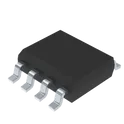
STM32G031J6M6
ARM® Cortex®-M0+ STM32G0 Microcontroller IC 32-Bit Single-Core 64MHz 32KB (32K x 8) FLASH 8-SOIC The STM32G031J6M6 is a compact, low-power 32-bit microcontroller from STMicroelectronics, based on the Arm® Cortex®-M0+ core running at up to 64 MHz. It belongs to the STM32G0 series, designed for cost-sensitive and energy-efficient embedded applications. This MCU integrates essential peripherals, memory, and system functions into a small package (8-pin SOIC), making it suitable for consumer electronics, industrial control, appliances, and IoT devices where space and power efficiency are critical. Key Features Core & Performance 32-bit Arm Cortex-M0+ CPU Up to 64 MHz clock frequency Memory Protection Unit (MPU) for improved reliability and security 💾 Memory 32 KB Flash memory (program storage) 8 KB SRAM Flash protection (read/write protection, secure area) Peripherals & Interfaces Communication: I2C (2x) SPI (2x) / I2S USART (2x) + Low-power UART 12-bit ADC (up to ~2.5 MSps, multiple channels) DMA controller (5 channels) Timers: Advanced PWM timer (motor control capable) General-purpose timers (16-bit & 32-bit) Low-power timers Watchdog timers RTC (Real-Time Clock) with VBAT backup Power & Efficiency Operating voltage: 1.7 V to 3.6 V Multiple low-power modes: Sleep, Stop, Standby, Shutdown Optimized for low energy consumption (battery-powered designs) I/O & Package Up to 44 GPIOs (depending on package) 6 GPIOs available in the 8-pin (J6M6) package 5V-tolerant I/O pins (select pins) Compact SOIC-8 package#commonpartslibrary #integratedcircuit #microcontroller... show more1.1k Uses
10 Stars
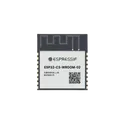
ESP32-C3-WROOM-02-N4
Bluetooth, WiFi 802.11b/g/n, Bluetooth v5.0 Transceiver Module 2.4GHz PCB Trace Surface Mount The ESP32-C3-WROOM-02-N4 is a compact, general-purpose Wi-Fi and Bluetooth Low Energy (BLE) module developed by Espressif Systems. It is built around the ESP32-C3 SoC and integrates RF components, crystal oscillator, flash memory, and PCB antenna in a single module. It is designed for a wide range of applications such as IoT devices, smart home systems, industrial automation, and consumer electronics, offering a balance of performance, low power consumption, and cost efficiency. Key Features MCU & Memory 32-bit RISC-V single-core processor up to 160 MHz 384 KB ROM 400 KB SRAM + 8 KB RTC SRAM Integrated 4 MB SPI flash (N4 variant) Connectivity 2.4 GHz Wi-Fi (802.11 b/g/n) Supports Station, SoftAP, and Station + SoftAP modes Bluetooth 5 (BLE) with mesh support Data rates up to 150 Mbps (Wi-Fi) Peripherals & Interfaces Up to 15 GPIOs Interfaces: SPI, UART, I2C, I2S LED PWM ADC (SAR) Timers & watchdog USB Serial/JTAG support TWAI® (CAN 2.0 compatible) #commonpartslibrary #transceiver #module #wireless #rf... show more1.1k Uses
1 Star
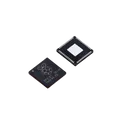
RP2040
RP2040 chip for Raspberry Pi Pico - ARM® Cortex®-M0+ MCU 32-Bit The RP2040 is a high-performance, low-cost microcontroller built around two ARM Cortex-M0+ cores. It is optimized for flexibility, ease of use, and deterministic real-time performance. Unlike many microcontrollers, it includes a unique programmable I/O subsystem (PIO), allowing custom hardware interfaces without extra components. Key Features Processing Dual-core ARM Cortex-M0+ processors Up to 133 MHz clock speed Efficient integer performance with low power consumption Memory 264 KB on-chip SRAM External QSPI flash support (typically 2 MB–16 MB depending on board) Programmable I/O (PIO) 2 PIO blocks, each with 4 state machines Enables custom protocols (e.g., SPI, I2C, UART, WS2812, VGA, etc.) Offloads timing-critical tasks from CPU 🔗 Connectivity Interfaces 2× UART 2× SPI 2× I2C USB 1.1 controller (device or host support) 16× PWM channels Analog Features 12-bit ADC (up to 5 channels, including internal temperature sensor) Power & Voltage Operating voltage: 1.8V – 3.3V Low-power modes available Package Options QFN-56 (7×7 mm) Development Ecosystem Supports C/C++ SDK MicroPython and CircuitPython support Strong community and documentation Typical Applications Embedded systems and IoT devices Robotics and automation DIY electronics and prototyping USB devices (HID, MIDI, etc.) Custom communication interfaces using PIO #CommonPartsLibrary #IntegratedCircuit #Microcontroller... show more1.1k Uses
12 Stars
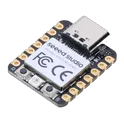
Seeed Studio XIAO RP2040
The Seeed Studio XIAO RP2040 is as small as the Seeed Studio XIAO SAMD21 but it's more powerful. On one hand, it carries the powerful Dual-core RP2040 processor that can flexible clock running up to 133 MHz which is a low-power microcontrollers. On the Seeed Studio XIAO RP2040 there is also 264KB of SRAM, and 2MB of on-board Flash memory which can provide more program to save and run. On the other hand, this little board has good performance in processing but needs less power. All in all, it is designed in a tiny size as small as a thumb(20x17.5mm) and can be used for wearable devices and small projects. #RP2040 #PICO #XIAO #SeedStudio... show more530 Uses
12 Stars
ESP32-S3-MINI-1-N8
ESP32-S3-MINI-1-N8 is a compact, low-power Wi-Fi and Bluetooth module from Espressif Systems based on the ESP32-S3 SoC. It integrates a dual-core Xtensa LX7 processor, 8 MB flash memory, crystal oscillator, RF matching circuitry, and a PCB antenna in a small SMD package, making it ideal for IoT devices, smart home products, industrial automation, HMI applications, AIoT edge devices, and USB-connected embedded systems. Key Features Dual-core 32-bit Xtensa LX7 CPU Up to 240 MHz operating frequency Includes single-precision floating-point unit (FPU) for enhanced processing performance. Integrated Memory 8 MB Quad SPI Flash (N8 variant) 512 KB SRAM 384 KB ROM 16 KB RTC SRAM. Wireless Connectivity 2.4 GHz Wi-Fi 4 (802.11 b/g/n) Data rates up to 150 Mbps Bluetooth 5 LE with Bluetooth Mesh support Simultaneous Wi-Fi and Bluetooth operation through an integrated coexistence mechanism. Rich Peripheral Set Up to 39 GPIOs USB 2.0 OTG USB Serial/JTAG SPI, I²C, I²S, UART PWM, MCPWM SDIO Host ADC Touch sensing Temperature sensor TWAI® (CAN 2.0 compatible) Timers and watchdogs. Integrated Components On-board 40 MHz crystal oscillator PCB antenna RF matching network Compact certified module design. Operating Conditions Supply voltage: 3.0 V to 3.6 V Operating temperature: −40°C to +85°C. Compliance RoHS and REACH compliant RF-certified module for simplified product development. #RF_transceiver #Module #Esp32... show more619 Uses
0 Stars
Seeed Studio XIAO ESP32C6
Seeed Studio XIAO ESP32C6 is powered by the highly-integrated ESP32-C6 SoC, built on two 32-bit RISC-V processors, with a high-performance (HP) processor with running up to 160 MHz, and a low-power (LP) 32-bit RISC-V processor, which can be clocked up to 20 MHz. There are 512KB SRAM and 4 MB Flash on the chip, allowing for more programming space, and binging more possibilities to the IoT control scenarios.... show more434 Uses
11 Stars
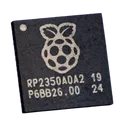
RP2350B
Two 150MHz Arm Cortex-M33 cores, with floating point and DSP support, 48 GPIOs, no FLASH, 520KB of on-chip SRAM, Arm TrustZone for Cortex-M, 8KB OTP memory,SHA-256 acceleration 10×10mm, QFN80 package pico 2 #pico2 #pico #mcu #RPi #raspberry #pi #arm... show more120 Uses
0 Stars
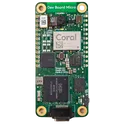
Coral_Dev_Board_Micro
A microcontroller board with a camera, mic, and Coral Edge TPU. Dual-core i.MX RT1176 MCU Cortex-M7 (@800 MHz) and a Cortex-M4 (@400 MHz) 2 MB of built-in SRAM 64 MB of SDRAM More than 1 GB of flash memory Embedded Evaluation Board #coral #google #Edge #TPU #coprocessor #no3d #RT1176... show more29 Uses
1 Star
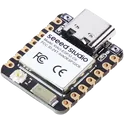
Seeed Studio XIAO RP2040
The Seeed Studio XIAO RP2040 is as small as the Seeed Studio XIAO SAMD21 but it's more powerful. On one hand, it carries the powerful Dual-core RP2040 processor that can flexible clock running up to 133 MHz which is a low-power microcontrollers. On the Seeed Studio XIAO RP2040 there is also 264KB of SRAM, and 2MB of on-board Flash memory which can provide more program to save and run. On the other hand, this little board has good performance in processing but needs less power. All in all, it is designed in a tiny size as small as a thumb(20x17.5mm) and can be used for wearable devices and small projects. #RP2040 #PICO #XIAO #SeedStudio... show more24 Uses
1 Star
RP2354B
Two 150MHz Arm Cortex-M33 cores, with floating point and DSP support, 48 GPIOs, 2MB FLASH, 520KB of on-chip SRAM, Arm TrustZone for Cortex-M, 8KB OTP memory,SHA-256 acceleration 10×10mm, QFN80 package pico 2 #pico2 #pico #mcu #RPi #raspberry #pi #arm... show more59 Uses
0 Stars
RP2354A
Two 150MHz Arm Cortex-M33 cores, with floating point and DSP support, 30 GPIOs, 2MB FLASH, 520KB of on-chip SRAM, Arm TrustZone for Cortex-M, 8KB OTP memory,SHA-256 acceleration 7×7mm, QFN60 package pico 2 #pico2 #pico #mcu #RPi #raspberry #pi #arm... show more54 Uses
1 Star
RP2040
133MHz LQFN-56(7x7) Microcontrollers (MCU/MPU/SOC) ROHS RP2040 The RP2040 is a high-performance, low-cost 32-bit microcontroller developed by Raspberry Pi Ltd.. It features dual ARM Cortex-M0+ processor cores, flexible digital interfaces, and a unique Programmable I/O (PIO) subsystem that enables custom hardware protocols and timing-critical applications. The device is widely used in embedded systems, IoT devices, robotics, industrial control, consumer electronics, and educational projects. Key Features Dual ARM Cortex-M0+ CPU cores operating up to 133 MHz (up to 200 MHz under specific conditions) 264 KB on-chip SRAM organized in six independent memory banks External QSPI Flash interface with Execute-In-Place (XIP) support and up to 16 MB Flash memory capability 30 multifunction GPIO pins with extensive peripheral multiplexing 2 × UART interfaces 2 × SPI controllers 2 × I²C controllers 16 PWM channels for motor control and signal generation USB 1.1 Host and Device support with integrated PHY 12-bit ADC with four external analog inputs and internal temperature sensor, up to 500 ksps sampling rate 12-channel DMA controller for efficient data transfers Programmable I/O (PIO) subsystem with 8 state machines for implementing custom communication interfaces and precise timing applications Integrated PLLs and programmable LDO regulator for clock and power management Operating voltage range: 1.8 V to 3.3 V Available in a compact 7 mm × 7 mm QFN-56 package Typical Applications IoT and connected devices Industrial automation Robotics and motor control Human-machine interfaces (HMI) Consumer electronics USB peripherals Sensor data acquisition systems Educational and maker projects Custom communication protocol implementations using PIO #CommonPartsLibrary #IntegratedCircuit #Microcontroller... show more155 Uses
0 Stars
STM32N657X0H3Q
High performance Arm Cortex-M55 MCU, 800MHz, 4.2MB SRAM, Neural-ART accelerator 600 GOPS, NeoChrom GPU, JPEG Codec, H-264 enc, HW crypto - Microcontroller IC 264-VFBGA (14x14) #CommonPartsLibrary #IntegratedCircuit #Microcontroller... show more65 Uses
0 Stars
STM32F405RGT6
ARM® Cortex®-M4 series Microcontroller IC 32-Bit Single-Core 168MHz 1MB (1M x 8) FLASH 64-LQFP (10x10) Arm® Cortex®-M4 32b MCU+FPU, 210DMIPS, up to 1MB flash/192+4KB RAM, USB OTG HS/FS, Ethernet, 17 TIMs, 3 ADCs, 15 comm. interfaces, and camera Includes ST state-of-the-art patented technology • Core: Arm® 32-bit Cortex®-M4 CPU with FPU, Adaptive real-time accelerator (ART Accelerator) allowing 0-wait state execution from flash memory, frequency up to 168 MHz, memory protection unit, 210 DMIPS/ 1.25 DMIPS/MHz (Dhrystone 2.1), and DSP instructions • Memories – Up to 1 Mbyte of flash memory – Up to 192+4 Kbytes of SRAM including 64- Kbyte of CCM (core coupled memory) data RAM – 512 bytes of OTP memory – Flexible static memory controller supporting CompactFlash™, SRAM, PSRAM, NOR and NAND memories • LCD parallel interface, 8080/6800 modes • Clock, reset, and supply management – 1.8 V to 3.6 V application supply and I/Os – POR, PDR, PVD and BOR – 4-to-26 MHz crystal oscillator – Internal 16 MHz factory-trimmed RC (1% accuracy) – 32 kHz oscillator for RTC with calibration – Internal 32 kHz RC with calibration • Low-power operation – Sleep, Stop, and Standby modes –VBAT supply for RTC, 20×32-bit backup registers + optional 4 KB backup SRAM • 3×12-bit, 2.4 MSPS A/D converters: up to 24 channels and 7.2 MSPS in triple interleaved mode • 2×12-bit D/A converters • General-purpose DMA: 16-stream DMA controller with FIFOs and burst support • Up to 17 timers: up to twelve 16-bit and two 32- bit timers up to 168 MHz, each with up to 4 IC/OC/PWM or pulse counter and quadrature (incremental) encoder input • Debug mode – Serial wire debug (SWD) & JTAG interfaces – Cortex-M4 Embedded Trace Macrocell™ • Up to 140 I/O ports with interrupt capability – Up to 136 fast I/Os up to 84 MHz – Up to 138 5 V-tolerant I/Os • Up to 15 communication interfaces – Up to 3 × I2C interfaces (SMBus/PMBus) – Up to 4 USARTs/2 UARTs (10.5 Mbit/s, ISO 7816 interface, LIN, IrDA, modem control) – Up to 3 SPIs (42 Mbits/s), 2 with muxed full-duplex I2S to achieve audio class accuracy via internal audio PLL or external clock – 2 × CAN interfaces (2.0B Active) – SDIO interface • Advanced connectivity – USB 2.0 full-speed device/host/OTG controller with on-chip PHY – USB 2.0 high-speed/full-speed device/host/OTG controller with dedicated DMA, on-chip full-speed PHY and ULPI – 10/100 Ethernet MAC with dedicated DMA: supports IEEE 1588v2 hardware, MII/RMII #commonpartslibrary #integratedcircuit #microcontroller... show more74 Uses
1 Star
STM32L432KBU6
Ultra-low-power Arm® Cortex®-M4 32-bit MCU+FPU, 100DMIPS, up to 256KB Flash, 64KB SRAM, USB FS, LCD, ext. SMPS #Microcontrollers #stm32 #commonpartslibrary... show more77 Uses
0 Stars
STM32F407VGT6
ARM Microcontrollers - MCU ARM M4 1024 FLASH 168 Mhz 192kB SRAM 100-LQFP (14x14) Arm® Cortex®-M4 32b MCU+FPU, 210DMIPS, up to 1MB Flash/192+4KB RAM, USB OTG HS/FS, Ethernet, 17 TIMs, 3 ADCs, 15 comm. interfaces & camera • Core: Arm® 32-bit Cortex®-M4 CPU with FPU, Adaptive real-time accelerator (ART Accelerator) allowing 0-wait state execution from Flash memory, frequency up to 168 MHz, memory protection unit, 210 DMIPS/ 1.25 DMIPS/MHz (Dhrystone 2.1), and DSP instructions • Memories – Up to 1 Mbyte of Flash memory – Up to 192+4 Kbytes of SRAM including 64- Kbyte of CCM (core coupled memory) data RAM – 512 bytes of OTP memory – Flexible static memory controller supporting Compact Flash, SRAM, PSRAM, NOR and NAND memories • LCD parallel interface, 8080/6800 modes • Clock, reset and supply management – 1.8 V to 3.6 V application supply and I/Os – POR, PDR, PVD and BOR – 4-to-26 MHz crystal oscillator – Internal 16 MHz factory-trimmed RC (1% accuracy) – 32 kHz oscillator for RTC with calibration – Internal 32 kHz RC with calibration • Low-power operation – Sleep, Stop and Standby modes –VBAT supply for RTC, 20×32 bit backup registers + optional 4 KB backup SRAM • 3×12-bit, 2.4 MSPS A/D converters: up to 24 channels and 7.2 MSPS in triple interleaved mode • 2×12-bit D/A converters • General-purpose DMA: 16-stream DMA controller with FIFOs and burst support • Up to 17 timers: up to twelve 16-bit and two 32- bit timers up to 168 MHz, each with up to 4 IC/OC/PWM or pulse counter and quadrature (incremental) encoder input • Debug mode – Serial wire debug (SWD) & JTAG interfaces – Cortex-M4 Embedded Trace Macrocell™ • Up to 140 I/O ports with interrupt capability – Up to 136 fast I/Os up to 84 MHz – Up to 138 5 V-tolerant I/Os • Up to 15 communication interfaces – Up to 3 × I2C interfaces (SMBus/PMBus) – Up to 4 USARTs/2 UARTs (10.5 Mbit/s, ISO 7816 interface, LIN, IrDA, modem control) – Up to 3 SPIs (42 Mbits/s), 2 with muxed full-duplex I2S to achieve audio class accuracy via internal audio PLL or external clock – 2 × CAN interfaces (2.0B Active) – SDIO interface • Advanced connectivity – USB 2.0 full-speed device/host/OTG controller with on-chip PHY – USB 2.0 high-speed/full-speed device/host/OTG controller with dedicated DMA, on-chip full-speed PHY and ULPI – 10/100 Ethernet MAC with dedicated DMA: supports IEEE 1588v2 hardware, MII/RMII #CommonPartsLibrary #IntegratedCircuit #Microcontroller #STM32F407... show more56 Uses
0 Stars
STM32G491RET6
ARM® Cortex®-M4F STM32G4 Microcontroller IC 32-Bit 170MHz 512KB (512K x 8) FLASH 64-LQFP (10x10) The STM32G491RET6 from STMicroelectronics is a high-performance 32-bit microcontroller based on the Arm® Cortex®-M4 core with Floating Point Unit (FPU), designed for advanced embedded applications requiring high computational performance, precise analog processing, and real-time control. It belongs to the STM32G4 series and integrates enhanced analog peripherals, motor-control timers, communication interfaces, security features, and hardware accelerators such as CORDIC and FMAC. The device operates at up to 170 MHz, provides 512 KB Flash memory, and includes 96 KB SRAM, making it suitable for applications such as motor control, digital power conversion, industrial automation, robotics, and embedded control systems. Key Features Core: Arm® Cortex®-M4 32-bit CPU with FPU, DSP instructions, and MPU Maximum CPU Frequency: Up to 170 MHz (up to 213 DMIPS) Memory: 512 KB Flash memory with ECC support 96 KB SRAM with parity checking features Quad-SPI memory interface Operating Voltage: 1.71 V to 3.6 V Package: LQFP-64 Advanced Analog Features: 3 × 12-bit ADCs with high-speed conversion 4 × 12-bit DAC channels 4 × Rail-to-Rail operational amplifiers 4 × Fast analog comparators Internal voltage reference buffer Hardware Accelerators: CORDIC accelerator for trigonometric calculations FMAC (Filter Math Accelerator) for digital filtering applications Timers & Motor Control: Advanced PWM timers for motor-control applications Multiple 16-bit and 32-bit timers Support for encoder and PWM control Communication Interfaces: 2 × FDCAN interfaces 5 × USART/UART 3 × SPI interfaces 3 × I²C interfaces USB 2.0 Full-Speed interface SAI audio interface Security Features: True Random Number Generator (TRNG) CRC calculation unit Unique device ID Debug & Programming: SWD and JTAG debugging support Typical Applications Motor control and BLDC controllers Digital power converters Industrial automation equipment Robotics and motion control Smart sensors and embedded control systems Power management applications #STM32G491RET6 #STM32G4 #STMicroelectronics #ARM_CortexM4 #Microcontroller #MCU #EmbeddedSystems #MotorControl #DigitalPower #IndustrialAutomation #Robotics #IoT #ElectronicsDesign #PCBDesign... show more33 Uses
0 Stars
STM32F103C8T6
ARM® Cortex® M3 STM32F1 Microcontroller IC 32-Bit Single-Core 72MHz 64KB (64K x 8) FLASH Medium-density performance line Arm®-based 32-bit MCU with 64 or 128 KB Flash, USB, CAN, 7 timers, 2 ADCs, 9 com. interfaces Arm® 32-bit Cortex®-M3 CPU core – 72 MHz maximum frequency, 1.25 DMIPS/MHz (Dhrystone 2.1) performance at 0 wait state memory access – Single-cycle multiplication and hardware division • Memories – 64 or 128 Kbytes of Flash memory – 20 Kbytes of SRAM • Clock, reset and supply management – 2.0 to 3.6 V application supply and I/Os – POR, PDR, and programmable voltage detector (PVD) – 4 to 16 MHz crystal oscillator – Internal 8 MHz factory-trimmed RC – Internal 40 kHz RC – PLL for CPU clock – 32 kHz oscillator for RTC with calibration • Low-power – Sleep, Stop and Standby modes – VBAT supply for RTC and backup registers • 2x 12-bit, 1 µs A/D converters (up to 16 channels) – Conversion range: 0 to 3.6 V – Dual-sample and hold capability – Temperature sensor • DMA – 7-channel DMA controller – Peripherals supported: timers, ADC, SPIs, I 2Cs and USARTs • Up to 80 fast I/O ports – 26/37/51/80 I/Os, all mappable on 16 external interrupt vectors and almost all 5 V-tolerant Debug mode: – Serial wire debug (SWD) and JTAG interfaces • Seven timers – Three 16-bit timers, each with up to 4 IC/OC/PWM or pulse counter and quadrature (incremental) encoder input – 16-bit, motor control PWM timer with dead-time generation and emergency stop – Two watchdog timers (independent and window) – SysTick timer 24-bit downcounter • Up to nine communication interfaces – Up to two I2C interfaces (SMBus/PMBus®) – Up to three USARTs (ISO 7816 interface, LIN, IrDA capability, modem control) – Up to two SPIs (18 Mbit/s) – CAN interface (2.0B Active) – USB 2.0 full-speed interface • CRC calculation unit, 96-bit unique ID • Packages are ECOPACK #commonpartslibrary #integratedcircuit #microcontroller #stm32f1... show more35 Uses
0 Stars
S32K344EHT1VPBST
ARM® Cortex®-M7 S32K3 Microcontroller IC 32-Bit 160MHz 4MB (4M x 8) FLASH 172-QFP (16x16) S32K344EHT1VPBST is an automotive-grade 32-bit microcontroller from NXP Semiconductors based on the Arm Cortex-M7 core architecture. The device is designed for high-performance real-time automotive body, chassis, powertrain, and domain control applications requiring functional safety, security, and advanced communication interfaces. It integrates high-speed processing capability, extensive peripheral integration, hardware security acceleration, and deterministic control functions suitable for safety-critical embedded systems. The microcontroller operates with an Arm Cortex-M7 CPU core running at high frequency with floating-point support and DSP extensions for computationally intensive applications. Integrated flash memory and SRAM provide embedded program and data storage optimized for automotive embedded control systems. The device supports hardware-assisted security features including secure boot, cryptographic acceleration, and tamper protection for secure automotive network communication and firmware integrity. The S32K344EHT1VPBST includes multiple communication peripherals supporting CAN FD, FlexCAN, LIN, SPI, UART, I2C, and Ethernet interfaces for distributed automotive networking and gateway applications. Advanced analog integration includes ADC modules, timers, PWM generators, watchdogs, and motor-control-oriented peripherals enabling precision sensing and control functionality. The device supports functional safety development aligned with ISO 26262 requirements and includes error correction, memory protection, fault monitoring, and safety management features. Power management functionality supports low-power operating modes for energy-efficient automotive electronic control units. The microcontroller is housed in a thermally enhanced LQFP package suitable for automotive operating environments with extended temperature capability and AEC-Q100 qualification for automotive reliability standards. #commonpartslibrary #integratedcircuit #microcontroller #arm #m7... show more25 Uses
1 Star

S80KS5123GABHI020
PSRAM (Pseudo SRAM) Memory IC 512Mbit SPI - Octal I/O 200 MHz 35 ns 24-FBGA (6x8) #CommonPartsLibrary #IntegratedCircuit #Memory #S80KS5123... show more29 Uses
0 Stars
MIMXRT1189XVM8C
ARM® Cortex®-M33F, ARM® Cortex®-M7F RT1180 Microcontroller IC 32-Bit Dual-Core 240MHz, 800MHz 160KB (160K x 8) ROM 289-LFBGA (14x14) The MIMXRT1189XVM8C is a high-performance crossover microcontroller from the NXP Semiconductors i.MX RT1180 family, designed for advanced industrial and real-time embedded applications. It combines the real-time performance of a microcontroller with the connectivity and security features typically found in application processors. The device integrates dual Arm® Cortex® cores, high-speed networking with Time-Sensitive Networking (TSN), and advanced EdgeLock® security technology, making it ideal for industrial automation, robotics, motor control, automotive gateways, and Industry 4.0 systems. Key Features Dual-core architecture: Arm® Cortex®-M7 core running up to 800 MHz Arm® Cortex®-M33 core running up to 300 MHz Integrated Gigabit TSN Ethernet switch for deterministic real-time networking Supports industrial Ethernet protocols including: EtherCAT PROFINET Ethernet/IP CC-Link IE Advanced EdgeLock® Secure Enclave for secure boot, cryptography, and tamper detection Up to 1.5 MB on-chip SRAM with ECC protection High-speed external memory interfaces Multiple communication peripherals: CAN-FD UART SPI I2C USB Ethernet High-resolution ADCs and advanced PWM/timer modules Supports MCUXpresso SDK and Zephyr RTOS Industrial temperature range operation from -40°C to +125°C BGA package optimized for compact industrial designs #Commonpartlibrary #Microcontroller #MIMXRT1189... show more15 Uses
0 Stars



Page 1 of 33
Next