
Doug ESP32-C3-WROOM-02 Processor
Welcome to your new project. Imagine what you can build here.... show more1 Use
0 Stars
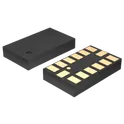
ADXL345BCCZ-RL
Accelerometer X, Y, Z Axis ±2g, 4g, 8g, 16g 0.05Hz ~ 1.6kHz 14-LGA (3x5) The ADXL345 is a small, thin, ultralow power, 3-axis accelerometer with high resolution (13-bit) measurement at up to ±16 g. Digital output data is formatted as 16-bit twos complement and is accessible through either a SPI (3- or 4-wire) or I2C digital interface. The ADXL345 is well suited for mobile device applications. It measures the static acceleration of gravity in tilt-sensing applications, as well as dynamic acceleration resulting from motion or shock. Its high resolution (3.9 mg/LSB) enables measurement of inclination changes less than 1.0°. Several special sensing functions are provided. Activity and inactivity sensing detect the presence or lack of motion by comparing the acceleration on any axis with user-set thresholds. Tap sensing detects single and double taps in any direction. Free-fall sensing detects if the device is falling. These functions can be mapped individually to either of two interrupt output pins. An integrated memory management system with a 32-level first in, first out (FIFO) buffer can be used to store data to minimize host processor activity and lower overall system power consumption. Low power modes enable intelligent motion-based power management with threshold sensing and active acceleration measurement at extremely low power dissipation. The ADXL345 is supplied in a small, thin, 3 mm × 5 mm × 1 mm, 14-lead, plastic package. ► Ultralow power: as low as 23 µA in measurement mode and 0.1 µA in standby mode at VS = 2.5 V (typical) ► Power consumption scales automatically with bandwidth ► User-selectable resolution ► Fixed 10-bit resolution ► Full resolution, where resolution increases with g range, up to 13-bit resolution at ±16 g (maintaining 4 mg/LSB scale factor in all g ranges) ► Embedded memory management system with FIFO technology minimizes host processor load ► Single tap/double tap detection ► Activity/inactivity monitoring ► Free-fall detection ► Supply voltage range: 2.0 V to 3.6 V ► I/O voltage range: 1.7 V to VS ► SPI (3- and 4-wire) and I2C digital interfaces ► Flexible interrupt modes mappable to either interrupt pin ► Measurement ranges selectable via serial command ► Bandwidth selectable via serial command ► Wide temperature range (−40°C to +85°C) ► 10,000 g shock survival ► Pb free/RoHS compliant #commonpartslibrary #sensor #transducer #accelerometer... show more202 Uses
2 Stars
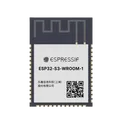
ESP32-S3-WROOM-1-N16R8
Bluetooth, WiFi 802.11b/g/n, Bluetooth v5.0 Transceiver Module 2.4GHz PCB Trace Surface Mount The ESP32-S3-WROOM-1-N16R8 is a high-performance Wi-Fi + Bluetooth Low Energy (BLE) module developed by Espressif Systems. It is built around the ESP32-S3 SoC, featuring a dual-core Xtensa LX7 32-bit processor running up to 240 MHz. This module integrates 16 MB Flash memory and 8 MB PSRAM, making it suitable for memory-intensive applications such as AI, image processing, and advanced IoT systems. It also includes an onboard PCB trace antenna, RF circuitry, crystal oscillator, and power management components—allowing designers to quickly integrate wireless connectivity into compact embedded designs. Key Features Processing & Memory Dual-core Xtensa LX7 CPU, up to 240 MHz 384 KB ROM, 512 KB SRAM + 16 KB RTC SRAM 16 MB Flash (Quad SPI) 8 MB PSRAM (Octal/Quad SPI) Connectivity 2.4 GHz Wi-Fi (802.11 b/g/n) Bluetooth 5 (LE) + Mesh support Integrated PCB antenna Peripherals & Interfaces Up to 36 GPIOs Interfaces: UART, SPI, I2C, I2S, PWM, ADC, USB OTG Built-in USB Serial/JTAG support Supports touch sensors, timers, watchdogs, CAN (TWAI) Electrical Characteristics Supply voltage: 3.0 V – 3.6 V TX power: up to ~20.5 dBm RX sensitivity: ~-103.5 dBm Operating temp: −40 °C to +65 °C (typical) Advanced Capabilities Optimized for AI acceleration (vector instructions) Suitable for voice recognition, image processing, and edge AI Low-power modes for battery-operated devices| Typical Applications IoT devices and sensor hubs Smart home & home automation AIoT (voice/image recognition) Industrial automation & monitoring Wearables and health devices USB-connected embedded systems #Module #RF-Transceiver #ESP32-S3... show more2.4k Uses
6 Stars
SIWG917Y111MGABAR
Bluetooth, WiFi 802.11b/g/n/ax, Bluetooth v5.4 Transceiver Module 2.4GHz Integrated, Chip Surface Mount Silicon Labs SiWG917 module is our lowest power Wi-Fi 6 plus Bluetooth LE 5.4, ideal for ultra-low power IoT wireless devices using Wi-Fi®, Bluetooth, Matter, and IP networking for secure cloud connectivity. It is optimal for developing battery operated devices that need long battery life. SiWG917 module includes an ultra-low power Wi-Fi 6 plus Bluetooth Low Energy (LE) 5.4 wireless CPU subsystem, and an integrated micro-controller (MCU) application subsystem, security, peripherals and power management subsystem all in a single 16 x 21.1 x 2.3 mm package. The wireless subsystem consists of a multi-threaded Network Wireless Processor (NWP) running up to 160 MHz, baseband digital signal processing, analog front end, 2.4 GHz RF transceiver and integrated power amplifier. The application subsystem consists of an ARM® Cortex®-M4 running up to 180 MHz, embedded SRAM, flash, ultra-low power sensor hub, and matrix vector processor. The ARM® Cortex®-M4 is dedicated for peripheral and application-related processing, while the NWP runs the wireless and networking stacks on independent threads, thus providing a fully integrated solution that is ready for a wide range of embedded wireless IoT applications. The modules come with modular radio type approvals for various countries, including USA (FCC), Canada (IC/ISED) and Japan (MIC), and are in compliance with the relevant EN standards (including EN 300 328 v2.2.2) for the conformity with the directives and regulations in EU and UK. KEY FEATURES • Wi-Fi 6 Single Band 2.4 GHz 20 MHz 1x1 stream IEEE 802.11 b/g/n/ax • Bluetooth LE 5.4 • Single chip Matter Over Wi-Fi Solution • ARM® Cortex® M4 Processor with FPU subsystem up to 180 MHz with rich set of Digital and Analog Peripherals. • Wi-Fi 6 Benefits: TWT for improved efficiency and longer battery life, MUMIMO/OFDMA for Higher Throughput, network capacity and low latency • Best in Class Device and Wireless Security • WLAN Tx power up to +17.5 dBm with integrated PA • Bluetooth LE Tx power up to +17 dBm with integrated PA • WLAN Rx sensitivity as low as -95.5 dBm • Wi-Fi 4 Standby Associated mode current: 71 μA @ 1-second listen interval • Embedded Flash option up to 8 MB/ optional external Flash up to 16 MB • Embedded PSRAM option up to 2 MB/ optional external PSRAM option up to 16 MB • Ultra-low power sensor hub peripherals • Matrix Vector Processor (MVP) • Embedded Wi-Fi, Bluetooth LE, Matter, and networking stacks supporting wireless coexistence • Three software-configurable MCU application memory options for sharing the RAM between the wireless, system, and application (192/256/320 KB) • Operating temperature: -40 to +85 ºC • Operating supply range: 3.0 to 3.63 V • Supply voltage for GPIOs: 1.71 to 3.63 V #WiFi6 #BluetoothLE54 #IoTModule #WirelessSoC #SiliconLabs #EmbeddedSystems #SmartHome #IndustrialIoT #LowPowerDesign #RFModule #ConnectedDevices #EdgeComputing #MatterReady #PCBDesign #ElectronicsEngineering... show more1.4k Uses
0 Stars
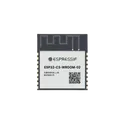
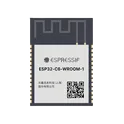
ESP32-C3-WROOM-02-N4
Bluetooth, WiFi 802.11b/g/n, Bluetooth v5.0 Transceiver Module 2.4GHz PCB Trace Surface Mount The ESP32-C3-WROOM-02-N4 is a compact, general-purpose Wi-Fi and Bluetooth Low Energy (BLE) module developed by Espressif Systems. It is built around the ESP32-C3 SoC and integrates RF components, crystal oscillator, flash memory, and PCB antenna in a single module. It is designed for a wide range of applications such as IoT devices, smart home systems, industrial automation, and consumer electronics, offering a balance of performance, low power consumption, and cost efficiency. Key Features MCU & Memory 32-bit RISC-V single-core processor up to 160 MHz 384 KB ROM 400 KB SRAM + 8 KB RTC SRAM Integrated 4 MB SPI flash (N4 variant) Connectivity 2.4 GHz Wi-Fi (802.11 b/g/n) Supports Station, SoftAP, and Station + SoftAP modes Bluetooth 5 (BLE) with mesh support Data rates up to 150 Mbps (Wi-Fi) Peripherals & Interfaces Up to 15 GPIOs Interfaces: SPI, UART, I2C, I2S LED PWM ADC (SAR) Timers & watchdog USB Serial/JTAG support TWAI® (CAN 2.0 compatible) #commonpartslibrary #transceiver #module #wireless #rf... show more1.1k Uses
1 Star
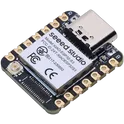
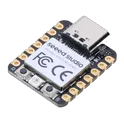
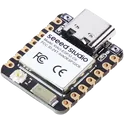
Seeed Studio XIAO ESP32S3
Seeed Studio XIAO ESP32S3 leverages 240MHz Xtensa 32-bit LX7 dual-core processor, supporting both WiFi and BLE 5.0 wireless connectivities, a 2.4GHz Rod antenna, allows for deep sleep mode with power consumption as low as 14μA while supporting lithium battery charging management. Ideal for the Internet of Things, Smart Homes, Wireless wearable devices, Robotics, etc. #SeeedStudio #xiao... show more846 Uses
16 Stars
ADXL373BCCZ-RL7
Accelerometer X, Y, Z Axis ±400g 160Hz ~ 2.56kHz 16-LGA (3x3.25) The ADXL373BCCZ-RL7 is an ultralow power, high-g digital MEMS accelerometer developed by Analog Devices for motion sensing and impact detection applications. The device is optimized for battery-powered and always-on systems requiring continuous acceleration monitoring with minimal power consumption. It supports selectable measurement ranges suitable for shock, vibration, and activity monitoring in industrial, wearable, medical, asset tracking, and IoT applications. The accelerometer integrates embedded motion detection features, a FIFO buffer, and interrupt capabilities to reduce host processor workload and overall system power consumption. Engineering Specification Device Type Ultralow power 3-axis digital MEMS accelerometer Manufacturer Analog Devices Inc. Manufacturer Part Number ADXL373BCCZ-RL7 Measurement Axes Three-axis acceleration sensing Acceleration Range Selectable full-scale ranges supporting high-g measurements up to ±400 g Output Interface SPI digital serial communication interface Resolution High-resolution digital acceleration output with integrated filtering and signal conditioning Power Supply Requirement Operates from a low-voltage DC supply suitable for portable and embedded systems Power Consumption Designed for extremely low current operation during measurement and wake-up monitoring modes Embedded Features Integrated activity detection Motion and impact sensing FIFO data buffering Interrupt generation Wake-up detection functionality Sampling and Performance Programmable output data rates and filtering options for optimized noise and bandwidth performance Operating Temperature Range Industrial temperature range suitable for harsh environmental applications Package Type LGA surface-mount package Mounting Style Surface mount technology Application Areas Impact event recording Condition monitoring Asset tracking Industrial sensing Wearable electronics Portable instrumentation Shock and vibration monitoring Always-on motion detection systems #commonpartslibrary #integratedcircuit #accelerometer #sensor... show more3 Uses
0 Stars
Seeed Studio XIAO RP2040
The Seeed Studio XIAO RP2040 is as small as the Seeed Studio XIAO SAMD21 but it's more powerful. On one hand, it carries the powerful Dual-core RP2040 processor that can flexible clock running up to 133 MHz which is a low-power microcontrollers. On the Seeed Studio XIAO RP2040 there is also 264KB of SRAM, and 2MB of on-board Flash memory which can provide more program to save and run. On the other hand, this little board has good performance in processing but needs less power. All in all, it is designed in a tiny size as small as a thumb(20x17.5mm) and can be used for wearable devices and small projects. #RP2040 #PICO #XIAO #SeedStudio... show more529 Uses
12 Stars
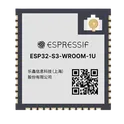
ESP32-S3-WROOM-1U-N16R8
Bluetooth, WiFi 802.11b/g/n, Bluetooth v5.0 Transceiver Module 2.4GHz Antenna Not Included, U.FL Surface Mount The ESP32-S3-WROOM-1U-N16R8 is a high-performance embedded module designed for IoT and edge computing applications, featuring integrated wireless connectivity and enhanced processing capabilities. Processor: Dual-core Xtensa LX7, up to 240 MHz Wireless Connectivity: Wi-Fi 2.4 GHz (802.11 b/g/n) Bluetooth LE 5.0 Memory Configuration (N16R8): 16 MB Flash memory 8 MB PSRAM Antenna Type: U.FL connector for external antenna (“1U” variant) Indicates support for an external antenna via U.FL connector Allows improved RF performance and flexible antenna placement #commonpartslibrary #rf #wireless #transceiver #module... show more663 Uses
9 Stars
Seeed Studio XIAO ESP32C6
Seeed Studio XIAO ESP32C6 is powered by the highly-integrated ESP32-C6 SoC, built on two 32-bit RISC-V processors, with a high-performance (HP) processor with running up to 160 MHz, and a low-power (LP) 32-bit RISC-V processor, which can be clocked up to 20 MHz. There are 512KB SRAM and 4 MB Flash on the chip, allowing for more programming space, and binging more possibilities to the IoT control scenarios.... show more430 Uses
11 Stars
ESP32-S3-MINI-1-N8
ESP32-S3-MINI-1-N8 is a compact, low-power Wi-Fi and Bluetooth module from Espressif Systems based on the ESP32-S3 SoC. It integrates a dual-core Xtensa LX7 processor, 8 MB flash memory, crystal oscillator, RF matching circuitry, and a PCB antenna in a small SMD package, making it ideal for IoT devices, smart home products, industrial automation, HMI applications, AIoT edge devices, and USB-connected embedded systems. Key Features Dual-core 32-bit Xtensa LX7 CPU Up to 240 MHz operating frequency Includes single-precision floating-point unit (FPU) for enhanced processing performance. Integrated Memory 8 MB Quad SPI Flash (N8 variant) 512 KB SRAM 384 KB ROM 16 KB RTC SRAM. Wireless Connectivity 2.4 GHz Wi-Fi 4 (802.11 b/g/n) Data rates up to 150 Mbps Bluetooth 5 LE with Bluetooth Mesh support Simultaneous Wi-Fi and Bluetooth operation through an integrated coexistence mechanism. Rich Peripheral Set Up to 39 GPIOs USB 2.0 OTG USB Serial/JTAG SPI, I²C, I²S, UART PWM, MCPWM SDIO Host ADC Touch sensing Temperature sensor TWAI® (CAN 2.0 compatible) Timers and watchdogs. Integrated Components On-board 40 MHz crystal oscillator PCB antenna RF matching network Compact certified module design. Operating Conditions Supply voltage: 3.0 V to 3.6 V Operating temperature: −40°C to +85°C. Compliance RoHS and REACH compliant RF-certified module for simplified product development. #RF_transceiver #Module #Esp32... show more525 Uses
0 Stars
ESP32-C6-WROOM-1-N4
802.15.4 Bluetooth, Wi-Fi Bluetooth v5.0, ZigBee® Transceiver Module 2.4GHz PCB Trace Surface Mount The ESP32-C6-WROOM-1-N4 is based on the ESP32-C6 single-core RISC-V microcontroller, integrating advanced wireless standards and secure connectivity in a small module format. It is designed for next-generation IoT devices that require Wi-Fi 6 efficiency, mesh networking, and Bluetooth Low Energy support. Processor: 32-bit RISC-V single-core CPU (up to 160 MHz) Wireless Connectivity: Wi-Fi 6 (802.11ax, 2.4 GHz) Bluetooth LE 5.0 IEEE 802.15.4 (Thread / Zigbee support) Memory (N4 variant): 4 MB Flash Security: Secure boot Flash encryption Cryptographic hardware acceleration #commonpartslibrary #rf #wireless #transceiver #module #zigbee... show more386 Uses
3 Stars
RK3568
Application Processor integrating a quad-core Arm Cortex-A55 64-bit CPU operating at up to 2.0 GHz, an Arm Mali-G52 2EE GPU, and a 1 TOPS INT8 NPU. Supports DDR3/DDR3L/DDR4/LPDDR3/LPDDR4/LPDDR4X memory, 4K H.264/H.265/VP9 video decoding, 1080p60 H.264/H.265 video encoding, and interfaces including PCIe 3.0, SATA 3.0, USB 3.0/2.0, Gigabit Ethernet, HDMI 2.0, eDP 1.3, MIPI-CSI, MIPI-DSI, CAN, SDIO/eMMC, UART, SPI, I²C, and PWM. Packaged in a FCBGA636L (19 × 19 mm) package. Hashtags: #ApplicationProcessor #SoC #Rockchip #RK3568 #CortexA55 #MaliG52 #NPU #EmbeddedProcessor #AIoT #FCBGA636 #BGA636 #DDR4 #LPDDR4X #PCIe3 #USB3 #HDMI2 #GigabitEthernet... show more1 Use
0 Stars

CYPD3174-16SXQ
USB Type-C port controller, Cortex®-M0 processor, DFP CC with opto coupler feedback bootloader, SOIC-16 USBPD quickcharge SOIC*3.9x9.9mm*P1.27mm*... show more11 Uses
0 Stars
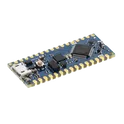
Arduino Nano Every Shield
Arduino Nano Every is based on the ATMega4809 AVR processor, flexible to the requirements of your design. It can be used in a breadboard when mounting pin headers, or as a SMT directly soldered on a PCB thanks to its castellated pads. #arduino #nano #every... show more290 Uses
2 Stars
ESP32-C6-WROOM-1-N8
802.15.4, Bluetooth, WiFi Bluetooth v5.0, Zigbee Transceiver Module 2.4GHz PCB Trace Surface Mount The ESP32-C6-WROOM-1-N8 integrates a 32-bit RISC-V single-core processor running up to 160 MHz, along with 8 MB of embedded SPI flash memory. It supports multiple wireless communication protocols, including: Wi-Fi 6 (802.11ax) in the 2.4 GHz band for improved efficiency and lower latency Bluetooth Low Energy (BLE 5) for short-range communication IEEE 802.15.4 for protocols such as Thread and Zigbee The module features a built-in PCB antenna, RF circuitry, crystal oscillator, and passive components, making it a complete solution that simplifies hardware design. It provides a wide range of GPIO pins and peripheral interfaces such as UART, SPI, I2C, PWM, ADC, and more, enabling flexible integration with sensors and external devices. Designed for low power consumption, it includes multiple power-saving modes, making it suitable for battery-powered applications. Typical Applications Smart home and IoT devices Wireless sensors and control systems Industrial automation Smart lighting and energy management Matter-compatible devices (via Thread support)... show more193 Uses
0 Stars
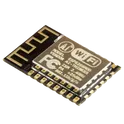
ESP-12F
WiFi 802.11b/g/n Transceiver Module 2.4GHz ~ 2.5GHz Integrated, Trace Surface Mount The ESP-12F is a compact WiFi module based on the ESP8266EX, widely used in IoT and embedded systems due to its low cost and built-in networking capabilities. Integrated WiFi (2.4 GHz) Supports 802.11 b/g/n Built-in TCP/IP stack (no external WiFi processor needed) Microcontroller + WiFi in one Powered by the ESP8266EX SoC Can run user applications directly (not just a WiFi modem) Flash Memory Typically 4 MB SPI flash (varies by version) GPIO Support Multiple multifunction pins: Digital I/O PWM I2C SPI UART ADC (1 channel) Size: ~16 mm × 24 mm Mounting: Castellated SMD module Antenna: Built-in PCB trace antenna (requires proper keepout zone) Power Requirements Operating Voltage: 3.0V – 3.6V (typical 3.3V) Current Consumption: Idle: ~70 mA Peak (TX): up to ~300 mA Common Interfaces UART – programming and debugging SPI – peripheral communication I2C (software-based) GPIO – general-purpose control #commonpartslibrary #transceiver #module #wireless #rf #wifi... show more185 Uses
0 Stars
STPMIC1APQR
Highly integrated power management IC for micro processor units 44-WFQFN (5x6) #CommonPartsLibrary #IntegratedCircuit #PowerManagement #STPMIC1... show more93 Uses
1 Star



Page 1 of 27
Next