
24 Seconds Shot Clock
24-Second TTL Shot Clock with Up/Down BCD Counters and 7-Segment Display... show more0 Uses
0 Stars
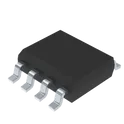
STM32G031J6M6
ARM® Cortex®-M0+ STM32G0 Microcontroller IC 32-Bit Single-Core 64MHz 32KB (32K x 8) FLASH 8-SOIC The STM32G031J6M6 is a compact, low-power 32-bit microcontroller from STMicroelectronics, based on the Arm® Cortex®-M0+ core running at up to 64 MHz. It belongs to the STM32G0 series, designed for cost-sensitive and energy-efficient embedded applications. This MCU integrates essential peripherals, memory, and system functions into a small package (8-pin SOIC), making it suitable for consumer electronics, industrial control, appliances, and IoT devices where space and power efficiency are critical. Key Features Core & Performance 32-bit Arm Cortex-M0+ CPU Up to 64 MHz clock frequency Memory Protection Unit (MPU) for improved reliability and security 💾 Memory 32 KB Flash memory (program storage) 8 KB SRAM Flash protection (read/write protection, secure area) Peripherals & Interfaces Communication: I2C (2x) SPI (2x) / I2S USART (2x) + Low-power UART 12-bit ADC (up to ~2.5 MSps, multiple channels) DMA controller (5 channels) Timers: Advanced PWM timer (motor control capable) General-purpose timers (16-bit & 32-bit) Low-power timers Watchdog timers RTC (Real-Time Clock) with VBAT backup Power & Efficiency Operating voltage: 1.7 V to 3.6 V Multiple low-power modes: Sleep, Stop, Standby, Shutdown Optimized for low energy consumption (battery-powered designs) I/O & Package Up to 44 GPIOs (depending on package) 6 GPIOs available in the 8-pin (J6M6) package 5V-tolerant I/O pins (select pins) Compact SOIC-8 package#commonpartslibrary #integratedcircuit #microcontroller... show more1.1k Uses
10 Stars
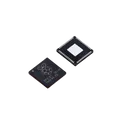
RP2040
RP2040 chip for Raspberry Pi Pico - ARM® Cortex®-M0+ MCU 32-Bit The RP2040 is a high-performance, low-cost microcontroller built around two ARM Cortex-M0+ cores. It is optimized for flexibility, ease of use, and deterministic real-time performance. Unlike many microcontrollers, it includes a unique programmable I/O subsystem (PIO), allowing custom hardware interfaces without extra components. Key Features Processing Dual-core ARM Cortex-M0+ processors Up to 133 MHz clock speed Efficient integer performance with low power consumption Memory 264 KB on-chip SRAM External QSPI flash support (typically 2 MB–16 MB depending on board) Programmable I/O (PIO) 2 PIO blocks, each with 4 state machines Enables custom protocols (e.g., SPI, I2C, UART, WS2812, VGA, etc.) Offloads timing-critical tasks from CPU 🔗 Connectivity Interfaces 2× UART 2× SPI 2× I2C USB 1.1 controller (device or host support) 16× PWM channels Analog Features 12-bit ADC (up to 5 channels, including internal temperature sensor) Power & Voltage Operating voltage: 1.8V – 3.3V Low-power modes available Package Options QFN-56 (7×7 mm) Development Ecosystem Supports C/C++ SDK MicroPython and CircuitPython support Strong community and documentation Typical Applications Embedded systems and IoT devices Robotics and automation DIY electronics and prototyping USB devices (HID, MIDI, etc.) Custom communication interfaces using PIO #CommonPartsLibrary #IntegratedCircuit #Microcontroller... show more1.1k Uses
12 Stars
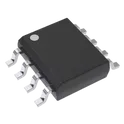
LMK1C1102PWR
Clock Clock Buffer IC 1:2 250 MHz 8-TSSOP (0.173", 4.40mm Width) #CommonPartsLibrary #IntegratedCircuit #Clock/Timing #Buffer #Driver #LMK1C1102... show more0 Uses
0 Stars
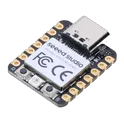
Seeed Studio XIAO RP2040
The Seeed Studio XIAO RP2040 is as small as the Seeed Studio XIAO SAMD21 but it's more powerful. On one hand, it carries the powerful Dual-core RP2040 processor that can flexible clock running up to 133 MHz which is a low-power microcontrollers. On the Seeed Studio XIAO RP2040 there is also 264KB of SRAM, and 2MB of on-board Flash memory which can provide more program to save and run. On the other hand, this little board has good performance in processing but needs less power. All in all, it is designed in a tiny size as small as a thumb(20x17.5mm) and can be used for wearable devices and small projects. #RP2040 #PICO #XIAO #SeedStudio... show more530 Uses
12 Stars
DS3231SN#
Real Time Clock (RTC) IC Clock/Calendar I2C, 2-Wire Serial 16-SOIC (0.295", 7.50mm Width) #CommonPartsLibrary #IntegratedCircuit #Clock/Timing #RTC #DS3231... show more480 Uses
1 Star
RV-3028-C7 32.768KHZ 1PPM-TA-QC
Real Time Clock (RTC) IC Clock/Calendar 2B, 43B I2C, 2-Wire Serial 8-WCDFN #CommonPartsLibrary #IntegratedCircuit #Clock/Timing #RTC... show more155 Uses
0 Stars
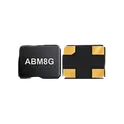
ABM8G-24.000MHZ-18-D2Y-T
24 MHz ±20ppm Crystal 18pF 60 Ohms 4-SMD, No Lead The ABM8G-24.000MHZ-18-D2Y-T is a compact 24.000 MHz surface-mount quartz crystal from Abracon's ABM8G series, designed to provide a stable and accurate clock reference for digital electronic systems. Housed in a miniature 3.2 × 2.5 mm, 4-pad SMD package, it is optimized for space-constrained applications while delivering reliable frequency performance over a wide operating temperature range. This crystal is commonly used in microcontrollers, wireless modules, communication equipment, networking devices, industrial electronics, and precision timing circuits. It operates in the fundamental mode with an 18 pF load capacitance, making it suitable for a broad range of oscillator circuits. Key Features 24.000 MHz fundamental-mode quartz crystal Compact 3.2 × 2.5 × 1.0 mm 4-pad SMD package 18 pF load capacitance ±20 ppm frequency tolerance ±30 ppm frequency stability Maximum 60 Ω ESR Wide operating temperature range: −40°C to +85°C Glass-sealed ceramic package for high reliability Compatible with standard IR reflow soldering processes Low-profile design suitable for compact PCB layouts Ideal for embedded systems, communications, wireless devices, and clock generation applications. #Abracon #QuartzCrystal #24MHz #ABM8G #SMDCrystal #TimingDevice #ClockSource #EmbeddedSystems #WirelessElectronics #IndustrialElectronics #PCBDesign #ElectronicsComponents... show more121 Uses
0 Stars
Seeed Studio XIAO RP2040
The Seeed Studio XIAO RP2040 is as small as the Seeed Studio XIAO SAMD21 but it's more powerful. On one hand, it carries the powerful Dual-core RP2040 processor that can flexible clock running up to 133 MHz which is a low-power microcontrollers. On the Seeed Studio XIAO RP2040 there is also 264KB of SRAM, and 2MB of on-board Flash memory which can provide more program to save and run. On the other hand, this little board has good performance in processing but needs less power. All in all, it is designed in a tiny size as small as a thumb(20x17.5mm) and can be used for wearable devices and small projects. #RP2040 #PICO #XIAO #SeedStudio... show more24 Uses
1 Star
CX3225SB16000D0GZJC1
16 MHz ±15ppm Crystal 8pF 60 Ohms 4-SMD, No Lead The CX3225SB16000D0GZJC1, manufactured by Kyocera AVX, is a 16.000 MHz crystal oscillator element designed to provide precise frequency reference for microcontrollers, communication ICs, and digital systems. It belongs to the CX3225SB series, known for compact size and stable frequency performance. Key Characteristics Type: Quartz crystal (passive frequency component) Frequency: 16 MHz Load Capacitance: 8 pF Frequency Stability: ±15 ppm Frequency Tolerance: ±15 ppm Operating Mode: Fundamental ESR (Equivalent Series Resistance): ~60–80 Ω Mechanical Details Package: 4-SMD, no-lead (surface mount) Size: 3.2 mm × 2.5 mm (3225 package) Height: ~0.6 mm (low profile) Operating Conditions Temperature Range: −25°C to +85°C Mounting Type: Surface mount (SMT) Function (Simple Explanation) This component: Generates a stable clock signal (16 MHz) Acts as the timing reference for MCUs, processors, or RF modules Works together with internal oscillator circuits inside ICs Microcontroller clock sources (e.g., ESP32, STM32, AVR) Communication modules Embedded systems Consumer electronics IoT devices #CommonPartsLibrary #Crystal #Oscillator #resonator... show more99 Uses
0 Stars
TLC555IDR
555 Type, Timer/Oscillator (Single) IC 2.1MHz 8-SOIC The TLC555IDR is a low-power CMOS timer device designed as a functional replacement for the standard bipolar 555 timer while providing significantly reduced supply current and improved operating efficiency. The device supports both astable and monostable operating modes and is commonly used for timing generation, pulse shaping, oscillation, PWM generation, delay circuits, and frequency generation applications. The CMOS architecture enables low power consumption, rail-to-rail output capability, and stable timing performance over a wide operating voltage range. The device is suitable for battery-powered systems, portable electronics, industrial controls, instrumentation, consumer products, and embedded electronic designs. The TLC555IDR is supplied in a compact SOIC surface-mount package intended for automated PCB assembly and space-constrained applications. Electrical Characteristics CMOS low-power timer architecture Functional equivalent to standard 555 timer devices Wide operating supply voltage range Low quiescent supply current High input impedance Rail-to-rail output swing capability Stable threshold and trigger levels Compatible with TTL and CMOS logic levels Capable of astable and monostable operation Adjustable duty cycle and frequency operation High output drive capability for direct interfacing Low noise and improved switching performance compared to bipolar 555 timers Functional Features Precision timing generation Oscillator and clock generation Pulse-width modulation support One-shot pulse generation Delay timer implementation Missing pulse detection Frequency divider implementation Sequential timing control LED flashing and tone generation PWM motor and power control applications Package Information Surface-mount SOIC package Standard tape-and-reel packaging format Compact footprint for automated assembly RoHS compliant device construction Environmental and Operating Conditions Industrial operating temperature range ESD protection handling required Suitable for commercial and industrial embedded systems Designed for low-power electronic applications Typical Applications Timer circuits Pulse generators Oscillators PWM controllers LED flashers Alarm and tone generators Frequency generators Power management timing Embedded control systems Portable battery-powered electronics #commonpartslibrary #integratedcircuit #timer #oscillator... show more91 Uses
0 Stars
RP2040
133MHz LQFN-56(7x7) Microcontrollers (MCU/MPU/SOC) ROHS RP2040 The RP2040 is a high-performance, low-cost 32-bit microcontroller developed by Raspberry Pi Ltd.. It features dual ARM Cortex-M0+ processor cores, flexible digital interfaces, and a unique Programmable I/O (PIO) subsystem that enables custom hardware protocols and timing-critical applications. The device is widely used in embedded systems, IoT devices, robotics, industrial control, consumer electronics, and educational projects. Key Features Dual ARM Cortex-M0+ CPU cores operating up to 133 MHz (up to 200 MHz under specific conditions) 264 KB on-chip SRAM organized in six independent memory banks External QSPI Flash interface with Execute-In-Place (XIP) support and up to 16 MB Flash memory capability 30 multifunction GPIO pins with extensive peripheral multiplexing 2 × UART interfaces 2 × SPI controllers 2 × I²C controllers 16 PWM channels for motor control and signal generation USB 1.1 Host and Device support with integrated PHY 12-bit ADC with four external analog inputs and internal temperature sensor, up to 500 ksps sampling rate 12-channel DMA controller for efficient data transfers Programmable I/O (PIO) subsystem with 8 state machines for implementing custom communication interfaces and precise timing applications Integrated PLLs and programmable LDO regulator for clock and power management Operating voltage range: 1.8 V to 3.3 V Available in a compact 7 mm × 7 mm QFN-56 package Typical Applications IoT and connected devices Industrial automation Robotics and motor control Human-machine interfaces (HMI) Consumer electronics USB peripherals Sensor data acquisition systems Educational and maker projects Custom communication protocol implementations using PIO #CommonPartsLibrary #IntegratedCircuit #Microcontroller... show more155 Uses
0 Stars
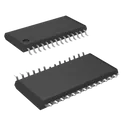
PCA9685PW,118
LED Driver IC 16 Output Linear PWM Dimming 25mA 5.5V 28-TSSOP PCA9685PW,118 is a 16-channel, 12-bit PWM LED controller with an I²C interface designed for LED dimming, RGB/RGBA lighting, and servo motor control applications. It provides independent PWM control for up to 16 outputs, allowing precise brightness or position control while minimizing MCU GPIO usage. The device supports Fast-mode Plus I²C communication up to 1 MHz and operates from a 2.3 V to 5.5 V supply range. It is commonly used in robotics, LED backlighting, automation systems, and PWM expansion modules for microcontrollers such as Arduino, ESP32, and Raspberry Pi. Key Features 16 independent PWM output channels 12-bit PWM resolution (4096 steps) Programmable PWM frequency from approximately 24 Hz to 1526 Hz I²C Fast-mode Plus compatible interface up to 1 MHz Six hardware address pins allowing up to 62 devices on one I²C bus Programmable open-drain or totem-pole outputs Output capability: 25 mA sink current 10 mA source current Internal 25 MHz oscillator with optional external clock input Individual programmable LED ON/OFF timing for reduced EMI and current surges Supports software reset and group addressing (All Call/Sub Call) 5.5 V tolerant inputs and outputs Operating voltage range: 2.3 V to 5.5 V Package: 28-pin TSSOP (PW suffix) #CommonPartsLibrary #IntegratedCircuit #PowerManagement #LEDdriver... show more86 Uses
1 Star
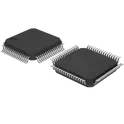
STM32F405RGT6
ARM® Cortex®-M4 series Microcontroller IC 32-Bit Single-Core 168MHz 1MB (1M x 8) FLASH 64-LQFP (10x10) Arm® Cortex®-M4 32b MCU+FPU, 210DMIPS, up to 1MB flash/192+4KB RAM, USB OTG HS/FS, Ethernet, 17 TIMs, 3 ADCs, 15 comm. interfaces, and camera Includes ST state-of-the-art patented technology • Core: Arm® 32-bit Cortex®-M4 CPU with FPU, Adaptive real-time accelerator (ART Accelerator) allowing 0-wait state execution from flash memory, frequency up to 168 MHz, memory protection unit, 210 DMIPS/ 1.25 DMIPS/MHz (Dhrystone 2.1), and DSP instructions • Memories – Up to 1 Mbyte of flash memory – Up to 192+4 Kbytes of SRAM including 64- Kbyte of CCM (core coupled memory) data RAM – 512 bytes of OTP memory – Flexible static memory controller supporting CompactFlash™, SRAM, PSRAM, NOR and NAND memories • LCD parallel interface, 8080/6800 modes • Clock, reset, and supply management – 1.8 V to 3.6 V application supply and I/Os – POR, PDR, PVD and BOR – 4-to-26 MHz crystal oscillator – Internal 16 MHz factory-trimmed RC (1% accuracy) – 32 kHz oscillator for RTC with calibration – Internal 32 kHz RC with calibration • Low-power operation – Sleep, Stop, and Standby modes –VBAT supply for RTC, 20×32-bit backup registers + optional 4 KB backup SRAM • 3×12-bit, 2.4 MSPS A/D converters: up to 24 channels and 7.2 MSPS in triple interleaved mode • 2×12-bit D/A converters • General-purpose DMA: 16-stream DMA controller with FIFOs and burst support • Up to 17 timers: up to twelve 16-bit and two 32- bit timers up to 168 MHz, each with up to 4 IC/OC/PWM or pulse counter and quadrature (incremental) encoder input • Debug mode – Serial wire debug (SWD) & JTAG interfaces – Cortex-M4 Embedded Trace Macrocell™ • Up to 140 I/O ports with interrupt capability – Up to 136 fast I/Os up to 84 MHz – Up to 138 5 V-tolerant I/Os • Up to 15 communication interfaces – Up to 3 × I2C interfaces (SMBus/PMBus) – Up to 4 USARTs/2 UARTs (10.5 Mbit/s, ISO 7816 interface, LIN, IrDA, modem control) – Up to 3 SPIs (42 Mbits/s), 2 with muxed full-duplex I2S to achieve audio class accuracy via internal audio PLL or external clock – 2 × CAN interfaces (2.0B Active) – SDIO interface • Advanced connectivity – USB 2.0 full-speed device/host/OTG controller with on-chip PHY – USB 2.0 high-speed/full-speed device/host/OTG controller with dedicated DMA, on-chip full-speed PHY and ULPI – 10/100 Ethernet MAC with dedicated DMA: supports IEEE 1588v2 hardware, MII/RMII #commonpartslibrary #integratedcircuit #microcontroller... show more74 Uses
1 Star
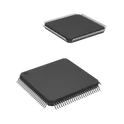
STM32F407VGT6
ARM Microcontrollers - MCU ARM M4 1024 FLASH 168 Mhz 192kB SRAM 100-LQFP (14x14) Arm® Cortex®-M4 32b MCU+FPU, 210DMIPS, up to 1MB Flash/192+4KB RAM, USB OTG HS/FS, Ethernet, 17 TIMs, 3 ADCs, 15 comm. interfaces & camera • Core: Arm® 32-bit Cortex®-M4 CPU with FPU, Adaptive real-time accelerator (ART Accelerator) allowing 0-wait state execution from Flash memory, frequency up to 168 MHz, memory protection unit, 210 DMIPS/ 1.25 DMIPS/MHz (Dhrystone 2.1), and DSP instructions • Memories – Up to 1 Mbyte of Flash memory – Up to 192+4 Kbytes of SRAM including 64- Kbyte of CCM (core coupled memory) data RAM – 512 bytes of OTP memory – Flexible static memory controller supporting Compact Flash, SRAM, PSRAM, NOR and NAND memories • LCD parallel interface, 8080/6800 modes • Clock, reset and supply management – 1.8 V to 3.6 V application supply and I/Os – POR, PDR, PVD and BOR – 4-to-26 MHz crystal oscillator – Internal 16 MHz factory-trimmed RC (1% accuracy) – 32 kHz oscillator for RTC with calibration – Internal 32 kHz RC with calibration • Low-power operation – Sleep, Stop and Standby modes –VBAT supply for RTC, 20×32 bit backup registers + optional 4 KB backup SRAM • 3×12-bit, 2.4 MSPS A/D converters: up to 24 channels and 7.2 MSPS in triple interleaved mode • 2×12-bit D/A converters • General-purpose DMA: 16-stream DMA controller with FIFOs and burst support • Up to 17 timers: up to twelve 16-bit and two 32- bit timers up to 168 MHz, each with up to 4 IC/OC/PWM or pulse counter and quadrature (incremental) encoder input • Debug mode – Serial wire debug (SWD) & JTAG interfaces – Cortex-M4 Embedded Trace Macrocell™ • Up to 140 I/O ports with interrupt capability – Up to 136 fast I/Os up to 84 MHz – Up to 138 5 V-tolerant I/Os • Up to 15 communication interfaces – Up to 3 × I2C interfaces (SMBus/PMBus) – Up to 4 USARTs/2 UARTs (10.5 Mbit/s, ISO 7816 interface, LIN, IrDA, modem control) – Up to 3 SPIs (42 Mbits/s), 2 with muxed full-duplex I2S to achieve audio class accuracy via internal audio PLL or external clock – 2 × CAN interfaces (2.0B Active) – SDIO interface • Advanced connectivity – USB 2.0 full-speed device/host/OTG controller with on-chip PHY – USB 2.0 high-speed/full-speed device/host/OTG controller with dedicated DMA, on-chip full-speed PHY and ULPI – 10/100 Ethernet MAC with dedicated DMA: supports IEEE 1588v2 hardware, MII/RMII #CommonPartsLibrary #IntegratedCircuit #Microcontroller #STM32F407... show more56 Uses
0 Stars
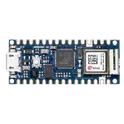
ABX00027
The Arduino Nano 33 IoT (ABX00027) is an advanced evaluation platform designed for IoT applications, featuring the 32 bit ARM® Cortex®-M0+ ATSAMD21G18A MCU. This board supports WiFi and Bluetooth connectivity by utilizing the Nina W102 uBlox module, making it ideal for wireless projects. It operates at a clock speed of 48MHz and uses a 3.3V logic level. The board is equipped with 22 digital I/O pins, 8 analog inputs, and supports PWM on 5 pins. It offers communication via UART, I2C and SPI. #Module #part #SAM D, Maker... show more49 Uses
0 Stars
STM32F103C8T6
ARM® Cortex® M3 STM32F1 Microcontroller IC 32-Bit Single-Core 72MHz 64KB (64K x 8) FLASH Medium-density performance line Arm®-based 32-bit MCU with 64 or 128 KB Flash, USB, CAN, 7 timers, 2 ADCs, 9 com. interfaces Arm® 32-bit Cortex®-M3 CPU core – 72 MHz maximum frequency, 1.25 DMIPS/MHz (Dhrystone 2.1) performance at 0 wait state memory access – Single-cycle multiplication and hardware division • Memories – 64 or 128 Kbytes of Flash memory – 20 Kbytes of SRAM • Clock, reset and supply management – 2.0 to 3.6 V application supply and I/Os – POR, PDR, and programmable voltage detector (PVD) – 4 to 16 MHz crystal oscillator – Internal 8 MHz factory-trimmed RC – Internal 40 kHz RC – PLL for CPU clock – 32 kHz oscillator for RTC with calibration • Low-power – Sleep, Stop and Standby modes – VBAT supply for RTC and backup registers • 2x 12-bit, 1 µs A/D converters (up to 16 channels) – Conversion range: 0 to 3.6 V – Dual-sample and hold capability – Temperature sensor • DMA – 7-channel DMA controller – Peripherals supported: timers, ADC, SPIs, I 2Cs and USARTs • Up to 80 fast I/O ports – 26/37/51/80 I/Os, all mappable on 16 external interrupt vectors and almost all 5 V-tolerant Debug mode: – Serial wire debug (SWD) and JTAG interfaces • Seven timers – Three 16-bit timers, each with up to 4 IC/OC/PWM or pulse counter and quadrature (incremental) encoder input – 16-bit, motor control PWM timer with dead-time generation and emergency stop – Two watchdog timers (independent and window) – SysTick timer 24-bit downcounter • Up to nine communication interfaces – Up to two I2C interfaces (SMBus/PMBus®) – Up to three USARTs (ISO 7816 interface, LIN, IrDA capability, modem control) – Up to two SPIs (18 Mbit/s) – CAN interface (2.0B Active) – USB 2.0 full-speed interface • CRC calculation unit, 96-bit unique ID • Packages are ECOPACK #commonpartslibrary #integratedcircuit #microcontroller #stm32f1... show more35 Uses
0 Stars
7M-27.120MEEQ-T
27.12 MHz ±10ppm Crystal 10pF 50 Ohms 4-SMD, No Lead # 7M-27.120MEEQ-T Crystal Unit Engineering Specification ## General Description The 7M-27.120MEEQ-T is a surface-mount quartz crystal resonator designed to provide a stable and accurate frequency reference for digital, wireless, communication, NFC, RFID, microcontroller, and embedded system applications. Manufactured by TXC Corporation, this crystal offers reliable frequency stability, low equivalent series resistance, and compact packaging suitable for space-constrained designs. Its surface-mount construction enables automated assembly while maintaining excellent electrical performance across a wide range of operating conditions. ## Features * Fundamental mode quartz crystal resonator * Surface-mount device package for automated PCB assembly * High frequency accuracy and stability * Low equivalent series resistance * Low power consumption * Suitable for clock generation and timing circuits * RoHS compliant construction * Reliable performance for industrial and consumer electronics applications ## Electrical Characteristics * Nominal Frequency: 27.120 MHz * Crystal Type: Fundamental Mode * Load Capacitance: 10 pF * Frequency Tolerance: ±20 ppm * Frequency Stability: ±20 ppm * Equivalent Series Resistance: 60 Ω Maximum * Drive Level: Low-power operation * Operating Temperature Range: Industrial grade * Storage Temperature Range: Extended environmental capability ## Mechanical Characteristics * Package Type: Surface-Mount Crystal * Mounting Style: SMD/SMT * Compact footprint optimized for high-density PCB layouts * Four-pad no-lead package construction ## Applications * PN532 NFC Controllers * RFID Readers and Writers * Microcontroller Clock Sources * Wireless Communication Modules * Embedded Systems * Industrial Control Electronics * Consumer Electronic Devices * IoT and Smart Device Platforms ## Compliance * RoHS Compliant * Lead-Free Construction * Suitable for Automated Assembly Processes #7M27_120MEEQT #TXC #CrystalResonator #SMDCrystal #QuartzCrystal #27_120MHz #PN532 #NFC #RFID #EmbeddedSystems #TimingReference #ElectronicsDesign... show more26 Uses
0 Stars
PCF85063ATL/1,118
Real Time Clock (RTC) IC Clock/Calendar I²C, 2-Wire Serial 10-XFDFN Exposed Pad #commonpartslibrary #integratedcircuit #realtimeclock #calendar... show more25 Uses
0 Stars








Page 1 of 400
Next