Part Datasheet Review and Summary

Review all available part information (MPN, package, pin count, description, properties). If no datasheet URL is already set, search the web for the official datasheet and update the part's Datasheet property with the URL. Then cross-check the schematic symbol, footprint, and pin descriptions against the datasheet. Summarize key specs and flag any mismatches.
Provide a concise direct to the point best description for this part based from the datasheet. i don't need a very long but useless description.
Thought for 4 sec
I’ll identify the part details currently in the project and condense the datasheet-based description into a short, useful one.
Worked for 2 mins 3 sec
Concise datasheet-based description:
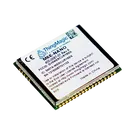
ThingMagic M6E-NANO is a compact SMT embedded UHF RAIN RFID reader module supporting EPC Gen2 / ISO 18000-6C operation from 859–930 MHz, with UART control, 3.3 V logic, adjustable RF output up to +27 dBm, and a 50 Ω antenna interface for small portable or embedded RFID reader designs.
Update description and review
Update part description
Verify datasheet URL
Check pin mapping
Summarize key specs
Refine this doc
Ask about this doc
M6E-NANO Part Audit
Date: 2026-06-30
Sources
Official JADAK/ThingMagic documentation found:
- Official spec sheet: https://www.jadaktech.com/wp-content/uploads/2022/08/Nano-Product-Spec-Sheet-04032021-1.pdf
- Official user guide: https://www.jadaktech.com/wp-content/uploads/2022/08/TM_Nano-UG-Rev-09172018-1.pdf
- Official comparison sheet: https://www.jadaktech.com/wp-content/uploads/2022/08/ThingMagic-M6E-Micro-M6E-Nano-and-M7E-PICO-comparison-04272022-1.pdf
The project had no dedicated Datasheet URL property exposed through the available metadata editor, so the official datasheet/user-guide URLs were recorded in the project
Implementation Details property.Existing Flux Part Information
- Project / part:
M6E-NANO - Published as part: yes
- Part UID:
15d3a860-0421-496f-b418-6b51f998624d - Existing project description:
X3 / Manufacturer recommendations / 2.8mm / ThingMagic - Existing project properties before audit:
Manufacturer Part Number = M6E-NANO,Designator Prefix = U - Schematic entries: 109 terminal components, each representing one pad/pin terminal
- PCB footprint entries: 109 pads, 1 footprint, 2 containers, 1 model, fab/silk/text geometry
Key Datasheet Specs
- Manufacturer / brand: ThingMagic, a JADAK brand
- Part / module: M6E-NANO / ThingMagic Nano / Mercury6e Nano embedded UHF RFID reader module
- Function: compact embedded UHF RAIN RFID reader module
- Protocols: EPCglobal Gen2V2, ISO 18000-63 / ISO 18000-6C
- RF output: 0 dBm to +27 dBm command-adjustable; +27 dBm max conducted output
- RF port: single 50 ohm antenna connection
- Frequency regions: regional UHF bands including FCC 917.4–927.2 MHz and ETSI 865.6–867.6 MHz; other regional bands documented by JADAK
- Host interface: UART, 3.3 V logic; no hardware handshaking
- GPIO: four 3.3 V bidirectional GPIOs
- Input supply: 3.3 V to 5.5 VDC; 3.7 V to 5.5 VDC required for full +27 dBm operation
- Power/current: approximately 3.2 W at +27 dBm from 5 V, about 640 mA at 5 V; design for up to about 1 A input-current capability
- Vout pin: 3.4 VDC output, 5 mA maximum, leave unconnected if unused
- Mechanical: 22 mm x 26 mm x 3.0 mm module; about 3.2 g
- Mounting: SMT module with board-edge connections / edge vias
- Main electrical pad count: 41 board-edge connections at 1.25 mm pitch
Expected 41-Pin Electrical Pinout From User Guide
Table
| Pin(s) | Datasheet signal | Notes |
|---|---|---|
| 1-9 | GND | Ground / return |
| 10 | Vout | 3.4 V output, 5 mA max |
| 11 | ENABLE | High/floating enabled; low shutdown |
| 12 | GPIO1 | 3.3 V bidirectional GPIO |
| 13 | GPIO2 | 3.3 V bidirectional GPIO |
| 14 | GPIO3 | 3.3 V bidirectional GPIO |
| 15 | GPIO4 | 3.3 V bidirectional GPIO |
| 16-17 | Vin | 3.3-5.5 VDC input; connect both |
| 18-19 | GND | Ground / return |
| 20 | UART_TX | Output from module, 3.3 V logic |
| 21 | UART_RX | Input to module, 3.3 V logic |
| 22-28 | RFU | Reserved; leave unconnected |
| 29-38 | GND | Ground / RF/thermal return region |
| 39 | RF | 50 ohm antenna port |
| 40-41 | GND | RF ground |
Cross-Check Results
Metadata
- MPN is present and correct:
M6E-NANO. - Designator prefix is present and reasonable:
U. - Manufacturer name is not set as a dedicated property. Recommended:
ThingMagic / JADAK. - Datasheet URL was not set as a dedicated property visible in the project metadata. Official URLs were recorded in
Implementation Detailsbecause the available project-property mutation tool did not exposeDatasheet URLfor part projects. - Description is sparse and should be expanded to identify the part as a ThingMagic/JADAK embedded UHF RAIN RFID reader module.
Symbol / Pin Naming
The symbol covers the expected 41 primary electrical pad numbers, plus additional thermal pad terminals. Major signal mismatches:
Table
| Pin | Current symbol name | Datasheet expected | Status |
|---|---|---|---|
| 10 | V3R3 | Vout, 3.4 V output, 5 mA max | Mismatch: name implies a 3.3 V rail, but datasheet calls this a limited 3.4 V output. |
| 11 | ~SHUTDOWN_N | ENABLE, active-low shutdown behavior | Naming is functionally close but polarity/name should be clarified as ENABLE or SHUTDOWN_N / ENABLE. |
| 20 | RS232_TX | UART_TX, 3.3 V logic | Mismatch: module interface is TTL/CMOS UART, not true RS-232 voltage levels. |
| 21 | RS232_RX | UART_RX, 3.3 V logic | Mismatch: module interface is TTL/CMOS UART, not true RS-232 voltage levels. |
| 22 | SPI_MISO__SDA | RFU, leave unconnected | Mismatch: should not be exposed as active SPI/I2C. |
| 23 | SPI_CSN__SCL | RFU, leave unconnected | Mismatch: should not be exposed as active SPI/I2C. |
| 24 | SPI_CLK__USBDP | RFU, leave unconnected | Mismatch: should not be exposed as SPI/USB. |
| 25 | SPI_MOSI__USBDM | RFU, leave unconnected | Mismatch: should not be exposed as SPI/USB. |
| 26 | SWCLK | RFU, leave unconnected | Mismatch: should not be exposed as debug clock. |
| 27 | SWDIO | RFU, leave unconnected | Mismatch: should not be exposed as debug data. |
| 28 | ~RESETN | RFU, leave unconnected | Mismatch: should not be exposed as reset. |
Pins 1-9, 18-19, 29-38, 40-41 are represented as GND terminals and match the datasheet ground assignment. Pins 12-15 are represented as GPIO1-GPIO4 and match the documented GPIO function. Pins 16-17 are represented as VIN and match the documented input supply assignment. Pin 39 is represented as RF_OUT; this is acceptable if treated as a bidirectional 50 ohm RF antenna port, though
RF or RF_ANT would be closer to the datasheet.Pin Types / Electrical Types
- UART pins should be 3.3 V logic UART, not RS-232.
- Pin 10 should be
Power Out, not a generic output rail named V3R3. - RFU pins 22-28 should be
Not ConnectedorReserved, not active digital interfaces. - RF pin 39 should be classified as RF/passive/signal rather than ordinary output.
- Grounds and VIN are broadly typed correctly as power pins.
Footprint / Pad Count
- The footprint has 109 pad objects.
- The datasheet/user guide documents 41 primary board-edge electrical connections. The remaining pads in the project appear to be thermal/ground land pattern pads named
THERMALPAD, with labels such asP1throughP69plusGND_PAD1/GND_PAD2style entries. - The footprint silk/fab outline visible in layout is approximately 22 mm x 26 mm, matching the documented module size.
- The visible footprint contains a 41-pin edge-connection model plus additional underside thermal/ground pads, which is consistent with a manufacturer-recommended land pattern rather than a simple 41-pad-only symbol.
- Detailed pad geometry such as exact pad size, pitch, and individual coordinates was not exposed in the layout inspection output, so pad-by-pad geometry could not be fully audited from the available data.
Recommended Fixes
- Rename pin 10 from
V3R3toVOUT_3V4orVOUT, and document3.4 V, 5 mA max. - Rename pins 20/21 from
RS232_TX/RS232_RXtoUART_TX/UART_RX, and note3.3 V logic, not RS-232. - Rename pins 22-28 to
RFU/NC_RFUand set pin type toReservedorNot Connected. - Consider renaming pin 39 from
RF_OUTtoRForRF_ANTand mark it as a 50 ohm RF antenna port. - Add dedicated part metadata if supported:
Manufacturer Name = ThingMagic / JADAK,Part Type = RF TransceiverorRFID Reader Module,Datasheet URL = official JADAK spec sheet, and expanded description. - If available through a lower-level footprint editor/import, verify exact pad pitch and landing-pad dimensions against the JADAK user guide/manufacturer land pattern.
Overall Assessment
The footprint appears broadly aligned with the ThingMagic Nano module outline and pad-count strategy, but the schematic symbol has several important functional pin-label mismatches. The most critical issue is that pins 22-28 are currently labeled as active SPI/I2C/USB/SWD/reset functions even though the official user guide marks them RFU/reserved. The UART pins are also mislabeled as RS-232, which could lead to an incorrect direct RS-232 connection without a level shifter.
Sources
Existing Flux Part Information
Key Datasheet Specs
Expected 41-Pin Electrical Pinout From User Guide
Cross-Check Results
Metadata
Symbol / Pin Naming
Pin Types / Electrical Types
Footprint / Pad Count
Recommended Fixes
Overall Assessment