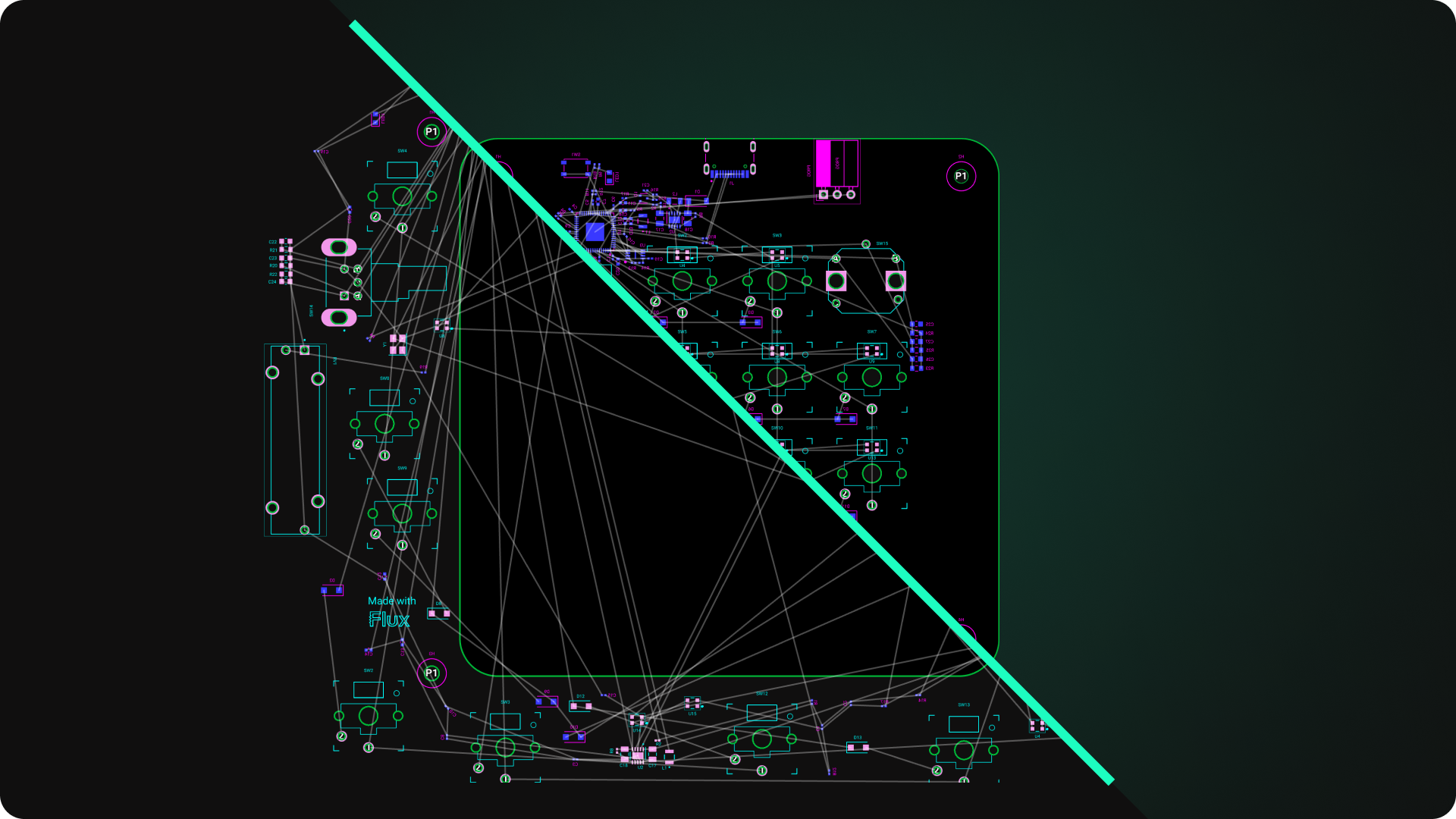
USB-C Temperature & Humidity Sensor Node
1:08
Planning sensor node design.
Linking components in design.
Fetching best practices for design.
Planning the sensor node design.
Accessing knowledge base.
Updating project and planning.
- Add core blocks: dual‑radio MCU, digital T/RH sensor, USB‑C sink interface, protected 5 V input, 5 V→3.3 V regulator, RF/clock.
- Wire nets: I2C with 4.7 kΩ pull‑ups, CC lines, reset/boot/UART, 3V3, decoupling (100 nF per VCC/GND), bulk caps.
- Set project description/properties; footprints; initial ERC.
- PCB: reserve antenna keep‑out; place connectors/antenna; auto‑place/route.
- Review ERC/DRC, availability; export files.
- Design and build a USB‑C powered consumer environmental sensor node that measures temperature and humidity. This sensor node will utilize a low-power dual‑radio MCU (Wi‑Fi 802.11 b/g/n, 2.4 GHz + BLE 5.x), a digital temperature and relative humidity sensor, and a robust 5 V power input designed to handle 0.5–3 A sources with reverse polarity, OVP, UVLO, and OCP protection. The design must include a USB‑C sink interface and proper I²C connectivity (with 4.7 kΩ pull‑ups), decoupling/bulk capacitors, and reserved antenna keep‑out areas for RF performance.
- Update the project metadata:
- Set and update the project description to reflect the consumer environmental sensor node requirements.
- Define system properties such as power input specifications (USB‑C 5 V, 0.5–3 A) and protection features (reverse, OVP, UVLO, OCP).
- Add and configure key components:
- Select and add a dual‑radio MCU with Wi‑Fi and BLE (e.g., compatible with 802.11 b/g/n and BLE 5.x) from the Flux parts library.
- Select and add a digital T/RH sensor with I²C interfacing.
- Select and add a USB‑C connector, ensuring CC resistors are provisioned for default current configuration.
- Develop a robust power management path:
- Add a protected 5 V input stage that includes mechanisms for reverse polarity, OVP, UVLO, and OCP.
- Add and configure a 5 V to 3.3 V regulator for the MCU and sensor.
- Establish necessary interconnections:
- Wire the digital sensor to the MCU via the I²C bus, including 4.7 kΩ pull‑ups and necessary decoupling (100 nF at VCC/GND pairs).
- Connect additional, required pins such as reset/boot and UART/debug.
- Plan the PCB layout:
- Reserve an antenna keep‑out region to ensure optimal RF performance.
- Place the USB‑C connector and antenna first, then auto‑place and adjust the remaining components.
- Validate design and prepare for manufacturing:
- Perform Electrical Reference Checks (ERC) and Design Rule Checks (DRC).
- Confirm parts availability and finalize the project design for export of manufacturing files.
- The design meets the environmental sensor node specifications with dual‑radio connectivity and proper USB‑C input protection.
- All components are correctly placed, connected (including proper I²C wiring), and the power path is robust and compliant with 5 V, 0.5–3 A source requirements.
- The PCB layout includes reserved RF keep‑out zones and meets design rules with complete ERC/DRC validation.
Started implementing a plan
#Goal
- Design and build a USB‑C powered consumer environmental sensor node that measures temperature and humidity. This sensor node will utilize a low-power dual‑radio MCU (Wi‑Fi 802.11 b/g/n, 2.4 GHz + BLE 5.x), a digital temperature and relative humidity sensor, and a robust 5 V power input designed to handle 0.5–3 A sources with reverse polarity, OVP, UVLO, and OCP protection. The design must include a USB‑C sink interface and proper I²C connectivity (with 4.7 kΩ pull‑ups), decoupling/bulk capacitors, and reserved antenna keep‑out areas for RF performance.
#Implementation plan
1. Update the project metadata:
1. Set and update the project description to reflect the consumer environmental sensor node requirements.
2. Define system properties such as power input specifications (USB‑C 5 V, 0.5–3 A) and protection features (reverse, OVP, UVLO, OCP).
2. Add and configure key components:
1. Select and add a dual‑radio MCU with Wi‑Fi and BLE (e.g., compatible with 802.11 b/g/n and BLE 5.x) from the Flux parts library.
2. Select and add a digital T/RH sensor with I²C interfacing.
3. Select and add a USB‑C connector, ensuring CC resistors are provisioned for default current configuration.
3. Develop a robust power management path:
1. Add a protected 5 V input stage that includes mechanisms for reverse polarity, OVP, UVLO, and OCP.
2. Add and configure a 5 V to 3.3 V regulator for the MCU and sensor.
4. Establish necessary interconnections:
1. Wire the digital sensor to the MCU via the I²C bus, including 4.7 kΩ pull‑ups and necessary decoupling (100 nF at VCC/GND pairs).
2. Connect additional, required pins such as reset/boot and UART/debug.
5. Plan the PCB layout:
1. Reserve an antenna keep‑out region to ensure optimal RF performance.
2. Place the USB‑C connector and antenna first, then auto‑place and adjust the remaining components.
6. Validate design and prepare for manufacturing:
1. Perform Electrical Reference Checks (ERC) and Design Rule Checks (DRC).
2. Confirm parts availability and finalize the project design for export of manufacturing files.
#Success criteria
- The design meets the environmental sensor node specifications with dual‑radio connectivity and proper USB‑C input protection.
- All components are correctly placed, connected (including proper I²C wiring), and the power path is robust and compliant with 5 V, 0.5–3 A source requirements.
- The PCB layout includes reserved RF keep‑out zones and meets design rules with complete ERC/DRC validation.
Working on your request...
0:11
Completed your request.
0:38
Analyzing the schematic.
Started: Defining system architecture and saving property
Updated 1 document property
0:01
Set System Architecture to "flowchart TD USB_C["USB-C Receptacle"] --> VBUS["VBUS 5V"] USB_C --> CC_RD["CC Rd Resistors"] VBUS --> PROTECT["I..."


Welcome 👋
Flux helps you build PCBs faster with an AI teammate!
Create your account to collaborate, stay updated, fork your own version, and get instant answers from our AI agent.