Power Supply and Control Integration
0:27

2:05
Querying design intents.
Planning component integration.
Navigating file and formatting rules.
Proposing project plan steps.
Using Knowledge Base Tool.
Looking for "reference design schematic" in RP2350-USB-A-81fe2026-fe48-4375-bd67-73ec763d846d.pdf
Looking for "power supply rails and decoupling" in RP2350-USB-A-81fe2026-fe48-4375-bd67-73ec763d846d.pdf
Looking for "USB interface routing and connector" in RP2350-USB-A-81fe2026-fe48-4375-bd67-73ec763d846d.pdf
Looking for "pinout and signals list" in RP2350-USB-A-81fe2026-fe48-4375-bd67-73ec763d846d.pdf
Looking for "layout guidelines and stackup" in RP2350-USB-A-81fe2026-fe48-4375-bd67-73ec763d846d.pdf
Looking for "recommended decoupling capacitor values" in RP2350-USB-A-81fe2026-fe48-4375-bd67-73ec763d846d.pdf
Planning the project steps.
- Integrate RP2350 USB, decoupling, and I/O mapping to the Pico 2 header.
- Power tree: 5–50 V front end, 24 V high‑power, 5 V logic, bulk/decoupling.
- Comms: 2× RS485, EtherCAT PHY+magnetics+RJ45, WiFi with two external antennas.
- High‑power stages: 4 BLDC (MOSFET+gate drivers) and 2 LED channels with protection.
- 2 closed‑loop stepper driver blocks (24 V, up to 8 A), full net integration and reviews.
Started implementing a plan
#Goal
- Develop a complete industrial control shield based on the RP2350 USB-A reference, integrating a wide 5–50 V input with decoupled I/O, regulated 24 V and 5 V rails, dual RS485 modules, EtherCAT-capable Ethernet, integrated WiFi with two external antennas, 4 BLDC outputs (~200 W each, 24 V), 2 LED outputs (50 W, 24 V), and 2 closed-loop stepper outputs (24 V, up to 8 A). The design will leverage the reference details from the RP2350 USB-A layout for MCU placement, decoupling, and USB connectivity.
#Implementation plan
1. **Microcontroller and Base I/O Integration**
1. Integrate the RP2350 USB-A reference design elements, including USB D+/D- configuration, 27 Ω series resistors, 1.5 kΩ pull-up, and documented decoupling (100 nF, 2.2 μF, 4.7 μF groups) as per the provided PDF.
2. Map MCU signals to the Pico 2 shield header [U1] to maintain signal integrity and proper connectivity.
2. **Power Subsystem Development**
1. Design the front-end to accept a 5–50 V supply with proper EMI filtering and decoupled input/output.
2. Implement regulated outputs for a 24 V rail for high power loads and a 5 V rail for logic. Include required bulk and decoupling capacitors, referencing the RP2350 guidelines.
3. **Communications and Connectivity**
1. Integrate two RS485 transceiver blocks with appropriate termination and isolation features.
2. Add an Ethernet interface with EtherCAT capability, including the Ethernet PHY, magnetics, and an RJ45 jack.
3. Incorporate a WiFi module and provision two external antenna connectors with proper RF matching circuits.
4. **High-Power Output Stages**
1. Design 4 BLDC motor driver stages using MOSFETs and gate drivers to handle ~200 W per channel at 24 V. Include necessary flyback and snubber circuits.
2. Develop 2 high-power LED driver channels for 50 W output at 24 V with current control and MOSFET switching.
5. **Closed-Loop Stepper Motor Driver Integration**
1. Implement 2 closed-loop stepper driver circuits rated for 24 V and up to 8 A. Ensure interfaces with the MCU for control and feedback.
6. **Schematic and PCB Integration
1. Leverage the decoupling strategies from the RP2350 reference for all relevant power rails and the on-chip regulator paths using an inductor and 4.7 μF capacitors.
2. Connect all components to form a cohesive schematic, ensuring power, signal integrity, and thermal considerations are met.
3. Define board sizing and layout constraints to accommodate high-power components, connectors, and ensure manufacturability.
7. **Review and Validation**
1. Conduct a schematic review ensuring all industrial control functionalities are met.
2. Validate component placements, net connections, and overall PCB layout adhering to design for manufacturability and performance requirements.
#Success criteria
- The final schematic includes a properly integrated RP2350 USB-A reference section with correct decoupling and layout.
- The power subsystem reliably converts 5–50 V to regulated 24 V and 5 V rails with proper filtering and decoupling.
- RS485, EtherCAT Ethernet, and WiFi modules are correctly implemented with ancillary components.
- High-power driver circuits for BLDC, LED, and closed-loop stepper outputs are fully designed and integrated.
- The overall design is review-ready with clear component interconnections and layout considerations.
Stopped due to a problem. Please try again.
Reviews

- Wirelessly connects nets on schematic. Used to organize schematics and separate functional blocks. To wirelessly connect net portals, give them same designator. #portaljharwinbarrozo43.0M
- Wirelessly connects power nets on schematic. Identical to the net portal, but with a power symbol. Used to organize schematics and separate functional blocks. To wirelessly connect power net portals, give them the same designator. #portal #powerjharwinbarrozo11.4M
- A generic fixed resistor for rapid developing circuit topology. Save precious design time by seamlessly add more information to this part (value, footprint, etc.) as it becomes available. Standard resistor values: 1.0Ω 10Ω 100Ω 1.0kΩ 10kΩ 100kΩ 1.0MΩ 1.1Ω 11Ω 110Ω 1.1kΩ 11kΩ 110kΩ 1.1MΩ 1.2Ω 12Ω 120Ω 1.2kΩ 12kΩ 120kΩ 1.2MΩ 1.3Ω 13Ω 130Ω 1.3kΩ 13kΩ 130kΩ 1.3MΩ 1.5Ω 15Ω 150Ω 1.5kΩ 15kΩ 150kΩ 1.5MΩ 1.6Ω 16Ω 160Ω 1.6kΩ 16kΩ 160kΩ 1.6MΩ 1.8Ω 18Ω 180Ω 1.8KΩ 18kΩ 180kΩ 1.8MΩ 2.0Ω 20Ω 200Ω 2.0kΩ 20kΩ 200kΩ 2.0MΩ 2.2Ω 22Ω 220Ω 2.2kΩ 22kΩ 220kΩ 2.2MΩ 2.4Ω 24Ω 240Ω 2.4kΩ 24kΩ 240kΩ 2.4MΩ 2.7Ω 27Ω 270Ω 2.7kΩ 27kΩ 270kΩ 2.7MΩ 3.0Ω 30Ω 300Ω 3.0KΩ 30KΩ 300KΩ 3.0MΩ 3.3Ω 33Ω 330Ω 3.3kΩ 33kΩ 330kΩ 3.3MΩ 3.6Ω 36Ω 360Ω 3.6kΩ 36kΩ 360kΩ 3.6MΩ 3.9Ω 39Ω 390Ω 3.9kΩ 39kΩ 390kΩ 3.9MΩ 4.3Ω 43Ω 430Ω 4.3kΩ 43KΩ 430KΩ 4.3MΩ 4.7Ω 47Ω 470Ω 4.7kΩ 47kΩ 470kΩ 4.7MΩ 5.1Ω 51Ω 510Ω 5.1kΩ 51kΩ 510kΩ 5.1MΩ 5.6Ω 56Ω 560Ω 5.6kΩ 56kΩ 560kΩ 5.6MΩ 6.2Ω 62Ω 620Ω 6.2kΩ 62KΩ 620KΩ 6.2MΩ 6.8Ω 68Ω 680Ω 6.8kΩ 68kΩ 680kΩ 6.8MΩ 7.5Ω 75Ω 750Ω 7.5kΩ 75kΩ 750kΩ 7.5MΩ 8.2Ω 82Ω 820Ω 8.2kΩ 82kΩ 820kΩ 8.2MΩ 9.1Ω 91Ω 910Ω 9.1kΩ 91kΩ 910kΩ 9.1MΩ #generics #CommonPartsLibraryjharwinbarrozo1.5M
- A generic fixed capacitor ideal for rapid circuit topology development. You can choose between polarized and non-polarized types, its symbol and the footprint will automatically adapt based on your selection. Supported options include standard SMD sizes for ceramic capacitors (e.g., 0402, 0603, 0805), SMD sizes for aluminum electrolytic capacitors, and through-hole footprints for polarized capacitors. Save precious design time by seamlessly add more information to this part (value, footprint, etc.) as it becomes available. Standard capacitor values: 1.0pF 10pF 100pF 1000pF 0.01uF 0.1uF 1.0uF 10uF 100uF 1000uF 10,000uF 1.1pF 11pF 110pF 1100pF 1.2pF 12pF 120pF 1200pF 1.3pF 13pF 130pF 1300pF 1.5pF 15pF 150pF 1500pF 0.015uF 0.15uF 1.5uF 15uF 150uF 1500uF 1.6pF 16pF 160pF 1600pF 1.8pF 18pF 180pF 1800pF 2.0pF 20pF 200pF 2000pF 2.2pF 22pF 20pF 2200pF 0.022uF 0.22uF 2.2uF 22uF 220uF 2200uF 2.4pF 24pF 240pF 2400pF 2.7pF 27pF 270pF 2700pF 3.0pF 30pF 300pF 3000pF 3.3pF 33pF 330pF 3300pF 0.033uF 0.33uF 3.3uF 33uF 330uF 3300uF 3.6pF 36pF 360pF 3600pF 3.9pF 39pF 390pF 3900pF 4.3pF 43pF 430pF 4300pF 4.7pF 47pF 470pF 4700pF 0.047uF 0.47uF 4.7uF 47uF 470uF 4700uF 5.1pF 51pF 510pF 5100pF 5.6pF 56pF 560pF 5600pF 6.2pF 62pF 620pF 6200pF 6.8pF 68pF 680pF 6800pF 0.068uF 0.68uF 6.8uF 68uF 680uF 6800uF 7.5pF 75pF 750pF 7500pF 8.2pF 82pF 820pF 8200pF 9.1pF 91pF 910pF 9100pF #generics #CommonPartsLibraryjharwinbarrozo1.5M
- A generic fixed inductor for rapid developing circuit topology. *You can now change the footprint and 3D model at the top level anytime you want. This is the power of #genericsjharwinbarrozo15.5k
- An electrical connector acting as reusable interface to a conductor and creating a point where external circuits can be connected.Terminal
- 47 kOhms ±5% 0.125W, 1/8W Chip Resistor 0805 (2012 Metric) Automotive AEC-Q200 Thick Film #forLedBlinkjharwinbarrozo1.2M
- 10uF Capacitor Aluminum Polymer 20% 16V SMD 5x5.3mm #forLedBlink #commonpartslibrary #capacitor #aluminumpolymer #radialcanjharwinbarrozo1.2M
- Yellow 595nm LED Indication - Discrete 1.7V 1206 (3216 Metric) #forLedBlinkjharwinbarrozo1.1M


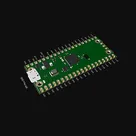
Properties
Properties describe core aspects of the project.
Pricing & Availability
Distributor | Qty 1 |
|---|
Assets

pico-template.png
pico-templateThumbnailControls
Welcome 👋
Flux helps you build PCBs faster with an AI teammate!
Create your account to collaborate, stay updated, fork your own version, and get instant answers from our AI agent.