Marauder Project Setup
2:04
Clarifying power input needs.
Using Knowledge Base Tool.
Planning the module setup.
Counting and clarifying project details.
Finalizing project instructions.
- Add parts plus USB-C connector and 3.3V regulator.
- Power: 100 nF decoupling + 10 uF bulk; EN pull-up + 0.1 uF.
- Interfaces: shared SPI (separate CS, 22-33 ohm series); joystick GPIOs; GPS UART+PPS; avoid boot pins.
- Programming pads; RF/antenna keepouts.
Started implementing a plan
# Goal
- Design a Marauder-style ESP32 board that integrates an ESP32-WROOM-32UE with a 1.44 inch ST7735 128x128 SPI RGB TFT LCD, a 5-way joystick switch, an ATGM336H GPS module, and a microSD card socket. The board will be powered via a USB-C 5V input regulated to 3.3V with proper decoupling, include programming pads (EN, IO0, RX0, TX0, GND), and use shared SPI for the LCD and microSD with series resistors. Additional interfaces include UART for the GPS (TX, RX, PPS) and proper handling of antenna and GPS keepouts.
# Implementation plan
1. **Core Components and Power Setup**
1. Add the ESP32-WROOM-32UE module ensuring terminal placeholders are replaced with proper connections.
2. Add the 1.44" ST7735 128x128 SPI RGB TFT LCD and configure its SPI interface with dedicated CS.
3. Add the 5-way joystick switch and connect each direction to ESP32 GPIOs with onboard pull-ups.
4. Add the ATGM336H GPS module and connect its UART TX/RX pins (plus PPS) to non-bootstrapped ESP32 UART pins.
5. Add a microSD card socket module and integrate it on the shared SPI bus (with separate CS) with 22–33 Ω series resistors on SPI lines.
6. Integrate a USB-C power input with a 5V supply routed through a 3.3V regulator. Add decoupling (100 nF) and a bulk 10 µF cap on the 3.3V rail and an EN pull-up resistor with a 0.1 µF capacitor.
2. **Interface Connections and Signal Routing**
1. Connect the SPI lines (SCK, MOSI, MISO) for the LCD and microSD. Add series termination resistors (22–33 Ω) on these lines.
2. Connect the 5-way joystick to selected GPIO pins avoiding ESP32 bootstrapped pins.
3. Connect the GPS module UART to the ESP32 UART interface and ensure the PPS signal is connected to a proper GPIO pin.
4. Provide programming/debug pads for EN, IO0, U0RXD, U0TXD, and GND.
3. **PCB and Schematic Considerations**
1. Update the schematic to label all nets appropriately and guarantee that high-speed and power integrity requirements are met (including proper decoupling and filtering for the GPS module).
2. Place footprints considering antenna and RF keepouts for both the ESP32 and GPS signals.
3. Prepare the PCB layout ensuring proper ground strategy, EMI control, and keepout zones for the antenna areas.
4. **Review and Final Checks**
1. Review the schematic for completeness: all interfaces, power supplies, and critical decoupling elements should be correctly added.
2. Prepare the board for PCB layout review checking component placement and ensuring that all nets are connected for production.
# Success criteria
- The ESP32, LCD, joystick, GPS module, and microSD are correctly added with proper interfaces and powered from a regulated 3.3V rail.
- The shared SPI bus for the ST7735 and microSD includes separate CS signals with series resistors, and the GPS UART is connected to the appropriate ESP32 GPIOs with PPS.
- The board includes proper programming pads and adheres to RF/antenna keepout strategies with sufficient decoupling and filtering.
- The schematic and PCB layout are complete, meeting both functional and electrical design goals.

1:58
Planning board creation.
Contextualizing project details.
Linking components and creating intents.
Detailing design considerations.
Using Knowledge Base Tool.
Focusing on component links.
- Add USB-C connector and 3.3V regulator; apply EN pull-up with 0.1 µF.
- Wire shared SPI with separate CS and series terminations; GPS on UART (TX, RX, PPS) to non-boot pins; joystick to safe GPIOs; add programming pads.
- Define RF and GPS antenna keepouts and place decoupling close to pins.
Started implementing a plan
#Goal
- Design a Marauder-style board using the ESP32-WROOM-32UE that integrates a 1.44" ST7735 (128x128) SPI TFT, 5-way joystick, ATGM336H GPS (UART with PPS), and a microSD socket sharing an SPI bus with separate CS lines. The board must include USB-C 5V input regulated to 3.3V with proper decoupling and an EN pull-up (with 0.1 μF cap), programming pads (EN, IO0, U0RXD, U0TXD, GND), and defined RF/GPS antenna keepouts.
#Implementation plan
1. Add Core Components
1. Add and configure the ESP32-WROOM-32UE ensuring antenna layout constraints.
2. Add the ST7735 1.44" TFT display and configure its SPI interface.
3. Add a 5-way joystick and assign directional GPIO connections.
4. Add the ATGM336H GPS module; connect its UART and PPS outputs to chosen non-bootstrapped ESP32 pins.
5. Add a microSD socket and configure it for SPI operation with its own chip select.
6. Add a USB-C connector with a 5V input stage, and integrate a 3.3V regulator with proper decoupling capacitors (0.1 μF on the EN line and additional decoupling at power pins).
2. Connect Interfaces and Signals
1. Wire the shared SPI bus for the ST7735 and microSD, ensuring each device uses its own CS line and series resistors (22–33 Ω) are placed on SCK, MOSI, and MISO lines.
2. Connect the GPS module’s UART and PPS signals to designated non-bootsrtap pins on the ESP32, avoiding conflicts with boot configuration requirements.
3. Connect the 5-way joystick to its respective ESP32 GPIOs.
4. Create dedicated programming pads for EN, IO0, U0RXD, U0TXD, and GND to support firmware flashing.
3. Add Supporting Circuitry and Layout Considerations
1. Set up decoupling capacitors for all ICs, ensuring them to be placed close to each power pin.
2. Implement an EN pull-up network with a 0.1 μF capacitor for reliable regulator and module reset function.
3. Define RF/GPS antenna keepout areas in the PCB layout to minimize interference.
4. Implement any required filtering on the GPS module power supply.
4. Finalize and Validate Design
1. Review the schematic for correct signal routing, especially ensuring the ESP32 bootstrapped pins are not inadvertently used.
2. Perform ERC/DRC checks to validate design integrity.
3. Confirm that all components, especially the shared SPI bus and programming interfaces, are correctly connected and meet the system requirements.
#Success criteria
- Successful integration of ESP32, ST7735 TFT, ATGM336H GPS, microSD, and 5-way joystick with proper shared SPI configuration and isolation (via series resistors).
- Accurate implementation of USB-C 5V input with 3.3V regulator and decoupling, including an EN pull-up circuit.
- Accessible and correctly routed programming pads (EN, IO0, U0RXD, U0TXD, GND).
- Maintained RF/GPS antenna keepouts ensuring minimal interference.
- Schematic and PCB layout pass ERC/DRC checks without errors.
Stopped due to a problem. Please try again.
Reviews

- Wirelessly connects nets on schematic. Used to organize schematics and separate functional blocks. To wirelessly connect net portals, give them same designator. #portaljharwinbarrozo43.0M
- Wirelessly connects power nets on schematic. Identical to the net portal, but with a power symbol. Used to organize schematics and separate functional blocks. To wirelessly connect power net portals, give them the same designator. #portal #powerjharwinbarrozo11.4M
- A generic fixed resistor for rapid developing circuit topology. Save precious design time by seamlessly add more information to this part (value, footprint, etc.) as it becomes available. Standard resistor values: 1.0Ω 10Ω 100Ω 1.0kΩ 10kΩ 100kΩ 1.0MΩ 1.1Ω 11Ω 110Ω 1.1kΩ 11kΩ 110kΩ 1.1MΩ 1.2Ω 12Ω 120Ω 1.2kΩ 12kΩ 120kΩ 1.2MΩ 1.3Ω 13Ω 130Ω 1.3kΩ 13kΩ 130kΩ 1.3MΩ 1.5Ω 15Ω 150Ω 1.5kΩ 15kΩ 150kΩ 1.5MΩ 1.6Ω 16Ω 160Ω 1.6kΩ 16kΩ 160kΩ 1.6MΩ 1.8Ω 18Ω 180Ω 1.8KΩ 18kΩ 180kΩ 1.8MΩ 2.0Ω 20Ω 200Ω 2.0kΩ 20kΩ 200kΩ 2.0MΩ 2.2Ω 22Ω 220Ω 2.2kΩ 22kΩ 220kΩ 2.2MΩ 2.4Ω 24Ω 240Ω 2.4kΩ 24kΩ 240kΩ 2.4MΩ 2.7Ω 27Ω 270Ω 2.7kΩ 27kΩ 270kΩ 2.7MΩ 3.0Ω 30Ω 300Ω 3.0KΩ 30KΩ 300KΩ 3.0MΩ 3.3Ω 33Ω 330Ω 3.3kΩ 33kΩ 330kΩ 3.3MΩ 3.6Ω 36Ω 360Ω 3.6kΩ 36kΩ 360kΩ 3.6MΩ 3.9Ω 39Ω 390Ω 3.9kΩ 39kΩ 390kΩ 3.9MΩ 4.3Ω 43Ω 430Ω 4.3kΩ 43KΩ 430KΩ 4.3MΩ 4.7Ω 47Ω 470Ω 4.7kΩ 47kΩ 470kΩ 4.7MΩ 5.1Ω 51Ω 510Ω 5.1kΩ 51kΩ 510kΩ 5.1MΩ 5.6Ω 56Ω 560Ω 5.6kΩ 56kΩ 560kΩ 5.6MΩ 6.2Ω 62Ω 620Ω 6.2kΩ 62KΩ 620KΩ 6.2MΩ 6.8Ω 68Ω 680Ω 6.8kΩ 68kΩ 680kΩ 6.8MΩ 7.5Ω 75Ω 750Ω 7.5kΩ 75kΩ 750kΩ 7.5MΩ 8.2Ω 82Ω 820Ω 8.2kΩ 82kΩ 820kΩ 8.2MΩ 9.1Ω 91Ω 910Ω 9.1kΩ 91kΩ 910kΩ 9.1MΩ #generics #CommonPartsLibraryjharwinbarrozo1.5M
- A generic fixed capacitor ideal for rapid circuit topology development. You can choose between polarized and non-polarized types, its symbol and the footprint will automatically adapt based on your selection. Supported options include standard SMD sizes for ceramic capacitors (e.g., 0402, 0603, 0805), SMD sizes for aluminum electrolytic capacitors, and through-hole footprints for polarized capacitors. Save precious design time by seamlessly add more information to this part (value, footprint, etc.) as it becomes available. Standard capacitor values: 1.0pF 10pF 100pF 1000pF 0.01uF 0.1uF 1.0uF 10uF 100uF 1000uF 10,000uF 1.1pF 11pF 110pF 1100pF 1.2pF 12pF 120pF 1200pF 1.3pF 13pF 130pF 1300pF 1.5pF 15pF 150pF 1500pF 0.015uF 0.15uF 1.5uF 15uF 150uF 1500uF 1.6pF 16pF 160pF 1600pF 1.8pF 18pF 180pF 1800pF 2.0pF 20pF 200pF 2000pF 2.2pF 22pF 20pF 2200pF 0.022uF 0.22uF 2.2uF 22uF 220uF 2200uF 2.4pF 24pF 240pF 2400pF 2.7pF 27pF 270pF 2700pF 3.0pF 30pF 300pF 3000pF 3.3pF 33pF 330pF 3300pF 0.033uF 0.33uF 3.3uF 33uF 330uF 3300uF 3.6pF 36pF 360pF 3600pF 3.9pF 39pF 390pF 3900pF 4.3pF 43pF 430pF 4300pF 4.7pF 47pF 470pF 4700pF 0.047uF 0.47uF 4.7uF 47uF 470uF 4700uF 5.1pF 51pF 510pF 5100pF 5.6pF 56pF 560pF 5600pF 6.2pF 62pF 620pF 6200pF 6.8pF 68pF 680pF 6800pF 0.068uF 0.68uF 6.8uF 68uF 680uF 6800uF 7.5pF 75pF 750pF 7500pF 8.2pF 82pF 820pF 8200pF 9.1pF 91pF 910pF 9100pF #generics #CommonPartsLibraryjharwinbarrozo1.5M
- A generic fixed inductor for rapid developing circuit topology. *You can now change the footprint and 3D model at the top level anytime you want. This is the power of #genericsjharwinbarrozo15.5k
- An electrical connector acting as reusable interface to a conductor and creating a point where external circuits can be connected.Terminal
- 47 kOhms ±5% 0.125W, 1/8W Chip Resistor 0805 (2012 Metric) Automotive AEC-Q200 Thick Film #forLedBlinkjharwinbarrozo1.2M
- 10uF Capacitor Aluminum Polymer 20% 16V SMD 5x5.3mm #forLedBlink #commonpartslibrary #capacitor #aluminumpolymer #radialcanjharwinbarrozo1.2M
- Yellow 595nm LED Indication - Discrete 1.7V 1206 (3216 Metric) #forLedBlinkjharwinbarrozo1.1M


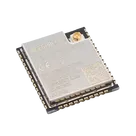
Pricing & Availability
Distributor | Qty 1 |
|---|
Assets

ESP32-WROOM-32UE.png
ESP32-WROOM-32UEThumbnailMODULE_ESP32-WROOM-32UE(M113EH6400UH3Q0).kicad_mod
Footprint_V5Footprint
ESP32-WROOM-32UE(M113EH6400UH3Q0)
defaultDefaultESP32-WROOM-32UE_M113EH6400UH3Q0_.step
3D3D ModelControls
Welcome 👋
Flux accelerates your PCB design with AI.
Create your account to start using this component and bring your ideas to life.