Build Guide Overview
0:38
Assessing response options.
Based on the specs you pasted, I think your build has a reasonable chance of becoming a working bench prototype, but I would not expect it to work correctly on the first build without debugging.
My honest assessment is:
- As a low-voltage bench prototype: probably yes, with iteration
- As a mains-connected protection system that works reliably and safely end-to-end: not yet proven
The docs are detailed enough to define a real build:
- clear controller choice: Raspberry Pi 4
- concrete ADC interface: MCP3008-I/P
- defined current sensing approach using multi-tap CTs
- defined voltage sensing using ZMPT101B
- defined relay/output mapping
- defined LCD and dashboard behavior
- defined software module structure
- defined burden resistor values and filter capacitors
- defined DIP switch logic
- defined startup, test, and service flow
That is enough to build a proof-of-concept system.
Why I do not think it is guaranteed to “just work”
There are still several risk areas.
1. The documentation is internally inconsistent
Across the versions you pasted, important things changed:
- buzzer pin changed
- relay pin assignments changed
- burden resistor values changed
- software architecture changed
- AI implementation changed
- relay behavior descriptions conflict in places
That usually means the design is still evolving, not frozen.
2. The software looks more like an ambitious prototype stack than a hardened product
The software includes:
- monitoring
- AI scoring
- LCD
- dashboard
- cloud notifications
- federated learning
- auto-restoration
That is a lot of moving parts for a first build. The most likely outcome is:
- hardware basics work first
- monitoring works next
- dashboard/LCD mostly work
- relay logic needs debugging
- AI thresholds and restoration logic need tuning
Even with the specified resistor values, the current and voltage measurements will depend on:
- exact CT characteristics
- exact ZMPT101B module gain
- burden resistor tolerance
- ADC reference accuracy
- biasing correctness
- noise pickup from enclosure wiring
So I would expect:
- voltage scaling adjustment
- current scaling adjustment
- threshold tuning
- filtering tweaks
Your latest guide uses an 8-channel relay module instead of discrete SSR drivers in the earlier version. That is much easier for prototyping, but still leaves open questions:
- does the module reliably accept 3.3 V GPIO as HIGH?
- does it default to the safe state at Pi boot?
- does the wiring logic match your software assumptions?
- are the controlled loads/contactors wired exactly as the code assumes?
That part often causes first-build problems.
5. The AI claims are much more uncertain than the hardware claims
The build can likely become a working monitoring and control prototype before it becomes a working AI cyber-physical threat detector.
I would trust these in this order:
- Raspberry Pi 4 boots and runs code
- MCP3008-I/P reads channels
- 16x2 character LCD with I2C backpack works
- LEDs and Active Piezo Buzzer 5V work
- relay channels switch
- CT/voltage readings become believable
- dashboard works
- restoration logic works
- AI threat detection works well
The last 2 to 3 are the least certain.
My bottom-line answer
If you build it exactly as written, will it power up and do something useful?
Probably yes.
Will it immediately be a fully reliable working Volta Guard system?
Probably no.
Is it realistic as a prototype?
Yes.
Is it realistic as a first-pass production-safe electrical protection product?
No.
Best expectation to set
Expect this sequence:
- Phase 1: hardware powers on
- Phase 2: LCD, GPIO, relay module, and ADC communications work
- Phase 3: voltage/current readings need calibration
- Phase 4: dashboard and logging stabilize
- Phase 5: relay logic and restoration behavior get debugged
- Phase 6: AI and thresholds need tuning from real data
I would call it a:
- credible prototype design
- not yet a proven finished prototype
- definitely not yet a proven field-safe autonomous protection system
Build it in this order, and stop after each stage:
- Raspberry Pi 4 + software only
- 16x2 character LCD with I2C backpack + LEDs + Active Piezo Buzzer 5V
- MCP3008-I/P + fake/test analog inputs
- ZMPT101B and CT channels on the bench
- 8-channel relay module logic testing with safe loads only
- only then panel-side integration with an electrician
If you want, I can next give you a pass/fail prototype readiness checklist with three columns:
- likely works
- needs bench validation
- high-risk / redesign recommended
Prototype checklist
Bench validation items
High-risk redesigns
9 days
Ready.
P2
P1
Reviews

- Wirelessly connects nets on schematic. Used to organize schematics and separate functional blocks. To wirelessly connect net portals, give them same designator. #portaljharwinbarrozo43.0M
- Wirelessly connects power nets on schematic. Identical to the net portal, but with a power symbol. Used to organize schematics and separate functional blocks. To wirelessly connect power net portals, give them the same designator. #portal #powerjharwinbarrozo11.4M
- A generic fixed resistor ideal for rapid circuit topology development. Its footprint automatically adapts based on the selected package case code—supporting 0402, 0603, 0805, 1203, and many other standard SMD packages, as well as axial horizontal and vertical configurations. Save precious design time by seamlessly add more information to this part (value, footprint, etc.) as it becomes available. Standard resistor values: 1.0 ohm, 10 ohm, 100 ohm, 1.0k ohm, 10k ohm, 100k ohm, 1.0M ohm 1.1 ohm, 11 ohm, 110 ohm, 1.1k ohm, 11k ohm, 110k ohm, 1.1M ohm 1.2 ohm, 12 ohm, 120 ohm, 1.2k ohm, 12k ohm, 120k ohm, 1.2M ohm 1.3 ohm, 13 ohm, 130 ohm, 1.3k ohm, 13k ohm, 130k ohm, 1.3M ohm 1.5 ohm, 15 ohm, 150 ohm, 1.5k ohm, 15k ohm, 150k ohm, 1.5M ohm 1.6 ohm, 16 ohm, 160 ohm, 1.6k ohm, 16k ohm, 160k ohm, 1.6M ohm 1.8 ohm, 18 ohm, 180 ohm, 1.8K ohm, 18k ohm, 180k ohm, 1.8M ohm 2.0 ohm, 20 ohm, 200 ohm, 2.0k ohm, 20k ohm, 200k ohm, 2.0M ohm 2.2 ohm, 22 ohm, 220 ohm, 2.2k ohm, 22k ohm, 220k ohm, 2.2M ohm 2.4 ohm, 24 ohm, 240 ohm, 2.4k ohm, 24k ohm, 240k ohm, 2.4M ohm 2.7 ohm, 27 ohm, 270 ohm, 2.7k ohm, 27k ohm, 270k ohm, 2.7M ohm 3.0 ohm, 30 ohm, 300 ohm, 3.0K ohm, 30K ohm, 300K ohm, 3.0M ohm 3.3 ohm, 33 ohm, 330 ohm, 3.3k ohm, 33k ohm, 330k ohm, 3.3M ohm 3.6 ohm, 36 ohm, 360 ohm, 3.6k ohm, 36k ohm, 360k ohm, 3.6M ohm 3.9 ohm, 39 ohm, 390 ohm, 3.9k ohm, 39k ohm, 390k ohm, 3.9M ohm 4.3 ohm, 43 ohm, 430 ohm, 4.3k ohm, 43K ohm, 430K ohm, 4.3M ohm 4.7 ohm, 47 ohm, 470 ohm, 4.7k ohm, 47k ohm, 470k ohm, 4.7M ohm 5.1 ohm, 51 ohm, 510 ohm, 5.1k ohm, 51k ohm, 510k ohm, 5.1M ohm 5.6 ohm, 56 ohm, 560 ohm, 5.6k ohm, 56k ohm, 560k ohm, 5.6M ohm 6.2 ohm, 62 ohm, 620 ohm, 6.2k ohm, 62K ohm, 620K ohm, 6.2M ohm 6.8 ohm, 68 ohm, 680 ohm, 6.8k ohm, 68k ohm, 680k ohm, 6.8M ohm 7.5 ohm, 75 ohm, 750 ohm, 7.5k ohm, 75k ohm, 750k ohm, 7.5M ohm 8.2 ohm, 82 ohm, 820 ohm, 8.2k ohm, 82k ohm, 820k ohm, 8.2M ohm 9.1 ohm, 91 ohm, 910 ohm, 9.1k ohm, 91k ohm, 910k ohm, 9.1M ohm #generics #CommonPartsLibraryjharwinbarrozo1.5M
- A generic fixed capacitor ideal for rapid circuit topology development. You can choose between polarized and non-polarized types, its symbol and the footprint will automatically adapt based on your selection. Supported options include standard SMD sizes for ceramic capacitors (e.g., 0402, 0603, 0805), SMD sizes for aluminum electrolytic capacitors, and through-hole footprints for polarized capacitors. Save precious design time by seamlessly add more information to this part (value, footprint, etc.) as it becomes available. Standard capacitor values: 1.0pF, 10pF, 100pF, 1000pF, 0.01uF, 0.1uF, 1.0uF, 10uF, 100uF, 1000uF, 10000uF 1.1pF, 11pF, 110pF, 1100pF 1.2pF, 12pF, 120pF, 1200pF 1.3pF, 13pF, 130pF, 1300pF 1.5pF, 15pF, 150pF, 1500pF, 0.015uF, 0.15uF, 1.5uF, 15uF, 150uF, 1500uF 1.6pF, 16pF, 160pF, 1600pF 1.8pF, 18pF, 180pF, 1800pF 2.0pF, 20pF, 200pF, 2000pF 2.2pF, 22pF, 220pF, 2200pF, 0.022uF, 0.22uF, 2.2uF, 22uF, 220uF, 2200uF 2.4pF, 24pF, 240pF, 2400pF 2.7pF, 27pF, 270pF, 2700pF 3.0pF, 30pF, 300pF, 3000pF 3.3pF, 33pF, 330pF, 3300pF, 0.033uF, 0.33uF, 3.3uF, 33uF, 330uF, 3300uF 3.6pF, 36pF, 360pF, 3600pF 3.9pF, 39pF, 390pF, 3900pF 4.3pF, 43pF, 430pF, 4300pF 4.7pF, 47pF, 470pF, 4700pF, 0.047uF, 0.47uF, 4.7uF, 47uF, 470uF, 4700uF 5.1pF, 51pF, 510pF, 5100pF 5.6pF, 56pF, 560pF, 5600pF 6.2pF, 62pF, 620pF, 6200pF 6.8pF, 68pF, 680pF, 6800pF, 0.068uF, 0.68uF, 6.8uF, 68uF, 680uF, 6800uF 7.5pF, 75pF, 750pF, 7500pF 8.2pF, 82pF, 820pF, 8200pF 9.1pF, 91pF, 910pF, 9100pF #generics #CommonPartsLibraryjharwinbarrozo1.5M
- A generic fixed inductor suitable for rapid circuit topology development. The footprint automatically adapts based on the selected package, supporting standard SMD sizes (e.g., 0402, 0603, 0805) as well as well-known inductor packages such as SDR1806, PA4320, SRN6028, and SRR1260. Standard inductor values: 1.0 nH, 10 nH, 100 nH, 1.0 µH, 10 µH, 100 µH, 1.0 mH 1.2 nH, 12 nH, 120 nH, 1.2 µH, 12 µH, 120 µH, 1.2 mH 1.5 nH, 15 nH, 150 nH, 1.5 µH, 15 µH, 150 µH, 1.5 mH 1.8 nH, 18 nH, 180 nH, 1.8 µH, 18 µH, 180 µH, 1.8 mH 2.2 nH, 22 nH, 220 nH, 2.2 µH, 22 µH, 220 µH, 2.2 mH 2.7 nH, 27 nH, 270 nH, 2.7 µH, 27 µH, 270 µH, 2.7 mH 3.3 nH, 33 nH, 330 nH, 3.3 µH, 33 µH, 330 µH, 3.3 mH 3.9 nH, 39 nH, 390 nH, 3.9 µH, 39 µH, 390 µH, 3.9 mH 4.7 nH, 47 nH, 470 nH, 4.7 µH, 47 µH, 470 µH, 4.7 mH 5.6 nH, 56 nH, 560 nH, 5.6 µH, 56 µH, 560 µH, 5.6 mH 6.8 nH, 68 nH, 680 nH, 6.8 µH, 68 µH, 680 µH, 6.8 mH 8.2 nH, 82 nH, 820 nH, 8.2 µH, 82 µH, 820 µH, 8.2 mH #generics #CommonPartsLibraryjharwinbarrozo15.7k
- An electrical connector acting as reusable interface to a conductor and creating a point where external circuits can be connected.Terminal
- 47 kOhms ±5% 0.125W, 1/8W Chip Resistor 0805 (2012 Metric) Automotive AEC-Q200 Thick Film #forLedBlinkjharwinbarrozo1.2M
- 10uF Capacitor Aluminum Polymer 20% 16V SMD 5x5.3mm #forLedBlink #commonpartslibrary #capacitor #aluminumpolymer #radialcanjharwinbarrozo1.2M
- Yellow 595nm LED Indication - Discrete 1.7V 1206 (3216 Metric) #forLedBlinkjharwinbarrozo1.1M


6x6mm micro tactile switch
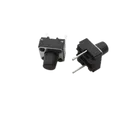
Micro Tactile Switch Momentary Tact DIP Switch 2Pin 6 X 6mm Micro Touch Push Button Switch #Commonpartlibrary #switch #THT #Tactile-switch #2pin
Pricing & Availability
Distributor | Qty 1 |
|---|
Controls
Welcome 👋
Flux accelerates your PCB design with AI.
Create your account to start using this component and bring your ideas to life.