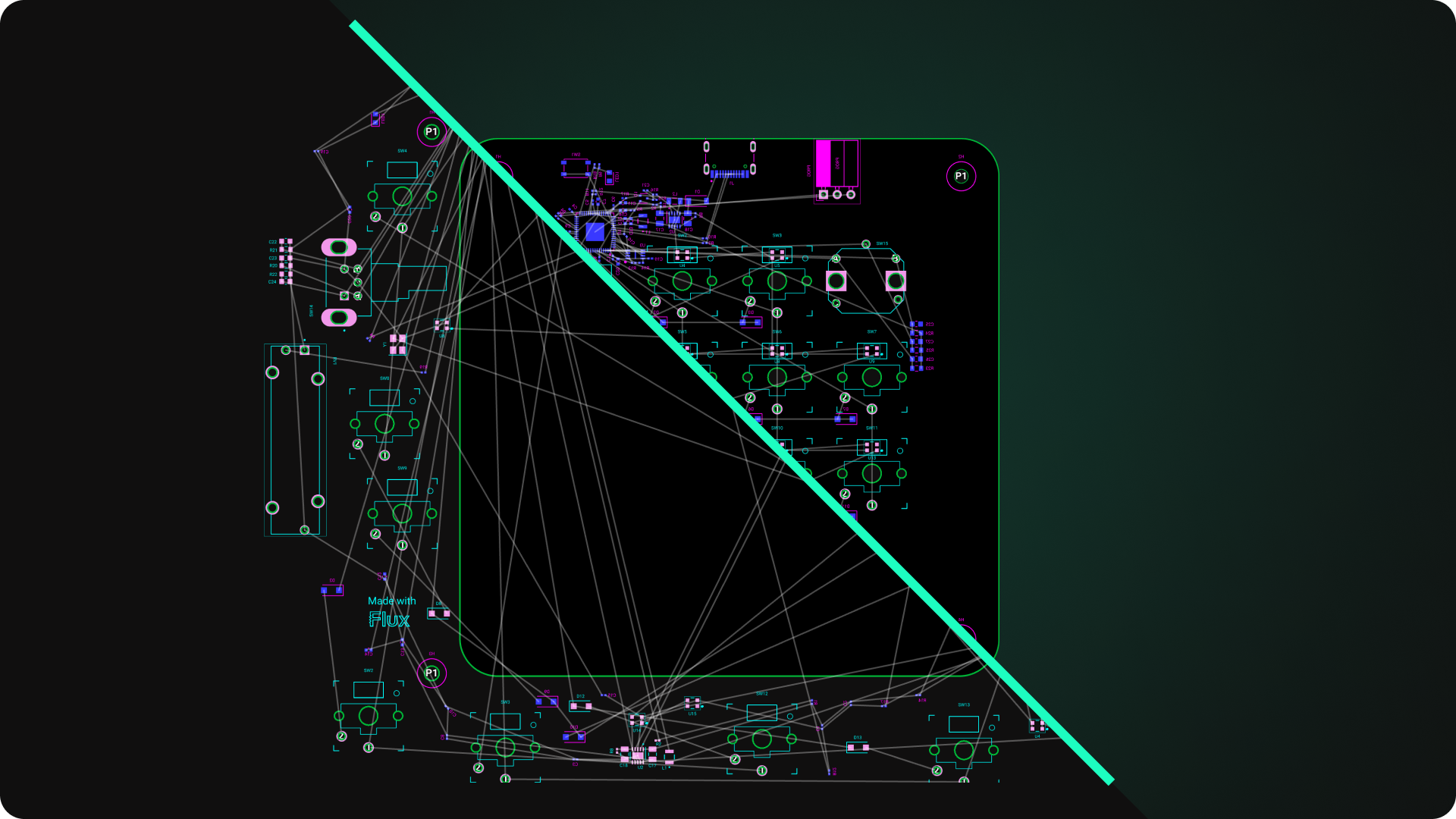
Temperature and Humidity Sensor Design
1:10
Addressing user complaint.
Interpreting user requests.
Resolving PCB visibility issues.
Deciding on user requests.
Formulating a plan for user requests.
Preparing to respond to user inquiry.
- Replace most portals with explicit wires and clear net labels; tidy groupings.
- Fix ERC, ensure every part has a valid footprint, and sync so components show in PCB.
- Configure 4‑layer roles, RF keep‑out, and selector-based rules (power/clock/vias).
- Group USB‑C + VBUS protection; cluster charger/buck/load‑switch; CH340E near USB‑C; keep INMP441 away from power; microSD at edge. Run Auto‑Layout and review DRC.
- Refactor the schematic for the Careful Silver Tricorder project by replacing net portals with explicit wires and clear net labels, resolving ERC red concerns, and ensuring that all components have assigned footprints so they appear on the PCB. Then, prepare the PCB layout with a 4-layer stackup, defined layout rules (including RF keep-out restrictions), and use Auto-Layout with appropriate component grouping and routing.
- Schematic Refactoring
- Replace most net portals with explicit wires and add clear net labels to all connections.
- Verify and add any missing reference nets (e.g., for VBUS, SYS, 3V3, I2S_WS, SD_SCK, EN, and GND) and group related signal labels.
- Run ERC and address red alert warnings by validating connections and ensuring all net labels match component pins.
- Footprint and ERC/DRC Synchronization
- Confirm that all schematic components (U1 ESP32-WROOM-32D, U7 INMP441, J1 microSD socket, U3 CH340E, etc.) have valid assigned footprints.
- Synchronize the schematic to the PCB layout so that all components are visible.
- PCB Layout Preparation
- Set up a 4-layer PCB stackup, assigning proper roles to each layer (Top, Inner1, Inner2, Bottom).
- Define PCB rules including trace width, spacing, specific rules for power and clock nets, and RF keep-out areas (especially around U1 antenna areas).
- Apply guidelines for grouping: cluster USB-C with VBUS protection, place CH340E near USB-C, cluster U4/U5/U6 for power management, and properly position INMP441 and microSD for signal integrity and accessibility.
- Auto-Layout & Review
- Run the Auto-Layout tool to place and route components according to the defined rules and grouping plan.
- Review the layout for clearance, routing conflicts, and manufacturability.
- Addressing the Empty PCB View
- Verify that all components in the schematic have valid footprints linked to the PCB layout.
- Ensure schematic-to-PCB synchronization is complete; fix any missing component or footprint associations that result in an empty PCB view.
- All red ERC concerns are resolved and explicit wiring is visible in the schematic.
- Every component has a valid footprint and appears in the PCB layout.
- The PCB stackup is properly configured as a 4-layer board with designated RF keep-out areas.
- Auto-Layout completes with all parts placed and routed without errors, ensuring manufacturability and reliable operation.
Started implementing a plan
# Goal
- Refactor the schematic for the Careful Silver Tricorder project by replacing net portals with explicit wires and clear net labels, resolving ERC red concerns, and ensuring that all components have assigned footprints so they appear on the PCB. Then, prepare the PCB layout with a 4-layer stackup, defined layout rules (including RF keep-out restrictions), and use Auto-Layout with appropriate component grouping and routing.
# Implementation plan
1. Schematic Refactoring
1. Replace most net portals with explicit wires and add clear net labels to all connections.
2. Verify and add any missing reference nets (e.g., for VBUS, SYS, 3V3, I2S_WS, SD_SCK, EN, and GND) and group related signal labels.
3. Run ERC and address red alert warnings by validating connections and ensuring all net labels match component pins.
2. Footprint and ERC/DRC Synchronization
1. Confirm that all schematic components (U1 ESP32-WROOM-32D, U7 INMP441, J1 microSD socket, U3 CH340E, etc.) have valid assigned footprints.
2. Synchronize the schematic to the PCB layout so that all components are visible.
3. PCB Layout Preparation
1. Set up a 4-layer PCB stackup, assigning proper roles to each layer (Top, Inner1, Inner2, Bottom).
2. Define PCB rules including trace width, spacing, specific rules for power and clock nets, and RF keep-out areas (especially around U1 antenna areas).
3. Apply guidelines for grouping: cluster USB-C with VBUS protection, place CH340E near USB-C, cluster U4/U5/U6 for power management, and properly position INMP441 and microSD for signal integrity and accessibility.
4. Auto-Layout & Review
1. Run the Auto-Layout tool to place and route components according to the defined rules and grouping plan.
2. Review the layout for clearance, routing conflicts, and manufacturability.
5. Addressing the Empty PCB View
1. Verify that all components in the schematic have valid footprints linked to the PCB layout.
2. Ensure schematic-to-PCB synchronization is complete; fix any missing component or footprint associations that result in an empty PCB view.
# Success criteria
- All red ERC concerns are resolved and explicit wiring is visible in the schematic.
- Every component has a valid footprint and appears in the PCB layout.
- The PCB stackup is properly configured as a 4-layer board with designated RF keep-out areas.
- Auto-Layout completes with all parts placed and routed without errors, ensuring manufacturability and reliable operation.
Stopped due to a problem. Please try again.


Welcome 👋
Flux helps you build PCBs faster with an AI teammate!
Create your account to collaborate, stay updated, fork your own version, and get instant answers from our AI agent.