Chat
Welcome to Flux
Treat Flux like your intern. Tell it what you'd like to build and it'll get to work. You can also ask it questions, brainstorm ideas, and teach it your preferences. Learn More
Explain project
Write a project description
Find schematic issues
Create a test plan
Simulate a circuit
Prepare for Manufacturing
Component Selection Workflow
New Subsystem Wizard
Write I2C initialization code
Generate firmware skeleton
MCU Boilerplate
Boost Converter
create a high level mermaid block diagram of MCU Boilerplate. Include key compon...

@copilot create a high level mermaid block diagram of MCU Boilerplate. Include key component's manufacturer part number in each block whenever possible.
1y
To create a high-level mermaid block diagram for the MCU Boilerplate and include key components with their manufacturer part numbers, let's break down the structure. The diagram will include connections between the MCU and key components such as the NFC IC.
Here's a mermaid block diagram:
Explanationgraph TD; MCU[MCU Boilerplate] NFC_IC["NFC IC NT3H2111W0FTTJ"] MCU -->|I2C| NFC_IC subgraph Power_Supply VCC GND end MCU -->|Power| VCC NFC_IC -->|Power| VCC MCU -->|Ground| GND NFC_IC -->|Ground| GND subgraph Components R5["Resistor R5\nValue: 47 Ohms"] C15["Capacitor C15\nMPN: node_04025A7R0CAT2A\n7pF"] C16["Capacitor C16\n220nF"] LED9["LED9\nForward Voltage Unknown"] end VCC --> R5 R5 --> LED9 C15 --> NFC_IC C16 --> VCC GND --> C16 GND --> NFC_IC GND --> LED9
- MCU Boilerplate: This acts as the central component in your schematic, representing the microcontroller connections.
- **NFC IC NT3H2111W0FTTJ: The NFC IC connected via I2C to the MCU.
- Power Supply: Represents power and ground connections shared by the components.
- Components: R5, C15, C16, and LED9 are additional components in the schematic. R5, C15, and C16 values are included where applicable.
This is a basic overview; make sure to include any missing components or update as needed for your specific schematic requirements.
1y
Koneksikan diagram ini dengan otomatis
1y
Certainly! Let's create a high-level mermaid block diagram for the MCU Boilerplate. Since specific connections to other components weren't mentioned in the project description provided, I'll include the MCU boilerplate's essential pins and make some assumptions about possible connections.
Here is a basic block diagram that includes the key components and manufacturer part numbers when available:
Key Assumptions:graph TD; MCU["MCU BoilerplateUnknown MPN"] DC-Reg("DC Regulator") NFC[IC1 - "NFC Controller[NT3H2111W0FTTJ](https://www.flux.ai/search?type=components&q=NT3H2111W0FTTJ)"] LED["LED9"] Resistor[R5 - "Resistor47Ω"] Capacitor[C15 - "Capacitor7pF[04025A7R0CAT2A](https://www.flux.ai/search?type=components&q=04025A7R0CAT2A)"] Capacitor2[C16 - "Capacitor220nF"] %% Connections DC-Reg --> MCU NFC --> MCU NFC --> Resistor Resistor --> LED Capacitor --> NFC Capacitor2 --> NFC
- MCU Boilerplate: This is a generic placeholder block with the essential pins exposed.
- NFC: Communicates with the MCU and might be connected via I2C or a similar interface using the SCL and SDA pins.
- LED9 and R5: Represent a simple LED circuit where R5 acts as a current-limiting resistor.
- Capacitors C15 and C16 are placed as decoupling capacitors around the NFC controller for signal integrity and power stability.
If you have additional specific connections or parts you want to include or adjust, feel free to let me know!
1y
6
Koneksi kemana ?
@copilot Koneksi kemana ?
1y
Berikut adalah beberapa koneksi dalam proyek Anda yang mungkin perlu diperiksa atau disesuaikan:
Koneksi yang Sudah Ada:
-
Net GND:
-
Net $IC1 - VOUT$:
-
Net $LED9 - A$:
- Jika Anda mempertimbangkan penggunaan modul NFC (IC1 adalah modul NT3H2111W0FTTJ), Anda perlu memastikan bahwa pin SCL dan SDA terhubung ke pin komunikasi sesuai dengan mikrokontroler atau perangkat Anda yang lain.
Apakah Anda memiliki bagian lain yang memerlukan klarifikasi koneksi atau bagian dari sirkuit yang ingin Anda diskusikan lebih lanjut?
1y
4
recommend a replacement for LB.
@copilot recommend a replacement for LB.
1y
The designator LB is currently labeled as a net in your project and is set to be excluded from the BOM and PCB. It doesn't appear to be a specific component, but rather a logical net used within your schematic.
If you meant to refer to a component and provided "LB" as a placeholder or incorrect designator, could you clarify what type of component you're looking to replace? For instance, if you're looking for an inductor, a common replacement would be a similar inductor with matching electrical characteristics, such as inductance, current rating, and package size. Let me know if you meant a specific component or if you have more details on the type of replacement you need!
1y
2
explain this project.
@copilot explain this project.
1y
Certainly! This project appears to be a design for a functional PCB business card with NFC capabilities. Here's a breakdown of the main components and features:
Project Overview
- Purpose: This PCB business card showcases the user's portfolio with functionality using NFC to link to their Flux page. It incorporates various components and modules to enhance its features.
- Features:
- NFC functionality for linking to a webpage.
- Additional electronic components to add more features.
- Instructions and templates for personalizing the design with a QR code.
-
NFC Chip:
- NT3H2111W0FTTJ: An NFC IC used to store and transmit data through Near Field Communication. It's connected via I2C interface with pins like SCL, SDA, and power pins.
-
Capacitors and Resistors:
- Capacitors: C16 (220nF) and C15 (7pF) are used for decoupling and tuning the circuit.
- Resistor: R5 has a resistance value of 47 ohms, possibly used for current limiting or other purposes.
-
LED:
- LED9 provides visual feedback and indicates power or operational status.
-
Microcontroller Boilerplate:
- This component includes multiple pin connections for interfacing with other modules, providing a platform for further development and integration of features.
-
Boost Converter:
- Used to regulate and boost the voltage supply to the circuit if necessary.
- NFC Interface: The NFC IC (IC1) is connected to various components through defined nets such as:
- VOUT and VCC: These power the components (IC1:VOUT to VCC).
- GND: A common ground connection (IC1:VSS to LED9:K).
- Other Logic: Connections for controlling LEDs and managing signals between the microcontroller and other components.
- Links to Resources: The project includes links to build instructions and additional project documentation such as a Bill of Materials (BoM).
- Licensing: Creative Commons license allows for sharing and adaptation with attribution.
This innovative project demonstrates an intersection of design, electronics, and personal branding through a functional business card. Is there a specific part you'd like more detailed information on?
1y
Auto Conection
1y
The project you're working on appears to be a business card with electronics functionalities, including an NFC feature that links to your Flux page. Here's a brief overview of the project's components and connections:
Project Overview
- The project is a PCB business card featuring various components, including an NFC module, LEDs, resistors, capacitors, and a microcontroller.
- The NFC module is based on the NT3H2111W0FTTJ.
- The card may also include notes or instructions, likely related to assembly or use.
- NFC Module: Uses the NT3H2111W0FTTJ IC.
- LED: LED9 is included for indication.
- Resistors & Capacitors: Includes R5 $47$ ohms and capacitors like C15 $7pF$ and C16 $220nF$.
- Microcontroller Boilerplate: Basic microcontroller pin configuration is set up as a boilerplate.
- Ground (GND) is connected to various components like the NFC IC and LED.
- VCC (Power) is distributed among the NFC IC, resistor R5, and capacitor C16.
- NFC Interface is routed through connections between IC1 LA, LB, and capacitor C15.
- LED Connection: Connects R5:P1 to LED9:A.
Would you like any specific help or explanation on a certain part of this project, or should I elaborate on any connections or components?
1y
5
create a high level mermaid block diagram of this project. Include key component...
@copilot create a high level mermaid block diagram of this project. Include key component's manufacturer part number in each block whenever possible.
1y
Sure! Here's a high-level mermaid block diagram representing your project. I've included the key components and their manufacturer part numbers where applicable.
graph TD;
    A[NFC Chip: NT3H2111W0FTTJ] --> B[VCC];
    A --> C[GND];
    A --> D[Capacitor: node_04025A7R0CAT2A];
    A --> E[Resistor: 47Ω];
    E --> F[LED];
    G[MCU Boilerplate] --> F;

    B -->|Power| G;
    C -->|Ground| G;
    G --> H[Boost Converter];
    H -- Power Supply --> F;

    subgraph NFC Business Card
        A
    end

    subgraph Power Management
        B
        C
        H
    end

    subgraph Components
        D
        E
        F
    end
This diagram illustrates the flow between different key components of your project. If there are any more details you would like included or if I should make adjustments, feel free to let me know!
1y
7
buatkan saya aplipiwer 5000 watt
@copilot buatkan saya aplipiwer 5000 watt
1y
Membuat amplifier dengan daya 5000 watt adalah proyek yang kompleks dan membutuhkan pemahaman mendalam tentang desain elektronik, serta komponen yang tepat untuk menangani daya besar tersebut. Selain itu, Anda akan memerlukan rangkaian pendinginan yang efektif untuk mencegah kerusakan akibat panas berlebih. Berikut adalah beberapa langkah dasar yang perlu dipertimbangkan:
Komponen Utama
-
Transistor atau Modul Amplifikasi: Untuk daya 5000 watt, Anda mungkin perlu menggunakan beberapa transistor daya tinggi atau modul amplifikasi seperti MOSFET atau IGBT yang dirangkai secara paralel.
-
Power Supply: Power supply harus mampu menyediakan tegangan dan arus cukup besar. Anda mungkin perlu menggunakan transformator besar dan rangkaian penyearah untuk menyesuaikan tegangan ke level yang sesuai.
-
Pendinginan: Gunakan heat sink besar dan/atau kipas untuk menghilangkan panas dari komponen utama, terutama transistor.
-
Proteksi: Sertakan sirkuit proteksi untuk mencegah arus berlebih dan panas berlebih, yang dapat menyebabkan kerusakan pada sirkuit.
-
Pre-amplifier: Untuk mengelola sinyal masuk dan memastikan kualitas suara yang baik sebelum penguatan utama.
-
Stage Penguatan Utama: Di sinilah sebagian besar penguatan daya terjadi. Menggunakan konfigurasi Class AB atau Class D mungkin lebih efisien untuk daya tinggi.
-
Output Stage: Mengatur output akhir ke speaker, memastikan impedansi yang sesuai untuk mencocokkan daya keluaran dan keselamatan speaker.
Berikut adalah contoh diagram blok dasar untuk amplifier ini menggunakan mermaid:
Tantangangraph TD; A[Input] --> B[Pre-amplifier] B --> C[Stage Penguatan Utama] C --> D[Output Stage] D --> E[Speaker] C --> F[Pendinginan] C --> G[Proteksi] E --> H[Pengukuran Suara]
- Efisiensi: Efisiensi sirkuit sangat penting untuk mengurangi panas yang dihasilkan dan memperpanjang umur komponen.
- Pengelolaan Panas: Sistem pendingin yang dirancang dengan baik sangat penting.
- Komponen: Mendapatkan komponen berkualitas yang dapat menangani arus dan tegangan tinggi.
Untuk memulai, Anda mungkin ingin mencari rangkaian referensi atau kit amplifier daya tinggi yang dapat dimodifikasi untuk kebutuhan Anda. Jika Anda memerlukan detail lebih lanjut, seperti desain skematis atau pemilihan komponen tertentu, informasikan kepada saya!
1y
Komponen yang dibutuhkan dan buatkan saya rangkaiannya
1y
Untuk membuat amplifier dengan daya 5000 watt, kita harus memilih komponen yang sesuai yang dapat menangani daya dan tegangan tinggi. Berikut adalah daftar komponen umum yang Anda perlukan, diikuti dengan penjelasan singkat tentang desain dan skemanya.
Komponen Utama
-
Power Supply: Transformator besar dengan kapasitas hingga 5000 VA, dioda penyearah, kapasitor filter (seperti 10,000 µF/80V atau sesuai kebutuhan tegangan).
-
Pendingin: Heat sink besar dan kipas pendingin untuk setiap transistor daya.
-
Pre-amplifier IC: IC seperti NE5532 atau LM358 untuk tahap amplifikasi awal.
-
Resistor, kapasitor, dan induktor: Berbagai nilai untuk biasing dan filter.
-
Proteksi: Termistor dan saklar otomatis untuk proteksi arus berlebih.
-
Output Transformer (opsional): Tergantung pada desain, jika menggunakan Class D, tidak selalu diperlukan.
Penjelasan SkemaPlaintext
+--------------------+ | Power Supply | | +------$$T$$-------+ | | | Bridge Rectifier| | | +------$$R$$-------+ | | | Large Caps | | +-----$$C$$ $$C$$------->| | $$R$$ | +-----+ $$O$$ | | Amplifier Module |-----+-----$$Speaker$$ | (Class D) | | | +---$$MOSFET$$----+ | | | | $$MOSFET$$ | | +---$$Protection$$ | +-------------->+ | | | Low Pass Filter | +----------------->|
-
Power Supply: Memberikan daya DC ke amplifier. Gunakan dioda penyearah untuk menghasilkan tegangan DC dari transformator AC besar, dan tambahkan kapasitor smoothing untuk mengurangi noise pada tegangan output.
-
Amplifier Stage: Gunakan modul Class D untuk efisiensi tinggi. Class D amplifier bekerja dengan cara PWM (Pulse Width Modulation) untuk mengoperasikan transistor daya hanya dalam kondisi sepenuhnya ON atau OFF, mengurangi kehilangan daya.
-
Low Pass Filter: Menghilangkan komponen frekuensi tinggi dari modul Class D, hanya menyisakan sinyal audio asli untuk diberikan ke speaker.
-
Pendingin: Penting untuk menjaga suhu transistor tetap rendah.
-
Pencocokan Impedansi: Penting agar impedansi output dari amplifier sesuai dengan impedansi speaker untuk menghindari kerusakan.
-
Stabilitas: Pastikan sirkuit memiliki proteksi terhadap arus pendek dan pemanasan berlebih.
-
Konstruksi Fisik: Mengatur tata letak komponen dengan baik untuk menghindari interferensi dan memastikan disipasi panas yang efisien.
Desain ini adalah garis besar sederhana dan membutuhkan modifikasi lebih lanjut dan tes praktis. Untuk proyek sebesar ini, sangat disarankan kerja sama dengan seorang insinyur elektronik berpengalaman untuk memastikan keamanan dan keandalan. Jika Anda memerlukan panduan lebih lanjut atau skematik spesifik pada perangkat lunak CAD, beri tahu saya!
1y
1
take action
@copilot take action
1y
It looks like you're working on a PCB business card project that includes NFC functionality and some additional modules. Is there something specific you need help with in this project? For example, do you need assistance with component placement, wiring connections, or something else? Feel free to let me know how I can assist you!
1y
9
LB
R5
Resistance
47 Ω
C16
Capacitance
220nF
VCC
LB
LB
C15
Capacitance
7pF
LED9
Note 2
Line 1
Find my Modules in the Flux Library!
Reviews

- Wirelessly connects nets on schematic. Used to organize schematics and separate functional blocks. To wirelessly connect net portals, give them same designator. #portaljharwinbarrozo43.0M
- Wirelessly connects power nets on schematic. Identical to the net portal, but with a power symbol. Used to organize schematics and separate functional blocks. To wirelessly connect power net portals, give them the same designator. #portal #powerjharwinbarrozo11.4M
- A generic fixed resistor ideal for rapid circuit topology development. Its footprint automatically adapts based on the selected package case code—supporting 0402, 0603, 0805, 1203, and many other standard SMD packages, as well as axial horizontal and vertical configurations. Save precious design time by seamlessly add more information to this part (value, footprint, etc.) as it becomes available. Standard resistor values: 1.0 ohm, 10 ohm, 100 ohm, 1.0k ohm, 10k ohm, 100k ohm, 1.0M ohm 1.1 ohm, 11 ohm, 110 ohm, 1.1k ohm, 11k ohm, 110k ohm, 1.1M ohm 1.2 ohm, 12 ohm, 120 ohm, 1.2k ohm, 12k ohm, 120k ohm, 1.2M ohm 1.3 ohm, 13 ohm, 130 ohm, 1.3k ohm, 13k ohm, 130k ohm, 1.3M ohm 1.5 ohm, 15 ohm, 150 ohm, 1.5k ohm, 15k ohm, 150k ohm, 1.5M ohm 1.6 ohm, 16 ohm, 160 ohm, 1.6k ohm, 16k ohm, 160k ohm, 1.6M ohm 1.8 ohm, 18 ohm, 180 ohm, 1.8K ohm, 18k ohm, 180k ohm, 1.8M ohm 2.0 ohm, 20 ohm, 200 ohm, 2.0k ohm, 20k ohm, 200k ohm, 2.0M ohm 2.2 ohm, 22 ohm, 220 ohm, 2.2k ohm, 22k ohm, 220k ohm, 2.2M ohm 2.4 ohm, 24 ohm, 240 ohm, 2.4k ohm, 24k ohm, 240k ohm, 2.4M ohm 2.7 ohm, 27 ohm, 270 ohm, 2.7k ohm, 27k ohm, 270k ohm, 2.7M ohm 3.0 ohm, 30 ohm, 300 ohm, 3.0K ohm, 30K ohm, 300K ohm, 3.0M ohm 3.3 ohm, 33 ohm, 330 ohm, 3.3k ohm, 33k ohm, 330k ohm, 3.3M ohm 3.6 ohm, 36 ohm, 360 ohm, 3.6k ohm, 36k ohm, 360k ohm, 3.6M ohm 3.9 ohm, 39 ohm, 390 ohm, 3.9k ohm, 39k ohm, 390k ohm, 3.9M ohm 4.3 ohm, 43 ohm, 430 ohm, 4.3k ohm, 43K ohm, 430K ohm, 4.3M ohm 4.7 ohm, 47 ohm, 470 ohm, 4.7k ohm, 47k ohm, 470k ohm, 4.7M ohm 5.1 ohm, 51 ohm, 510 ohm, 5.1k ohm, 51k ohm, 510k ohm, 5.1M ohm 5.6 ohm, 56 ohm, 560 ohm, 5.6k ohm, 56k ohm, 560k ohm, 5.6M ohm 6.2 ohm, 62 ohm, 620 ohm, 6.2k ohm, 62K ohm, 620K ohm, 6.2M ohm 6.8 ohm, 68 ohm, 680 ohm, 6.8k ohm, 68k ohm, 680k ohm, 6.8M ohm 7.5 ohm, 75 ohm, 750 ohm, 7.5k ohm, 75k ohm, 750k ohm, 7.5M ohm 8.2 ohm, 82 ohm, 820 ohm, 8.2k ohm, 82k ohm, 820k ohm, 8.2M ohm 9.1 ohm, 91 ohm, 910 ohm, 9.1k ohm, 91k ohm, 910k ohm, 9.1M ohm #generics #CommonPartsLibraryjharwinbarrozo1.5M
- A generic fixed capacitor ideal for rapid circuit topology development. You can choose between polarized and non-polarized types, its symbol and the footprint will automatically adapt based on your selection. Supported options include standard SMD sizes for ceramic capacitors (e.g., 0402, 0603, 0805), SMD sizes for aluminum electrolytic capacitors, and through-hole footprints for polarized capacitors. Save precious design time by seamlessly add more information to this part (value, footprint, etc.) as it becomes available. Standard capacitor values: 1.0pF, 10pF, 100pF, 1000pF, 0.01uF, 0.1uF, 1.0uF, 10uF, 100uF, 1000uF, 10000uF 1.1pF, 11pF, 110pF, 1100pF 1.2pF, 12pF, 120pF, 1200pF 1.3pF, 13pF, 130pF, 1300pF 1.5pF, 15pF, 150pF, 1500pF, 0.015uF, 0.15uF, 1.5uF, 15uF, 150uF, 1500uF 1.6pF, 16pF, 160pF, 1600pF 1.8pF, 18pF, 180pF, 1800pF 2.0pF, 20pF, 200pF, 2000pF 2.2pF, 22pF, 220pF, 2200pF, 0.022uF, 0.22uF, 2.2uF, 22uF, 220uF, 2200uF 2.4pF, 24pF, 240pF, 2400pF 2.7pF, 27pF, 270pF, 2700pF 3.0pF, 30pF, 300pF, 3000pF 3.3pF, 33pF, 330pF, 3300pF, 0.033uF, 0.33uF, 3.3uF, 33uF, 330uF, 3300uF 3.6pF, 36pF, 360pF, 3600pF 3.9pF, 39pF, 390pF, 3900pF 4.3pF, 43pF, 430pF, 4300pF 4.7pF, 47pF, 470pF, 4700pF, 0.047uF, 0.47uF, 4.7uF, 47uF, 470uF, 4700uF 5.1pF, 51pF, 510pF, 5100pF 5.6pF, 56pF, 560pF, 5600pF 6.2pF, 62pF, 620pF, 6200pF 6.8pF, 68pF, 680pF, 6800pF, 0.068uF, 0.68uF, 6.8uF, 68uF, 680uF, 6800uF 7.5pF, 75pF, 750pF, 7500pF 8.2pF, 82pF, 820pF, 8200pF 9.1pF, 91pF, 910pF, 9100pF #generics #CommonPartsLibraryjharwinbarrozo1.5M
- A generic fixed inductor suitable for rapid circuit topology development. The footprint automatically adapts based on the selected package, supporting standard SMD sizes (e.g., 0402, 0603, 0805) as well as well-known inductor packages such as SDR1806, PA4320, SRN6028, and SRR1260. Standard inductor values: 1.0 nH, 10 nH, 100 nH, 1.0 µH, 10 µH, 100 µH, 1.0 mH 1.2 nH, 12 nH, 120 nH, 1.2 µH, 12 µH, 120 µH, 1.2 mH 1.5 nH, 15 nH, 150 nH, 1.5 µH, 15 µH, 150 µH, 1.5 mH 1.8 nH, 18 nH, 180 nH, 1.8 µH, 18 µH, 180 µH, 1.8 mH 2.2 nH, 22 nH, 220 nH, 2.2 µH, 22 µH, 220 µH, 2.2 mH 2.7 nH, 27 nH, 270 nH, 2.7 µH, 27 µH, 270 µH, 2.7 mH 3.3 nH, 33 nH, 330 nH, 3.3 µH, 33 µH, 330 µH, 3.3 mH 3.9 nH, 39 nH, 390 nH, 3.9 µH, 39 µH, 390 µH, 3.9 mH 4.7 nH, 47 nH, 470 nH, 4.7 µH, 47 µH, 470 µH, 4.7 mH 5.6 nH, 56 nH, 560 nH, 5.6 µH, 56 µH, 560 µH, 5.6 mH 6.8 nH, 68 nH, 680 nH, 6.8 µH, 68 µH, 680 µH, 6.8 mH 8.2 nH, 82 nH, 820 nH, 8.2 µH, 82 µH, 820 µH, 8.2 mH #generics #CommonPartsLibraryjharwinbarrozo15.9k
- An electrical connector acting as reusable interface to a conductor and creating a point where external circuits can be connected.Terminal
- General Purpose Thick Film Standard Power and High-Power Chip Resistor 47 kOhms ±5% 0.125W, 1/8W Chip Resistor 0805 (2012 Metric) Automotive AEC-Q200 Thick Film Features: - RMCF – standard power ratings - RMCP – high power ratings - Nickel barrier terminations standard - Power derating from 100% at 70ºC to zero at +155ºC - RoHS compliant, REACH compliant, and halogen free - AEC-Q200 compliantjharwinbarrozo1.2M
- 10 µF 16 V Aluminum - Polymer Capacitors Radial, Can - SMD 30mOhm 2000 Hrs @ 105°C #commonpartslibrary #capacitor #aluminumpolymer #radialcanjharwinbarrozo1.2M


PCB Business Card V2
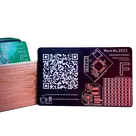
Change History from V1:
-13.56MHz tuning
-larger instruction font
-put some stuff on the back
#template
I wanted to create a business card that has some functionality and shows off a bit of my portfolio IRL:
-NFC to my flux page -here's the instructables
-Put a bunch of modules on it
Find the BoM here
Properties
Pricing & Availability
Distributor | Qty 1 |
|---|
Controls
Welcome 👋
Flux helps you build PCBs faster with an AI teammate!
Create your account to collaborate, stay updated, fork your own version, and get instant answers from our AI agent.
febrilumanga
febrilumanga
copilot
Note 1) and finding modules in the Flux Library (Note 2).VCC) and ground (GND) connections to manage the flow of electricity through the components.