Project Overview and Design Breakdown

1:00

Accessing knowledge base.

Here is a structured explanation of your “Green Dot 2040E5: Robust LoRa/RS485 IoT Node” project based on the current schematic.

1. Overall Purpose
This design is a robust, field-deployable IoT node for (likely outdoor) AgriTech use that can:
  • Be powered from a Li-ion battery with solar input and USB for charging.
  • Communicate wirelessly via LoRaWAN using a U4.
  • Provide RS‑485 industrial bus connectivity using the IC2.
  • Use a compact Seeed XIAO RP2040 module U6 as the main controller/host.
High-level: it is a flexible node that can talk long-range (LoRa) and wired bus (RS485), powered from a small solar‑charged battery.

2. Core Functional Blocks and How They Interact 2.1 Power Input and Battery/Charging
Sources and storage:
  • Solar input via J3 (2‑Position Screw Terminal) on net VSOLAR:
    • Goes through D1 (SS34) into the VIN node.
  • USB power:
    • VUSB net from the XIAO U6 5 V pin, routed via D3 (SS34) into VIN.
  • Battery:
    • J1 (JST B2B PH) is the Li‑ion battery connector on VBAT.
    • U2 is the Li‑ion charger IC.
      • VIN (from solar/USB diodes) feeds [CN3063](U2: VIN).
      • U2 BAT and FB pins tie into VBAT and feedback network.
      • C1, C9 and R2 / LEDs D5, D2 implement input filtering, battery decoupling and charge-status LEDs via CHRG, DONE, CHARG nets.
Interaction:
  • Solar and USB power are OR’d with Schottky diodes (D1, D3) into VIN, avoiding back‑feeding between sources.
  • U2 manages Li‑ion charging from VIN to VBAT, and reports charging states to LEDs via CHRG, DONE.
Trade-off:
  • Diode OR-ing is simple and robust but wastes some headroom (diode drop).
  • Dedicated power‑path management ICs could improve efficiency but are more complex/costly.

2.2 Main 3.3 V Rail
  • 3.3 V regulator: U1.
    • Input: VBAT to [U1](U1: VIN, EN).
    • Output: +3V3 net via feedback network R3, R7, C2, C8, C3, C4 on VBAT.
    • L2 and LX net show a switching buck/boost topology around U1, making this effectively a switching converter, not a pure linear LDO.
Loads on +3V3:
  • U6 (3V3 pin, SCL/SDA pins, UART pins).
  • U4 on VCC.
  • IC2 on VCC.
  • C11, C12 and others provide decoupling on +3V3 and RS485 VCC.
Design choice:
  • Using a switching converter from VBAT to 3.3 V (rather than a linear LDO) trades higher efficiency and better battery life against more EMI and design complexity.

2.3 Boost Converter for 12.5 V Rail
  • IC1 boost converter block:
    • Input: VBAT to [IC1](IC1: IN, EN).
    • Output: 12_5V via L1, D4, @:handle=:C7, C10.
    • Feedback: FB net through R6 to 12_5V and SW1 for adjustable regulation.
  • SW1 is an SPDT switch tied to FB, SW_A, SW_C via R1, R4, R9.
    • This allows selectable feedback configuration, likely to:
      • Turn boost ON/OFF or
      • Switch between different output voltages or operating modes.
  • 12.5 V appears on:
    • 12_5V net, exported via a Net Portal and [J6](J6: Pin_10).
Use case:
  • Powering external actuators, sensors, or valves that need ~12 V (very typical in irrigation and AgriTech).
Trade-offs:
  • Boosting from VBAT (~3–4.2 V) to 12.5 V is inherently less efficient; only practical for low‑duty or low‑power loads.
  • Adds complexity (inductor L1, diode D4, etc.) but increases node versatility.

2.4 MCU / Controller: Seeed XIAO RP2040
  • U6 module:
    • Powered from +3V3 (3V3 pin).
    • Also has 5V / VUSB pin used as one of the power sources for the charger.
    • IO connections:
      • LoRa UART:
        • TX net: [U6](U6: P0_TX_D6) to [U4](U4: PB7) via R10.
        • RX net: [U6](U6: D7_CSn_P1_RX) to [U4](U4: PB6) via R11.
      • Reset / control:
        • Net 19: [U6](U6: D9_MISO_P4) to [U4](U4: RST) through R18 (pull network).
        • ENABLE net: [U6](U6: D10_MOSI_P3) to [IC2](IC2: DE, RE).
      • RS485 logic:
        • RO net: [U6](U6: P26_A0_D0) from [IC2](IC2: RO) via R17.
        • DI net: [U6](U6: P27_A1_D1) to [IC2](IC2: DI).
      • GPIO expansion:
        • PIO1 net: [U6](U6: P28_A2_D2) to [J6](J6: Pin_1).
        • PIO2 net: [U6](U6: P29_A3_D3) to [J6](J6: Pin_2).
Key technologies:
  • RP2040 dual‑core MCU on a ready‑made module simplifies high‑speed design and flash/QSPI routing.
  • The module includes USB, clock, and flash, so the baseboard is simpler.
Design choice:
  • Using a pre‑built XIAO module trades BOM and per‑unit cost for:
    • Faster development.
    • Reduced risk around high‑speed layout and flash interfacing.

2.5 LoRa Radio: LoRa-E5 (STM32WLE5JC)
  • U4:
    • Powered from +3V3, decoupled to GND.
    • RF output RFIO routed to J2 (IPEX1) for an external antenna.
    • Control & data:
      • UART with U6 via TX, RX nets.
      • Reset via Net 19 from RP2040.
      • Additional IO and a DIP switch:
        • SW2 and R13 on SW net connect to [U4](U4: PB13), giving a configurable mode/boot/feature pin (e.g. join mode, debug).
Trade-offs:
  • LoRa‑E5 module is more expensive than discrete RF + MCU + matching, but:
    • It massively reduces RF design risk.
    • Simplifies certification and antenna matching.

2.6 RS-485 Interface
  • IC2 RS‑485 transceiver:
    • Power: +3V3 (VCC), decoupled by C12.
    • Logic interface with RP2040:
      • RO (receiver out) to RP2040 via R17.
      • DI (driver in) from RP2040.
      • RE, DE tied to ENABLE net from RP2040 so firmware controls bus direction/enable.
    • Bus lines:
      • Differential pair A / B:
        • A net: [IC2](IC2: A) via R14 and R15 to [J6](J6: Pin_6).
        • B net: [IC2](IC2: B) via R16 and R14 to [J6](J6: Pin_7).
      • Likely R14, R15, R16 are fail‑safe bias and/or termination networks for the RS‑485 bus.
  • RS485 physical connector is the 10‑pin header J6, exposing:
    • A, B, 3.3 V, GND, additional I/O (PIO1, PIO2), and 12.5 V.
Design choice:
  • Using an RS‑485 transceiver instead of, say, RS‑232 or CAN leverages:
    • Long cable operation.
    • Robust noise immunity.
    • Multi‑drop bus capability (common in agriculture, industrial fields).

2.7 User / Status Interfaces
  • Charge status LEDs:
    • D5 and D2 driven by U2 via CHRG, DONE, CHARG nets with R2 and R8 as current‑set / sense.
  • DIP switch SW2 for LoRa/MCU mode selection via SW net to [U4](U4: PB13).
  • SW1 SPDT for power/boost configuration (FB network).
  • Mounting holes H1 and H2 for mechanical robustness.
  • 3D enclosure notes 3D Enclosure and Enclosure suggesting a custom housing.

3. Design Choices, Trade-offs, and Optimizations Power Architecture
  • Two DC‑DC stages: one for 3.3 V, one for 12.5 V.
    • Optimized for battery efficiency and supporting higher‑voltage actuators.
  • Diode OR-ing of solar and USB:
    • Simple, rugged, but dissipates some power in the diodes.
  • Single‑cell Li‑ion with U2:
    • Common, high‑energy‑density chemistry.
    • CN3063 gives a proven, integrated charger implementation.
Modularity and Connectivity
  • XIAO RP2040 module:
    • Reduces design complexity; firmware‑friendly pinout.
  • LoRa-E5 module:
    • Pre‑certified RF and integrated STM32 simplifies radio and LoRaWAN stack.
  • RS‑485 transceiver:
    • Industrial‑grade long‑distance wired connectivity.
  • Expansion header J6:
    • Exposes power rails, RS‑485 bus, general IO, and boosted voltage for external modules/sensors.
Robustness and Field Use
  • Multiple decoupling capacitors around each power IC and at distribution points.
  • Differential RS‑485 with bias/termination resistors for bus stability.
  • External antenna via IPEX for better LoRa range.
  • Mechanical mounting holes and enclosure markers for real‑world deployment.

4. Functional Summary
Putting it all together:
  1. Solar panel and/or USB power feed the VIN rail via diodes.
  2. U2 charges the Li‑ion battery connected on VBAT and reports charge status on LEDs.
  3. From VBAT:
    • U1 + L2 etc. generate +3V3 for all logic (RP2040, LoRa-E5, RS‑485).
    • IC1 + L1 etc. generate 12_5V for higher‑voltage loads and the expansion header.
  4. The RP2040 module runs user firmware, managing:
    • LoRaWAN messaging via UART to U4.
    • RS‑485 bus traffic and direction via IC2.
    • Any attached sensors/actuators via expansion header and boosted rail.
  5. The node can be mounted in a custom enclosure and run autonomously in the field, solar‑charged and maintaining communication via LoRa and RS‑485.

If you want, next I can:
  • Walk through just the power path step‑by‑step (VBAT/VIN/3V3/12.5V).
  • Or focus on communication architecture (LoRa + RS‑485 + firmware implications).
Focus on power path
Check power sizing
LoRa + firmware details
Review RS485 section
Optimize for battery life
148 days

I want you to optimize this micropython code for speed and low power consumption...

6
Perform a design review to verify that each passive component's voltage rating i...

11
with consideration of this project requirements, pin mapping and context, write ...

7
using references and pin description of U6 write a baremetal C/C++ driver that I...

9
write a comprehensive documenation of this code files provided with regards to t...

5
Perform a design review to ensure that all current limiting resistors in the sch...

13
simulate the output of this code with appropriate input values import time impo...

4
using references and pin description of U6 write a baremetal C/C++ driver that ...

8
I want to use this board to read temperature data from an I2C sensor and send th...

3
Perform a design review to verify that each passive component's voltage rating i...

12
Perform a design review to verify that each passive component's voltage rating i...

10
Perform Power Consumption Calculations to determine the total power consumption ...

14
Perform an Electrical Rule Check (ERC) on the schematic for all the ICs, specifi...

2
use python to recreate the graphs described in the datasheet of U1

15
+3V3
+3V3
+3V3
VBAT
+3V3
+3V3
12_5V
+3V3
C11
Capacitance
4u7 F
U6
VUSB
R15
Resistance
4k7 Ω
R9
Resistance
20kΩ
A
R16
Resistance
4k7 Ω
R11
Resistance
22 Ω
R14
Resistance
120 Ω
PIO2
+3V3
PIO2
R8
Resistance
2kΩ
R7
Resistance
15kΩ
R6
Resistance
150kΩ
A
+3V3
+3V3
R1
Resistance
3kΩ
C2
Capacitance
10uF
ENABLE
R2
Resistance
1k5 Ω
C8
Not Recommended for New Designs
Capacitance
68pF
+3V3
R17
Resistance
4k7 Ω
RX
NRST
RO
R10
Resistance
22 Ω
R4
Resistance
4k7 Ω
R13
Resistance
470 Ω
B
B
RX
NRST
TX
+3V3
C10
Capacitance
22uF
PIO1
RX
DI
ENABLE
+3V3
TX
C12
Capacitance
100nF
R3
Resistance
68kΩ
PIO1
DI
12_5V
R5
Resistance
6k8 Ω
C6
Capacitance
100nF
C5
Capacitance
10uF
R18
Resistance
22 Ω
RO
IC1
L1
Inductance
10uH
SW2
U4
IC2
U2
D4
D5
Color
Red
SW1
D2
Color
Green
J2
J6
L2
Inductance
2u2 H
H2
H1
U3
U1


  • Ground
    A common return path for electric current. Commonly known as ground.
  • Net Portal
    Wirelessly connects nets on schematic. Used to organize schematics and separate functional blocks. To wirelessly connect net portals, give them same designator. #portal
  • Power Net Portal
    Wirelessly connects power nets on schematic. Identical to the net portal, but with a power symbol. Used to organize schematics and separate functional blocks. To wirelessly connect power net portals, give them the same designator. #portal #power
  • Generic Resistor
    A generic fixed resistor ideal for rapid circuit topology development. Its footprint automatically adapts based on the selected package case code—supporting 0402, 0603, 0805, 1203, and many other standard SMD packages, as well as axial horizontal and vertical configurations. Save precious design time by seamlessly add more information to this part (value, footprint, etc.) as it becomes available. Standard resistor values: 1.0 ohm, 10 ohm, 100 ohm, 1.0k ohm, 10k ohm, 100k ohm, 1.0M ohm 1.1 ohm, 11 ohm, 110 ohm, 1.1k ohm, 11k ohm, 110k ohm, 1.1M ohm 1.2 ohm, 12 ohm, 120 ohm, 1.2k ohm, 12k ohm, 120k ohm, 1.2M ohm 1.3 ohm, 13 ohm, 130 ohm, 1.3k ohm, 13k ohm, 130k ohm, 1.3M ohm 1.5 ohm, 15 ohm, 150 ohm, 1.5k ohm, 15k ohm, 150k ohm, 1.5M ohm 1.6 ohm, 16 ohm, 160 ohm, 1.6k ohm, 16k ohm, 160k ohm, 1.6M ohm 1.8 ohm, 18 ohm, 180 ohm, 1.8K ohm, 18k ohm, 180k ohm, 1.8M ohm 2.0 ohm, 20 ohm, 200 ohm, 2.0k ohm, 20k ohm, 200k ohm, 2.0M ohm 2.2 ohm, 22 ohm, 220 ohm, 2.2k ohm, 22k ohm, 220k ohm, 2.2M ohm 2.4 ohm, 24 ohm, 240 ohm, 2.4k ohm, 24k ohm, 240k ohm, 2.4M ohm 2.7 ohm, 27 ohm, 270 ohm, 2.7k ohm, 27k ohm, 270k ohm, 2.7M ohm 3.0 ohm, 30 ohm, 300 ohm, 3.0K ohm, 30K ohm, 300K ohm, 3.0M ohm 3.3 ohm, 33 ohm, 330 ohm, 3.3k ohm, 33k ohm, 330k ohm, 3.3M ohm 3.6 ohm, 36 ohm, 360 ohm, 3.6k ohm, 36k ohm, 360k ohm, 3.6M ohm 3.9 ohm, 39 ohm, 390 ohm, 3.9k ohm, 39k ohm, 390k ohm, 3.9M ohm 4.3 ohm, 43 ohm, 430 ohm, 4.3k ohm, 43K ohm, 430K ohm, 4.3M ohm 4.7 ohm, 47 ohm, 470 ohm, 4.7k ohm, 47k ohm, 470k ohm, 4.7M ohm 5.1 ohm, 51 ohm, 510 ohm, 5.1k ohm, 51k ohm, 510k ohm, 5.1M ohm 5.6 ohm, 56 ohm, 560 ohm, 5.6k ohm, 56k ohm, 560k ohm, 5.6M ohm 6.2 ohm, 62 ohm, 620 ohm, 6.2k ohm, 62K ohm, 620K ohm, 6.2M ohm 6.8 ohm, 68 ohm, 680 ohm, 6.8k ohm, 68k ohm, 680k ohm, 6.8M ohm 7.5 ohm, 75 ohm, 750 ohm, 7.5k ohm, 75k ohm, 750k ohm, 7.5M ohm 8.2 ohm, 82 ohm, 820 ohm, 8.2k ohm, 82k ohm, 820k ohm, 8.2M ohm 9.1 ohm, 91 ohm, 910 ohm, 9.1k ohm, 91k ohm, 910k ohm, 9.1M ohm #generics #CommonPartsLibrary
  • Generic Capacitor
    A generic fixed capacitor ideal for rapid circuit topology development. You can choose between polarized and non-polarized types, its symbol and the footprint will automatically adapt based on your selection. Supported options include standard SMD sizes for ceramic capacitors (e.g., 0402, 0603, 0805), SMD sizes for aluminum electrolytic capacitors, and through-hole footprints for polarized capacitors. Save precious design time by seamlessly add more information to this part (value, footprint, etc.) as it becomes available. Standard capacitor values: 1.0pF, 10pF, 100pF, 1000pF, 0.01uF, 0.1uF, 1.0uF, 10uF, 100uF, 1000uF, 10000uF 1.1pF, 11pF, 110pF, 1100pF 1.2pF, 12pF, 120pF, 1200pF 1.3pF, 13pF, 130pF, 1300pF 1.5pF, 15pF, 150pF, 1500pF, 0.015uF, 0.15uF, 1.5uF, 15uF, 150uF, 1500uF 1.6pF, 16pF, 160pF, 1600pF 1.8pF, 18pF, 180pF, 1800pF 2.0pF, 20pF, 200pF, 2000pF 2.2pF, 22pF, 220pF, 2200pF, 0.022uF, 0.22uF, 2.2uF, 22uF, 220uF, 2200uF 2.4pF, 24pF, 240pF, 2400pF 2.7pF, 27pF, 270pF, 2700pF 3.0pF, 30pF, 300pF, 3000pF 3.3pF, 33pF, 330pF, 3300pF, 0.033uF, 0.33uF, 3.3uF, 33uF, 330uF, 3300uF 3.6pF, 36pF, 360pF, 3600pF 3.9pF, 39pF, 390pF, 3900pF 4.3pF, 43pF, 430pF, 4300pF 4.7pF, 47pF, 470pF, 4700pF, 0.047uF, 0.47uF, 4.7uF, 47uF, 470uF, 4700uF 5.1pF, 51pF, 510pF, 5100pF 5.6pF, 56pF, 560pF, 5600pF 6.2pF, 62pF, 620pF, 6200pF 6.8pF, 68pF, 680pF, 6800pF, 0.068uF, 0.68uF, 6.8uF, 68uF, 680uF, 6800uF 7.5pF, 75pF, 750pF, 7500pF 8.2pF, 82pF, 820pF, 8200pF 9.1pF, 91pF, 910pF, 9100pF #generics #CommonPartsLibrary
  • Generic Inductor
    A generic fixed inductor suitable for rapid circuit topology development. The footprint automatically adapts based on the selected package, supporting standard SMD sizes (e.g., 0402, 0603, 0805) as well as well-known inductor packages such as SDR1806, PA4320, SRN6028, and SRR1260. Standard inductor values: 1.0 nH, 10 nH, 100 nH, 1.0 µH, 10 µH, 100 µH, 1.0 mH 1.2 nH, 12 nH, 120 nH, 1.2 µH, 12 µH, 120 µH, 1.2 mH 1.5 nH, 15 nH, 150 nH, 1.5 µH, 15 µH, 150 µH, 1.5 mH 1.8 nH, 18 nH, 180 nH, 1.8 µH, 18 µH, 180 µH, 1.8 mH 2.2 nH, 22 nH, 220 nH, 2.2 µH, 22 µH, 220 µH, 2.2 mH 2.7 nH, 27 nH, 270 nH, 2.7 µH, 27 µH, 270 µH, 2.7 mH 3.3 nH, 33 nH, 330 nH, 3.3 µH, 33 µH, 330 µH, 3.3 mH 3.9 nH, 39 nH, 390 nH, 3.9 µH, 39 µH, 390 µH, 3.9 mH 4.7 nH, 47 nH, 470 nH, 4.7 µH, 47 µH, 470 µH, 4.7 mH 5.6 nH, 56 nH, 560 nH, 5.6 µH, 56 µH, 560 µH, 5.6 mH 6.8 nH, 68 nH, 680 nH, 6.8 µH, 68 µH, 680 µH, 6.8 mH 8.2 nH, 82 nH, 820 nH, 8.2 µH, 82 µH, 820 µH, 8.2 mH #generics #CommonPartsLibrary
  • Terminal
    Terminal
    An electrical connector acting as reusable interface to a conductor and creating a point where external circuits can be connected.
  • RMCF0805JT47K0
    47 kOhms ±5% 0.125W, 1/8W Chip Resistor 0805 (2012 Metric) Automotive AEC-Q200 Thick Film #forLedBlink
  • 875105359001
    10uF Capacitor Aluminum Polymer 20% 16V SMD 5x5.3mm #forLedBlink #commonpartslibrary #capacitor #aluminumpolymer #radialcan
  • CTL1206FYW1T
    Yellow 595nm LED Indication - Discrete 1.7V 1206 (3216 Metric) #forLedBlink

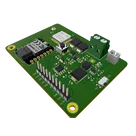
The Green Dot 2040E5 Board

The Green Dot 2040E5 Board  thumbnail
Green Dot 2040E5: Robust LoRa/RS485 IoT Node

Properties

[Add details from decoupling_caps review]

[Add details from resistor_power_rating review]

[Add details from design_rule_check_missing_footprints review]

[Add details from design_rule_check_airwires review]

[Add details from capacitor_voltage_rating review]

[Add details from pull_up_pull_down review]

[Add details from parts_available review]

AgriTech

Pricing & Availability

Distributor

Qty 1

Controls