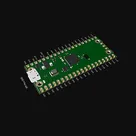
Minimal Pico 2 Design

Add the minimum required components needed for this Pi Pico 2 to function properly. Keep the design as simple and minimal as possible.
You may include a single humidity sensor as the primary peripheral, along with any essential supporting components such as power regulation, pull-up resistors, decoupling capacitors, or required connectors.
Thought for 6 sec
I’ll add a minimal Pico 2 shield circuit: inspect the existing Pico header/module, choose a simple humidity sensor, add only required pull-ups/decoupling/power support, wire it, then run checks and fix any issues.
Worked for 3 mins 8 sec
The SHTC3 circuit is wired. I found expected template-style floating pins on the unused Pico header pins, so I’m marking intentionally unused pins and documenting the minimal power/current assumptions next.
Worked for 2 mins 50 sec
Added a minimal SHTC3 humidity sensor circuit: U2 on Pico GP4/GP5 I2C, 10kΩ pull-ups, 100nF local decoupling, all Pico grounds tied, and unused shield pins marked no-connect. ERC and manufacturing checks are clean; remaining airwires are expected until you approve layout/routing.
I also documented the design and power budget in Minimal Pico 2 Humidity Shield Notes.
Proceed to layout
Place sensor edge
Check BOM cost
Use GP0 GP1
Add test points