Pin Function Grouping for nRF52840

Looking at the datasheet of this component, can you group together pins by their functions? for example for Power, 3v3, gnd_1 gnd_2 etc
Also can you place them into their respective sections based on their functions
NOTE: If you group them, can you not add the same pin if you already added them in a group? You should know which pin function is common for its function
Thought for 26 sec
I’ll update the nRF52840 symbol organization by assigning each pin to one functional section and one pin group only, using the datasheet pin functions as the source of truth. I’ll first inspect the current pins/properties, then apply grouped sections and verify there are no duplicate group assignments.
Worked for 14 mins 53 sec
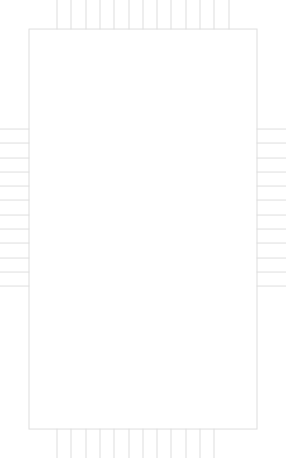
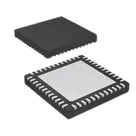
Done — I grouped all 49 nRF52840-QFAA terminals into mutually exclusive functional sections and updated Section, Pin Group, Pin Type, and Pin Description properties. I also created the detailed reference file here: nRF52840-QFAA-F-R Pin Grouping.
No pin was assigned to more than one functional section; multifunction pins keep their alternate functions in the descriptions.
Run ERC/DRC
Review pin groups
Check decoupling
Clean descriptions
Refine this doc
Ask about this doc
nRF52840-QFAA-F-R Pin Grouping
Purpose: organize the 49 terminals of the nRF52840-QFAA QFN48 symbol into mutually exclusive functional sections. Each physical pin is assigned to exactly one Section and one Pin Group; multifunction capabilities are retained in the Pin Description rather than duplicating the pin in multiple groups.
Source basis: Nordic nRF52840 Product Specification pin naming/function conventions, the current part terminal list, and official Nordic documentation lookup. The uploaded PDF search did not expose the full QFN48 pin table as extractable text, so the symbol's pin-numbered terminal names were cross-checked against Nordic's known QFN48 naming conventions.
Functional sections used
Table
| Section | Included pins | Rationale |
|---|---|---|
| Power Supply | 1, 12, 17, 25, 32, 33, 34, 37, 45, 46, 47, 48, 49 | VDD, VSS/VSS_PA, exposed pad, DCC, and DEC regulator/decoupling pins. |
| Clock | 2, 3, 35, 36 | LF crystal pins XL1/XL2 and HF crystal pins XC1/XC2. |
| Analog | 4, 5, 39, 40, 41, 42, 43, 44 | GPIO pins with SAADC analog input functions AIN0-AIN7. |
| GPIO | 7, 8, 13, 14, 15, 18, 19, 20, 21, 22, 23, 38 | General digital GPIO without a higher-priority dedicated symbol group. |
| Debug | 6, 9, 10, 11, 24, 26, 27 | SWD and trace pins. |
| Reset | 16 | P0.18/nRESET, separated for visibility because reset is a board-level control signal. |
| Interface | 29, 30 | NFC antenna pins NFC1/NFC2. |
| Communication | 31 | 2.4 GHz RF antenna pin ANT. |
| MISC | 28 | No-connect pin. |
Pin-by-pin assignments
Table
| Pin | Terminal | Section | Pin Group | Pin Type | Description |
|---|---|---|---|---|---|
| 1 | DEC1 | Power Supply | Power | Power Out | 1.1 V regulator supply decoupling; connect required capacitor per Nordic reference design. |
| 2 | P0.00XL1 | Clock | Crystal | Bi-Directional | GPIO P0.00; 32.768 kHz low-frequency crystal input XL1. |
| 3 | P0.01_XL2 | Clock | Crystal | Bi-Directional | GPIO P0.01; 32.768 kHz low-frequency crystal output XL2. |
| 4 | P0.04_AIN2 | Analog | ADC | Bi-Directional | GPIO P0.04; SAADC analog input AIN2. |
| 5 | P0.05AIN3 | Analog | ADC | Bi-Directional | GPIO P0.05; SAADC analog input AIN3. |
| 6 | P0.07TRACECLK | Debug | Debug | Bi-Directional | GPIO P0.07; trace buffer clock output TRACECLK. |
| 7 | P0.08 | GPIO | PA | Bi-Directional | General purpose I/O P0.08. |
| 8 | P1.08 | GPIO | PB | Bi-Directional | General purpose I/O P1.08. |
| 9 | P1.09TRACEDATA3 | Debug | Debug | Bi-Directional | GPIO P1.09; trace buffer data output TRACEDATA[3]. |
| 10 | P0.11TRACEDATA2 | Debug | Debug | Bi-Directional | GPIO P0.11; trace buffer data output TRACEDATA[2]. |
| 11 | P0.12TRACEDATA1 | Debug | Debug | Bi-Directional | GPIO P0.12; trace buffer data output TRACEDATA[1]. |
| 12 | VDD_1 | Power Supply | VDD | Power In | Main VDD power supply input. |
| 13 | P0.13 | GPIO | PA | Bi-Directional | General purpose I/O P0.13. |
| 14 | P0.14 | GPIO | PA | Bi-Directional | General purpose I/O P0.14. |
| 15 | P0.17 | GPIO | PA | Bi-Directional | General purpose I/O P0.17. |
| 16 | P0.18NRESET | Reset | Reset / GPIO | Bi-Directional | GPIO P0.18; configurable system reset nRESET. |
| 17 | VDD_2 | Power Supply | VDD | Power In | Main VDD power supply input. |
| 18 | P0.19 | GPIO | PA | Bi-Directional | General purpose I/O P0.19. |
| 19 | P0.20 | GPIO | PA | Bi-Directional | General purpose I/O P0.20. |
| 20 | P0.21 | GPIO | PA | Bi-Directional | General purpose I/O P0.21. |
| 21 | P0.22 | GPIO | PA | Bi-Directional | General purpose I/O P0.22. |
| 22 | P0.23 | GPIO | PA | Bi-Directional | General purpose I/O P0.23. |
| 23 | P0.24 | GPIO | PA | Bi-Directional | General purpose I/O P0.24. |
| 24 | P1.00TRACEDATA0 | Debug | Debug | Bi-Directional | GPIO P1.00; trace buffer data output TRACEDATA[0], also used for SWO. |
| 25 | VDD_3 | Power Supply | VDD | Power In | Main VDD power supply input. |
| 26 | SWDIO | Debug | SWD | Bi-Directional | Serial wire debug data for programming and debug. |
| 27 | SWDCLK | Debug | SWD | Input | Serial wire debug clock input for programming and debug. |
| 28 | NC | MISC | No connect | Not Connected | No internal connection; leave unconnected. |
| 29 | P0.09NFC1 | Interface | NFC antenna / GPIO | Bi-Directional | GPIO P0.09; NFC antenna connection NFC1. |
| 30 | P0.10NFC2 | Interface | NFC antenna / GPIO | Bi-Directional | GPIO P0.10; NFC antenna connection NFC2. |
| 31 | ANT | Communication | 2.4 GHz RF | Passive | Single-ended 2.4 GHz radio antenna connection; follow Nordic RF reference layout. |
| 32 | VSS_PA | Power Supply | VSS | Ground | Ground for radio power amplifier supply. |
| 33 | DEC6 | Power Supply | Power | Power Out | 1.3 V radio regulator supply decoupling; decouple per Nordic reference circuit. |
| 34 | DEC3 | Power Supply | Power | Power Out | Internal supply decoupling pin; connect capacitor per Nordic reference circuit. |
| 35 | XC1 | Clock | Crystal | Input | 32 MHz high-frequency crystal connection XC1. |
| 36 | XC2 | Clock | Crystal | Output | 32 MHz high-frequency crystal connection XC2. |
| 37 | VDD_4 | Power Supply | VDD | Power In | Main VDD power supply input. |
| 38 | P1.15 | GPIO | PB | Bi-Directional | General purpose I/O P1.15. |
| 39 | P0.03AIN1 | Analog | ADC | Bi-Directional | GPIO P0.03; SAADC analog input AIN1. |
| 40 | P0.02AIN0 | Analog | ADC | Bi-Directional | GPIO P0.02; SAADC analog input AIN0. |
| 41 | P0.28AIN4 | Analog | ADC | Bi-Directional | GPIO P0.28; SAADC analog input AIN4. |
| 42 | P0.29AIN5 | Analog | ADC | Bi-Directional | GPIO P0.29; SAADC analog input AIN5. |
| 43 | P0.30AIN6 | Analog | ADC | Bi-Directional | GPIO P0.30; SAADC analog input AIN6. |
| 44 | P0.31AIN7 | Analog | ADC | Bi-Directional | GPIO P0.31; SAADC analog input AIN7. |
| 45 | VSS_1 | Power Supply | VSS | Ground | Ground VSS. |
| 46 | DEC4 | Power Supply | Power | Power Out | 1.3 V regulator supply decoupling; connect/decouple with DEC6 per Nordic guidance. |
| 47 | DCC | Power Supply | Power | Power Out | DC/DC converter output node; connect external inductor/capacitors per Nordic reference circuit. |
| 48 | VDD_5 | Power Supply | VDD | Power In | Main VDD power supply input. |
| 49 | VSS_2 | Power Supply | VSS | Ground | Exposed die pad VSS; connect to ground for operation, thermal, and RF performance. |
Verification
- All 49 physical pins are represented.
- Each pin has exactly one Section value.
- Each pin has exactly one Pin Group value.
- No pin was duplicated across functional groups.
- Pin descriptions preserve important alternate functions for GPIO/analog, GPIO/clock, GPIO/NFC, GPIO/reset, and GPIO/trace pins.

Welcome 👋
Flux accelerates your PCB design with AI.
Create your account to start using this component and bring your ideas to life.