Power Supply Design Overview
4:32
Thought for 5s
Thought for 4s
Thought for 41s
Thought for 3s
Read knowledge.
Read schematic.
Search 2 components.
Search complete.
Search 2 components.
Search complete.
Search [[object Object]](https://www.flux.ai/search?q=%5Bobject%20Object%5D&type=components).
Search complete.
Thought for a moment
Here’s what this project represents and how a 13.8 V / 20 A LM723 + MJ802 supply works.
What’s currently in your Flux project
- The schematic contains only LM723 pin breakouts as terminals and no nets yet. I can see: V , V-, VC, VREF, VOUT, VZ, FC, ILIM, CSEN, plus a few NC terminals. No regulator IC or pass devices are placed/connected yet, so this is a pin breakout/template rather than a finished power supply.
How the 13.8 V / 20 A regulator is typically implemented
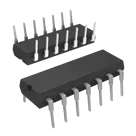
- Control/regulator IC: The LM723CN-NOPB provides an internal reference and an error amplifier that controls the output via its drive pin(s). The output voltage is set by a feedback divider; per best practice, remember that divider tolerance and line/load regulation reduce available headroom on the raw supply.
- External series pass stage: One or more MJ802G NPN power transistors are used as emitter followers (or a Darlington arrangement) to deliver the heavy load current. For high current designs, multiple pass devices are commonly paralleled with small, equal emitter ballast resistors (use generic placeholders like a Generic Resistor) to encourage current sharing.
- Current limit/protection: LM723 exposes current-limit pins, which you’ve broken out as ILIM and CSEN, to sense the drop across a shunt and reduce the drive to the pass transistor under overload/short. Foldback limiting is commonly implemented using the same pins and an extra resistor network.
- Frequency compensation and stability: The FC pin takes a small compensation capacitor (e.g., a Generic Capacitor) as shown in the datasheet’s application circuits to keep the error amp stable. The output also needs adequate bulk capacitance for transient response.
- Headroom and thermal: The raw DC input must exceed 13.8 V by the dropout across the pass stage plus regulation headroom. Power dissipation is (Vin_raw − 13.8 V) × I_load, which can be very large at 20 A, so heatsinking, SOA, and possibly multiple pass devices are critical. Also budget headroom for regulation accuracy and voltage-set resistor tolerances.
Datasheet-backed facts that matter here
- LM723CN-NOPB (TI LM723/LM723C) [Datasheet]
- Output current without external pass transistor: up to 150 mA.
- “Output currents in excess of 10 A possible by adding external transistors.”
- Output voltage adjustable: 2 V to 37 V.
- Recommended input voltage range: 9.5 V to 40 V.
- Reference voltage: typical 7.15 V (table shows 6.95/7.15/7.35 V limits depending on grade).
- Typical application circuits include “Positive Voltage Regulator (External NPN Pass Transistor)” and show compensation capacitor usage.
- MJ802G (ON Semi MJ802) [Datasheet]
- Collector current IC (continuous): 30 A.
- VCE(sat) max: 0.8 V at IC = 7.5 A, IB = 0.75 A.
- Total device dissipation: 200 W at TC = 25°C (derate 1.14 W/°C).
- Package: TO-204 (TO-3). Observe DC SOA curves; ensure the operating load line stays inside SOA across line/load and temperature.
Practical notes for a 13.8 V / 20 A build
- Pass devices: 20 A is realistic for the MJ802 family only when SOA and heat are respected. It is common to use two or more MJ802 in parallel with matched emitter ballast resistors to keep each device within SOA under worst-case Vin and during faults.
- Raw supply: If you’re rectifying AC, size the transformer, rectifier, and reservoir capacitor so the minimum ripple valley still provides headroom over 13.8 V while not making (Vin − 13.8 V) so large that you exceed the pass devices’ thermal/SOA limits.
- Sensing and wiring: Kelvin-connect the sense return for CSEN to the output node to avoid regulation errors from wiring drops. Keep the compensation loop around FC compact.
- Accuracy and headroom: Because feedback resistors define VOUT, their tolerance and the regulator’s line/load regulation consume some voltage margin; plan your raw supply voltage accordingly.
If you want, I can turn this into a complete schematic in this project (LM723 control core, MJ802 pass stage, current-limit network, compensation, and output filtering) and size the key parts to your input source.
Clarify input source
Ask for schematic help
Ask about number of MJ802s
Focus on current limiting
Ask about component values
Ready to work


Welcome 👋
Flux accelerates your PCB design with AI.
Create your account to start using this component and bring your ideas to life.