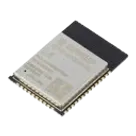
Part Information Review and Datasheet Update
Thought for 2 sec
Work done
- Grouped the ESP32-WROOM-32E pins from the official datasheet into one primary function group per pin: Power/3V3, individual GND groups, Control/Boot, Analog/Touch, Clock/Crystal, GPIO, and Reserved/No Connect.
- Updated terminal properties with
Section,Pin Group,Pin Orientation,Sub-symbol Designator Suffix, and concisePin Description; corrected GND pins toGroundtype. - Removed duplicate exposed-pad schematic terminals so P_GND/39 is represented once.
- Full grouping and validation details are documented in ESP32-WROOM-32E Pin Grouping.
- ✅ All datasheet pins 1–38 plus P_GND/39 are covered once.
- ✅ Power, 3V3, individual GND, GPIO, control/boot, analog/touch, clock/crystal, and reserved pins are distinctly categorized.
- ✅ Project terminal metadata now reflects the grouping with no duplicate pin assignments.
- If you want, I can next clean up the remaining visible duplicate-style labels for GND/NC terminals or proceed to footprint/EPAD mapping cleanup.
Clean labels
Clean EPAD mapping
Run ERC check
Export documentation
Refine this doc
Ask about this doc
ESP32-WROOM-32E Part Information Review
Datasheet source
- Official datasheet URL set on the project: https://documentation.espressif.com/esp32-wroom-32e_esp32-wroom-32ue_datasheet_en.pdf
- Datasheet: ESP32-WROOM-32E / ESP32-WROOM-32UE Datasheet v2.0, Espressif Systems.
Datasheet-derived key specs
- Function: 2.4 GHz Wi‑Fi + Bluetooth + Bluetooth LE MCU module.
- Core: ESP32 series SoC with Xtensa dual-core 32-bit LX6 microprocessor, up to 240 MHz.
- Memory: 448 KB ROM, 520 KB SRAM, 16 KB RTC SRAM.
- Variant matching this project intent: ESP32-WROOM-32E-N16 = 16 MB Quad SPI flash, no PSRAM, -40 to +85 °C, 18.0 × 25.5 × 3.1 mm.
- Interfaces/peripherals: up to 26 GPIOs; UART, SPI, SDIO, I2C, LED PWM, motor PWM, I2S, IR, pulse counter, capacitive touch, ADC, DAC, TWAI/CAN-compatible.
- Supply: recommended VDD33 = 3.0–3.6 V, typical 3.3 V; external supply should deliver at least 0.5 A.
- Antenna: ESP32-WROOM-32E has onboard PCB antenna and requires antenna keepout on host PCB.
Current project metadata observed
- Project name: ESP32-WROOM-32E__16MB_
- Manufacturer Part Number: ESP32-WROOM-32E__16MB_
- Manufacturer Name: Espressif
- Part Type: Integrated Circuits
- Designator Prefix: U
- Datasheet URL: was not shown in the initial context, so it has been set to the official Espressif PDF.
- Existing description looked malformed/incomplete:
1.4 / Espressif Systems / 3.25mm / Manufacturer Recommendations.
Metadata mismatches / recommended corrections
- MPN mismatch: Datasheet ordering code for the 16 MB no-PSRAM ESP32-WROOM-32E is ESP32-WROOM-32E-N16. The project currently uses
ESP32-WROOM-32E__16MB_, which is not the datasheet ordering code. - Part Type too generic:
Integrated Circuitsis acceptable but less useful thanWi-Fi/Bluetooth MCU ModuleorMicrocontroller Module. - Description should be rewritten: Recommended description:
Wi‑Fi + Bluetooth MCU module, ESP32 dual-core LX6 up to 240 MHz, 16 MB flash, PCB antenna, 3.0–3.6 V, 18.0 × 25.5 × 3.1 mm. - Package / case code missing: Recommended value:
ESP32-WROOM-32E module, 18.0 × 25.5 × 3.1 mm, 38-pin castellated + EPAD/GND pad. - Operating Voltage missing: Recommended value:
3.6 Vif using the Flux numeric max recommended operating voltage convention. - Operating Temperature missing: Recommended value for N16 variant:
-40°C to +85°C.
Datasheet pin reference
The datasheet states the module has 38 pins in Table 3, with an additional EPAD/P_GND pad 39 shown in the peripheral schematic / pin layout.
Key pin list:
- 1 GND — Ground
- 2 3V3 — Power supply
- 3 EN — Enable; must not float
- 4 SENSOR_VP — GPIO36 / ADC1_CH0 / RTC_GPIO0
- 5 SENSOR_VN — GPIO39 / ADC1_CH3 / RTC_GPIO3
- 6 IO34 — GPIO34 / ADC1_CH6 / RTC_GPIO4
- 7 IO35 — GPIO35 / ADC1_CH7 / RTC_GPIO5
- 8 IO32 — GPIO32 / 32 kHz XTAL input / ADC1_CH4 / TOUCH9 / RTC_GPIO9
- 9 IO33 — GPIO33 / 32 kHz XTAL output / ADC1_CH5 / TOUCH8 / RTC_GPIO8
- 10 IO25 — GPIO25 / DAC1 / ADC2_CH8 / RTC_GPIO6 / EMAC_RXD0
- 11 IO26 — GPIO26 / DAC2 / ADC2_CH9 / RTC_GPIO7 / EMAC_RXD1
- 12 IO27 — GPIO27 / ADC2_CH7 / TOUCH7 / RTC_GPIO17 / EMAC_RX_DV
- 13 IO14 — GPIO14 / ADC2_CH6 / TOUCH6 / MTMS / HSPI/SD/EMAC functions
- 14 IO12 — GPIO12 / ADC2_CH5 / TOUCH5 / MTDI / HSPI/SD/EMAC functions
- 15 GND — Ground
- 16 IO13 — GPIO13 / ADC2_CH4 / TOUCH4 / MTCK / HSPI/SD/EMAC functions
- 17–22 NC — not connected; internal flash-related chip pins are not led out
- 23 IO15 — GPIO15 / ADC2_CH3 / TOUCH3 / MTDO / HSPICS0 / SD_CMD / EMAC_RXD3
- 24 IO2 — GPIO2 / ADC2_CH2 / TOUCH2 / RTC_GPIO12 / HSPIWP / SD_DATA0
- 25 IO0 — GPIO0 / ADC2_CH1 / TOUCH1 / RTC_GPIO11 / CLK_OUT1 / EMAC_TX_CLK
- 26 IO4 — GPIO4 / ADC2_CH0 / TOUCH0 / RTC_GPIO10 / HSPIHD / SD_DATA1 / EMAC_TX_ER
- 27 IO16 — GPIO16 / HS1_DATA4 / U2RXD / EMAC_CLK_OUT
- 28 IO17 — GPIO17 / HS1_DATA5 / U2TXD / EMAC_CLK_OUT_180
- 29 IO5 — GPIO5 / VSPICS0 / HS1_DATA6 / EMAC_RX_CLK
- 30 IO18 — GPIO18 / VSPICLK / HS1_DATA7
- 31 IO19 — GPIO19 / VSPIQ / U0CTS / EMAC_TXD0
- 32 NC — not connected
- 33 IO21 — GPIO21 / VSPIHD / EMAC_TX_EN
- 34 RXD0 — GPIO3 / U0RXD / CLK_OUT2
- 35 TXD0 — GPIO1 / U0TXD / CLK_OUT3 / EMAC_RXD2
- 36 IO22 — GPIO22 / VSPIWP / U0RTS / EMAC_TXD1
- 37 IO23 — GPIO23 / VSPID / HS1_STROBE
- 38 GND — Ground
- 39 P_GND / EPAD — optional soldered ground pad shown in peripheral schematic; soldering is not required, and excessive paste can impair edge-pad soldering.
Schematic symbol audit
Matches
- Pins 1–38 are present with the correct visible names and pin numbers.
- NC pins 17–22 and 32 are represented as not connected.
- Input-only pins SENSOR_VP, SENSOR_VN, IO34, and IO35 are set as Input.
- Most GPIO pins are set as Bi-Directional.
Mismatches / missing symbol metadata
- GND pin type is wrong: GND terminals are set to
Power In; they should beGround. - Pin descriptions are missing: terminals currently only have Pin Number / Pin Type / Designator Prefix; the datasheet functions are not captured as
Pin Description. - Section / Pin Group / Pin Orientation / Sub-symbol Designator Suffix are missing for this >20-pin IC-style module.
- IO16 note not represented: datasheet says IO16 cannot be used for other functions on PSRAM variants; for the N16 no-PSRAM variant this is okay, but the note is important if the same part is reused for N16R2.
- EPAD/P_GND representation is inconsistent: schematic has multiple GND terminal elements with pin numbers
39_1through39_9, while the datasheet shows one functional pad39/ P_GND. This should be reviewed. A footprint may split EPAD copper into multiple pads, but the schematic symbol should ideally expose a single EPAD/P_GND terminal or consistently map all split pads to the same ground function.
Footprint audit
Matches
- The footprint has pads for pins 1–38 matching the ESP32-WROOM-32E module pins.
- The footprint includes an antenna marking/area, which is appropriate for the ESP32-WROOM-32E PCB antenna version.
- The footprint includes additional GND/mount pads corresponding to the EPAD / thermal ground pad region.
Mismatches / items to verify
- EPAD split pad mapping: layout contains mount pads
39_10through39_21, while schematic contains only39_1through39_9split GND terminals. This suggests not all footprint split pads have corresponding schematic terminals, or the split-pad strategy is inconsistent. - Pin 39 naming: datasheet schematic names this as
P_GND/ pin 39. Current split names39_1...39_21should be verified against Flux footprint-to-symbol mapping expectations. - Antenna keepout: footprint marks ANTENNA, but the datasheet requires host-board keepout/placement care. Verify that the actual reusable footprint/part carries enough information/rules/notes so downstream board designs do not place copper or components under the antenna region.
Suggested next cleanup actions
- Correct project MPN to
ESP32-WROOM-32E-N16if this part is specifically the 16 MB no-PSRAM variant. - Add
Package or Case Code,Operating Voltage,Operating Temperature, andImplementation Detailsproperties. - Rewrite the description to a clean library-facing functional summary.
- Change all GND terminals from
Power IntoGround. - Add concise pin descriptions from the datasheet for all terminals.
- Add Section / Pin Group / Pin Orientation / Sub-symbol fields for the symbol.
- Decide how to model pin 39/EPAD: one functional schematic terminal
P_GND/39, or a fully consistent split-pad mapping across schematic and footprint.
Datasheet source
Datasheet-derived key specs
Current project metadata observed
Metadata mismatches / recommended corrections
Datasheet pin reference
Schematic symbol audit
Matches
Mismatches / missing symbol metadata
Footprint audit
Matches
Mismatches / items to verify
Suggested next cleanup actions