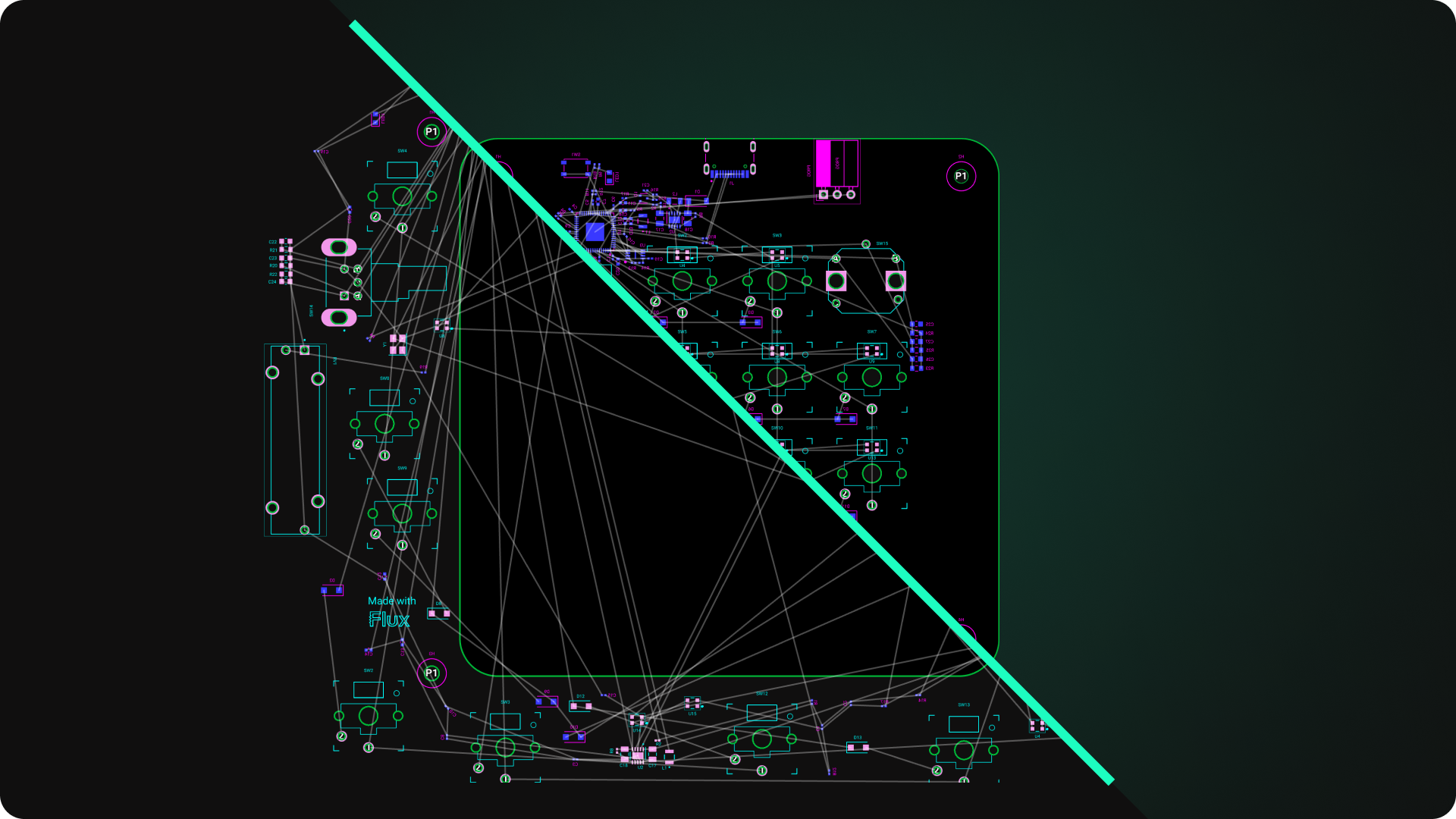
PCB Design for Silent Gaude Bracelet
0:00
Here’s where we stand:
Work completed (Steps 1–7):
- Project description and “System Architecture” property updated; mermaid diagram shared
- Major ICs and modules added:
- ESP32-S3 (U1), LTE/GNSS U2, MEMS mic U6, MAX3010x U7, haptic driver U8, Li-ion charger U9, dual 3.3 V LDOs U10/U11, USB-C port J6, programming header H1, eSIM footprint U3, nano-SIM connector J7, battery connector J8
- Supporting passives placed: decoupling caps C1–C21; ESD diodes U12/U13; CC resistors R6/R7
- All nets through the schematic (power tree, I2S, I²C, UART, haptic, power connections) routed
Remaining tasks (Step 8 – PCB Layout Configuration):
- Determine board length (Y extents + 5 mm margin) and set PCB outline to 10 mm width
- Configure a 4-layer stackup with dedicated 3.3 V and GND internal planes
- Set up ground-fill on signal layers and define RF keep-out for the LTE module
- Place all components per wearable constraints (HR sensor on skin side, mic at outer edge, tall-part zoning, RF keep-out)
[No tasks were marked as not doable.]
Success Criteria Review:
- ✅ Schematic complete with all required components, correct decoupling, ESD, and connections
- ❌ PCB layout not yet configured (outline, stackup, placement, routing)
Next step: Let’s configure the PCB outline and stackup (flux-agentic-workflow: Prepare PCB Layout). We’ll size the board to 10 mm × (calculated length), set up the 4-layer stackup, and assign internal planes before component placement.
138 days
To get started, talk to Flux or create a New Document.

Welcome 👋
Flux helps you build PCBs faster with an AI teammate!
Create your account to collaborate, stay updated, fork your own version, and get instant answers from our AI agent.