Chat
Welcome to Flux
Treat Flux like your intern. Tell it what you'd like to build and it'll get to work. You can also ask it questions, brainstorm ideas, and teach it your preferences. Learn More
Explain project
Write a project description
Find schematic issues
Create a test plan
Simulate a circuit
Prepare for Manufacturing
Component Selection Workflow
New Subsystem Wizard
Ready.
make a great clean 55watt power amplifire out of it

2y
Sure, I can guide you on creating a 55 Watt power amplifier setup using the TDA7296S audio power amplifier I see in your project. The TDA7296S from STMicroelectronics is rated for output power up to 60W into 8 ohms, making it a good fit for your requirement of 55W. It also features mute and standby functions which can be useful.
Here is a simple layout suggestion for your 55W amplifier:
-
Power Supply: You'll need a power supply delivering +/- 25V DC. The +Vs and -Vs (Pins 7, 15 and 13) of the IC should be connected to this power supply.
-
Input: The input audio signal should be AC-coupled to Pin 3 (+) and Pin 2 (-). This can be done with through a 1µF capacitor connected in series with the input. Connect a 22kΩ resistor from Pin 3 (+) to signal ground.
-
Output: Pin 14 (~) is your output pin. Connect a 0.1µF capacitor and 10µF capacitor in parallel from this pin to the speaker. Also, connect an inductor (around 10µH) to this line to eliminate any high-frequency noise.
-
Mute and Standby Control: If you want to use the Mute or Standby functions, connect switches to Pin 9 (STBY) and Pin 10 (MUTE) to control them. Leave these pins disconnected if you don't need these functions.
-
Boot Strap: Connect a 220µF capacitor from Pin 6 (BOOT) to Pin 14 (~). This is necessary for the bootstrapping function of the amplifier.
-
Ground Pin: Pin 1 (SGND) and Pin 4 (SIG_GND) should be directly connected to the signal ground.
Remember to place the TDA7296S on a substantial heat sink as it will generate a significant amount of heat.
Assumptions:
- The power supply voltage based on the requested power output and a reasonable safety margin.
- Typical values of components based on common usage in amplifier circuits.
Please review the setup and make adjustments based on the specifics of your project.
2y
Sure, I understand you want to design a 55W amplifier with low distortion. Here's a general guideline to set up TDA7296S for a decent audio power amplifier:
-
Power Supply: You'll need a supply delivering +/- 25V DC. Connect
+Vspins (Pins 7 and 13) and-Vs(Pin 15) to the positive and negative terminals of the power supply respectively. -
Input Audio Signal: Feed the input audio signal to pin 3 (
+). To this, you should AC-couple a resistor and capacitor in series, choosing values such as R = 10 kΩ and C = 1 μF. The–(Pin 2) should be connected toSIG_GND(Pin 4) through a resistor (22 kΩ would be a good starting value). This setup provides biasing and initial filtering for the input signal. -
Output Audio Signal: The output will be at pin 14 (
~). Between~and+Vs(Pin 7 or 13), you need a bootstrap capacitor of about 220uF. Connect a series LRC network (a typical set might be L = 10uH, R = 10Ω, C = 100nF) from~to speaker. -
Standby and Mute Controls: If you want to include standby and mute functions, use logic-level signals (0V for active, Vcc for inactive) to control pin 9 (
STBY) and pin 10 (MUTE) respectively. If you don't want to use these functions, connectSTBYto+Vs(through a 47K resistor) andMUTEto+Vs(through a 10K resistor). -
Ground Connections: Connect Pin 1 (
SGND) and Pin 4 (SIG_GND) directly to the signal ground. -
Thermal Management: As the TDA7296S can dissipate significant amounts of heat, don't forget to mount the IC to a suitable heatsink to manage the thermal dissipation effectively.
Assumptions:
- The power supply voltage based on the requirement for 55W power output and a reasonable safety margin.
- Typical component values suggestive for similar power amplifier applications using TDA7296S.
- Values of the capacitors and resistors are assumed. They could be tailored to achieve desired audio profile and functions.
Please note that, to have the best quality audio output, the selection of good quality resistors, capacitors, inductors, power supplies, and even PCB design are also important. It's also suggested to encase the amplifier in a good quality and appropriately sized enclosure to minimize external interference. If you have any more modifications or queries regarding your project, feel free to ask.
2y
Apologies for any confusion. I'll break down the connections for the IC again:
-
Power Supply Connections: Connect
+Vs(Pins 7 and 13) and-Vs(Pin 15) to your +/- 25V DC power supply. -
Input Connections:
- Connect your input AC signal through a 1µF capacitor to
+(Pin 3). - Connect a 22kΩ resistor from Pin 3 (
+) to Pin 4 (SIG GND).
- Connect your input AC signal through a 1µF capacitor to
-
Output Connections:
- Connect
~(Pin 14) to your speaker. - Also connect a 0.1µF capacitor and a 10µF capacitor from Pin 14 (
~) to the speaker. - You can additionally connect a 10µH inductor to filter high-frequency noise.
- Don't forget to connect a bootstrap capacitor of approximately 220 µF between Pin 6 (
BOOT) and Pin 14 (~).
- Connect
-
Mute and Standby Controls:
- If you want to use these features, connect switches to Pin 10 (
MUTE) and Pin 9 (STBY). - If not, you can leave these pins unconnected.
- If you want to use these features, connect switches to Pin 10 (
-
Ground Connections: Connect symbol ground to
SGND(Pin 1) andSIG_GND(Pin 4). -
Heat Dissipation: Remember to put the TDA7296S on a good heat sink.
I based these connections on common use cases for these types of ICs, since we don't have any datasheet excerpts for TDA7296S. Always double check with the specific datasheet of your component before finalizing your design.
This setup should give you a basic 55W power amplifier with the TDA7296S. Depending on your specific needs and additional components, some modifications might be necessary.
2y
Here are the additional components you will need to complete your 55W amplifier circuit:
-
Power Supply: A bipolar DC power supply capable of delivering +/- 25V.
-
Input Capacitor (Cin): A 1µF capacitor to connect your input AC signal to
+(Pin 3). -
Feedback Grounding Resistor (Rgnd): A 22kΩ resistor to connect Pin 3 (
+) to Pin 4 (SIG GND). -
Output Capacitor (Cout): A pair of capacitors, 0.1µF and 10µF, connected in parallel from Pin 14 (
~) to your speaker. -
Output Inductor (Lout): A 10µH inductor to filter high-frequency noise from the output.
-
Bootstrap Capacitor (Cboot): A 220µF capacitor between Pin 6 (
BOOT) and Pin 14 (~). -
Mute and Standby Controls: If needed, switches to control Pin 10 (
MUTE) and Pin 9 (STBY). -
Speaker: An 8-ohm speaker suitable for a 55W output.
-
Heat Sink: A heat sink appropriate for TDA7296S to manage heat generated during operation.
Please make sure to connect the symbol ground to
SGND (Pin 1) and SIG_GND (Pin 4). This setup should give you a basic 55W power amplifier with the TDA7296S. This design is built around typical use cases for these types of ICs, and it's always recommended to adjust specific values based on your unique application and requirements.Note: The values of capacitors, resistors and inductors used here are based on typical values used in many audio amplifier applications. You can adjust these values to alter the sound characteristics to better suit your needs. Similarly, the power supply voltage and current rating used are also more or less typical for a 55W amplifier. Always remember to check with the specific datasheet of your component before finalizing your design.
2y
please do it
2y
1
C4
Capacitance
10uF
IC1 SIG_GND - IC1 +Vs
C1
Capacitance
0.47uF
C5
Capacitance
22uF
J3
J1
R1
Resistance
22kΩ
C7
Capacitance
100nF
C8
Capacitance
1000uF
IC1 SIG_GND - IC1 +Vs
R4
Resistance
22kΩ
J2
C10
Capacitance
100nF
C6
Capacitance
1000uF
IC1 SIG_GND - IC1 +Vs
R5
Resistance
10kΩ
IC1 SIG_GND - IC1 +Vs
C3
Capacitance
10uF
C9
Capacitance
100nF
C2
Capacitance
22uF
R3
Resistance
22kΩ
R2
Resistance
680 Ω
IC1
Reviews

- Wirelessly connects nets on schematic. Used to organize schematics and separate functional blocks. To wirelessly connect net portals, give them same designator. #portaljharwinbarrozo43.0M
- Wirelessly connects power nets on schematic. Identical to the net portal, but with a power symbol. Used to organize schematics and separate functional blocks. To wirelessly connect power net portals, give them the same designator. #portal #powerjharwinbarrozo11.4M
- A generic fixed resistor ideal for rapid circuit topology development. Its footprint automatically adapts based on the selected package case code—supporting 0402, 0603, 0805, 1203, and many other standard SMD packages, as well as axial horizontal and vertical configurations. Save precious design time by seamlessly add more information to this part (value, footprint, etc.) as it becomes available. Standard resistor values: 1.0 ohm, 10 ohm, 100 ohm, 1.0k ohm, 10k ohm, 100k ohm, 1.0M ohm 1.1 ohm, 11 ohm, 110 ohm, 1.1k ohm, 11k ohm, 110k ohm, 1.1M ohm 1.2 ohm, 12 ohm, 120 ohm, 1.2k ohm, 12k ohm, 120k ohm, 1.2M ohm 1.3 ohm, 13 ohm, 130 ohm, 1.3k ohm, 13k ohm, 130k ohm, 1.3M ohm 1.5 ohm, 15 ohm, 150 ohm, 1.5k ohm, 15k ohm, 150k ohm, 1.5M ohm 1.6 ohm, 16 ohm, 160 ohm, 1.6k ohm, 16k ohm, 160k ohm, 1.6M ohm 1.8 ohm, 18 ohm, 180 ohm, 1.8K ohm, 18k ohm, 180k ohm, 1.8M ohm 2.0 ohm, 20 ohm, 200 ohm, 2.0k ohm, 20k ohm, 200k ohm, 2.0M ohm 2.2 ohm, 22 ohm, 220 ohm, 2.2k ohm, 22k ohm, 220k ohm, 2.2M ohm 2.4 ohm, 24 ohm, 240 ohm, 2.4k ohm, 24k ohm, 240k ohm, 2.4M ohm 2.7 ohm, 27 ohm, 270 ohm, 2.7k ohm, 27k ohm, 270k ohm, 2.7M ohm 3.0 ohm, 30 ohm, 300 ohm, 3.0K ohm, 30K ohm, 300K ohm, 3.0M ohm 3.3 ohm, 33 ohm, 330 ohm, 3.3k ohm, 33k ohm, 330k ohm, 3.3M ohm 3.6 ohm, 36 ohm, 360 ohm, 3.6k ohm, 36k ohm, 360k ohm, 3.6M ohm 3.9 ohm, 39 ohm, 390 ohm, 3.9k ohm, 39k ohm, 390k ohm, 3.9M ohm 4.3 ohm, 43 ohm, 430 ohm, 4.3k ohm, 43K ohm, 430K ohm, 4.3M ohm 4.7 ohm, 47 ohm, 470 ohm, 4.7k ohm, 47k ohm, 470k ohm, 4.7M ohm 5.1 ohm, 51 ohm, 510 ohm, 5.1k ohm, 51k ohm, 510k ohm, 5.1M ohm 5.6 ohm, 56 ohm, 560 ohm, 5.6k ohm, 56k ohm, 560k ohm, 5.6M ohm 6.2 ohm, 62 ohm, 620 ohm, 6.2k ohm, 62K ohm, 620K ohm, 6.2M ohm 6.8 ohm, 68 ohm, 680 ohm, 6.8k ohm, 68k ohm, 680k ohm, 6.8M ohm 7.5 ohm, 75 ohm, 750 ohm, 7.5k ohm, 75k ohm, 750k ohm, 7.5M ohm 8.2 ohm, 82 ohm, 820 ohm, 8.2k ohm, 82k ohm, 820k ohm, 8.2M ohm 9.1 ohm, 91 ohm, 910 ohm, 9.1k ohm, 91k ohm, 910k ohm, 9.1M ohm #generics #CommonPartsLibraryjharwinbarrozo1.5M
- A generic fixed capacitor ideal for rapid circuit topology development. You can choose between polarized and non-polarized types, its symbol and the footprint will automatically adapt based on your selection. Supported options include standard SMD sizes for ceramic capacitors (e.g., 0402, 0603, 0805), SMD sizes for aluminum electrolytic capacitors, and through-hole footprints for polarized capacitors. Save precious design time by seamlessly add more information to this part (value, footprint, etc.) as it becomes available. Standard capacitor values: 1.0pF, 10pF, 100pF, 1000pF, 0.01uF, 0.1uF, 1.0uF, 10uF, 100uF, 1000uF, 10000uF 1.1pF, 11pF, 110pF, 1100pF 1.2pF, 12pF, 120pF, 1200pF 1.3pF, 13pF, 130pF, 1300pF 1.5pF, 15pF, 150pF, 1500pF, 0.015uF, 0.15uF, 1.5uF, 15uF, 150uF, 1500uF 1.6pF, 16pF, 160pF, 1600pF 1.8pF, 18pF, 180pF, 1800pF 2.0pF, 20pF, 200pF, 2000pF 2.2pF, 22pF, 220pF, 2200pF, 0.022uF, 0.22uF, 2.2uF, 22uF, 220uF, 2200uF 2.4pF, 24pF, 240pF, 2400pF 2.7pF, 27pF, 270pF, 2700pF 3.0pF, 30pF, 300pF, 3000pF 3.3pF, 33pF, 330pF, 3300pF, 0.033uF, 0.33uF, 3.3uF, 33uF, 330uF, 3300uF 3.6pF, 36pF, 360pF, 3600pF 3.9pF, 39pF, 390pF, 3900pF 4.3pF, 43pF, 430pF, 4300pF 4.7pF, 47pF, 470pF, 4700pF, 0.047uF, 0.47uF, 4.7uF, 47uF, 470uF, 4700uF 5.1pF, 51pF, 510pF, 5100pF 5.6pF, 56pF, 560pF, 5600pF 6.2pF, 62pF, 620pF, 6200pF 6.8pF, 68pF, 680pF, 6800pF, 0.068uF, 0.68uF, 6.8uF, 68uF, 680uF, 6800uF 7.5pF, 75pF, 750pF, 7500pF 8.2pF, 82pF, 820pF, 8200pF 9.1pF, 91pF, 910pF, 9100pF #generics #CommonPartsLibraryjharwinbarrozo1.5M
- A generic fixed inductor suitable for rapid circuit topology development. The footprint automatically adapts based on the selected package, supporting standard SMD sizes (e.g., 0402, 0603, 0805) as well as well-known inductor packages such as SDR1806, PA4320, SRN6028, and SRR1260. Standard inductor values: 1.0 nH, 10 nH, 100 nH, 1.0 µH, 10 µH, 100 µH, 1.0 mH 1.2 nH, 12 nH, 120 nH, 1.2 µH, 12 µH, 120 µH, 1.2 mH 1.5 nH, 15 nH, 150 nH, 1.5 µH, 15 µH, 150 µH, 1.5 mH 1.8 nH, 18 nH, 180 nH, 1.8 µH, 18 µH, 180 µH, 1.8 mH 2.2 nH, 22 nH, 220 nH, 2.2 µH, 22 µH, 220 µH, 2.2 mH 2.7 nH, 27 nH, 270 nH, 2.7 µH, 27 µH, 270 µH, 2.7 mH 3.3 nH, 33 nH, 330 nH, 3.3 µH, 33 µH, 330 µH, 3.3 mH 3.9 nH, 39 nH, 390 nH, 3.9 µH, 39 µH, 390 µH, 3.9 mH 4.7 nH, 47 nH, 470 nH, 4.7 µH, 47 µH, 470 µH, 4.7 mH 5.6 nH, 56 nH, 560 nH, 5.6 µH, 56 µH, 560 µH, 5.6 mH 6.8 nH, 68 nH, 680 nH, 6.8 µH, 68 µH, 680 µH, 6.8 mH 8.2 nH, 82 nH, 820 nH, 8.2 µH, 82 µH, 820 µH, 8.2 mH #generics #CommonPartsLibraryjharwinbarrozo15.6k
- An electrical connector acting as reusable interface to a conductor and creating a point where external circuits can be connected.Terminal
- 47 kOhms ±5% 0.125W, 1/8W Chip Resistor 0805 (2012 Metric) Automotive AEC-Q200 Thick Film #forLedBlinkjharwinbarrozo1.2M
- 10uF Capacitor Aluminum Polymer 20% 16V SMD 5x5.3mm #forLedBlink #commonpartslibrary #capacitor #aluminumpolymer #radialcanjharwinbarrozo1.2M
- Yellow 595nm LED Indication - Discrete 1.7V 1206 (3216 Metric) #forLedBlinkjharwinbarrozo1.1M


tda 7296 project
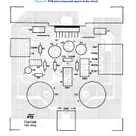
Welcome to your new project. Imagine what you can build here.
Properties
Properties describe core aspects of the project.
Pricing & Availability
Distributor | Qty 1 |
|---|---|
LCSC | $0.83 |
Assets

Screenshot 2023-11-21 061636.jpg
Screenshot 2023-11-21 061636ThumbnailControls
Welcome 👋
Flux helps you build PCBs faster with an AI teammate!
Create your account to collaborate, stay updated, fork your own version, and get instant answers from our AI agent.
tbf
copilot
copilot
IC1:(+Vs)(pin 7) to your positive supply rail (should be a +25V DC source; ensure it can deliver the necessary currents for a 50W output).IC1:(-Vs)(pin 8 and 15) to your negative supply rail (this should be a -25V DC source).IC1:(+)(pin 3) toC1:(P1). ConnectC1:(P2)to your input audio signal terminal.R1:(P1)toC1:(P2)and the other terminalR1:(P2)to your ground.C4:(P1)toR1:(P2)and the other terminalC4:(P2)to your ground.C3:(P1)toC1:(P2)andC3:(P2)toR1:(P2).IC1:(-)(pin 2) to your output terminal (which will be connected to your 4-ohm speaker).C5. ConnectC5:(P1)toIC1:(-)(Pin 2) andC5:(P2)to the terminal of the inductor. The other terminal of the inductor will be connected to your ground.C5.R2:(P1)to your positive supply rail andR2:(P2)toIC1:(STBY)(pin 9).R4:(P1)to your positive supply rail andR4:(P2)toIC1:(MUTE)(pin 10).C7:(P1)andC9:(P1)to your positive supply rail andC7:(P2)andC9:(P2)to the ground.C10:(P1)andC8:(P1)to your negative supply rail andC10:(P2)andC8:(P2)to the ground.IC1:(SGND)(pin 1) to your ground.tbf