Guitar Pedal Project Overview
2:19
Project
BOM
Schematic
Analyzing design components.
Structuring component links.
Identifying intents for the project.
Using Knowledge Base Tool.
Using BOM Tool.
Using Schematic Tool.
Setting up queries for knowledge retrieval.
Preparing component and net interactions.
Here’s a clear walkthrough of this Guitar Pedal Template project: what it is, what’s in it, how the pieces connect, and how you can extend it.
Purpose
- A starter “stompbox” template to speed up DIY guitar pedal builds.
- Provides standardized I/O (input/output 1/4-inch jacks via headers), a 9 V power header, a 3PDT true-bypass wiring header (to an external switch breakout), and a 3-pin potentiometer header.
- PCB size targets a 125B enclosure; design rules match JLCPCB 2-layer defaults.
Core components and roles
Guitar Pedal Template core hardware
Table
| Component | Link | Role |
|---|---|---|
| Power header (2-pin) | J1 | 9 V supply in (P1 = 9 V, P2 = GND). Feeds the pedal circuit and any switch/LED wiring. |
| Input jack header (2-pin) | J2 | Off-board input jack wiring. P1 typically Tip (signal), P2 Sleeve (GND). |
| Output jack header (2-pin) | J3 | Off-board output jack wiring. P1 Tip (signal), P2 Sleeve (GND). |
| 3PDT breakout header (6-pin) | SW1 | Connects to a footswitch breakout to implement true-bypass and optional LED control. |
| Potentiometer header (3-pin) | VR1 | For a board-mounted or wired pot (e.g., gain, tone, level). |
| Circuit ingress portal | CircuitInput | Logical entry point for your effect circuit’s input. |
| Circuit egress portal | CircuitOutput | Logical output from your effect circuit back to the bypass/switch/output wiring. |
| Input jack portal | InputJack | Named net portal tying to input wiring (helps keep the schematic organized). |
| Output jack portal | OutputJack | Named net portal tying to output wiring (organizes schematic). |
How they interact
- Offboard I/O:
- Bypass switching:
- The 3PDT wiring is abstracted by SW1 (01x06 header) intended to mate with an external switch breakout, simplifying chassis wiring.
- The signal path (input -> effect -> output) or direct-through (true-bypass) is achieved by wiring between J2, J3, your effect taps (CircuitInput, CircuitOutput), and the switch header.
- Power:
- 9 V comes in on J1 (P1 = +9 V, P2 = GND per the note). Your effect circuit will derive its rails from here.
- Control:
- VR1 provides a convenient 3-pin interface for a pot (e.g., connect end-to-end across a node and ground, wiper back to the circuit).
Net-level summary (as provided)
- Net 1: SW1:Pin_1 ↔ J3:P1
- Net (J3 - Pin_2): SW1:Pin_3 ↔ J1:P1
- GND: SW1:Pin_4, J2:P2, J1:P2, J3:P2
- Net 7: SW1:Pin_6 ↔ J2:P1
- Net 5: SW1:Pin_5 (currently only this node)
- Net 6: SW1:Pin_2 (currently only this node)
Design, implementation, and functionality
- Schematic organization
- Net portals (InputJack, OutputJack, CircuitInput, CircuitOutput) keep the drawing tidy while maintaining correct electrical connectivity.
- The central work area “Put the circuit here” is where you place your actual effect (e.g., buffer, boost, distortion, filter).
- Offboard wiring minimization
- Using 2-pin headers for jacks and power reduces chassis hand-wiring; the 6-pin header for the 3PDT routes the complex bypass to a small breakout board.
- PCB/layout baseline
- 2-layer stack aimed at low-cost fab (JLC rules).
- Board size is pre-tuned for a 125B enclosure for mechanical fit.
Key technologies, dependencies, and design choices
- “True-bypass” approach via 3PDT
- Pros: preserves tone when bypassed; simple to service.
- Cons: mechanical pops on switching; more wiring than relay/FET soft-bypass solutions.
- Offboard headers vs direct panel-mount
- Pros: faster assembly, clearer serviceability, standardized harnessing.
- Cons: adds connectors and harnesses; potential added series resistance/inductance and failure points if strained.
- Grounding strategy (important for noise)
- Prioritize ground separation over supply separation; return paths dominate noise coupling. Keep noisy/high-current return paths away from sensitive input returns.
- If you later add a switching regulator or digital blocks, manage the ground plane carefully to prevent ground bounce coupling into analog paths via shared returns.
- Mechanical dependency
- Relies on a 3PDT switch breakout and offboard jacks matched to the headers.
- 125B enclosure sizing informs control/jack placement and wiring lengths.
Potential challenges and performance considerations
- Switch pop and thumps
- True-bypass mechanical switching can inject pops if coupling caps are charged or inputs float. Consider adding an input pulldown and providing DC paths for caps to discharge.
- Hum/noise and ground loops
- The instrument, power supply, and chassis grounds can form loops. Keep a clean input ground reference and avoid mixing high-current returns with the input return near the jack.
- Power integrity
- Daisy-chained pedal supplies inject ripple and transients. Add bulk and high-frequency decoupling near where your effect taps power; consider reverse-polarity protection at the 9 V entry.
- ESD and hot-plugging
- Jacks can see ESD events; consider adding series resistors, input clamp diodes, or a small RC for bandwidth-limiting as your effect requires.
- Mechanical stress
- Wires between headers and chassis hardware should be strain-relieved to prevent header solder joint fatigue.
Optimizations and trade-offs
- Bypass architecture
- True-bypass is simple but noisy; a relay- or JFET-based soft-bypass can reduce pops and allow LED control via logic at the cost of complexity and power.
- Grounding and routing
- Use a star ground strategy around the input jack region and isolate high-current or switching returns. Keep the input trace short and away from power traces.
- Input impedance and buffering
- A high-impedance input buffer immediately after the jack can reduce tone loss and noise pickup; it also gives you freedom to place pots elsewhere without loading the pickups.
- Power entry
- Add reverse-polarity protection (series Schottky or ideal diode controller), an input TVS, and an LC/RC filter to suppress supply noise without audible sag.
- LED indication
- Allocate one pole of the switch breakout or a driver transistor for status LED with a current-limiting resistor mounted on the PCB.
Real-world applications
- A baseline for boosts, distortions, fuzzes, EQ/filters, and simple modulation where in/out, one or more pots, a 3PDT switch, and 9 V input are standard.
- Fast prototyping for teaching, DIY kits, or rapid effect iteration.
Areas for improvement, scalability, and future enhancements
- Power and protection
- Add a DC barrel jack footprint and on-board reverse-polarity, surge/ESD protection, and input filtering.
- Optional regulator or charge pump if your effect needs cleaner or alternate rails (e.g., virtual ground or bipolar supply).
- Better documentation on-Board
- Label header pins with functions (Tip/Sleeve, +9 V, GND, LED+, LED-) and add silkscreen arrows for wire dress. Give SW1 a clear pin map for the intended breakout.
- Signal integrity
- Reserve space for input pulldown, input RF filter, output series resistor, and coupling caps as footprints you can stuff as needed.
- Alternative bypass
- Provide a relay/FET soft-bypass subcircuit footprint as an option with the same headers for drop-in swapping.
- Mechanical fit
- Add mounting holes aligned for 125B standoffs; pre-place common control/jack patterns to speed mechanical integration.
- Testability
- Add test pads for 9 V, GND, input, output, and your circuit’s key nodes.
If you want, I can help you:
Audit SW1 pin map
Add pop/noise mitigation
Power entry protection
Check grounding strategy
18 days
Ready.
Reviews

- Wirelessly connects nets on schematic. Used to organize schematics and separate functional blocks. To wirelessly connect net portals, give them same designator. #portaljharwinbarrozo43.0M
- Wirelessly connects power nets on schematic. Identical to the net portal, but with a power symbol. Used to organize schematics and separate functional blocks. To wirelessly connect power net portals, give them the same designator. #portal #powerjharwinbarrozo11.4M
- A generic fixed resistor for rapid developing circuit topology. Save precious design time by seamlessly add more information to this part (value, footprint, etc.) as it becomes available. Standard resistor values: 1.0Ω 10Ω 100Ω 1.0kΩ 10kΩ 100kΩ 1.0MΩ 1.1Ω 11Ω 110Ω 1.1kΩ 11kΩ 110kΩ 1.1MΩ 1.2Ω 12Ω 120Ω 1.2kΩ 12kΩ 120kΩ 1.2MΩ 1.3Ω 13Ω 130Ω 1.3kΩ 13kΩ 130kΩ 1.3MΩ 1.5Ω 15Ω 150Ω 1.5kΩ 15kΩ 150kΩ 1.5MΩ 1.6Ω 16Ω 160Ω 1.6kΩ 16kΩ 160kΩ 1.6MΩ 1.8Ω 18Ω 180Ω 1.8KΩ 18kΩ 180kΩ 1.8MΩ 2.0Ω 20Ω 200Ω 2.0kΩ 20kΩ 200kΩ 2.0MΩ 2.2Ω 22Ω 220Ω 2.2kΩ 22kΩ 220kΩ 2.2MΩ 2.4Ω 24Ω 240Ω 2.4kΩ 24kΩ 240kΩ 2.4MΩ 2.7Ω 27Ω 270Ω 2.7kΩ 27kΩ 270kΩ 2.7MΩ 3.0Ω 30Ω 300Ω 3.0KΩ 30KΩ 300KΩ 3.0MΩ 3.3Ω 33Ω 330Ω 3.3kΩ 33kΩ 330kΩ 3.3MΩ 3.6Ω 36Ω 360Ω 3.6kΩ 36kΩ 360kΩ 3.6MΩ 3.9Ω 39Ω 390Ω 3.9kΩ 39kΩ 390kΩ 3.9MΩ 4.3Ω 43Ω 430Ω 4.3kΩ 43KΩ 430KΩ 4.3MΩ 4.7Ω 47Ω 470Ω 4.7kΩ 47kΩ 470kΩ 4.7MΩ 5.1Ω 51Ω 510Ω 5.1kΩ 51kΩ 510kΩ 5.1MΩ 5.6Ω 56Ω 560Ω 5.6kΩ 56kΩ 560kΩ 5.6MΩ 6.2Ω 62Ω 620Ω 6.2kΩ 62KΩ 620KΩ 6.2MΩ 6.8Ω 68Ω 680Ω 6.8kΩ 68kΩ 680kΩ 6.8MΩ 7.5Ω 75Ω 750Ω 7.5kΩ 75kΩ 750kΩ 7.5MΩ 8.2Ω 82Ω 820Ω 8.2kΩ 82kΩ 820kΩ 8.2MΩ 9.1Ω 91Ω 910Ω 9.1kΩ 91kΩ 910kΩ 9.1MΩ #generics #CommonPartsLibraryjharwinbarrozo1.5M
- A generic fixed capacitor ideal for rapid circuit topology development. You can choose between polarized and non-polarized types, its symbol and the footprint will automatically adapt based on your selection. Supported options include standard SMD sizes for ceramic capacitors (e.g., 0402, 0603, 0805), SMD sizes for aluminum electrolytic capacitors, and through-hole footprints for polarized capacitors. Save precious design time by seamlessly add more information to this part (value, footprint, etc.) as it becomes available. Standard capacitor values: 1.0pF 10pF 100pF 1000pF 0.01uF 0.1uF 1.0uF 10uF 100uF 1000uF 10,000uF 1.1pF 11pF 110pF 1100pF 1.2pF 12pF 120pF 1200pF 1.3pF 13pF 130pF 1300pF 1.5pF 15pF 150pF 1500pF 0.015uF 0.15uF 1.5uF 15uF 150uF 1500uF 1.6pF 16pF 160pF 1600pF 1.8pF 18pF 180pF 1800pF 2.0pF 20pF 200pF 2000pF 2.2pF 22pF 20pF 2200pF 0.022uF 0.22uF 2.2uF 22uF 220uF 2200uF 2.4pF 24pF 240pF 2400pF 2.7pF 27pF 270pF 2700pF 3.0pF 30pF 300pF 3000pF 3.3pF 33pF 330pF 3300pF 0.033uF 0.33uF 3.3uF 33uF 330uF 3300uF 3.6pF 36pF 360pF 3600pF 3.9pF 39pF 390pF 3900pF 4.3pF 43pF 430pF 4300pF 4.7pF 47pF 470pF 4700pF 0.047uF 0.47uF 4.7uF 47uF 470uF 4700uF 5.1pF 51pF 510pF 5100pF 5.6pF 56pF 560pF 5600pF 6.2pF 62pF 620pF 6200pF 6.8pF 68pF 680pF 6800pF 0.068uF 0.68uF 6.8uF 68uF 680uF 6800uF 7.5pF 75pF 750pF 7500pF 8.2pF 82pF 820pF 8200pF 9.1pF 91pF 910pF 9100pF #generics #CommonPartsLibraryjharwinbarrozo1.5M
- A generic fixed inductor for rapid developing circuit topology. *You can now change the footprint and 3D model at the top level anytime you want. This is the power of #genericsjharwinbarrozo15.4k
- An electrical connector acting as reusable interface to a conductor and creating a point where external circuits can be connected.Terminal
- 47 kOhms ±5% 0.125W, 1/8W Chip Resistor 0805 (2012 Metric) Automotive AEC-Q200 Thick Film #forLedBlinkjharwinbarrozo1.2M
- 10uF Capacitor Aluminum Polymer 20% 16V SMD 5x5.3mm #forLedBlink #commonpartslibrary #capacitor #aluminumpolymer #radialcanjharwinbarrozo1.2M
- Yellow 595nm LED Indication - Discrete 1.7V 1206 (3216 Metric) #forLedBlinkjharwinbarrozo1.1M


Inspect
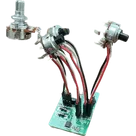
Guitar Pedal Template
Controls
Properties
Availability & Pricing
| Distributor | Qty 1 | |
|---|---|---|
Assets
- Subject.png
id=Subject
Thumbnail

Welcome 👋
Flux helps you build PCBs faster with an AI teammate!
Create your account to collaborate, stay updated, fork your own version, and get instant answers from our AI agent.