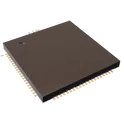
PIC Schematics
A PIC microcontroller (MCU) is a compact, powerful microcontroller that is widely used in a variety of applications, including automotive, industrial, and consumer electronics. PIC MCUs are known for their high performance, low power consumption, and ease of use. There are many different use cases for PIC MCUs, including control systems, data acquisition, and communication protocols. These microcontrollers are also commonly used in the development of Internet of Things (IoT) devices and other connected systems. Flux.ai has the world's largest community-driven public library of PIC MCUs, with footprints, symbols, datasheets, and simulation models available for use. This extensive library makes it easy for developers and engineers to find the information they need to work with PIC MCUs, and to find and test new solutions for their projects. Whether you're a seasoned professional or a beginner, Flux.ai's library is a valuable resource for anyone working with PIC microcontrollers.
Raspberry Pi Pico | End-to-end AI Design Tutorial [Example]
Learn how to design PCBs faster with generative AI in this 20 minute hands-on tutorial. You’ll learn how to use Flux Copilot, an AI-powered hardware design assistant, to research parts, review your design, and even connect components. https://youtu.be/FL7e0OXTLic
0 Uses0 StarsRaspberry Pi Pico | End-to-end AI Design Tutorial [Example]
Learn how to design PCBs faster with generative AI in this 20 minute hands-on tutorial. You’ll learn how to use Flux Copilot, an AI-powered hardware design assistant, to research parts, review your design, and even connect components. https://youtu.be/FL7e0OXTLic
0 Uses0 StarsRaspberry Pi Pico | End-to-end AI Design Tutorial [Example]
Learn how to design PCBs faster with generative AI in this 20 minute hands-on tutorial. You’ll learn how to use Flux Copilot, an AI-powered hardware design assistant, to research parts, review your design, and even connect components. https://youtu.be/FL7e0OXTLic
0 Uses0 StarsRaspberry Pi Pico | End-to-end AI Design Tutorial [Example]
Learn how to design PCBs faster with generative AI in this 20 minute hands-on tutorial. You’ll learn how to use Flux Copilot, an AI-powered hardware design assistant, to research parts, review your design, and even connect components. https://youtu.be/FL7e0OXTLic
0 Uses0 StarsRaspberry Pi Pico | End-to-end AI Design Tutorial [Example]
Learn how to design PCBs faster with generative AI in this 20 minute hands-on tutorial. You’ll learn how to use Flux Copilot, an AI-powered hardware design assistant, to research parts, review your design, and even connect components. https://youtu.be/FL7e0OXTLic
0 Uses0 StarsRaspberry Pi Pico | End-to-end AI Design Tutorial [Example]
Learn how to design PCBs faster with generative AI in this 20 minute hands-on tutorial. You’ll learn how to use Flux Copilot, an AI-powered hardware design assistant, to research parts, review your design, and even connect components. https://youtu.be/FL7e0OXTLic
0 Uses0 StarsRaspberry Pi Pico | End-to-end AI Design Tutorial [Example]
Learn how to design PCBs faster with generative AI in this 20 minute hands-on tutorial. You’ll learn how to use Flux Copilot, an AI-powered hardware design assistant, to research parts, review your design, and even connect components. https://youtu.be/FL7e0OXTLic
0 Uses0 StarsPICO Smart Automation Controller [Prod_V1_AUTO_NET_CLASS_12-10] mPfB
Use this template if you plan to get your 1-4 layer boards manufactured with HQ NextPCB (nextpcb.com). This template is designed for generic designs to minimize unnecessary costs and complications where possible. https://www.nextpcb.com/pcb-capabilities #project-template #template #manufacturer-design-rules Here’s a simple bogus Mermaid diagram you can paste and render: ```mermaid flowchart TD A["Start"] B["Open Box"] C["Find Blue Banana"] D["Ask Why"] E["Do Nothing"] F["Finish"] A --> B B -->|box is empty| E B -->|box has stuff| C C --> D D -->|shrug| E E --> F ```
0 Uses0 StarsRaspberry Pi Pico | End-to-end AI Design Tutorial [Example]
Learn how to design PCBs faster with generative AI in this 20 minute hands-on tutorial. You’ll learn how to use Flux Copilot, an AI-powered hardware design assistant, to research parts, review your design, and even connect components. https://youtu.be/FL7e0OXTLic
0 Uses0 StarsRaspberry Pi Pico | End-to-end AI Design Tutorial [Example]
Learn how to design PCBs faster with generative AI in this 20 minute hands-on tutorial. You’ll learn how to use Flux Copilot, an AI-powered hardware design assistant, to research parts, review your design, and even connect components. https://youtu.be/FL7e0OXTLic
0 Uses0 StarsRaspberry Pi Pico | End-to-end AI Design Tutorial [Example]
Learn how to design PCBs faster with generative AI in this 20 minute hands-on tutorial. You’ll learn how to use Flux Copilot, an AI-powered hardware design assistant, to research parts, review your design, and even connect components. https://youtu.be/FL7e0OXTLic
0 Uses0 StarsRaspberry Pi Pico | End-to-end AI Design Tutorial [Example]
Learn how to design PCBs faster with generative AI in this 20 minute hands-on tutorial. You’ll learn how to use Flux Copilot, an AI-powered hardware design assistant, to research parts, review your design, and even connect components. https://youtu.be/FL7e0OXTLic
0 Uses0 StarsRaspberry Pi Pico | End-to-end AI Design Tutorial [Example]
Learn how to design PCBs faster with generative AI in this 20 minute hands-on tutorial. You’ll learn how to use Flux Copilot, an AI-powered hardware design assistant, to research parts, review your design, and even connect components. https://youtu.be/FL7e0OXTLic
0 Uses0 StarsRaspberry Pi Pico | End-to-end AI Design Tutorial [Example]
Learn how to design PCBs faster with generative AI in this 20 minute hands-on tutorial. You’ll learn how to use Flux Copilot, an AI-powered hardware design assistant, to research parts, review your design, and even connect components. https://youtu.be/FL7e0OXTLic
0 Uses0 StarsRaspberry Pi Pico | End-to-end AI Design Tutorial [Example]
Learn how to design PCBs faster with generative AI in this 20 minute hands-on tutorial. You’ll learn how to use Flux Copilot, an AI-powered hardware design assistant, to research parts, review your design, and even connect components. https://youtu.be/FL7e0OXTLic
0 Uses0 StarsRaspberry Pi Pico | End-to-end AI Design Tutorial [Example]
Learn how to design PCBs faster with generative AI in this 20 minute hands-on tutorial. You’ll learn how to use Flux Copilot, an AI-powered hardware design assistant, to research parts, review your design, and even connect components. https://youtu.be/FL7e0OXTLic
0 Uses0 StarsRaspberry Pi Pico | End-to-end AI Design Tutorial [Example]
Learn how to design PCBs faster with generative AI in this 20 minute hands-on tutorial. You’ll learn how to use Flux Copilot, an AI-powered hardware design assistant, to research parts, review your design, and even connect components. https://youtu.be/FL7e0OXTLic
0 Uses0 StarsRaspberry Pi Pico | End-to-end AI Design Tutorial [Example]
Learn how to design PCBs faster with generative AI in this 20 minute hands-on tutorial. You’ll learn how to use Flux Copilot, an AI-powered hardware design assistant, to research parts, review your design, and even connect components. https://youtu.be/FL7e0OXTLic
0 Uses0 StarsRaspberry Pi Pico | End-to-end AI Design Tutorial [Example]
Learn how to design PCBs faster with generative AI in this 20 minute hands-on tutorial. You’ll learn how to use Flux Copilot, an AI-powered hardware design assistant, to research parts, review your design, and even connect components. https://youtu.be/FL7e0OXTLic
0 Uses0 StarsRaspberry Pi Pico | End-to-end AI Design Tutorial [Example]
Learn how to design PCBs faster with generative AI in this 20 minute hands-on tutorial. You’ll learn how to use Flux Copilot, an AI-powered hardware design assistant, to research parts, review your design, and even connect components. https://youtu.be/FL7e0OXTLic
0 Uses0 StarsIXTL2N470
N-Channel 4700 V 2A (Tc) 220W (Tc) Through Hole ISOPLUSi5-Pak™ Full picture confirmed from IXYS/Littelfuse datasheet sources — N-channel MOSFET, unipolar, ultra-high voltage class, housed in the ISOPLUS i5-Pak package. Here's the complete spec. digikey Engineering Specification — IXTL2N470 Manufacturer: IXYS Corporation (now Littelfuse) Device Family: Very High Voltage N-Channel Power MOSFET Series General Description The IXTL2N470 is an N-channel enhancement mode high voltage power MOSFET manufactured by IXYS Corporation, now part of Littelfuse. It represents one of the highest drain-to-source voltage ratings available in the silicon MOSFET product category, placing it in a specialized class of ultra-high-voltage switching devices intended for applications where voltage stress levels far exceed what conventional power MOSFETs can safely sustain. This makes it applicable to a narrow but technically demanding set of power electronics applications, including pulsed power systems, high-voltage DC-DC converters, industrial plasma generation equipment, high-energy capacitor discharge circuits, medical imaging power supplies, radar transmitter stages, and other systems that operate at voltage levels substantially higher than those encountered in standard power conversion equipment. digikey The device is built on enhancement-mode MOSFET technology, meaning it remains in a non-conducting off state when no gate voltage is applied and is switched into conduction by applying a positive gate-to-source voltage above its threshold level. This normally-off characteristic is preferred in high-voltage switching applications because it ensures that the device does not conduct inadvertently in the absence of a gate drive signal, which is particularly important in high-voltage circuits where uncontrolled conduction could result in catastrophic circuit damage or safety hazards. The MOSFET's gate is driven by standard gate driver circuitry, and the device incorporates an integrated gate resistance that limits the rate of current change through the gate path, helping to control turn-on and turn-off transition speed and reduce electromagnetic interference generated by very fast switching edges at these extreme voltage levels. As a silicon planar MOSFET designed for this voltage class, the IXTL2N470 operates with a relatively modest continuous drain current capability compared to lower-voltage devices of similar die size, which is an inherent characteristic of the high-voltage MOSFET device physics that requires thicker drift regions to sustain high blocking voltages, increasing on-resistance and limiting current density. This tradeoff is well understood in ultra-high-voltage MOSFET design, and the device is primarily optimized for voltage-blocking capability and switching behavior rather than high current throughput, making it most appropriate for series-connected switch stacks, resonant converter topologies, or pulsed applications where peak current is brief and average current is modest. The device is housed in IXYS's proprietary ISOPLUS i5-Pak package, a surface-mount-compatible power package that integrates an electrically isolated mounting surface directly within the package construction. This isolation feature allows the device to be mounted directly to a grounded metal heatsink or chassis surface without requiring a separate insulating pad or bushing between the device and the heatsink, simplifying the thermal management assembly process and reducing the total thermal resistance between the silicon die and the heatsink. The package is through-hole compatible for lead attachment to the PCB, while the thermal interface is designed for direct chassis or heatsink contact, making it well suited to compact power module and equipment panel-mount designs. Spec Sheet Identification Part Number: IXTL2N470 Device Family: Very High Voltage N-Channel Standard Power MOSFET Manufacturer: IXYS Corporation (now Littelfuse) Functional Classification Device Type: Power MOSFET Channel Type: N-channel Operating Mode: Enhancement mode (normally off) Technology: Silicon planar high-voltage MOSFET Electrical Characteristics Drain-to-Source Voltage Rating: Ultra-high voltage class, among the highest available in silicon MOSFET technology Drain Current Rating: Low continuous current class, consistent with ultra-high-voltage MOSFET physics Power Dissipation: High power dissipation class for its current rating, reflecting package thermal capability On-Resistance: Relatively high on-resistance, inherent to ultra-high-voltage MOSFET drift region design Gate Threshold: Standard enhancement-mode positive gate threshold voltage Integrated Gate Resistance: Built-in gate resistance for switching transition control and EMI reduction Input Capacitance: Moderate-to-high input capacitance class Reverse Transfer Capacitance: Low reverse transfer capacitance class Switching Characteristics Turn-On Delay: Defined turn-on delay time Rise Time: Defined output voltage rise time Turn-Off Delay: Defined turn-off delay time Fall Time: Defined output voltage fall time Thermal Characteristics Junction-to-Case Thermal Resistance: Defined by package construction and isolated mounting interface Operating Junction Temperature: Standard high-temperature silicon MOSFET class Mechanical & Package Package Type: ISOPLUS i5-Pak (proprietary IXYS isolated surface-mount power package) Isolation Feature: Electrically isolated mounting base integrated within package — no external insulator required for heatsink mounting Mounting Method: Through-hole PCB pin termination with isolated bottom thermal contact Environmental & Qualification RoHS Compliance: Yes Lifecycle Status: Active, available through Littelfuse and authorized distributors Target Applications Application Domains: Pulsed power systems, high-voltage DC-DC converters, plasma generation equipment, medical imaging power supplies, radar transmitter stages, capacitor discharge circuits, high-voltage series switch stacks #IXTL2N470 #IXYS #Littelfuse #HighVoltageMOSFET #UltraHighVoltageMOSFET #NChannelMOSFET #PowerMOSFET #EnhancementMode #ISOPLUSi5Pak #PulsedPower #HighVoltagePower #PowerElectronics #SwitchingDevice #PlasmaEquipment #MedicalPowerSupply #IndustrialPower #SemiconductorIC #DiscreteSemiconductor #EngineeringSpec #ComponentLibrary #CommonPartsLibrary #RoHSCompliant
1 Uses0 StarsHSCDRRN001ND2A5
Pressure Sensor ±0.04PSI (±0.25kPa) Differential Male - 0.08" (1.93mm) Tube, Dual 12 b 8-DIP (0.524", 13.30mm), Dual Ports, Same Side Excellent — full picture confirmed from multiple sources. The HSCDRRN001ND2A5 is a TruStability HSC Series high accuracy digital I²C sensor with address 0x28, DIP package, dual radial barbed ports on the same side, differential pressure type, rated for ±1 inH₂O, operating on a 5.0 Vdc supply. Here's the complete spec. HIROSE Electric Engineering Specification — HSCDRRN001ND2A5 Manufacturer: Honeywell Sensing and Productivity Solutions Device Family: TruStability HSC Series General Description The HSCDRRN001ND2A5 is a high-accuracy, fully compensated and amplified differential pressure sensor manufactured by Honeywell, belonging to the TruStability HSC Series of board-mount pressure sensing devices. The device is built around a piezoresistive silicon sensing element housed within a ceramic package, combining a mature and proven sensing principle with advanced on-chip signal conditioning that makes the device ready for direct interfacing with a host microcontroller or processor without requiring extensive external analog signal processing circuitry. The defining characteristic of the TruStability HSC series, and of this device in particular, is its fully calibrated and temperature-compensated output, achieved through an integrated application-specific integrated circuit that corrects for sensor offset, sensitivity drift, temperature effects, and pressure nonlinearity across the device's rated operating range. This level of factory compensation allows the device to maintain its specified accuracy across the full compensated temperature range without requiring individual board-level calibration, significantly simplifying the design and production process for equipment that relies on precise low-pressure measurement. This particular configuration uses a digital I²C output interface, communicating pressure readings as high-resolution digital data words over a standard two-wire bus using a fixed I²C device address. This digital output makes it highly compatible with modern embedded system architectures where analog-to-digital conversion resources may be limited or where noise immunity and data integrity over longer trace runs are priorities. The device offers both high resolution and high accuracy within a tight total error band, making it suitable for applications where small differential pressure differences must be resolved reliably over time and temperature variation. The sensor is configured as a differential pressure measurement device, meaning it produces an output proportional to the difference in pressure between its two pneumatic ports rather than to absolute or gauge pressure relative to atmosphere. This makes it particularly well suited to airflow measurement, filter condition monitoring, liquid level detection, spirometry and respiratory measurement, HVAC duct pressure sensing, and other applications where the pressure difference across two points in a system is the relevant physical quantity. The device is housed in a through-hole dual in-line package with two radial barbed pneumatic port fittings located on the same side of the package body, allowing small-bore flexible tubing to be connected directly to each port without requiring additional adapter fittings. The barbed port design provides a secure, friction-held tube connection that resists accidental disconnection during normal handling and operation. The package is designed for standard through-hole PCB mounting, and the device is intended for use with non-corrosive, non-ionic dry gases only, consistent with the silicon and ceramic wetted materials used in its construction. Spec Sheet Identification Part Number: HSCDRRN001ND2A5 Series: TruStability HSC Series Manufacturer: Honeywell Sensing and Productivity Solutions Functional Classification Device Type: Board-mount piezoresistive silicon pressure sensor Sensing Type: Differential pressure Compensation: Fully calibrated and temperature compensated via integrated ASIC Accuracy Class: High accuracy, tight total error band class Output Interface Output Type: Digital I²C I²C Device Address: Fixed address 0x28 Output Resolution: High-resolution digital pressure word Applicable Interface Standards: I²C-compatible digital output Pressure Port Configuration Port Style: Dual radial barbed ports Port Orientation: Same side, both ports on the same face of the package Tubing Connection: Direct small-bore flexible tube connection via barbed fittings Media Compatibility: Non-corrosive, non-ionic dry gases only Pressure Characteristics Pressure Type: Differential Pressure Range: Very low differential pressure class, sub-inch water column range Overpressure Capability: Rated overpressure withstand above operating range Power Supply Supply Voltage: Standard logic-level supply rail class Environmental & Mechanical Operating Temperature Range: Commercial/industrial extended temperature range Compensated Temperature Range: Subset of the full operating temperature range, within which calibrated accuracy is maintained Mount Type: Through-hole Package: DIP (Dual In-line Package), standard pin pitch Application Suitability Target Applications: Airflow measurement, HVAC duct pressure sensing, filter monitoring, respiratory and spirometry equipment, liquid level detection, low-pressure process monitoring Environmental & Qualification RoHS Compliance: Yes Media Restriction: Dry, non-corrosive, non-ionic gases only; no liquid media on Port #HSCDRRN001ND2A5 #Honeywell #TruStability #HSCSeries #PressureSensor #DifferentialPressure #PiezoresistiveSensor #I2CSensor #BoardMountSensor #LowPressureSensor #AirflowSensor #HVACSensor #RespiratoryMedical #ThroughHole #DIPPackage #CompensatedSensor #TemperatureCompensated #SensorDatasheet #EngineeringSpec #ComponentLibrary #CommonPartsLibrary #RoHSCompliant
0 Uses0 StarsRaspberry Pi Pico | End-to-end AI Design Tutorial [Example]
Learn how to design PCBs faster with generative AI in this 20 minute hands-on tutorial. You’ll learn how to use Flux Copilot, an AI-powered hardware design assistant, to research parts, review your design, and even connect components. https://youtu.be/FL7e0OXTLic
0 Uses0 Stars