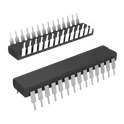
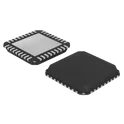
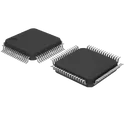
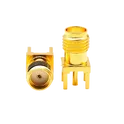
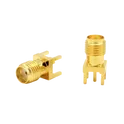
Slide Switch, SPDT, On-On, Through Hole, OS Series, 100mA # OS102011MS2QN1 ## General Description The OS102011MS2QN1 is a miniature slide switch manufactured by C&K, designed for low-power signal switching and control applications in electronic equipment. The switch features a compact mechanical design, reliable contact performance, and through-hole mounting configuration, making it suitable for embedded systems, industrial controls, instrumentation, telecommunications equipment, consumer electronics, and portable devices. Its robust construction ensures dependable operation throughout repeated switching cycles while maintaining stable electrical performance. The device is commonly utilized for mode selection, power control, configuration settings, and user-interface functions within electronic assemblies. ## Key Features ### Mechanical Characteristics * Miniature slide switch construction * Through-hole PCB mounting * Compact form factor * Durable actuator mechanism * Positive switching action * Designed for repeated mechanical operation ### Switching Characteristics * Maintained-contact operation * Reliable position retention * Low-force actuation * Stable contact engagement * Suitable for signal and control switching applications ### Electrical Characteristics * Low contact resistance * Reliable signal transmission * Stable switching performance * Suitable for low-current and low-voltage circuits * Consistent electrical operation throughout service life ### Contact System * High-reliability contact materials * Corrosion-resistant contact surfaces * Long operational durability * Dependable electrical continuity ### Material Construction * High-strength thermoplastic housing * Industrial-grade metallic contacts * Durable actuator assembly * RoHS-compliant materials ### Environmental Characteristics * Suitable for commercial and industrial electronic equipment * Resistant to mechanical wear * Reliable performance under normal operating environments * Designed for long-term service reliability ### Application Areas * Embedded Systems * Industrial Control Equipment * Consumer Electronics * Test and Measurement Instruments * Communication Devices * Medical Electronics * Power Control Circuits * User Interface Controls * Configuration and Mode Selection Functions * Electronic Development Platforms ### Compliance * RoHS Compliant * Lead-Free Compatible * Industrial-Grade Switching Component ## Manufacturer C&K ## Product Family OS Series Miniature Slide Switches #OS102011MS2QN1 #CKSwitches #SlideSwitch #MiniatureSwitch #ElectronicSwitch #PCBSwitch #EmbeddedSystems #IndustrialElectronics #ControlSystems #ConsumerElectronics #HardwareDesign #ElectronicsEngineering #SignalSwitching #PCBAssembly #ElectronicComponents #commonpartslibrary #switch #slide #spdt
600 Uses
1 Star
MPU with Dual Arm Cortex-A35 @1.5GHz, Cortex-M33 @400MHz, 3xEthernet (2+1 switch), 3xFD-CAN, LVDS/DSI, H.264, 3D GPU, AI/NN, Secure Boot, Cryptography, DRAM enc/dec, PKA The STM32MP257FAI3 is a high-performance microprocessor from STMicroelectronics' STM32MP2 series, integrating dual 64-bit Arm Cortex-A35 cores running at up to 1.5 GHz, a Cortex-M33 real-time core, and a Cortex-M0+ low-power management core. It is designed for advanced industrial, edge AI, machine vision, HMI, IoT gateway, and multimedia applications requiring Linux-class processing alongside deterministic real-time control. The device features AI acceleration, 3D graphics, video encoding/decoding, extensive connectivity, advanced security, and support for high-speed external memory. Key Features Dual-core 64-bit Arm Cortex-A35 CPU operating up to 1.5 GHz Arm Cortex-M33 real-time processor with TrustZone and FPU support Arm Cortex-M0+ low-power coprocessor for autonomous operation Integrated NPU (Neural Processing Unit) delivering up to 1.35 TOPS AI performance 3D GPU and hardware video encoder/decoder acceleration Supports DDR3L, DDR4, and LPDDR4 external memory up to 4 GB Multiple display interfaces including MIPI-DSI, LVDS, and parallel RGB USB 2.0 Host and USB 3.0 Dual-Role with embedded PHYs PCI Express interface with integrated 5 Gbps PHY Up to three Gigabit Ethernet interfaces with TSN and IEEE 1588 support Extensive connectivity: I2C, I3C, SPI, UART, USART, CAN FD, SDMMC, SAI, and SPDIF Hardware cryptographic accelerators including AES, SHA, RSA, ECC, PKA, and True RNG Secure boot, TrustZone security, tamper detection, and resource isolation framework Multiple low-power operating modes for energy-efficient designs Available in fine-pitch BGA packages for high-density embedded systems. #STM32MP257FAI3 #STM32MP2 #STMicroelectronics #CortexA35 #CortexM33 #EdgeAI #EmbeddedLinux #IndustrialAutomation #MachineVision #HMI #IoTGateway #MPU #PCIe #USB3 #GigabitEthernet #TrustZone #EmbeddedSystems #ArtificialIntelligence #LinuxProcessor #IndustrialIoT #CommonPartsLibrary #IntegratedCircuit #Microprocessor #STM32MP2
33 Uses
1 Star
Humidity, Pressure, Temperature 0 ~ 100% RH I²C, SPI ±3% 1 s Surface Mount BME280 I2C breakout module The BME280 integrates three sensors—temperature, relative humidity, and pressure—along with a high-performance digital interface. It communicates via I²C or SPI, making it easy to interface with microcontrollers like Arduino, ESP32, and STM32. It is designed for low power consumption, making it suitable for battery-powered applications such as portable weather stations and smart home devices. Key Features Environmental Sensing Measures: Temperature Relative Humidity Barometric Pressure Enables altitude estimation based on pressure readings High Accuracy Temperature: ±1.0°C (typical) Humidity: ±3% RH (typical) Pressure: ±1 hPa (typical) Low Power Consumption Typical current: ~0.6 µA (sleep mode) ~3.6 µA (measurement mode) Ideal for battery-operated devices Communication Interfaces Supports: I²C (up to 3.4 MHz) SPI (3-wire / 4-wire) Easy integration with most microcontrollers Compact Package Small footprint: 2.5 × 2.5 × 0.93 mm LGA package Suitable for space-constrained designs Built-in Features Factory-calibrated coefficients stored in NVM Configurable oversampling and filtering Integrated ADC for high-resolution measurements #commonpartslibrary #sensor #humidity #pressure
306 Uses
1 Star
MAX-M10 RF Receiver BeiDou, Galileo, GLONASS, GPS, GNSS 1.561GHz, 1.575GHz, 1.602GHz -167dBm 921.6kbps Not Included Module The MAX-M10S-00B is a professional-grade, ultra-low-power GNSS positioning module from u-blox based on the u-blox M10 platform. It is designed for battery-powered applications such as asset trackers, wearables, IoT devices, and navigation systems. The module supports simultaneous reception of multiple GNSS constellations, providing high positioning availability, fast acquisition times, and excellent sensitivity even in challenging urban or weak-signal environments. It integrates a TCXO, LNA, and SAW filter to improve RF performance while maintaining very low power consumption. Key Features Multi-constellation GNSS receiver: GPS Galileo GLONASS BeiDou QZSS SBAS support (WAAS, EGNOS, MSAS, GAGAN) Concurrent tracking of up to four GNSS constellations for improved position availability and accuracy. Ultra-low power consumption: Approximately 25 mW in continuous tracking mode, making it ideal for battery-powered devices. High RF sensitivity: Tracking sensitivity up to −167 dBm for reliable operation in weak-signal conditions. High positioning accuracy: Typical position accuracy of approximately 1.5 m CEP under suitable conditions. Navigation update rate: Up to 10 Hz for responsive tracking applications. Integrated RF front-end: Built-in LNA (Low Noise Amplifier) Built-in SAW filter Integrated TCXO for stable operation. Supports Assisted GNSS services: AssistNow Online AssistNow Offline AssistNow Autonomous CloudLocate support for low-power IoT positioning. Communication interfaces: UART I²C NMEA and UBX protocols supported. Wide operating temperature range: −40°C to +85°C. Supply voltage: 1.76 V to 3.6 V. Typical Applications Asset tracking devices Wearable electronics Fleet management systems Industrial IoT Smart meters Drone and robotics navigation Personal navigation devices Timing and synchronization systems Package Information Package Type: Surface-mount LCC module Dimensions: 9.7 mm × 10.1 mm × 2.5 mm (typical module size) #Commonpartslibrary #RF #Wireless #RFreceivers #MAXM10S #uBlox #GNSS #GPS #Galileo #GLONASS #BeiDou #QZSS #NavigationModule #GNSSModule #GPSTracking #AssetTracking #IoT #IndustrialIoT #WearableTech #FleetManagement #DroneNavigation #EmbeddedSystems #ElectronicsDesign #PCBDesign #HardwareEngineering #LowPowerDesign #LocationTracking #Geolocation #RFDesign #LNA #SMTModule
263 Uses
1 Star
Motor Drivers TMC2209-LA-T QFN-28_L5.0-W5.0-P0.50-BL-EP LCSC Part Number: C2150710 TRINAMIC TMC2209-LA two-phase stepper motor driver IC with STEP/DIR interface, up to 2.8A peak coil current (2A RMS), ultra-quiet StealthChop2 operation, SpreadCycle current control, StallGuard4 sensorless stall detection, CoolStep automatic current reduction, MicroPlyer interpolation up to 256 microsteps, integrated pulse generator, UART configuration interface, internal sense resistor option, low RDS(on) MOSFETs, 4.75V to 29V motor supply range, QFN package with exposed thermal pad, designed for 3D printers, CNC machines, robotics, automation and battery-powered equipment. Search Keywords: TMC2209, TMC2209-LA, Trinamic TMC2209, stepper motor driver, silent stepper driver, StealthChop2, SpreadCycle, StallGuard4, CoolStep, MicroPlyer, UART stepper driver, STEP DIR driver, 2A RMS stepper driver, 2.8A peak motor driver, 3D printer driver, CNC motor driver, QFN stepper driver Hashtags: #TMC2209 #TMC2209LA #Trinamic #StepperDriver #StepperMotorDriver #StealthChop2 #SpreadCycle #StallGuard4 #CoolStep #MicroPlyer #UARTDriver #3DPrinterElectronics #CNCElectronics #MotionControl #MotorDriverIC #SilentStepperDriver
87 Uses
1 Star
Bluetooth, WiFi 802.11b/g/n, Bluetooth v5.0 Transceiver Module 2.4GHz PCB Trace Surface Mount The ESP32-S3-WROOM-1-N8R8 is a high-performance Wi-Fi and Bluetooth Low Energy (BLE) module from Espressif Systems, designed for advanced IoT, edge AI, smart devices, industrial automation, and embedded applications. It is based on the ESP32-S3 SoC featuring a dual-core Xtensa® LX7 processor running up to 240 MHz, integrated wireless connectivity, and enhanced AI acceleration capabilities. The N8R8 variant includes 8 MB Flash memory and 8 MB Octal SPI PSRAM, making it suitable for memory-intensive applications such as machine learning, image processing, graphical user interfaces, and data logging. Key Features Dual-core 32-bit Xtensa LX7 CPU operating up to 240 MHz Integrated 2.4 GHz Wi-Fi (802.11 b/g/n) Bluetooth 5 LE (Low Energy) support 8 MB Flash memory 8 MB Octal SPI PSRAM Vector instructions and hardware acceleration for AI/ML workloads Integrated PCB trace antenna USB OTG and USB Serial/JTAG support Rich peripheral set including: GPIO ADC UART SPI I²C I²S PWM USB Operating voltage: 3.0 V to 3.6 V Wireless data rates up to 150 Mbps RF output power up to 20.5 dBm High receiver sensitivity down to –104.5 dBm Surface-mount 41-pin module package Industrial operating temperature range up to -40°C to +85°C (module-dependent specification) #Module #RF-Transceiver #Esp32
350 Uses
1 Star
The ESP32-CAM Ai-Thinker is a compact, low-cost Wi-Fi and Bluetooth-enabled camera development module based on the ESP32-S dual-core microcontroller. It integrates an OV2640 2MP camera sensor, onboard Flash memory, PSRAM, and a MicroSD card slot, making it suitable for IoT vision applications, wireless surveillance, image capture, video streaming, face recognition, and smart home projects. The module combines wireless connectivity and image processing capabilities in a small form factor while maintaining low power consumption. Key Features ESP32-S Dual-Core Processor Tensilica Xtensa LX6 dual-core 32-bit CPU Operating frequency up to 240 MHz Computing performance up to 600 DMIPS Integrated Camera Equipped with OV2640 CMOS image sensor Maximum image resolution: 1600 × 1200 (UXGA, 2MP) Supports JPEG image compression and video streaming Memory 4 MB Flash memory External PSRAM for frame buffering and image processing 520 KB internal SRAM Wireless Connectivity 2.4 GHz Wi-Fi (802.11 b/g/n) Bluetooth 4.2 BR/EDR and BLE support Storage Built-in MicroSD/TF card slot Supports local storage of images, videos, and data logs Peripheral Interfaces UART SPI I²C PWM ADC DAC GPIO expansion pins Power Supply Operating voltage: 5 V Low-power operation with deep-sleep capability for battery-powered applications Compact Design Module size approximately 27 mm × 40.5 mm PCB antenna onboard Optional external antenna connection on some variants
161 Uses
1 Star
Female Headers CONN SOCKET 40POS 2.54mm DUAL ROW TH This connector consists of 40 pins total (2 rows × 20 pins) spaced at 2.54 mm pitch. It is widely used in PCB interconnections, embedded systems, Raspberry Pi-style GPIO headers, Arduino expansion boards, and general prototyping applications. It mates with standard female headers or jumper wires. Key Features Pin configuration: 2×20 (40 pins total) Pitch: 2.54 mm (0.1 inch standard) Mounting type: Through-hole (THT) Orientation options: Vertical or right-angle variants Contact material: Typically brass or phosphor bronze Plating: Tin or gold-plated options for improved conductivity Current rating: Commonly 1A–3A per pin (depends on manufacturer) Voltage rating: Typically up to 250V AC/DC (application-dependent) Compatibility: Standard 2.54 mm female headers and jumper cables Use cases: Development boards, GPIO expansion, debugging interfaces, mezzanine connections #CommonPartsLibrary #Connector
200 Uses
1 Star
SOP-4-2.54mm Transistor, Photovoltaic Output Optoisolators ROHS PC817C-S SOP-4_L6.5-W4.6-P2.54-LS10.3-TL LCSC Part Number: C3008369 JLCPCB Part Class: Extended Part Manufactured by UMW(友台半导体) The ESDA18-1K is a transient voltage suppression and electrostatic discharge protection device designed to protect sensitive electronic circuits from ESD events, surge transients, and electrical overstress conditions. Manufactured by STMicroelectronics and commonly used in communication and embedded electronic systems, this device provides fast-response protection for signal lines and low-voltage interfaces exposed to external electrical disturbances. The component utilizes low-capacitance TVS diode technology to clamp transient voltages while maintaining signal integrity on high-speed communication lines. It is optimized for protecting USB interfaces, GPIO lines, communication ports, sensor interfaces, and portable electronic devices from electrostatic discharge damage and transient spikes. The ESDA18-1K is widely used in industrial electronics, consumer devices, embedded systems, communication hardware, and portable equipment requiring compact and reliable ESD suppression. Its small surface-mount package enables easy integration into high-density PCB layouts while improving overall system reliability and EMC robustness. Engineering Specification Device Type Transient voltage suppression and ESD protection diode Protection Function Electrostatic discharge and surge transient suppression Protection Architecture Single-line TVS protection structure Response Characteristics Fast transient clamping response Signal Compatibility Suitable for low-voltage and high-speed signal interfaces Capacitance Characteristics Low capacitance for minimal signal distortion Electrical Performance Low leakage current and stable clamping behavior Reliability Features High ESD robustness and transient tolerance Mounting Style Surface mount technology Package Type Compact SOD-style surface-mount package Thermal Characteristics Low-power passive protection structure EMC Features Enhanced electromagnetic compatibility protection support Applications USB interface protection GPIO protection Communication interfaces Embedded systems Portable electronics Industrial control hardware Sensor interfaces Consumer electronics Signal line protection Data communication systems Manufacturer STMicroelectronics #commonpartslibrary #esdprotection #tvsdiode #transientprotection #signalprotection #stmicroelectronics #embeddedhardware #electronicsdesign
220 Uses
1 Star
The PJ-320A is a panel-mount or PCB-mount DC barrel power jack connector designed for low-voltage DC power input applications in embedded and consumer electronic systems. This connector provides a reliable interface for external DC power adapters and is commonly used in development boards, communication devices, industrial electronics, portable equipment, and power distribution modules. The connector is engineered for stable mechanical retention and consistent electrical contact performance during repeated insertion and removal cycles. Its compact construction and standardized barrel interface support broad compatibility with common DC plug adapters used in low-voltage electronic systems. The PJ-320A is widely implemented in embedded hardware, battery charging systems, portable electronics, instrumentation equipment, and microcontroller-based applications requiring secure external power connectivity. Its durable housing and solderable terminal structure support reliable PCB integration and automated assembly processes. Engineering Specification Device Type DC barrel power jack connector Connector Function External DC power input interface Mounting Style PCB mount or panel mount depending on implementation Connector Configuration Coaxial barrel-style power connector Electrical Characteristics Designed for low-voltage DC power transmission Contact Structure Spring-contact conductive interface for stable plug retention Mechanical Features Durable insertion and extraction cycle performance Housing Material Insulated high-strength connector body Terminal Configuration Solderable PCB terminal interface Reliability Features Stable contact resistance and secure mechanical retention Assembly Compatibility Suitable for automated and manual PCB assembly processes Package Structure Compact embedded connector form factor Applications Embedded systems Portable electronics Power adapter interfaces Microcontroller development boards Battery charging systems Industrial electronics Consumer devices Communication equipment Instrumentation systems Low-voltage DC power distribution Manufacturer Commonly associated with generic DC power connector manufacturers #commonpartslibrary #dcjack #powerconnector #barreljack #embeddedhardware #electronicsdesign #powerelectronics #pcbconnectors #consumerelectronics #surfacemountcomponents #throughholecomponents #powerinput #industrialelectronics #microcontroller #electromechanical
94 Uses
1 Star
ARM® Cortex®-M7 S32K3 Microcontroller IC 32-Bit 160MHz 4MB (4M x 8) FLASH 172-QFP (16x16) S32K344EHT1VPBST is an automotive-grade 32-bit microcontroller from NXP Semiconductors based on the Arm Cortex-M7 core architecture. The device is designed for high-performance real-time automotive body, chassis, powertrain, and domain control applications requiring functional safety, security, and advanced communication interfaces. It integrates high-speed processing capability, extensive peripheral integration, hardware security acceleration, and deterministic control functions suitable for safety-critical embedded systems. The microcontroller operates with an Arm Cortex-M7 CPU core running at high frequency with floating-point support and DSP extensions for computationally intensive applications. Integrated flash memory and SRAM provide embedded program and data storage optimized for automotive embedded control systems. The device supports hardware-assisted security features including secure boot, cryptographic acceleration, and tamper protection for secure automotive network communication and firmware integrity. The S32K344EHT1VPBST includes multiple communication peripherals supporting CAN FD, FlexCAN, LIN, SPI, UART, I2C, and Ethernet interfaces for distributed automotive networking and gateway applications. Advanced analog integration includes ADC modules, timers, PWM generators, watchdogs, and motor-control-oriented peripherals enabling precision sensing and control functionality. The device supports functional safety development aligned with ISO 26262 requirements and includes error correction, memory protection, fault monitoring, and safety management features. Power management functionality supports low-power operating modes for energy-efficient automotive electronic control units. The microcontroller is housed in a thermally enhanced LQFP package suitable for automotive operating environments with extended temperature capability and AEC-Q100 qualification for automotive reliability standards. #commonpartslibrary #integratedcircuit #microcontroller #arm #m7
7 Uses
1 Star
Temperature Sensor Digital, Local -55°C ~ 150°C 16 b 6-WSON (2x2) The TMP117AIDRVR is a high-precision digital temperature sensor manufactured by Texas Instruments. The device provides accurate temperature measurements through an I²C-compatible digital interface and is optimized for applications requiring medical-grade accuracy, low power consumption, and compact PCB footprint. The sensor integrates a precision temperature sensing element, analog-to-digital converter, calibration memory, and digital interface into a single compact package. The device supports continuous conversion and shutdown operating modes, enabling efficient thermal monitoring in battery-powered and always-on systems. Internal calibration minimizes external component requirements while providing highly linear and repeatable temperature measurements across an extended operating range. The TMP117AIDRVR is commonly used in industrial controls, wearable electronics, healthcare equipment, environmental monitoring systems, battery management systems, consumer electronics, and precision instrumentation. Electrical Characteristics Supply voltage supports low-voltage digital systems and portable electronics applications. Ultra-low operating current enables long battery life in energy-sensitive designs. Integrated EEPROM allows programmable offset correction and configuration storage. Digital output eliminates the need for external ADC circuitry. High measurement resolution supports precision thermal monitoring applications. Low self-heating characteristics improve measurement stability and accuracy. Functional Features High-accuracy digital temperature sensing. I²C and SMBus compatible communication interface. Programmable alert functionality for thermal threshold monitoring. Continuous conversion and low-power shutdown operating modes. Integrated non-volatile memory for user configuration storage. Wide operating temperature range for industrial and commercial environments. Fast conversion timing suitable for real-time monitoring systems. Factory-calibrated performance requiring minimal external calibration. Package Information Package type is WSON with compact surface-mount footprint suitable for dense PCB layouts. Moisture-sensitive package designed for automated assembly processes. Lead-free and RoHS-compliant construction. Typical Applications Medical thermometers and patient monitoring systems. Industrial temperature monitoring equipment. Battery-powered portable electronics. HVAC and environmental sensing systems. Data acquisition and instrumentation systems. Server and embedded thermal management applications. Consumer electronics requiring precision thermal sensing. #commonpartslibrary #integratedcircuit #temperaturesensor
290 Uses
1 Star
LED Driver IC 16 Output Linear PWM Dimming 25mA 5.5V 28-TSSOP PCA9685PW,118 is a 16-channel, 12-bit PWM LED controller with an I²C interface designed for LED dimming, RGB/RGBA lighting, and servo motor control applications. It provides independent PWM control for up to 16 outputs, allowing precise brightness or position control while minimizing MCU GPIO usage. The device supports Fast-mode Plus I²C communication up to 1 MHz and operates from a 2.3 V to 5.5 V supply range. It is commonly used in robotics, LED backlighting, automation systems, and PWM expansion modules for microcontrollers such as Arduino, ESP32, and Raspberry Pi. Key Features 16 independent PWM output channels 12-bit PWM resolution (4096 steps) Programmable PWM frequency from approximately 24 Hz to 1526 Hz I²C Fast-mode Plus compatible interface up to 1 MHz Six hardware address pins allowing up to 62 devices on one I²C bus Programmable open-drain or totem-pole outputs Output capability: 25 mA sink current 10 mA source current Internal 25 MHz oscillator with optional external clock input Individual programmable LED ON/OFF timing for reduced EMI and current surges Supports software reset and group addressing (All Call/Sub Call) 5.5 V tolerant inputs and outputs Operating voltage range: 2.3 V to 5.5 V Package: 28-pin TSSOP (PW suffix) #CommonPartsLibrary #IntegratedCircuit #PowerManagement #LEDdriver
72 Uses
1 Star
ARM® Cortex®-M4 series Microcontroller IC 32-Bit Single-Core 168MHz 1MB (1M x 8) FLASH 64-LQFP (10x10) Arm® Cortex®-M4 32b MCU+FPU, 210DMIPS, up to 1MB flash/192+4KB RAM, USB OTG HS/FS, Ethernet, 17 TIMs, 3 ADCs, 15 comm. interfaces, and camera Includes ST state-of-the-art patented technology • Core: Arm® 32-bit Cortex®-M4 CPU with FPU, Adaptive real-time accelerator (ART Accelerator) allowing 0-wait state execution from flash memory, frequency up to 168 MHz, memory protection unit, 210 DMIPS/ 1.25 DMIPS/MHz (Dhrystone 2.1), and DSP instructions • Memories – Up to 1 Mbyte of flash memory – Up to 192+4 Kbytes of SRAM including 64- Kbyte of CCM (core coupled memory) data RAM – 512 bytes of OTP memory – Flexible static memory controller supporting CompactFlash™, SRAM, PSRAM, NOR and NAND memories • LCD parallel interface, 8080/6800 modes • Clock, reset, and supply management – 1.8 V to 3.6 V application supply and I/Os – POR, PDR, PVD and BOR – 4-to-26 MHz crystal oscillator – Internal 16 MHz factory-trimmed RC (1% accuracy) – 32 kHz oscillator for RTC with calibration – Internal 32 kHz RC with calibration • Low-power operation – Sleep, Stop, and Standby modes –VBAT supply for RTC, 20×32-bit backup registers + optional 4 KB backup SRAM • 3×12-bit, 2.4 MSPS A/D converters: up to 24 channels and 7.2 MSPS in triple interleaved mode • 2×12-bit D/A converters • General-purpose DMA: 16-stream DMA controller with FIFOs and burst support • Up to 17 timers: up to twelve 16-bit and two 32- bit timers up to 168 MHz, each with up to 4 IC/OC/PWM or pulse counter and quadrature (incremental) encoder input • Debug mode – Serial wire debug (SWD) & JTAG interfaces – Cortex-M4 Embedded Trace Macrocell™ • Up to 140 I/O ports with interrupt capability – Up to 136 fast I/Os up to 84 MHz – Up to 138 5 V-tolerant I/Os • Up to 15 communication interfaces – Up to 3 × I2C interfaces (SMBus/PMBus) – Up to 4 USARTs/2 UARTs (10.5 Mbit/s, ISO 7816 interface, LIN, IrDA, modem control) – Up to 3 SPIs (42 Mbits/s), 2 with muxed full-duplex I2S to achieve audio class accuracy via internal audio PLL or external clock – 2 × CAN interfaces (2.0B Active) – SDIO interface • Advanced connectivity – USB 2.0 full-speed device/host/OTG controller with on-chip PHY – USB 2.0 high-speed/full-speed device/host/OTG controller with dedicated DMA, on-chip full-speed PHY and ULPI – 10/100 Ethernet MAC with dedicated DMA: supports IEEE 1588v2 hardware, MII/RMII #commonpartslibrary #integratedcircuit #microcontroller
56 Uses
1 Star
USB to Serial Interface, SSOP-28 FTDI USB Serial SSOP*5.3x10.2mm*P0.65mm* The FT232RL is a full-speed USB 2.0 to asynchronous serial data transfer IC. It integrates all the necessary USB protocol handling and UART interface logic, making it very easy to add USB connectivity to embedded devices without requiring complex firmware development. It is commonly used in development boards (like Arduino clones), USB-to-TTL converters, and debugging interfaces. Key Features USB Interface Fully compliant with USB 2.0 Full-Speed (12 Mbps) Integrated USB transceiver (no external components required) Supports USB suspend/resume modes Internal EEPROM for storing USB descriptors (no external EEPROM needed) Serial (UART) Interface Supports standard UART communication (TX, RX) Configurable baud rates from 300 bps up to 3 Mbps Supports hardware flow control (RTS/CTS, DTR/DSR) Bit-bang mode for simple GPIO control Integrated Components Built-in clock generator (no external crystal required) Internal EEPROM for configuration Integrated voltage regulator (3.3V output available for external use) Power Features Operates from 3.3V to 5V Can be powered directly from USB (bus-powered) Low power consumption with sleep mode Driver Support Virtual COM Port (VCP) drivers available for: Windows Linux macOS Also supports direct D2XX driver for advanced applications Package Typically available in SSOP-28 package Common Applications USB-to-serial converters (TTL/RS232) Microcontroller programming and debugging Embedded system communication Industrial and instrumentation interfaces
152 Uses
1 Star
Accelerometer X, Y, Z Axis ±3g 1.6kHz (X,Y), 550Hz (Z) 16-LFCSP-LQ (4x4) The ADXL335BCPZ is a small, thin, low-power, complete 3-axis accelerometer with signal-conditioned voltage outputs. It measures acceleration with a minimum full-scale range of ±3 g. The device outputs analog voltages proportional to acceleration in each of the three orthogonal axes (X, Y, and Z). The accelerometer is designed for low power consumption and high resolution, making it suitable for mobile devices, tilt sensing, motion detection, and vibration monitoring. It operates over a wide temperature range and requires minimal external components, enabling easy integration into compact systems. Functional Overview The ADXL335 uses a capacitive sensing structure to detect acceleration. Changes in acceleration result in differential capacitance changes, which are converted into voltage outputs through an internal signal conditioning circuit. Each axis provides an independent analog output that can be directly interfaced with ADC inputs of microcontrollers or other processing units. Bandwidth for each axis can be adjusted using external capacitors, allowing flexibility depending on application requirements. Electrical Characteristics Supply Voltage Range: 1.8 V to 3.6 V Supply Current: Typical: 350 µA Measurement Range: ±3 g Sensitivity (Typical): 300 mV/g Zero-g Bias Level: Approximately mid-supply voltage Bandwidth: User-selectable via external capacitors Typical range: X, Y axes: up to 1600 Hz Z axis: up to 550 Hz Output Characteristics Output Type: Analog voltage (ratiometric to supply voltage) Number of Axes: Three (X, Y, Z) Output Noise: Low noise suitable for precision motion sensing Cross-Axis Sensitivity: Typically ±1% Mechanical Characteristics Package Type: 16-lead LFCSP (Lead Frame Chip Scale Package) Dimensions: Approximately 4 mm × 4 mm × 1.45 mm Mounting: Surface mount Environmental Specifications Operating Temperature Range: −40°C to +85°C Shock Survivability: Up to 10,000 g Interface Requirements External Components: Requires capacitors for bandwidth setting (one per axis) Output Interface: Direct analog output compatible with ADC inputs Applications Mobile devices and handheld electronics Tilt and orientation sensing Vibration monitoring systems Gaming and motion input devices Industrial instrumentation Wearable electronics Key Features Low power consumption Compact form factor High resolution analog outputs User-adjustable bandwidth Wide operating temperature range Simple integration with minimal external components #commonpartslibrary #sensor #transducer #motionsensor #accelerometer
58 Uses
1 Star
USB-C (USB TYPE-C) USB 2.0 Receptacle Connector 24 (16+8 Dummy) Position Surface Mount, Right Angle; Through Hole The USB4105-GF-A is a USB Type-C receptacle connector designed for USB 2.0 applications, commonly used in embedded systems, IoT devices, and consumer electronics. It features a 24-position (16 active + 8 dummy) contact design that supports reversible plug orientation, making it user-friendly and compliant with USB Type-C standards. This connector is a right-angle, surface-mount (SMT) device with through-hole retention tabs, providing both compact PCB integration and strong mechanical stability. Key Features USB Type-C Interface Reversible plug orientation (no wrong insertion) Standard USB Type-C receptacle Supports USB 2.0 signaling Contact Configuration 24 pins total (16 active + 8 dummy pins) Includes: Power (VBUS) Ground (GND) USB 2.0 data (D+, D−) Configuration channel (CC) Electrical Capability Supports multiple current levels (up to 5A depending on design) Rated voltage up to 48V DC Mechanical Design Right-angle (horizontal) mounting Surface-mount + through-hole hybrid Includes: Board guide Solder retention tabs (strong anchoring) Durability & Materials Shielded metal shell (EMI protection) Contact finish: Gold plating Housing: UL94 V-0 flame rated Mating cycles: ~20,000 insertions Environmental Specs Operating temperature: -40°C to +85°C RoHS compliant (lead-free) Typical Applications Microcontroller boards (ESP32, Arduino, etc.) Charging + data interface for embedded devices Power + USB communication ports Consumer electronics (gadgets, accessories) #CommonPartsLibrary #Connector #USB #DVI #USB4105 #USB-C
1.9k Uses
1 Star
2 Position Terminal Block Header, Male Pins, Shrouded (4 Side) 0.200" (5.08mm) 90°, Right Angle Through Hole Phoenix Contact MSTBA 2.5/ 2-G-5.08 CAN connector terminal block 2 pin The component is a two-position pluggable terminal block header designed for secure and reliable wire-to-board connections in industrial and embedded electronic systems. It is part of the COMBICON MSTB family, widely used for field wiring applications such as CAN bus, RS485, and power distribution. The device provides a robust interface between PCB circuitry and external wiring, supporting easy installation, maintenance, and replacement through a pluggable connection system. Mechanical Characteristics Number of Positions: 2 Pitch: 5.08 mm Mounting Type: Through-hole PCB mount Orientation: Vertical (straight) Termination Style: Pin header for mating plug connector Housing Material: Polyamide (PA), high-temperature resistant Color: Green Electrical Characteristics Rated Voltage: Up to 250 V Rated Current: Up to 12 A Contact Material: Copper alloy Contact Plating: Tin plated Environmental Characteristics Operating Temperature Range: -40°C to +105°C Flammability Rating: UL94 V-0 Mating and Compatibility Compatible Plug Series: Phoenix Contact MSTB 2,5 series (e.g., 1757019) Connection Method (Plug Side): Screw clamp termination Wire Size Range: Typically accepts 24 AWG to 12 AWG (depending on mating plug) Standards and Compliance RoHS: Compliant UL Recognized: Yes IEC Compliance: Yes Application Notes The component is commonly used in industrial communication systems such as CAN bus networks where a reliable and removable connection is required for CANH and CANL signals. Its 5.08 mm pitch ensures adequate spacing for signal integrity and ease of wiring, while the pluggable design simplifies field servicing and module replacement. #connector #tht #terminalblock
1.5k Uses
1 Star
Bluetooth, WiFi 802.11b/g/n, Bluetooth v5.0 Transceiver Module 2.4GHz PCB Trace Surface Mount The ESP32-C3-WROOM-02-N4 is a compact, general-purpose Wi-Fi and Bluetooth Low Energy (BLE) module developed by Espressif Systems. It is built around the ESP32-C3 SoC and integrates RF components, crystal oscillator, flash memory, and PCB antenna in a single module. It is designed for a wide range of applications such as IoT devices, smart home systems, industrial automation, and consumer electronics, offering a balance of performance, low power consumption, and cost efficiency. Key Features MCU & Memory 32-bit RISC-V single-core processor up to 160 MHz 384 KB ROM 400 KB SRAM + 8 KB RTC SRAM Integrated 4 MB SPI flash (N4 variant) Connectivity 2.4 GHz Wi-Fi (802.11 b/g/n) Supports Station, SoftAP, and Station + SoftAP modes Bluetooth 5 (BLE) with mesh support Data rates up to 150 Mbps (Wi-Fi) Peripherals & Interfaces Up to 15 GPIOs Interfaces: SPI, UART, I2C, I2S LED PWM ADC (SAR) Timers & watchdog USB Serial/JTAG support TWAI® (CAN 2.0 compatible) #commonpartslibrary #transceiver #module #wireless #rf
946 Uses
1 Star