Microcontrollers
A microcontroller is a small, low-cost computer-on-a-chip that can be used to control electronic devices and systems. It consists of a central processing unit (CPU), memory, input/output (I/O) ports, and other peripherals integrated onto a single chip. Microcontrollers are commonly used in a wide range of applications, including automotive systems, home appliances, industrial automation, and consumer electronics. One of the key benefits of microcontrollers is their ability to interact with their environment through sensors and actuators, making them well-suited for use in embedded systems. These systems are often found in devices that require real-time control or data processing, such as medical equipment, aircraft, and factory automation systems. Flux.ai is home to the world's largest community-driven public library of microcontrollers, with footprints, symbols, datasheets, and simulation models for a wide range of devices. Whether you're a professional engineer looking for a specific microcontroller for your next project, or a hobbyist exploring the possibilities of microcontroller-based systems, Flux.ai has the resources you need to get started.
TSW-118-07-G-S
Connector Header Through Hole 18 position 0.100" (2.54mm) # TSW-118-07-G-S ## General Description The TSW-118-07-G-S is a through-hole board-to-board and wire-to-board interconnect header manufactured by Samtec. It belongs to the TSW series of standard terminal strip headers designed for reliable signal transmission in electronic assemblies, embedded systems, industrial controls, telecommunications equipment, instrumentation, and general-purpose printed circuit board applications. The component features precision-machined contacts, robust mechanical construction, and compatibility with a wide range of mating connectors. Its design supports secure electrical connections while maintaining excellent durability during repeated mating cycles and long-term operation in demanding environments. ## Key Features ### Mechanical Characteristics * Through-hole mounting configuration * Single-row terminal strip header design * Straight vertical orientation * Precision-machined contact system * High-reliability board-level interconnection ### Contact System * Gold-plated contact surface * Enhanced conductivity and signal integrity * Corrosion-resistant contact finish * Suitable for repeated insertion and removal cycles ### Electrical Characteristics * Low contact resistance * Reliable signal transmission * Suitable for low-power and signal-level applications * Stable electrical performance across operating conditions ### Material Construction * High-temperature thermoplastic insulator * Durable metallic contact structure * RoHS-compliant materials * Lead-free manufacturing compatibility ### Environmental Characteristics * Industrial-grade operating capability * Resistant to mechanical wear during mating cycles * Suitable for automated and manual assembly processes ### Application Areas * Embedded Systems * Microcontroller Development Boards * Industrial Automation Equipment * Telecommunications Hardware * Test and Measurement Instruments * Medical Electronics * Data Acquisition Systems * Prototyping Platforms * Consumer Electronic Devices * PCB Interconnection Applications ### Compliance * RoHS Compliant * Lead-Free Compatible * Industry-standard connector footprint ## Manufacturer Samtec Inc. ## Product Family TSW Series Terminal Strip Headers #Samtec #TSW11807GS #TerminalStripHeader #PCBConnector #BoardToBoardConnector #WireToBoardConnector #ElectronicsComponents #EmbeddedSystems #IndustrialElectronics #InterconnectSolutions #ThroughHoleConnector #ElectronicDesign #HardwareEngineering #PCBAssembly #CommonPartsLibrary #Connector #Header #TSW pin header 1x18 2.54mm
32 Uses0 StarsMAX44009EDT+T
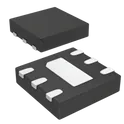
Optical Sensor Ambient I2C 6-UDFN Exposed Pad ## Engineering Specification ## General Description The **MAX44009EDT+T** is an Analog Devices / Maxim Integrated digital ambient light sensor designed for portable electronics, display brightness control, industrial sensors, embedded systems, and low-power optical sensing applications. It integrates an ambient light photodiode, signal conditioning, analog-to-digital conversion, and an I²C digital output interface in a compact surface-mount package. The device is suitable for systems requiring automatic brightness adjustment, low current consumption, and light measurement behavior that closely follows human-eye response. ## Device Identification Manufacturer Part Number: **MAX44009EDT+T** Manufacturer: **Analog Devices / Maxim Integrated** Product Series: **MAX44009** Device Category: **Sensor Integrated Circuit** Device Type: **Digital Ambient Light Sensor** Sensor Interface: **I²C Digital Output** Mounting Type: **Surface Mount** Package Type: **UTDFN-Opto / UDFN** ## Functional Description The device functions as a digital ambient light sensor that measures surrounding light intensity and reports the measurement through an I²C interface. It is designed to help electronic systems adjust display brightness, conserve power, improve user visibility, and respond to changes in lighting conditions. The integrated optical sensing and digital conversion circuitry reduce the need for external analog signal-conditioning components. ## Optical Sensing Description The sensor includes an on-chip photodiode with spectral response optimized to approximate human-eye sensitivity. It also incorporates infrared and ultraviolet blocking capability to improve ambient light measurement accuracy. The adaptive gain function automatically selects the appropriate measurement range, allowing the device to operate across very low-light and bright-light conditions. ## Electrical Description The **MAX44009EDT+T** operates from a low-voltage supply range and is optimized for ultra-low power consumption. It supports digital communication through an I²C interface and is suitable for battery-powered and energy-sensitive systems. Proper supply decoupling, pull-up resistor selection, and bus voltage compatibility should be considered during circuit design. ## Package and Mechanical Description The component is supplied in a compact surface-mount optical package suitable for space-constrained printed circuit board designs. The package is intended for placement where the optical sensing window has access to ambient light while maintaining proper mechanical protection from contamination, shadowing, and enclosure obstruction. ## Interface and Control Description The device communicates with a host microcontroller or processor through an I²C digital interface. The host can read ambient light data and configure device behavior through register-based communication. The selectable I²C addressing feature supports flexible integration in systems that may include multiple I²C peripherals. ## Mounting and Assembly Description The **MAX44009EDT+T** is intended for surface-mount PCB assembly using standard reflow soldering processes. PCB layout should follow the manufacturer’s recommended footprint and assembly guidance. The optical sensing area should remain unobstructed, clean, and aligned with the product enclosure opening or light pipe when used. ## Application Suitability The device is suitable for smartphones, tablets, notebooks, wearable electronics, handheld devices, display brightness control, industrial light sensing, smart home devices, battery-powered equipment, sensor modules, and embedded systems requiring digital ambient light detection. ## Design Considerations The design should account for sensor placement, optical window design, enclosure transparency, light pipe geometry, I²C bus pull-up values, supply voltage compatibility, ambient interference, temperature conditions, and contamination protection. The sensor should not be blocked by opaque materials or placed where shadows, reflections, or nearby LEDs may distort the measured ambient light level. ## Hashtags #commonpartslibrary #integratedcircuit #sensor #ambientlightsensor #digitalsensor #opticalsensor #analogdevices #maximintegrated #max44009 #max44009edt #i2csensor #lightmeasurement #brightnesscontrol #lowpowersensor #portableelectronics #displaycontrol #embeddedhardware #embeddeddesign #smdcomponent #surfacemount #utdfnpackage #uDFNpackage #pcbdesign #hardwaredesign #electronicscomponents #electronicparts #componentlibrary #engineeringparts #electronicsengineering
9 Uses0 StarsLAN8770M-I/PRA
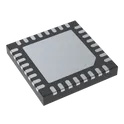
4/4 Transceiver Full MII, RMII 32-VQFN (5x5) ## Engineering Specification ## General Description The **LAN8770M-I/PRA** is a Microchip Technology single-port **100BASE-T1 Ethernet physical layer transceiver** designed for automotive, industrial, and embedded networking applications. It provides Ethernet communication over a single balanced twisted pair and is suitable for compact systems requiring reliable network connectivity, low-power operation, and standard MAC interface support. The device is commonly used in automotive electronic control units, infotainment systems, telematics modules, sensor nodes, industrial control systems, and embedded Ethernet hardware. ## Device Identification Manufacturer Part Number: **LAN8770M-I/PRA** Manufacturer: **Microchip Technology** Product Family: **LAN8770** Device Category: **Integrated Circuit** Device Type: **Ethernet PHY Transceiver** Ethernet Standard: **100BASE-T1** Interface Type: **MII and RMII** Mounting Type: **Surface Mount** Package Type: **VQFN** ## Functional Description The device functions as an Ethernet physical layer transceiver that connects a host controller or microcontroller MAC interface to a single-pair Ethernet physical medium. It handles the analog and digital PHY functions required for 100BASE-T1 communication, allowing embedded systems to transmit and receive Ethernet data over a single twisted pair cable. ## Network and Interface Description The **LAN8770M-I/PRA** supports 100 Mb/s single-pair Ethernet communication and provides MII and RMII host interface options. This allows integration with microcontrollers, processors, gateways, and network controllers that support standard Ethernet MAC interfaces. The device is intended for applications where compact Ethernet connectivity and reduced cabling complexity are required. ## Electrical Description The device is designed for low-voltage operation and supports multiple supply domains according to the manufacturer’s recommended operating conditions. Proper power sequencing, decoupling, reset handling, clocking, and reference layout should be implemented to maintain stable PHY operation and signal integrity. ## Package and Mechanical Description The component is supplied in a compact surface-mount **VQFN package**, suitable for dense printed circuit board assemblies. The package supports automated assembly and is appropriate for space-constrained automotive and industrial electronic designs. ## Control and Diagnostic Description The PHY supports management and configuration through standard control interfaces used in Ethernet designs. It provides status monitoring and configuration capability for link management, operating mode selection, and system-level diagnostics. These features allow the host controller to configure and monitor Ethernet link behavior during operation. ## Automotive and Industrial Suitability The **LAN8770M-I/PRA** is suitable for embedded systems requiring robust single-pair Ethernet communication. It is applicable to automotive networking, telematics, infotainment, advanced driver assistance systems, industrial Ethernet nodes, building automation, control modules, and other connected embedded platforms. ## Mounting and Assembly Description The component is intended for surface-mount PCB assembly using standard reflow soldering processes. PCB layout should follow Microchip’s hardware design guidance, including proper power supply decoupling, controlled impedance routing, short signal paths, grounding, and separation of sensitive analog and digital sections where applicable. ## Design Considerations The design should account for Ethernet signal integrity, single-pair cable interface requirements, common-mode noise control, EMC performance, supply filtering, oscillator or clock source requirements, reset timing, thermal performance, and package solderability. The device should not be operated beyond the manufacturer’s specified electrical, thermal, or mechanical limits. ## Application Suitability The device is suitable for automotive Ethernet nodes, electronic control units, telematics modules, infotainment systems, sensor interfaces, industrial controllers, embedded gateways, connected equipment, and compact network-enabled hardware requiring 100BASE-T1 Ethernet PHY functionality. ## Hashtags #commonpartslibrary #integratedcircuit #ethernetphy #microchip #microchiptechnology #lan8770 #lan8770mipra #singlepairethernet #100baset1 #automotiveethernet #ethernettransceiver #phytransceiver #embeddednetworking #mii #rmii #vqfnpackage #smdcomponent #surfacemount #automotiveelectronics #industrialethernet #telematics #infotainment #embeddedhardware #pcbdesign #hardwaredesign #electronicscomponents #electronicparts #componentlibrary #engineeringparts #electronicsengineering
3 Uses0 StarsS32K358GHT1MJBST
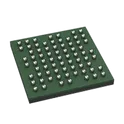
ARM® Cortex®-M7 S32K3 Microcontroller IC 32-Bit Tri-Core 240MHz 8MB (8M x 8) FLASH 289-LFBGA (14x14) ## Engineering Specification ## General Description The **S32K358GHT1MJBST** is an NXP Semiconductors **S32K3 series automotive microcontroller** designed for high-performance embedded control applications in automotive, industrial, and electrically harsh environments. It is built around an **Arm Cortex-M7 architecture** and provides high processing capability, large embedded flash memory, automotive-grade qualification, security support, and a broad set of communication interfaces. The device is suitable for body control, gateway systems, vehicle networking, motor control, domain control, safety-related embedded systems, and general-purpose automotive electronic control units. ## Device Identification Manufacturer Part Number: **S32K358GHT1MJBST** Manufacturer: **NXP Semiconductors** Product Family: **S32K3** Device Category: **Integrated Circuit** Device Type: **Automotive Microcontroller** Core Architecture: **Arm Cortex-M7** Processing Class: **Thirty-Two-Bit MCU** Qualification: **Automotive Grade, AEC-Q100** ## Functional Description The device functions as a high-performance automotive microcontroller for embedded control and communication systems. It provides processing resources for real-time control, communication management, diagnostics, security handling, and system-level application logic. The microcontroller is designed for scalable automotive platforms where software reuse, safety capability, and peripheral integration are important. ## Core and Processing Description The **S32K358GHT1MJBST** uses an Arm Cortex-M7 based processing architecture with tri-core capability and high-speed operation. The core architecture supports digital signal processing, floating-point operation, interrupt handling, and real-time embedded software execution. This makes the device suitable for control systems that require strong computing performance and deterministic response. ## Memory Description The device includes large embedded flash memory for application firmware storage and integrated RAM for runtime operation, data buffering, communication stacks, and control algorithms. The memory architecture is suitable for complex embedded applications requiring large program space, diagnostics, bootloader support, and over-the-air update capability. ## Security and Safety Description The microcontroller includes hardware security support through **HSE-B security** and is intended for automotive applications where secure boot, cryptographic services, protected firmware operation, and system integrity are important. The S32K3 family also supports automotive safety-oriented development through features such as error correction, monitoring, and diagnostic capability. ## Communication and Interface Description The device supports multiple embedded communication interfaces suitable for vehicle and industrial networks. Supported interface types include CAN, Ethernet, I²C, SPI, UART, LIN, QSPI, SAI, SENT, and FlexIO. These interfaces allow the device to communicate with sensors, actuators, transceivers, memory devices, network controllers, and other electronic control units. ## Analog and Peripheral Description The microcontroller includes analog-to-digital conversion capability, timers, watchdog functions, direct memory access, serial audio support, and general-purpose input and output resources. These peripherals support sensing, control, timing, supervision, communication, and system management functions in embedded hardware designs. ## Electrical Description The device is designed for automotive low-voltage operation and supports use across a wide supply voltage range. It is intended for applications requiring reliable operation in automotive and industrial temperature environments. Proper power supply design, decoupling, reset control, clock configuration, and grounding should follow the manufacturer’s hardware design recommendations. ## Package and Mechanical Description The **S32K358GHT1MJBST** is supplied in a **surface-mount LFBGA package** with a compact ball-grid-array footprint. The package is intended for dense printed circuit board layouts requiring careful routing, controlled assembly process, thermal management, and proper solder joint reliability. ## Mounting and Assembly Description The component is intended for automated surface-mount PCB assembly using BGA-compatible manufacturing processes. PCB layout should follow the recommended footprint, ball escape routing, power-plane design, decoupling capacitor placement, thermal design, and inspection requirements for high-density automotive microcontroller assemblies. ## Application Suitability The device is suitable for automotive electronic control units, body control modules, gateway controllers, vehicle networking systems, motor control platforms, battery-related control systems, industrial controllers, safety-oriented embedded systems, and high-performance general-purpose control applications. ## Design Considerations The design should account for supply voltage range, clocking requirements, flash and RAM usage, thermal limits, package routing density, communication interface requirements, EMC performance, boot configuration, security provisioning, debugging access, software safety requirements, and compliance with automotive design guidelines. The device should not be operated beyond the manufacturer’s specified electrical, thermal, or mechanical limits. ## Hashtags #commonpartslibrary #integratedcircuit #microcontroller #automotivemcu #nxp #nxpsemiconductors #s32k3 #s32k358 #s32k358ght1mjbst #armcortexm7 #cortexm7 #thirtytwobit #automotiveelectronics #aecq100 #hsesecurity #canfd #ethernet #vehicleelectronics #embeddedhardware #embeddeddesign #ecu #gatewaycontroller #bodycontrolmodule #pcbdesign #hardwaredesign #electronicscomponents #electronicparts #componentlibrary #engineeringparts #electronicsengineering
2 Uses0 StarsR7FA6E10F2CFM#AA0
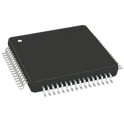
ARM® Cortex®-M33 RA6E1 Microcontroller IC 32-Bit 200MHz 1MB (1M x 8) FLASH 64-LFQFP (10x10) ## Engineering Specification ## General Description The **R7FA6E10F2CFM#AA0** is a Renesas Electronics **RA6E1 series microcontroller** designed for embedded control, industrial electronics, IoT edge devices, automation systems, and general-purpose connected applications. It is built around an **Arm Cortex-M33 processor with TrustZone support**, providing high performance, secure execution capability, and flexible integration for modern embedded designs. ## Device Identification Manufacturer Part Number: **R7FA6E10F2CFM#AA0** Manufacturer: **Renesas Electronics** Product Family: **RA Family** Series: **RA6 Series** Group: **RA6E1 Group** Device Category: **Integrated Circuit** Device Type: **Microcontroller Unit** ## Core and Processing The device uses an **Arm Cortex-M33 core** and is intended for high-performance embedded processing. It supports secure application development through TrustZone technology and is suitable for systems requiring reliable control, fast response, and efficient software execution. ## Memory Configuration The microcontroller includes program flash memory, data flash memory, and SRAM resources suitable for embedded firmware, application code, configuration storage, and runtime processing requirements. ## Package and Mechanical Description The component is supplied in an **LQFP surface-mount package**, making it suitable for compact printed circuit board layouts and standard automated assembly processes. ## Electrical and Operating Description The device is designed for low-voltage embedded systems and supports operation across an industrial temperature range. It is suitable for products requiring stable performance in controlled, commercial, or industrial operating environments. ## Communication and Interface Support The device supports common embedded communication interfaces such as USB, UART, SPI, I²C, QSPI, and CAN, allowing integration with sensors, displays, external memory, communication modules, and other peripheral devices. ## Analog and Control Features The microcontroller includes analog conversion capability, timer functions, PWM support, watchdog protection, reset monitoring, and low-voltage detection features. These functions make it suitable for control systems, monitoring equipment, and mixed-signal embedded applications. ## Security and Debug Features The device supports embedded security functions including TrustZone, unique device identification, and true random number generation. Debug and development access is supported through standard JTAG and SWD interfaces. ## Application Suitability This device is suitable for embedded controllers, IoT devices, industrial automation, metering equipment, appliance control, USB-connected products, sensor-based systems, and general electronic control applications requiring a compact and secure microcontroller solution. ## Hashtags #commonpartslibrary #integratedcircuit #microcontroller #renesas #renesaselectronics #ra6e1 #ra6series #armcortexm33 #embeddedsystems #electronicscomponents #semiconductor #mcu #iotdevices #industrialautomation #pcbdesign #electronicparts #componentlibrary #engineeringparts #hardwaredesign #electronicsengineering
0 Uses0 StarsSTM32WLE5JCI6
Multiprotocol LPWAN 32-bit Arm Cortex-M4 MCUs, LoRa, (G)FSK, (G)MSK, BPSK, up to 256KB flash, 64KB SRAM IC RF TxRx + MCU 802.15.4 LoRa™ 150MHz ~ 960MHz 73-UFBGA The STM32WLE5JCI6 is an ultra-low-power wireless System-on-Chip (SoC) from STMicroelectronics that combines a 32-bit Arm Cortex-M4 microcontroller with an integrated sub-GHz radio transceiver. It is designed for long-range, low-power IoT and LPWAN applications such as smart metering, smart cities, industrial sensors, and remote monitoring systems. It supports multiple modulation schemes including LoRa®, (G)FSK, (G)MSK, and BPSK, making it flexible for both proprietary and standardized wireless protocols like LoRaWAN®. The device integrates RF, analog, digital, and security features into a single chip to reduce external components and PCB size. Key Features Core & Performance 32-bit Arm® Cortex®-M4 core up to 48 MHz DSP instructions and MPU support Up to 256 KB Flash and 64 KB SRAM Wireless Radio Sub-GHz frequency range: 150 MHz – 960 MHz Supports LoRa®, (G)FSK, (G)MSK, BPSK High receiver sensitivity up to –148 dBm (LoRa mode) Output power up to +22 dBm Ultra-Low Power Operation Supply voltage: 1.8 V – 3.6 V Very low sleep currents (nA–µA range) Optimized for battery-powered and energy-harvesting devices Peripherals Up to 43 GPIOs ADC (12-bit), DAC, comparators Multiple timers (16-bit and 32-bit) Interfaces: SPI, I2C, UART/USART, LPUART, I2S Security Features Hardware AES-256 encryption True Random Number Generator (TRNG) Secure memory protection and unique device ID System Integration Integrated RF + MCU (highly reduced BOM) OTA firmware update capability Industrial temperature range (typically –40°C to +85°C / +105°C depending variant) Summary The STM32WLE5JCI6 is a highly integrated LoRa-capable MCU + RF transceiver SoC, optimized for long-range wireless communication with extremely low power consumption, making it ideal for IoT devices that must run for years on battery power. #CommonPartsLibrary #IntegratedCircuit #STM32WLE5JCI6 #STM32WL #LoRa #IoT #LowPowerMCU #ArmCortexM4 #SubGHzRF #WirelessMCU #LPWAN #STMicroelectronics
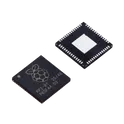
1 Uses0 StarsRP2040
133MHz LQFN-56(7x7) Microcontrollers (MCU/MPU/SOC) ROHS RP2040 The RP2040 is a high-performance, low-cost 32-bit microcontroller developed by Raspberry Pi Ltd.. It features dual ARM Cortex-M0+ processor cores, flexible digital interfaces, and a unique Programmable I/O (PIO) subsystem that enables custom hardware protocols and timing-critical applications. The device is widely used in embedded systems, IoT devices, robotics, industrial control, consumer electronics, and educational projects. Key Features Dual ARM Cortex-M0+ CPU cores operating up to 133 MHz (up to 200 MHz under specific conditions) 264 KB on-chip SRAM organized in six independent memory banks External QSPI Flash interface with Execute-In-Place (XIP) support and up to 16 MB Flash memory capability 30 multifunction GPIO pins with extensive peripheral multiplexing 2 × UART interfaces 2 × SPI controllers 2 × I²C controllers 16 PWM channels for motor control and signal generation USB 1.1 Host and Device support with integrated PHY 12-bit ADC with four external analog inputs and internal temperature sensor, up to 500 ksps sampling rate 12-channel DMA controller for efficient data transfers Programmable I/O (PIO) subsystem with 8 state machines for implementing custom communication interfaces and precise timing applications Integrated PLLs and programmable LDO regulator for clock and power management Operating voltage range: 1.8 V to 3.3 V Available in a compact 7 mm × 7 mm QFN-56 package Typical Applications IoT and connected devices Industrial automation Robotics and motor control Human-machine interfaces (HMI) Consumer electronics USB peripherals Sensor data acquisition systems Educational and maker projects Custom communication protocol implementations using PIO #CommonPartsLibrary #IntegratedCircuit #Microcontroller
160 Uses0 StarsCD74HC4067M
The CD74HC4067M is a high-speed CMOS analog multiplexer and demultiplexer designed to route one of multiple analog or digital signals to a common input/output line. Built using advanced high-speed CMOS technology, this device provides low ON-state resistance, wide signal bandwidth, and low power consumption, making it suitable for signal routing, data acquisition systems, sensor expansion, communication interfaces, industrial control systems, and embedded electronics. The integrated channel selection logic enables efficient switching between multiple signal paths while maintaining signal integrity and minimizing distortion. Features High-speed CMOS analog multiplexer and demultiplexer architecture Multiple single-ended channels connected to a common input/output Low ON-state resistance for reduced signal loss Wide analog signal handling capability Bidirectional signal switching support Compatible with both analog and digital signals Low power consumption during operation Break-before-make switching characteristic High noise immunity Wide operating supply voltage range Direct interface compatibility with microcontrollers and digital logic devices Low crosstalk and low leakage current performance Surface-mount package optimized for automated assembly Applications Sensor multiplexing systems Data acquisition equipment Industrial automation controllers Embedded electronics Test and measurement instruments Communication systems Audio signal routing Battery monitoring systems Medical instrumentation Consumer electronic products Microcontroller input expansion Analog signal selection networks Electrical Characteristics CMOS logic implementation Analog and digital signal switching capability Low propagation delay Low channel capacitance Low leakage current High switching speed Wide bandwidth operation ESD protection features High input impedance Low standby power consumption Mechanical Characteristics Surface-mount integrated circuit package Compact footprint for high-density PCB layouts RoHS-compliant construction Suitable for automated pick-and-place assembly Standard industry package dimensions Design Considerations Use proper decoupling capacitors near supply pins Keep analog signal traces short to minimize noise pickup Ensure signals remain within specified supply voltage limits Consider ON-resistance effects in precision analog applications Implement appropriate PCB grounding techniques for optimal performance Avoid exceeding maximum switching current ratings #commonpartslibrary #integratedcircuit #analog #digital #multiplexer #demultiplexer #signalrouting #analogswitch #dataacquisition #embeddedsystems #industrialelectronics #texasinstruments
108 Uses0 Stars7805
5V Positive Fixed TO-220 Voltage Regulators - Linear, Low Drop Out (LDO) Regulators RoHS The 7805 is a fixed positive linear voltage regulator IC that provides a regulated +5 V DC output from a higher DC input voltage. It belongs to the widely used 78xx series of voltage regulators, where "05" indicates the 5 V output voltage. The device is commonly used in power supplies for microcontrollers, digital logic circuits, sensors, communication modules, and other electronic systems requiring a stable 5 V supply. It typically requires only a few external capacitors for reliable operation and includes built-in protection features for enhanced robustness. Key Features Fixed 5 V regulated output voltage Output current capability up to 1 A to 1.5 A (depending on manufacturer, package, and thermal conditions) Wide input voltage range (typically up to 35 V maximum) Internal thermal overload protection Internal short-circuit current limiting Safe Operating Area (SOA) protection Requires minimal external components Good line and load regulation Available in common packages such as TO-220, TO-263, and others Suitable for embedded systems, industrial controls, instrumentation, and general-purpose power supplies Typical Applications 12 V to 5 V power conversion Microcontroller and development board power supplies Embedded and IoT devices Digital logic circuits (TTL/CMOS) Sensor and communication module power regulation Educational and hobby electronics projects #CommonPartsLibrary #IntegratedCircuit #PowerManagement
200 Uses0 StarsTPS3839G33DBZT
The TPS3839G33DBZT is an ultra-low-power voltage supervisor designed to monitor system supply rails and provide reliable reset signaling for microcontrollers, processors, FPGAs, and other digital systems. The device continuously supervises the supply voltage and asserts a reset output when the monitored voltage falls below the factory-programmed threshold, ensuring proper system startup, shutdown, and fault recovery. Its low quiescent current makes it particularly suitable for battery-powered, portable, and energy-efficient applications where power consumption is critical. The device features a precision voltage monitoring architecture with a fixed reset threshold optimized for nominal logic supply rails. It provides a stable reset output with an internally defined reset timeout period, eliminating the need for external timing components. The compact package and robust noise immunity make it ideal for embedded systems, industrial controls, consumer electronics, IoT devices, medical equipment, and wireless communication platforms. Key Features Ultra-low quiescent current operation Precision fixed-voltage supervision Factory-programmed reset threshold for logic supply monitoring Active-low reset output Internal reset timeout delay High threshold accuracy over temperature Fast response to undervoltage conditions Push-pull reset output configuration No external components required for operation Compact surface-mount package Wide operating temperature range High reliability and low power consumption Applications Microcontroller reset generation Embedded control systems Battery-powered electronics Industrial automation equipment IoT and wireless sensor nodes Portable medical devices Consumer electronics Data acquisition systems Power management subsystems Communication and networking equipment Electrical Characteristics Fixed supply voltage monitoring Precision undervoltage detection Low operating current Integrated reset timing circuitry Stable reset assertion during power-up and brownout conditions Noise-tolerant voltage supervision Reliable operation across specified temperature range Package Information Surface-mount package Compact footprint for space-constrained designs RoHS-compliant construction Suitable for automated assembly processes #commonpartslibrary #integratedcircuit #powersupervisor #voltagesupervisor #resetcontroller #powermanagement #embeddedsystems #microcontroller #lowpower #batterypowered #industrialelectronics #iot #electronicsdesign #semiconductor #texasinstruments
85 Uses0 Stars