Memory
A memory IC, or integrated circuit, is a type of electronic device that stores and retrieves data. It is used in a wide range of electronic devices, including computers, smartphones, and other electronic devices. Memory ICs come in a variety of types, including DRAM, SRAM, and Flash memory, and are used for different purposes depending on the device and application. One of the primary use cases for memory ICs is in computer systems, where they are used to store data and instructions that are accessed by the processor. Memory ICs are also used in a variety of other electronic devices, such as digital cameras, MP3 players, and mobile phones, to store data and enable various functions. Flux.ai has the world's largest community-driven public library of memory ICs, with a wide variety of footprints, symbols, datasheets, and simulation models available. This extensive library allows users to easily access and use memory ICs in their projects, making it an invaluable resource for engineers and developers.
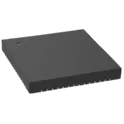
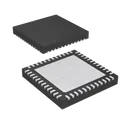
PCA9450CHNY
Power Management IC for iMX8M 5V 6A 6 Buck + 5 LDO The PCA9450CHNY is a highly integrated Power Management Integrated Circuit (PMIC) from NXP Semiconductors, specifically designed to power the i.MX 8M family of application processors, particularly the i.MX 8M Plus. It integrates multiple high-efficiency DC-DC buck converters, LDO regulators, power sequencing logic, load switching, voltage monitoring, and system control functions into a single device. The PCA9450C variant features a configurable dual-phase 6 A buck regulator for powering high-current processor cores while supporting Dynamic Voltage Scaling (DVS) for optimized power efficiency. Key Features Six high-efficiency switching regulators (Buck converters) PCA9450C variant supports a configurable 6 A dual-phase buck regulator Three 3 A buck regulators with Dynamic Voltage Scaling (DVS) Remote-sense capability on major buck outputs for IR-drop compensation Five integrated LDO regulators Supports DDR4, LPDDR4, and DDR3L memory configurations 400 mA load switch with active discharge Dual-channel logic level translator Integrated 32.768 kHz crystal oscillator driver Fast-mode Plus (Fm+) 1 MHz I²C interface Programmable power sequencing and voltage control Power ON/OFF and Standby/Run mode control inputs Protection features including UVLO, thermal shutdown, fault monitoring, and soft-start Operating temperature range: −40°C to +105°C 56-pin HVQFN package (7 mm × 7 mm, 0.4 mm pitch) Optimized for i.MX 8M Mini, Nano, and Plus processors, especially the i.MX 8M Plus for the PCA9450C variant. #CommonPartsLibrary #PCA9450CHNY #PCA9450C #NXP #PMIC #PowerManagementIC #PowerSupply #VoltageRegulator #BuckConverter #LDO #DynamicVoltageScaling #DVS #IMX8M #IMX8MPlus #EmbeddedSystems #IndustrialElectronics #PowerManagement #HVQFN56 #Semiconductor #IntegratedCircuit #IC #CommonPartsLibrary #ElectronicsDesign #HardwareDesign #PCBDesign #EmbeddedLinux #IoT #ProcessorPowerManagement #PowerSequencing #SystemPower #NXPSemiconductors
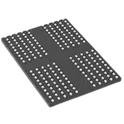
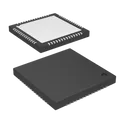
11 Uses0 StarsMT53E1536M32D4DT-046 WT:A
SDRAM - Mobile LPDDR4 Memory IC 48Gbit 2.133 GHz MT53E1536M32D4DT-046 WT:A is a high-density 48Gb (6GB) LPDDR4/LPDDR4X SDRAM memory device from Micron Technology. It is designed for high-performance, low-power applications requiring fast memory bandwidth and efficient power management. The device features a 32-bit data bus, supports data rates up to 4266 MT/s, and is packaged in a compact 200-ball FBGA, making it suitable for embedded computing, industrial systems, networking equipment, AI edge devices, automotive electronics, and mobile platforms. Key Features 48Gb (6GB) LPDDR4/LPDDR4X SDRAM Organized as 1.5G × 32 bits Data transfer rates up to 4266 MT/s Maximum clock frequency of 2133 MHz Low-power operation with 1.1V core supply 32-bit memory interface 200-ball FBGA package JEDEC LPDDR4-compliant architecture Per-bank refresh support Temperature-compensated refresh Self-refresh and deep power-down modes Partial-array self-refresh capability High bandwidth with reduced power consumption Optimized for compact embedded designs Operating temperature range: –30°C to +85°C Typical Applications Embedded Linux computers Single-board computers (SBCs) AI and edge computing platforms Industrial automation systems Networking and telecommunications equipment Automotive infotainment and control systems Tablets and mobile devices FPGA and SoC-based designs #commonpartslibrary #integratedcircuit #memory #dram #sdram #lpddr4 #lpddr4x #mobiledram #micron #embeddedsystems #embeddedcomputing #industrialelectronics #automotiveelectronics #edgecomputing #artificialintelligence #networking #telecommunications #highspeedmemory #lowpowerdesign #computerhardware #electroniccomponents #semiconductor #datasheet #fbga #memorychip #electronicsdesign #pcbdesign #hardwareengineering #electronicengineering #systemonchip #fpga #iot #internetofthings #computermemory #digitalelectronics #surfaceMount #smt #bga #storage #highperformancecomputing #hpc #mobiledevices #industrialautomation #electronicdesign #componentlibrary #fluxlibrary #parametricpart #eda #schematic #pcb #electronicdesignautomation #chipdesign #embeddedhardware #memorymodule #lowpowerelectronics #highbandwidthmemory #electronics #hardwaredevelopment #engineering #electricalengineering
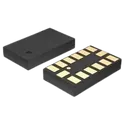
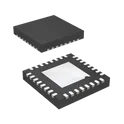
1 Uses0 StarsADXL345TCCZ-EP
Accelerometer X, Y, Z Axis ±2g, 4g, 8g, 16g 0.05Hz ~ 1.6kHz 14-LGA (3x5) The ADXL345-EP is an extended performance version of the ADXL345, which is a small, thin, ultralow power, 3-axis accelerometer with high resolution (13-bit) measurement at up to ±16 g. Digital output data is formatted as 16-bit twos complement and is accessible through either a SPI (3- or 4-wire) or I2 C digital interface. The ADXL345-EP is well suited for extended temperature range industrial and aerospace equipment. It measures the static acceleration of gravity in tilt-sensing applications, as well as dynamic acceleration resulting from motion or shock. Its high resolution (3.9 mg/LSB) enables measurement of inclination changes less than 1.0°. Several special sensing functions are provided. Activity and inactivity sensing detect the presence or lack of motion by comparing the acceleration on any axis with user-set thresholds. Tap sensing detects single and double taps in any direction. Freefall sensing detects if the device is falling. These functions can be mapped individually to either of two interrupt output pins. An integrated memory management system with a 32-level first in, first out (FIFO) buffer can be used to store data to minimize host processor activity and lower overall system power consumption. Low power modes enable intelligent motion-based power management with threshold sensing and active acceleration measurement at extremely low power dissipation. The ADXL345-EP is supplied in a small, thin, 3 mm × 5 mm × 1 mm, 14-lead, enhanced plastic package. Ultralow power: as low as 23 µA in measurement mode and 0.1 µA in standby mode at VS = 2.5 V (typical) Power consumption scales automatically with bandwidth User-selectable resolution from 10 to 13 bits 4 mg/LSB scale factor in all g ranges 32-sample FIFO minimizes host processor load Single tap, double tap, and free-fall detection Activity/inactivity monitoring Supply voltage range: 2.0 V to 3.6 V I/O voltage range: 1.7 V to VS SPI (3- and 4-wire) and I2C digital interfaces Flexible interrupt modes mappable to either interrupt pin Measurement ranges selectable via serial command Bandwidth selectable via serial command 10,000 g shock survival Pb free/RoHS compliant Small and thin: 3 mm × 5 mm × 1 mm LGA package #CommonPartsLibrary #Sensor #Motion-sensor #accelerometer
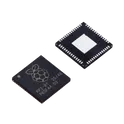
49 Uses0 StarsRP2040
133MHz LQFN-56(7x7) Microcontrollers (MCU/MPU/SOC) ROHS RP2040 The RP2040 is a high-performance, low-cost 32-bit microcontroller developed by Raspberry Pi Ltd.. It features dual ARM Cortex-M0+ processor cores, flexible digital interfaces, and a unique Programmable I/O (PIO) subsystem that enables custom hardware protocols and timing-critical applications. The device is widely used in embedded systems, IoT devices, robotics, industrial control, consumer electronics, and educational projects. Key Features Dual ARM Cortex-M0+ CPU cores operating up to 133 MHz (up to 200 MHz under specific conditions) 264 KB on-chip SRAM organized in six independent memory banks External QSPI Flash interface with Execute-In-Place (XIP) support and up to 16 MB Flash memory capability 30 multifunction GPIO pins with extensive peripheral multiplexing 2 × UART interfaces 2 × SPI controllers 2 × I²C controllers 16 PWM channels for motor control and signal generation USB 1.1 Host and Device support with integrated PHY 12-bit ADC with four external analog inputs and internal temperature sensor, up to 500 ksps sampling rate 12-channel DMA controller for efficient data transfers Programmable I/O (PIO) subsystem with 8 state machines for implementing custom communication interfaces and precise timing applications Integrated PLLs and programmable LDO regulator for clock and power management Operating voltage range: 1.8 V to 3.3 V Available in a compact 7 mm × 7 mm QFN-56 package Typical Applications IoT and connected devices Industrial automation Robotics and motor control Human-machine interfaces (HMI) Consumer electronics USB peripherals Sensor data acquisition systems Educational and maker projects Custom communication protocol implementations using PIO #CommonPartsLibrary #IntegratedCircuit #Microcontroller
160 Uses0 StarsNRF52832-QFAB-R
The NRF52832-QFAB-R is a multiprotocol wireless system-on-chip manufactured by Nordic Semiconductor, designed for low-power Bluetooth and embedded wireless communication applications. This highly integrated microcontroller combines a powerful ARM Cortex-M4 processor with advanced wireless connectivity, low-energy operation, and extensive peripheral functionality within a compact surface-mount package. The device supports Bluetooth Low Energy, proprietary wireless protocols, and advanced embedded processing capabilities, making it suitable for IoT devices, wearable electronics, industrial sensors, medical equipment, smart home products, and battery-powered wireless systems. Its integrated radio architecture and optimized low-power design enable extended battery life while maintaining reliable wireless communication performance. The NRF52832-QFAB-R integrates flash memory, RAM resources, analog and digital peripherals, security features, and flexible GPIO functionality to simplify system-level design and reduce external component requirements. The device is widely used in wireless sensor networks, portable electronics, beacon systems, HID devices, and low-power connected embedded applications. Engineering Specification Device Type Wireless microcontroller system-on-chip Processor Architecture ARM Cortex-M4 embedded processor Wireless Connectivity Bluetooth Low Energy and proprietary wireless communication support Radio Features Integrated low-power wireless transceiver architecture Memory Resources Integrated flash memory and RAM Power Characteristics Ultra-low-power operation optimized for battery-powered devices Communication Interfaces SPI I2C UART PWM ADC GPIO NFC support Wireless Features Low-energy wireless networking and secure communication capability Security Features Hardware-based security and encryption support Processing Features Embedded DSP and floating-point processing capability Package Type QFN surface-mount package Mounting Style Surface mount technology Reliability Features Industrial-grade wireless and embedded system reliability Applications IoT devices Wearable electronics Wireless sensor nodes Smart home systems Medical electronics Industrial automation Beacon devices Portable electronics Human interface devices Embedded wireless systems Manufacturer Nordic Semiconductor #commonpartslibrary #nrf52 #nrf52832 #wirelessmcu #bluetoothlowenergy #iot #embeddedhardware #nordicsemi #wirelesscommunication #microcontroller #surfaceountcomponents #wearableelectronics #smarthome #industrialelectronics #lowpowerelectronics
71 Uses0 StarsESP32-S3R8
IC RF TxRx + MCU Bluetooth, WiFi 802.11b/g/n, Bluetooth v5.0 2.412GHz ~ 2.484GHz 56-VFQFN Exposed Pad The ESP32-S3R8 is a high-performance wireless microcontroller system-on-chip manufactured by Espressif Systems. This device integrates dual-core processing, Wi-Fi connectivity, Bluetooth Low Energy communication, embedded memory resources, and advanced peripheral interfaces within a compact package optimized for embedded and IoT applications. The microcontroller is based on the Xtensa LX7 architecture and is designed to support edge computing, wireless communication, human-machine interfaces, audio processing, AI acceleration, and low-power connected systems. The ESP32-S3R8 includes integrated flash and RAM resources, advanced security functions, vector instruction acceleration, and extensive GPIO/peripheral capability for modern embedded development. The device is widely used in IoT devices, industrial automation systems, smart home equipment, wearable electronics, wireless sensor nodes, edge AI applications, USB-enabled embedded systems, and portable consumer electronics. Its integrated wireless functionality and high processing performance reduce external component count while simplifying system-level design for connected embedded platforms. Engineering Specification Device Type Wireless microcontroller system-on-chip Processor Architecture Dual-core Xtensa LX7 microcontroller architecture Wireless Connectivity Integrated Wi-Fi and Bluetooth Low Energy communication Processing Features High-performance embedded processing with vector instruction acceleration Memory Resources Integrated RAM and embedded memory architecture Communication Interfaces SPI I2C UART I2S USB PWM ADC GPIO interfaces Wireless Features Secure wireless networking and low-power communication support USB Capability Integrated USB communication and device functionality AI and DSP Features Vector instruction support for AI and digital signal processing workloads Security Features Hardware encryption and secure boot support Power Characteristics Low-power operating modes for battery-powered systems Package Type QFN surface-mount package Mounting Style Surface mount technology Applications IoT devices Wireless embedded systems Industrial automation Smart home electronics Edge AI applications Wearable devices Consumer electronics USB-enabled systems Sensor networks Embedded communication platforms Manufacturer Espressif Systems #commonpartslibrary #esp32 #esp32s3 #wirelessmcu #microcontroller #iot #embeddedhardware #wifi #bluetoothlowenergy #espressif #surfaceountcomponents #electronicsdesign #edgeai #wirelesscommunication #consumerelectronics
86 Uses0 StarsnRF52810-QCAA-R
IC RF TxRx + MCU Bluetooth Bluetooth v5.0 2.4GHz 32-VFQFN Exposed Pad nRF52810-QCAA-R is a multiprotocol ultra-low-power wireless System-on-Chip from Nordic Semiconductor designed for Bluetooth Low Energy and proprietary wireless communication applications. The device integrates a high-performance ARM Cortex-M processor, radio transceiver, memory resources, and peripheral interfaces into a compact package optimized for low-power embedded systems and IoT devices. This SoC supports reliable wireless connectivity with low energy consumption, making it suitable for wearable electronics, wireless sensors, smart home devices, industrial monitoring systems, and battery-powered portable applications. The integrated radio architecture provides stable RF performance with support for advanced wireless features, secure communication, and efficient coexistence in crowded RF environments. The nRF52810-QCAA-R includes multiple GPIOs, serial communication peripherals, timers, PWM functionality, analog interfaces, and low-power operating modes that simplify embedded hardware design and firmware development. Its compact package and optimized power profile make it ideal for space-constrained and energy-sensitive wireless applications. #commonpartslibrary #nordicsemiconductor #bluetoothlowenergy #wirelesssoc #iotdevices #embeddedhardware #rfdesign #lowpowerdesign #wearableelectronics #wirelesscommunication
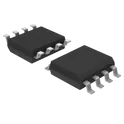
77 Uses0 StarsW25Q32JVSSIQ
SPI Flash 32M-BIT Serial Flash Memory with Dual, Quad SPI The W25Q32JV (32M-bit) Serial Flash memory provides a storage solution for systems with limited space, pins and power. The 25Q series offers flexibility and performance well beyond ordinary Serial Flash devices. They are ideal for code shadowing to RAM, executing code directly from Dual/Quad SPI (XIP) and storing voice, text and data. The device operates on 2.7V to 3.6V power supply with current consumption as low as 1µA for power-down. The W25Q32JV array is organized into 16,384 programmable pages of 256-bytes each. Up to 256 bytes can be programmed at a time. Pages can be erased in groups of 16 (4KB sector erase), groups of 128 (32KB block erase), groups of 256 (64KB block erase) or the entire chip (chip erase). The W25Q32JV has 1,024 erasable sectors and 64 erasable blocks respectively. The small 4KB sectors allow for greater flexibility in applications that require data and parameter storage. (See Figure 2.) The W25Q32JV supports the standard Serial Peripheral Interface (SPI), and a high performance Dual/Quad output as well as Dual/Quad I/O SPI: Serial Clock, Chip Select, Serial Data I/O0 (DI), I/O1 (DO), I/O2, and I/O3. SPI clock frequencies of up to 133MHz are supported allowing equivalent clock rates of 266MHz (133MHz x 2) for Dual I/O and 532MHz (133MHz x 4) for Quad I/O when using the Fast Read Dual/Quad I/O instructions. These transfer rates can outperform standard Asynchronous 8 and 16-bit Parallel Flash memories. New Family of SpiFlash Memories – W25Q32JV: 32M-bit / 4M-byte – Standard SPI: CLK, /CS, DI, DO – Dual SPI: CLK, /CS, IO0, IO1, – Quad SPI: CLK, /CS, IO0, IO1, IO2, IO3 – Software & Hardware Reset(1) Highest Performance Serial Flash – 133MHz Single, Dual/Quad SPI clocks – 266/532MHz equivalent Dual/Quad SPI – 66MB/S continuous data transfer rate – Min. 100K Program-Erase cycles per sector – More than 20-year data retention Efficient “Continuous Read” – Continuous Read with 8/16/32/64-Byte Wrap – As few as 8 clocks to address memory – Allows true XIP (execute in place) operation – Outperforms X16 Parallel Flash Low Power, Wide Temperature Range – Single 2.7V to 3.6V supply – <1µA Power-down (typ.) – -40°C to +85°C operating range – -40°C to +105°C operating range Flexible Architecture with 4KB sectors – Uniform Sector/Block Erase (4K/32K/64K-Byte) – Program 1 to 256 byte per programmable page – Erase/Program Suspend & Resume Advanced Security Features – Software and Hardware Write-Protect – Special OTP protection(2) – Top/Bottom, Complement array protection – Individual Block/Sector array protection – 64-Bit Unique ID for each device – Discoverable Parameters (SFDP) Register – 3X256-Bytes Security Registers – Volatile & Non-volatile Status Register Bits #CommonPartsLibrary #IntegratedCircuit
124 Uses0 StarsATECC608B-MAHDA-S
Authentication Chip 8-UDFN (2x3) The ATECC608B-MAHDA-S is a secure authentication and cryptographic co-processor designed for hardware-based security, device authentication, encrypted communication, and secure key storage in embedded systems and IoT applications. The device integrates advanced cryptographic functionality with protected non-volatile memory to provide a secure root of trust for connected devices. The integrated security engine supports public key cryptography, secure boot validation, message authentication, key generation, digital signatures, and encrypted data exchange. The device is optimized for low-power embedded applications requiring protection against counterfeiting, unauthorized access, firmware tampering, and network-based attacks. The ATECC608B-MAHDA-S supports industry-standard cryptographic algorithms and secure provisioning workflows, enabling secure authentication in cloud-connected systems, industrial automation, consumer electronics, and automotive embedded platforms. The compact surface-mount package and low-power operation make the device suitable for highly integrated embedded designs where hardware security and identity protection are critical requirements. Key Features Hardware-based cryptographic security device Secure key storage and management Integrated authentication engine Public key cryptography support Secure boot and firmware validation capability Digital signature generation and verification Hardware random number generator Encrypted communication support Tamper-resistant key protection Secure provisioning and device identity management Low-power operation for embedded systems I2C serial communication interface Compact surface-mount package IoT and cloud authentication support Electrical Characteristics Secure non-volatile key storage architecture Low operating power consumption Hardware cryptographic acceleration Secure internal key isolation Fast authentication processing capability Wide operating voltage support Industrial temperature operation compatibility High-reliability embedded security implementation Applications IoT device authentication Secure embedded systems Cloud-connected devices Secure boot implementations Firmware integrity verification Industrial automation systems Smart home products Medical electronics Automotive embedded security Asset tracking and identification Anti-counterfeiting systems Encrypted communication platforms Package Information Package Type: SOIC Mounting Type: Surface Mount Compact embedded security package RoHS compliant configuration available #commonpartslibrary #integratedcircuit #securityic #cryptography #iotsecurity #embeddedhardware #authentication #secureboot #hardwaresecurity #encryptedcommunication
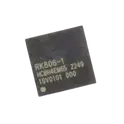
127 Uses0 StarsRK806-1
QFN-68(7x7) Power Management - Specialized ROHS The RK806-1 is a multi-channel PMIC designed to deliver and manage power for modern embedded platforms. It integrates multiple high-efficiency DC-DC buck converters, LDO regulators, and a configurable power sequencing controller in a compact QFN-68 package. It is tightly coupled with Rockchip SoCs and is responsible for generating stable voltage rails for CPU cores, GPU, DDR memory, and peripheral blocks. ⭐ Key Features ⚡ 1. High-Integration Power Architecture Multiple synchronous buck converters (high-current rails for CPU/GPU) Several LDO regulators for low-noise analog and IO domains Supports dynamic voltage scaling (DVS) for performance optimization 🔌 2. Wide Output Capability Output voltage range: ~0.5 V to 3.4 V per channel Designed for modern low-voltage SoC power domains Supports both high-current and low-noise power rails 🧠 3. Programmable Power Sequencing OTP / register-configurable power-up & power-down sequence Ensures safe startup for multi-rail SoCs Supports synchronized sequencing with multiple PMICs 📡 4. Digital Control Interface I²C and SPI interface for configuration and control Real-time voltage adjustment per processor demand Register-based control for power modes and telemetry 🛡️ 5. Protection & Reliability Features Over-voltage protection (OVP) Over-current protection (OCP) Thermal shutdown protection Soft-start for inrush current control ⚙️ 6. Efficiency & Performance Optimizations High-frequency switching (~MHz range) for smaller external components Fast transient response for CPU load changes Low standby current for power-sensitive designs 📦 7. Package & Integration QFN-68 (7×7 mm) compact package High thermal efficiency for dense PCB layouts Minimal external components required 📌 Typical Applications Single-board computers (SBCs) AI edge computing devices Tablets and industrial embedded systems Consumer electronics using Rockchip SoCs (e.g., RK3588 platforms) #commonpartslibrary #integratedcircuit #powermanagement
38 Uses0 Stars