Voltage Regulators
A voltage regulator is an electronic device that maintains a constant output voltage level, regardless of changes in the input voltage or load conditions. These devices are commonly used to provide a stable power supply to electronic circuits, as well as to protect them from voltage spikes and surges. There are several types of voltage regulators, including linear, switching, and pulse width modulation (PWM) regulators, each with its own set of characteristics and applications. Linear regulators, for example, are simple and efficient, but have a relatively low switching speed and can only provide a limited output current. Switching regulators, on the other hand, have higher switching speeds and can provide a higher output current, but are more complex and require additional components. In addition to their use in power supplies and voltage protection, voltage regulators are also used in a wide range of other applications, including motor control, battery charging, and instrumentation. Flux.ai has the world's largest community-driven public library of voltage regulators, with footprints, symbols, datasheets, and simulation models for a wide range of devices. Whether you're a designer, engineer, or hobbyist, you can find the resources you need to get your project up and running quickly and efficiently.
AP2112K-3.3TRG1
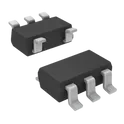
Linear Voltage Regulator IC Positive Fixed 1 Output 600mA SOT-25 3.3V LDO AP2112K-3.3 The AP2112K-3.3TRG1 is a low dropout (LDO) linear voltage regulator designed to provide a stable 3.3V output from a higher input voltage. It is optimized for low noise, high power supply rejection ratio (PSRR), and low quiescent current, making it suitable for battery-powered and noise-sensitive applications. The device features current limiting and thermal shutdown protection, ensuring reliable operation under fault conditions. It is commonly used in portable electronics, RF modules, microcontroller power supplies, and other low-power systems. Key Features Fixed output voltage: 3.3V Output current: up to 600 mA Low dropout voltage: ~250 mV at 300 mA load High PSRR: up to 70 dB at 1 kHz Low quiescent current: typically 55 µA Stable with low ESR ceramic capacitors Built-in overcurrent protection Thermal shutdown protection Fast transient response Absolute Maximum Ratings Input Voltage (VIN): up to 6.5 V Output Current: Internally limited Operating Junction Temperature: -40°C to +125°C Storage Temperature: -65°C to +150°C Electrical Characteristics (Typical values unless otherwise specified) Output Voltage Accuracy: ±2% Dropout Voltage: 250 mV @ 300 mA 400 mV @ 600 mA Line Regulation: 0.05%/V Load Regulation: 0.2% Quiescent Current: 55 µA Shutdown Current: <1 µA PSRR: 70 dB @ 1 kHz 45 dB @ 10 kHz Pin Configuration (SOT-23-5 / SC-70-5) VIN – Input voltage GND – Ground EN – Enable (active high) NC – No connection VOUT – Regulated output (3.3V) Package Information Package Type: SOT-23-5 (TRG1 suffix indicates tape & reel) Mounting: Surface mount Small footprint suitable for compact PCB layouts Typical Applications Battery-powered devices Wireless modules (Wi-Fi, Bluetooth, RF) Microcontroller and FPGA power supplies Portable consumer electronics Sensor and analog circuits requiring low noise Compliance & Reliability RoHS compliant Lead-free package Designed for high reliability and long operational life #CommonPartsLibrary #IntegratedCircuit #PowerManagement #LinearRegulator #VoltageRegulator
3.4k Uses2 Stars