Timers and RTCs
Timers and Real-Time Clocks (RTCs) are electronic devices that are used to measure time or keep track of the current time. They can be found in a wide range of applications, including computers, phones, and appliances. Timers are used to trigger an action after a specific period of time has elapsed. They can be used to control the duration of an event, or to schedule tasks to be performed at a later time. RTCs, on the other hand, are used to maintain accurate time even when the device is powered off. They are often used in devices that need to keep track of the current time and date, such as alarm clocks and smart thermostats. If you're looking for high-quality timers and RTCs for your electronic projects, you should check out Flux.ai. They have the world's largest community-driven public library of timers and RTCs, with footprints, symbols, datasheets, and simulation models. This makes it easy for you to find the components you need for your project, and ensures that you have access to accurate and up-to-date information about each component. Whether you're a professional engineer or a hobbyist, Flux.ai has the resources you need to get your project off the ground.
MP2759AGQ-0000-Z
36 V Switching Battery Charger IC – Switching charger with power-path management for 1- to 6-cell Li-ion/Li-polymer battery packs. The Monolithic Power Systems MP2759AGQ-0000-Z supports up to 36 V DC input and 3 A programmable charge current, with selectable battery regulation voltages from 3.6 V to 4.4 V per cell. It includes input current/voltage limiting, reverse blocking, battery over-voltage protection, JEITA thermal monitoring, and charging safety timer. The device is housed in a 19-pin QFN, 3 × 3 mm package. #MonolithicPowerSystems #MP2759A #BatteryCharger #LiIonCharger #LiPolymer #PowerPath #BatteryManagement #3ACharger #36V #QFN #PowerManagement
0 Uses0 StarsESP32-C3-WROOM-02-N4
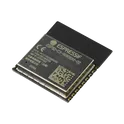
20.5dBm ESP32-C3 Chip 2.4GHz VFQFN-32-EP WiFi Modules ROHS RF Transceiver ICs ESP32-C3-WROOM-02-N4 BULETM-SMD_ESPRESSIF_ESP32-C3-WROOM-02-N4-4MB LCSC Part Number: C2934560 Espressif ESP32-C3-WROOM-02 wireless MCU module, based on ESP32-C3 32-bit RISC-V single-core processor up to 160MHz, supports 2.4GHz Wi-Fi 802.11b/g/n and Bluetooth LE 5.0 with Bluetooth mesh, 4MB or 8MB SPI flash options, 384KB ROM, 400KB SRAM and 8KB RTC SRAM, up to 15 GPIOs, SPI, UART, I2C, I2S, LED PWM, USB Serial/JTAG, ADC, timers and watchdogs, integrated 40MHz crystal oscillator, 3.0V to 3.6V supply voltage, on-board PCB antenna, RoHS/REACH compliant, 18.0 x 20.0 x 3.2mm module size. Search Keywords: ESP32-C3-WROOM-02, ESP32-C3-WROOM-02-N4, ESP32-C3-WROOM-02-H4, ESP32-C3-WROOM-02-N8, Espressif ESP32-C3-WROOM-02, ESP32-C3 WiFi Bluetooth module, ESP32-C3 RISC-V module, WiFi BLE 5 module, 802.11bgn module, Bluetooth mesh module, ESP32-C3 PCB antenna module, ESP32-C3 4MB flash module, ESP32-C3 8MB flash module Hashtags: #ESP32C3WROOM02 #ESP32C3WROOM02N4 #ESP32C3WROOM02H4 #ESP32C3WROOM02N8 #EspressifESP32C3 #ESP32C3 #WiFiBluetoothModule #WiFiModule #BluetoothLEModule #BLE5Module #RISCVMCU #IoTModule #PCBantenna #80211bgn
215 Uses0 StarsSTM32G0B1CBT3
ARM® Cortex®-M0+ STM32G0 Microcontroller IC 32-Bit 64MHz 128KB (128K x 8) FLASH 48-LQFP (7x7) 32-bit microcontroller unit (MCU) based on an Arm Cortex-M0+ core, operating at up to 64 MHz with 1.7–3.6 V supply. It integrates up to 128 KB Flash memory, 36 KB SRAM, a 12-bit ADC, timers, two DACs, I2C, USART, SPI, USB 2.0 Full-Speed, and FDCAN interfaces in a 48-pin LQFP package. #STM32G0B1CBT3 #STM32 #Microcontroller #MCU
8 Uses0 StarsICM7555IPA
555 Type, Timer/Oscillator (Single) IC 500kHz 8-PDIP General-purpose timer, CMOS RC timer for generating accurate time delays or frequencies. It operates from a 2 V to 18 V supply, supports frequencies up to 500 kHz, and is provided in an 8-lead PDIP package. The device features low supply current and active-low trigger and reset inputs. #Timer #CMOS #555Timer #PDIP
0 Uses0 StarsPIC18F4620-I/PT
8-Bit Microcontroller – Microchip PIC18F4620-I/PT is an 8-bit PIC microcontroller with 64 KB Flash program memory, 3.8 KB RAM, and 1 KB EEPROM, operating at up to 40 MHz. It includes 36 I/O pins, a 10-bit ADC with 13 channels, I²C, SPI, and EUSART interfaces, plus timers, PWM, watchdog, brown-out reset, and analog comparators. The device operates from 4.2 V to 5.5 V for this specific I/PT variant and is housed in a 44-pin TQFP (10 × 10 mm) package. #Microchip #PIC18F4620 #Microcontroller #PIC18 #8BitMCU #FlashMCU #ADC #I2C #SPI #UART #EmbeddedSystems #TQFP
0 Uses0 StarsAutomatic Bike Light
Fully analog automatic bicycle front light with USB-C charging, 1S Li-ion/Li-Po battery input, darkness detection, motion-triggered timer control, and a TPS61165 boost LED driver. The circuit automatically enables the front LEDs when it is dark or motion is detected, without any microcontroller or firmware.
0 Uses0 StarsSMV2020-079LF
Dual-Core Crossover MCU with Arm® Cortex®-M7 and Cortex®-M4 Cores – High-performance crossover microcontroller designed for industrial automation, edge AI, HMI, motor control, robotics, audio processing, IoT gateways, medical devices, and advanced embedded systems. The NXP MIMXRT1173CVM8A integrates an Arm® Cortex®-M7 core running up to 800 MHz and an Arm® Cortex®-M4 core running up to 400 MHz, delivering real-time performance without an external operating system. It features 2 MB on-chip SRAM with support for external program memory, making it suitable for graphics, audio, and complex control applications. The device includes 20-channel 12-bit SAR ADCs, 12-bit DAC, 10/100 Ethernet, USB 2.0 OTG, CAN FD, SD/MMC, I²C, SPI, UART/USART, SAI, SPDIF, LCD interface, camera interface, PWM, DMA, watchdog timers, temperature sensor, and extensive external memory interfaces (SEMC/FlexSPI). It also provides Secure Boot, AES, SHA, TRNG, tamper detection, and other hardware security features for secure embedded applications. Operates from 1.65–1.95 V core and 3.0–3.6 V I/O supplies, over a −40°C to +105°C junction temperature range, and is housed in a 289-ball MAPBGA (14 × 14 mm) package. The MIMXRT1173CVM8A is currently Not Recommended for New Designs (NRND), with MIMXRT1173CVM8B listed as the recommended replacement. #NXP #MIMXRT1173CVM8A #iMXRT1170 #CortexM7 #CortexM4 #DualCoreMCU #CrossoverMCU #IndustrialAutomation #EdgeAI #MotorControl #EmbeddedSystems
0 Uses0 StarsMIMXRT1173CVM8A
Dual-Core Crossover MCU with Arm® Cortex®-M7 and Cortex®-M4 Cores – High-performance crossover microcontroller designed for industrial automation, edge AI, HMI, motor control, robotics, audio processing, IoT gateways, medical devices, and advanced embedded systems. The NXP MIMXRT1173CVM8A integrates an Arm® Cortex®-M7 core running up to 800 MHz and an Arm® Cortex®-M4 core running up to 400 MHz, delivering real-time performance without an external operating system. It features 2 MB on-chip SRAM with support for external program memory, making it suitable for graphics, audio, and complex control applications. The device includes 20-channel 12-bit SAR ADCs, 12-bit DAC, 10/100 Ethernet, USB 2.0 OTG, CAN FD, SD/MMC, I²C, SPI, UART/USART, SAI, SPDIF, LCD interface, camera interface, PWM, DMA, watchdog timers, temperature sensor, and extensive external memory interfaces (SEMC/FlexSPI). It also provides Secure Boot, AES, SHA, TRNG, tamper detection, and other hardware security features for secure embedded applications. Operates from 1.65–1.95 V core and 3.0–3.6 V I/O supplies, over a −40°C to +105°C junction temperature range, and is housed in a 289-ball MAPBGA (14 × 14 mm) package. The MIMXRT1173CVM8A is currently Not Recommended for New Designs (NRND), with MIMXRT1173CVM8B listed as the recommended replacement. #NXP #MIMXRT1173CVM8A #iMXRT1170 #CortexM7 #CortexM4 #DualCoreMCU #CrossoverMCU #IndustrialAutomation #EdgeAI #MotorControl #EmbeddedSystems
0 Uses0 StarsNRF52832-QFAA-R7
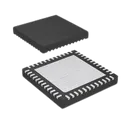
IC RF TxRx + MCU Bluetooth Bluetooth v5.3 2.4GHz 48-VFQFN Exposed Pad NRF52832-QFAA-R7 is an ultra-low-power wireless System-on-Chip (SoC) from Nordic Semiconductor, designed for Bluetooth Low Energy (BLE), ANT, NFC, and proprietary 2.4 GHz wireless applications. It integrates a high-performance ARM Cortex-M4F processor, memory, peripherals, and a 2.4 GHz radio into a single chip, making it ideal for IoT devices, wearables, wireless sensors, beacons, and smart peripherals. GHz protocols • 2.4 GHz transceiver • -96 dBm sensitivity in Bluetooth® low energy mode • Supported data rates: 1 Mbps, 2 Mbps Bluetooth® low energy mode • -20 to +4 dBm TX power, configurable in 4 dB steps • On-chip balun (single-ended RF) • 5.3 mA peak current in TX (0 dBm) • 5.4 mA peak current in RX • RSSI (1 dB resolution) • ARM® Cortex®-M4 32-bit processor with FPU, 64 MHz • 215 EEMBC CoreMark® score running from flash memory • 58 μA/MHz running from flash memory • 51.6 μA/MHz running from RAM • Data watchpoint and trace (DWT), embedded trace macrocell (ETM), and instrumentation trace macrocell (ITM) • Serial wire debug (SWD) • Trace port • Flexible power management • 1.7 V–3.6 V supply voltage range • Fully automatic LDO and DC/DC regulator system • Fast wake-up using 64 MHz internal oscillator • 0.3 μA at 3 V in System OFF mode • 0.7 μA at 3 V in System OFF mode with full 64 kB RAM retention • 1.9 μA at 3 V in System ON mode, no RAM retention, wake on RTC • Memory • 512 kB flash/64 kB RAM • 256 kB flash/32 kB RAM • Nordic SoftDevice ready • Support for concurrent multi-protocol • Type 2 near field communication (NFC-A) tag with wakeup-on-field and touchto-pair capabilities • 12-bit, 200 ksps ADC - 8 configurable channels with programmable gain • 64 level comparator • 15 level low power comparator with wakeup from System OFF mode • Temperature sensor • 32 general purpose I/O pins • 3x 4-channel pulse width modulator (PWM) unit with EasyDMA • Digital microphone interface (PDM) • 5x 32-bit timer with counter mode • Up to 3x SPI master/slave with EasyDMA • Up to 2x I2C compatible 2-wire master/slave • I2S with EasyDMA • UART (CTS/RTS) with EasyDMA • Programmable peripheral interconnect (PPI) • Quadrature decoder (QDEC) • AES HW encryption with EasyDMA • Autonomous peripheral operation without CPU intervention using PPI and EasyDMA • 3x real-time counter (RTC) • Single crystal operation • Package variants • QFN48 package, 6 × 6 mm • WLCSP package, 3.0 × 3.2 mm #CommonPartsLibrary #IntegratedCircuit
51 Uses0 Stars