Memory
A memory IC, or integrated circuit, is a type of electronic device that stores and retrieves data. It is used in a wide range of electronic devices, including computers, smartphones, and other electronic devices. Memory ICs come in a variety of types, including DRAM, SRAM, and Flash memory, and are used for different purposes depending on the device and application. One of the primary use cases for memory ICs is in computer systems, where they are used to store data and instructions that are accessed by the processor. Memory ICs are also used in a variety of other electronic devices, such as digital cameras, MP3 players, and mobile phones, to store data and enable various functions. Flux.ai has the world's largest community-driven public library of memory ICs, with a wide variety of footprints, symbols, datasheets, and simulation models available. This extensive library allows users to easily access and use memory ICs in their projects, making it an invaluable resource for engineers and developers.
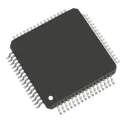
STM32H533RET6
ARM® Cortex®-M33 STM32H5 Microcontroller IC 32-Bit 250MHz 512KB (512K x 8) FLASH 64-LQFP (10x10) The STM32H533RET6 specification defines the engineering requirements for a high-performance embedded microcontroller designed for advanced control, computation, and communication applications. This specification establishes the functional, electrical, mechanical, environmental, and quality requirements necessary to ensure reliable operation in complex embedded systems across industrial, consumer, and communication environments. The device is intended for use in applications requiring real-time processing capability, efficient peripheral integration, and secure system operation. It supports embedded control systems, industrial automation, sensor data processing, communication gateways, and other applications requiring deterministic performance and flexible connectivity. Engineering Requirements The microcontroller shall be manufactured using advanced semiconductor processes to ensure high processing efficiency, low power consumption, and long-term operational reliability. The device shall support stable execution of embedded firmware under defined electrical, thermal, and environmental conditions. The architecture shall provide integrated memory resources, high-speed processing capability, and a wide range of peripheral interfaces to support system-level integration. Communication interfaces and on-chip peripherals shall operate reliably under specified conditions without degradation of performance or data integrity. Electrical characteristics shall ensure stable logic operation, accurate timing behavior, and robust signal integrity during normal operation, reset events, and power transitions. The device shall maintain functional stability under dynamic load conditions and environmental variation. Mechanical and package construction shall be suitable for surface-mount assembly and shall ensure mechanical robustness during soldering, handling, and operation. Workmanship shall be free from defects such as contamination, cracks, deformation, or structural inconsistencies that could impact performance or reliability. Inspection, validation, and testing shall be performed using controlled procedures and calibrated equipment to ensure compliance with all applicable engineering and quality requirements. Any deviation from this specification shall require formal engineering review, documented justification, and approval through established change control processes. Documentation Supporting documentation shall include official datasheets, reference manuals, qualification reports, electrical characterization data, inspection records, and revision-controlled manufacturing documentation. All records shall be maintained under formal configuration management and quality assurance systems. Revision Control Any modification to this specification shall be managed through the formal engineering change control system. All revisions shall undergo technical evaluation, validation, and approval prior to implementation to ensure continued compliance with design intent and applicable standards. #EngineeringSpecification #Microcontroller #STM32H5 #STMicroelectronics #EmbeddedSystems #RealTimeControl #IndustrialElectronics #Firmware #Semiconductor #QualityAssurance #EngineeringDocumentation
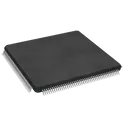
1 Uses0 StarsSTM32F427IIT6
ARM® Cortex®-M4 STM32F4 Microcontroller IC 32-Bit 180MHz 2MB (2M x 8) FLASH 176-LQFP (24x24) The STM32F427IIT6 specification defines the engineering requirements for a high-performance microcontroller device designed for embedded processing applications requiring advanced computational capability, rich peripheral integration, and reliable real-time control. This specification establishes the functional, electrical, mechanical, environmental, and quality requirements necessary to ensure consistent operation across industrial, consumer, and communication systems. The device is intended for use in complex embedded systems where high-speed processing, efficient memory handling, and extensive peripheral connectivity are required. It supports applications such as industrial automation, motor control, signal processing, communication interfaces, and advanced embedded control systems. Engineering Requirements The microcontroller shall be manufactured using advanced semiconductor fabrication processes to ensure high processing performance, low power consumption, and long-term reliability. The device shall provide stable operation across its intended voltage, temperature, and environmental conditions while maintaining deterministic real-time behavior. The integrated architecture shall support high-speed processing capabilities, embedded memory resources, and multiple communication interfaces for system-level integration. Peripheral functionality shall operate reliably under defined electrical and environmental conditions without degradation of performance. Electrical characteristics shall ensure stable logic levels, accurate timing behavior, and robust signal integrity across all supported operating modes. The device shall maintain functional reliability during power transitions, reset conditions, and dynamic load variations. Mechanical and package construction shall be suitable for surface-mount assembly processes and shall ensure mechanical integrity during soldering, handling, and operation. Workmanship shall be free from defects including contamination, physical damage, or structural inconsistencies that could impact reliability or performance. Inspection, validation, and testing shall be performed using controlled procedures and calibrated equipment to ensure compliance with all applicable engineering and quality standards. Any deviation from this specification shall require formal engineering review, documented justification, and approval through the established change control process. Documentation Supporting documentation shall include engineering datasheets, reference manuals, qualification reports, electrical characterization data, inspection records, and revision-controlled manufacturing documentation. All records shall be maintained under formal configuration management and quality assurance systems. Revision Control Any modification to this specification shall be processed through the established engineering change management system. All revisions shall undergo technical review, validation, and formal approval prior to implementation to ensure continued compliance with design intent and applicable industry requirements. #EngineeringSpecification #Microcontroller #EmbeddedSystems #STMicroelectronics #DigitalControl #IndustrialElectronics #Firmware #Semiconductor #QualityAssurance #EngineeringDocumentation #RealTimeSystems
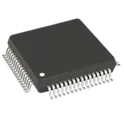
0 Uses0 StarsSTM32G491RET6
ARM® Cortex®-M4F STM32G4 Microcontroller IC 32-Bit 170MHz 512KB (512K x 8) FLASH 64-LQFP (10x10) The STM32G491RET6 from STMicroelectronics is a high-performance 32-bit microcontroller based on the Arm® Cortex®-M4 core with Floating Point Unit (FPU), designed for advanced embedded applications requiring high computational performance, precise analog processing, and real-time control. It belongs to the STM32G4 series and integrates enhanced analog peripherals, motor-control timers, communication interfaces, security features, and hardware accelerators such as CORDIC and FMAC. The device operates at up to 170 MHz, provides 512 KB Flash memory, and includes 96 KB SRAM, making it suitable for applications such as motor control, digital power conversion, industrial automation, robotics, and embedded control systems. Key Features Core: Arm® Cortex®-M4 32-bit CPU with FPU, DSP instructions, and MPU Maximum CPU Frequency: Up to 170 MHz (up to 213 DMIPS) Memory: 512 KB Flash memory with ECC support 96 KB SRAM with parity checking features Quad-SPI memory interface Operating Voltage: 1.71 V to 3.6 V Package: LQFP-64 Advanced Analog Features: 3 × 12-bit ADCs with high-speed conversion 4 × 12-bit DAC channels 4 × Rail-to-Rail operational amplifiers 4 × Fast analog comparators Internal voltage reference buffer Hardware Accelerators: CORDIC accelerator for trigonometric calculations FMAC (Filter Math Accelerator) for digital filtering applications Timers & Motor Control: Advanced PWM timers for motor-control applications Multiple 16-bit and 32-bit timers Support for encoder and PWM control Communication Interfaces: 2 × FDCAN interfaces 5 × USART/UART 3 × SPI interfaces 3 × I²C interfaces USB 2.0 Full-Speed interface SAI audio interface Security Features: True Random Number Generator (TRNG) CRC calculation unit Unique device ID Debug & Programming: SWD and JTAG debugging support Typical Applications Motor control and BLDC controllers Digital power converters Industrial automation equipment Robotics and motion control Smart sensors and embedded control systems Power management applications #STM32G491RET6 #STM32G4 #STMicroelectronics #ARM_CortexM4 #Microcontroller #MCU #EmbeddedSystems #MotorControl #DigitalPower #IndustrialAutomation #Robotics #IoT #ElectronicsDesign #PCBDesign
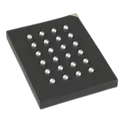
35 Uses0 StarsIS66WVH64M8DBLL-166B1LI
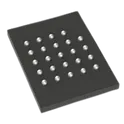
PSRAM (Pseudo SRAM) Memory IC 512Mbit HyperBus 166 MHz 36 ns 24-TFBGA (6x8) The IS66/67WVH64M8DALL/BLL are 512Mb Dual Die device containing two units of 256Mbit Pseudo Static Random Access Memory, organized as 64M words by 8 bits. The device supports a HyperBus interface, Very Low Signal Count (Address, Command and data through 8 DQ pins), Hidden Refresh Operation, and Automotive Temperature Operation, designed especially for Mobile and Automotive applications Key Features 512-Mbit (64M × 8) HyperRAM™ PSRAM High-speed HyperBus interface Clock frequency up to 166 MHz Fast 36 ns access time Single-ended clock architecture with reduced pin count Operating voltage range: 2.7 V to 3.6 V Industrial temperature range: −40°C to +85°C Low-power volatile memory solution Surface-mount 24-TFBGA (6 mm × 8 mm) package Suitable for graphics, AI edge devices, networking, and embedded systems requiring large external memory capacity. #CommonPartsLibrary #IntegratedCircuit #HyperRAM #PSRAM #ISSI #MemoryIC #HyperBus #EmbeddedSystems #IndustrialElectronics #IoT #HighSpeedMemory #BGA #VolatileMemory #EdgeComputing #HMI #ElectronicsDesign
2 Uses0 StarsSN74HCT245DWR
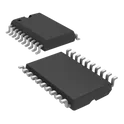
SN74HCT245 / SN54HCT245 – octal bus transceiver with 3-state outputs designed for bidirectional data communication between two 8-bit buses. Features direction control (DIR) for selecting data flow direction and output enable (OE) for bus isolation. TTL-compatible inputs, low power consumption, and high-current outputs make it suitable for interfacing microcontrollers, memory devices, processors, FPGAs, LCD modules, industrial controllers, and digital communication systems. Operates from a 4.5 V to 5.5 V supply voltage and supports asynchronous data transfer. Search Keywords: SN74HCT245, SN54HCT245, HCT245, Octal Bus Transceiver, Bidirectional Bus Transceiver, 8 Bit Bus Buffer, 3 State Buffer, Tri State Buffer, TTL Compatible Logic IC, Data Bus Interface, Logic Level Buffer, Microcontroller Interface, Memory Bus Driver, Digital Logic IC, Bus Isolation IC, Direction Controlled Buffer, Parallel Data Interface, Industrial Control Logic, FPGA Interface, Processor Bus Transceiver Hashtags: #SN74HCT245 #SN54HCT245 #HCT245 #BusTransceiver #OctalBusTransceiver #TriStateBuffer #LogicIC #TTLCompatible #DigitalLogic #BusBuffer #MicrocontrollerInterface #FPGA #EmbeddedSystems #MemoryInterface #IndustrialElectronics #DataBus #ElectronicsDesign #PCBDesign #HardwareDesign #TexasInstruments
28 Uses0 Stars74HC238N
3-to-8 line decoder/demultiplexer The 74HC238; 74HCT238 decodes three binary weighted address inputs (A0, A1 and A2) to eight mutually exclusive outputs (Y0 to Y7). The device features three enable inputs (E1 and E2 and E3). Every output will be LOW unless E1 and E2 are LOW and E3 is HIGH. This multiple enable function allows easy parallel expansion to a 1-of-32 (5 to 32 lines) decoder with just four '238 ICs and one inverter. The '238 can be used as an eight output demultiplexer by using one of the active LOW enable inputs as the data input and the remaining enable inputs as strobes. Inputs include clamp diodes. This enables the use of current limiting resistors to interface inputs to voltages in excess of VCC. • Wide supply voltage range from 2.0 to 6.0 V • CMOS low power dissipation • High noise immunity • Demultiplexing capability • Multiple input enable for easy expansion • Ideal for memory chip select decoding • Active HIGH mutually exclusive outputs • Input levels: • For 74HC238: CMOS level • For 74HCT238: TTL level • Complies with JEDEC standards • JESD8C (2.7 V to 3.6 V) • JESD7A (2.0 V to 6.0 V) • Latch-up performance exceeds 100 mA per JESD 78 Class II Level B • ESD protection: • HBM: ANSI/ESDA/JEDEC JS-001 class 2 exceeds 2000 V • CDM: ANSI/ESDA/JEDEC JS-002 class C3 exceeds 1000 V • Multiple package options • Specified from -40 °C to +85 °C and from -40 °C to +125 °C #74HC238N #74HCSeries #CMOSLogic #DecoderIC #Demultiplexer #DigitalLogic #AddressDecoder #ChipSelect #LogicGate #IntegratedCircuit #ElectronicsDesign #EmbeddedSystems
5 Uses0 StarsESP32-C3-DEVKITM-1
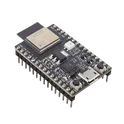
ESP32-C3-MINI-1 ESP32-C 802.11 b/g/n (WiFi/WLAN/Wi-Fi 4), Bluetooth® 5.x (BLE) Transceiver 2.4GHz Evaluation Board ESP32-C3-DevKitM-1 is a compact entry-level development board from Espressif Systems based on the ESP32-C3-MINI-1 module. It integrates a 32-bit RISC-V single-core microcontroller, 2.4 GHz Wi-Fi, and Bluetooth Low Energy (BLE) connectivity, making it suitable for IoT devices, embedded applications, smart sensors, and wireless control projects. The board exposes most GPIO pins through headers for easy prototyping and supports programming through USB. Key Features: 32-bit RISC-V Single-Core Processor Based on ESP32-C3 SoC architecture Clock frequency up to 160 MHz Wireless Connectivity Integrated 2.4 GHz Wi-Fi (802.11 b/g/n) Bluetooth 5 Low Energy (BLE) support Memory 4 MB embedded Flash memory inside the ESP32-C3-MINI-1 module GPIO and Peripheral Interfaces Multiple programmable GPIO pins Supports interfaces such as: SPI UART I²C I²S PWM ADC USB Serial/JTAG Development Board Features Built-in ESP32-C3-MINI-1 module with PCB antenna USB interface for programming and power 5 V to 3.3 V onboard voltage regulator Breadboard-friendly pin headers Applications IoT gateways Smart home devices Wireless sensors Industrial automation Wearable electronics Embedded control systems #ESP32C3 #ESP32 #DevKitM1 #Espressif #RISCVD #WiFiMCU #BluetoothLE #IoT #EmbeddedSystems #Microcontroller #WirelessModule #SmartDevices #ElectronicsDesign #Prototyping
32 Uses0 StarsMX66UM1G45GXDI00
Macronix MX66UM1G45G – 1 Gbit (128 MB) Octal SPI (xSPI) Serial NOR Flash memory designed for high-performance embedded systems. Supports Octal I/O interface for high-speed code execution, firmware storage, data logging, graphics assets, and external memory expansion. Features sector, block, and chip erase operations, page programming, status monitoring, low-power standby mode, and endurance of up to 100,000 program/erase cycles. Suitable for microcontrollers, processors, industrial systems, automotive electronics, networking equipment, IoT devices, HMI displays, and embedded Linux applications. Search Keywords: MX66UM1G45G, Macronix Flash Memory, Octal SPI Flash, OctaFlash, xSPI Flash, Serial NOR Flash, 1Gbit Flash Memory, 128MB Flash, External Flash Memory, Boot Flash, Firmware Storage, Execute In Place Flash, XIP Memory, High Speed Flash Memory, Embedded Storage, Industrial Flash Memory, Automotive Flash Memory, MCU External Memory, Processor Boot Memory, Non Volatile Memory MX66UM1G45G Hashtags: #MX66UM1G45G #Macronix #OctalSPI #OctaFlash #xSPI #NORFlash #SerialFlash #FlashMemory #ExternalMemory #NonVolatileMemory #FirmwareStorage #XIP #EmbeddedSystems #Microcontroller #IndustrialElectronics #AutomotiveElectronics #IoTDevices #ElectronicsDesign #PCBDesign #EmbeddedHardware
1 Uses0 StarsSTM32G071K8U6
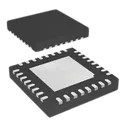
STM32U073 Series – ultra-low-power 32-bit microcontroller based on the Arm Cortex-M0+ core operating up to 56 MHz. Features up to 256 KB Flash memory, 40 KB SRAM, USB Full-Speed interface, integrated LCD controller, advanced analog peripherals, and extremely low power consumption. Designed for battery-powered, portable, industrial, smart metering, IoT, wearable, medical, and consumer electronics applications. Includes ADC, DAC, op-amp, comparators, RTC, DMA, timers, communication interfaces, and multiple low-power operating modes. Search Keywords: STM32U073, STM32U073RBT6, STM32U073CBT6, STM32U073 MCU, STMicroelectronics MCU, Cortex-M0+ Microcontroller, Ultra Low Power MCU, ARM Microcontroller, USB Microcontroller, LCD Controller MCU, Battery Powered MCU, Embedded Controller, IoT Microcontroller, Industrial MCU, Smart Meter MCU, Wearable MCU, 256KB Flash MCU, 40KB SRAM MCU, Low Power Embedded System, STM32U0 Series Hashtags: #STM32U073 #STM32U0 #STM32 #STMicroelectronics #CortexM0Plus #ARMMCU #Microcontroller #UltraLowPower #EmbeddedSystems #USBMCU #LCDController #IoT #WearableElectronics #SmartMeter #IndustrialElectronics #BatteryPowered #FirmwareDevelopment #ElectronicsDesign #PCBDesign #EmbeddedHardwareST Microelectronics STM32G071K8U6 UFQFPN-32_L5.0-W5.0-P0.50-TL-EP3.5 LCSC Part Number: C724237 JLCPCB Part Class: Extended Part Manufactured by ST(意法半导体)
5 Uses0 StarsPLCC68
Toby PLCC series DIP socket for PLCC IC packages, through-hole PCB mounting, available for 20/28/32/52/68/84-pin PLCC devices, copper alloy contacts with tin plating over nickel, PPS UL94V-0 insulator, 1A current rating, 1000MΩ minimum insulation resistance, 300VAC dielectric withstand voltage, 20mΩ max contact resistance, -40°C to +105°C operating temperature, suitable for socketing PLCC ICs, memory chips, microcontrollers, programmable logic and embedded hardware. Search Keywords: PLCC socket, Toby PLCC socket, PLCC DIP socket, PLCC through hole socket, PLCC IC socket, 20 pin PLCC socket, 28 pin PLCC socket, 32 pin PLCC socket, 52 pin PLCC socket, 68 pin PLCC socket, 84 pin PLCC socket, PLCC PCB socket, square IC socket, IC socket connector PCF80C552 PLCC68 / PLCC-68 socket Hashtags: #PLCCSocket #TobyPLCCSocket #PLCC-68-R #PLCC-68 #ThroughHoleSocket #PLCCConnector #20PinPLCC #28PinPLCC #32PinPLCC #52PinPLCC #68PinPLCC #84PinPLCC #PPSInsulator #TinPlatedContactsphosphor bronze, tin plated,55C to 85C,1000 M,30 m
0 Uses0 Stars