Interface ICs
An interface IC is a type of integrated circuit that is designed to facilitate communication between two devices or systems. These devices are commonly used in electronic systems to enable the transfer of data and control signals between different components or subsystems. Some common use cases for interface ICs include connecting microcontrollers to peripherals such as sensors or displays, linking multiple processors together in a network, and enabling communication between devices using different communication protocols. Flux.ai has the world's largest community-driven public library of interface ICs, with footprints, symbols, datasheets, and simulation models. This library is a valuable resource for engineers and designers who need access to accurate and up-to-date information on these important components. Whether you are working on a new design project or simply looking to learn more about interface ICs, Flux.ai is an excellent resource to help you find the information you need.
GL823K-HCY04
USB 2.0 single-LUN card reader controller supporting SD/MMC and Memory Stick PRO media, including SDHC/SDXC and microSD applications. Provides USB 2.0 High-Speed data transfer up to 480 Mbps and integrates an 8051 MCU, USB transceiver, FIFO, POR/LVD, card-power MOSFETs, and 5 V-to-3.3 V / 3.3 V-to-1.8 V regulators. Operates from 4.75 V to 5.25 V with typical active current of 50 mA and idle current of 45 mA; 0 °C to +70 °C operating temperature. Includes an on-chip clock source, eliminating the need for an external 12 MHz crystal. Available in SSOP-16 (150 mil). #USB2 #CardReader #SD #MMC #MemoryStick #InterfaceController #GENESYS
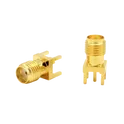
13 Uses1 StarsKH-SMA-KE-Z
SMA female straight board-end RF coaxial connector with through-hole mounting, gold-plated half-thread interface, 6.2 mm interface diameter, 8 mm interface height, and 50 Ω impedance. Designed for PCB-level RF connections to coaxial cables and antennas in wireless communications, RF test equipment, broadcast, radar, navigation, and related high-frequency applications. #RF #SMA #CoaxialConnector #BoardMount #ThroughHole #50Ohm #Kinghelm
21 Uses1 StarsSTM32MP257FAI3
MPU with Dual Arm Cortex-A35 @1.5GHz, Cortex-M33 @400MHz, 3xEthernet (2+1 switch), 3xFD-CAN, LVDS/DSI, H.264, 3D GPU, AI/NN, Secure Boot, Cryptography, DRAM enc/dec, PKA The STM32MP257FAI3 is a high-performance microprocessor from STMicroelectronics' STM32MP2 series, integrating dual 64-bit Arm Cortex-A35 cores running at up to 1.5 GHz, a Cortex-M33 real-time core, and a Cortex-M0+ low-power management core. It is designed for advanced industrial, edge AI, machine vision, HMI, IoT gateway, and multimedia applications requiring Linux-class processing alongside deterministic real-time control. The device features AI acceleration, 3D graphics, video encoding/decoding, extensive connectivity, advanced security, and support for high-speed external memory. Key Features Dual-core 64-bit Arm Cortex-A35 CPU operating up to 1.5 GHz Arm Cortex-M33 real-time processor with TrustZone and FPU support Arm Cortex-M0+ low-power coprocessor for autonomous operation Integrated NPU (Neural Processing Unit) delivering up to 1.35 TOPS AI performance 3D GPU and hardware video encoder/decoder acceleration Supports DDR3L, DDR4, and LPDDR4 external memory up to 4 GB Multiple display interfaces including MIPI-DSI, LVDS, and parallel RGB USB 2.0 Host and USB 3.0 Dual-Role with embedded PHYs PCI Express interface with integrated 5 Gbps PHY Up to three Gigabit Ethernet interfaces with TSN and IEEE 1588 support Extensive connectivity: I2C, I3C, SPI, UART, USART, CAN FD, SDMMC, SAI, and SPDIF Hardware cryptographic accelerators including AES, SHA, RSA, ECC, PKA, and True RNG Secure boot, TrustZone security, tamper detection, and resource isolation framework Multiple low-power operating modes for energy-efficient designs Available in fine-pitch BGA packages for high-density embedded systems. #STM32MP257FAI3 #STM32MP2 #STMicroelectronics #CortexA35 #CortexM33 #EdgeAI #EmbeddedLinux #IndustrialAutomation #MachineVision #HMI #IoTGateway #MPU #PCIe #USB3 #GigabitEthernet #TrustZone #EmbeddedSystems #ArtificialIntelligence #LinuxProcessor #IndustrialIoT #CommonPartsLibrary #IntegratedCircuit #Microprocessor #STM32MP2
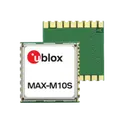
35 Uses1 StarsMAX-M10S-00B
GNSS Receiver Module – Standard-precision GNSS receiver supporting concurrent reception of GPS, Galileo, GLONASS, and BeiDou/QZSS. The u-blox MAX-M10S-00B operates from 1.76 V to 3.6 V, provides I²C and UART interfaces, and has a -167 dBm sensitivity with a maximum data rate of 921.6 kbps. It uses an integrated TCXO, LNA, and SAW filter and is housed in a compact 18-SMD module measuring approximately 9.7 × 10.1 × 2.5 mm. #uBlox #MAXM10S00B #GNSS #GPS #GNSSReceiver #GPSModule #BeiDou #Galileo #GLONASS #UART #I2C #EmbeddedSystems
424 Uses1 StarsNEO-M8P-2
High-Precision GNSS Receiver Module – Multi-constellation GNSS receiver with RTK base-station and rover functionality designed for precision positioning, surveying, robotics, navigation, and embedded GNSS applications. The u-blox NEO-M8P-2 supports GPS/QZSS, GLONASS, and BeiDou, with concurrent reception of up to 2 GNSS systems. It operates from 2.7–3.6 V, provides UART, USB, SPI, and I²C interfaces, and has a 1.575 GHz RF frequency with −160 dBm sensitivity. The module measures approximately 12.2 × 16.0 × 2.4 mm and operates from −40°C to +85°C. #uBlox #NEOM8P2 #GNSS #GPS #RTK #GNSSReceiver #PrecisionPositioning #Navigation #EmbeddedSystems #Robotics
0 Uses1 StarsS2B-PH-SM4-TB(LF)(SN)
Connector header for wire-to-board interconnection, providing a 2-position, side-entry surface-mount interface compatible with the JST PH Series 2.0 mm pitch connector system. It is rated for 100 V AC/DC and 2 A, and features a shrouded right-angle SMT design with hold-down solder tabs for PCB mounting. #Connector #WireToBoard #Header #JST #PHSeries #2mmPitch #SMT #RightAngle #2Position #100V #2A
2.5k Uses1 StarsSTM32G030F6P6
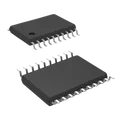
Microcontroller – 32-bit ARM® Cortex®-M0+ microcontroller operating at up to 64 MHz, featuring 32 KB Flash memory, 8 KB SRAM, and 17 programmable I/O pins. Operates from a 2.0 V to 3.6 V supply and integrates a 13-channel 12-bit ADC, internal and external oscillator support, and communication interfaces including I²C, SPI, UART/USART, IrDA, LIN, and SmartCard. Includes DMA, I²S, PWM, power-on reset (POR), and watchdog timer (WDT) peripherals. Housed in a 20-pin TSSOP package. #STMicroelectronics #STM32 #STM32G030F6P6 #Microcontroller #ARMCortexM0Plus #32BitMCU #64MHz #32KBFlash #8KBSRAM #ADC #I2C #SPI #UART #LIN #SmartCard #TSSOP20 #EmbeddedSystems
93 Uses1 StarsNRF52840-QIAA-R
32-bit ARM® Cortex®-M4F wireless microcontroller with 2.4 GHz multi-protocol radio supporting Bluetooth® 5, Bluetooth mesh, Thread, Zigbee®, IEEE 802.15.4, ANT, and proprietary 2.4 GHz protocols. Features 1 MB Flash, 256 KB RAM, 48 GPIOs, and integrated USB 2.0 (Full-Speed), I²C, I²S, SPI, UART, and QSPI interfaces. Operates from a 1.7 V to 5.5 V supply, provides up to +8 dBm transmit power, −96 dBm receiver sensitivity, supports data rates up to 2 Mbps, and is housed in a 73-pin aQFN (7 × 7 mm) package. #NordicSemiconductor #nRF52840 #NRF52840QIAAR #WirelessMCU #Bluetooth5 #BluetoothMesh #Thread #Zigbee #IEEE802154 #ANT #ARMCortexM4F #2_4GHz #USB #SPI #I2C #UART #QSPI #EmbeddedSystems
248 Uses1 StarsVL6180XV0NR/1
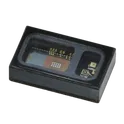
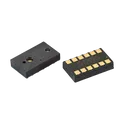
Optical Sensor 0 ~ 24.41" (0 ~ 62cm) I2C Output Optical Time-of-Flight (ToF) proximity sensor with an integrated infrared emitter, designed for absolute distance measurement, ambient light sensing, and gesture detection. Operates from a 2.6 V to 3.5 V supply, measures distances up to 100 mm, features an I²C interface (up to 400 kHz), and integrates an 850 nm VCSEL, ranging sensor, ambient light sensor (ALS), and signal processing. Housed in a compact 4.8 × 2.8 × 1.0 mm LGA-12 package. #TimeOfFlight #ToFSensor #ProximitySensor #AmbientLightSensor #GestureDetection #I2C #VCSEL #InfraredSensor #STMicroelectronics #LGA12 #commonpartslibrary #sensor
22 Uses1 Stars