Interface ICs
An interface IC is a type of integrated circuit that is designed to facilitate communication between two devices or systems. These devices are commonly used in electronic systems to enable the transfer of data and control signals between different components or subsystems. Some common use cases for interface ICs include connecting microcontrollers to peripherals such as sensors or displays, linking multiple processors together in a network, and enabling communication between devices using different communication protocols. Flux.ai has the world's largest community-driven public library of interface ICs, with footprints, symbols, datasheets, and simulation models. This library is a valuable resource for engineers and designers who need access to accurate and up-to-date information on these important components. Whether you are working on a new design project or simply looking to learn more about interface ICs, Flux.ai is an excellent resource to help you find the information you need.
PPPC082LJBN-RC
16 Position Header Connector 0.100" (2.54mm) Through Hole, Right Angle Gold The PPPC082LJBN-RC is a dual-row, right-angle pin header connector intended for through-hole PCB mounting. It uses a standard 2.54 mm pitch with a 2×8 pin configuration and is commonly used for board-to-board or board-to-cable connections. The connector provides stable mechanical support and reliable electrical performance, making it suitable for prototyping, embedded systems, and general-purpose electronic designs. Mechanical Specifications Connector Type: Pin Header Mounting Type: Through-Hole, Right Angle Number of Positions: 16 (2×8) Pitch: 2.54 mm Row Spacing: 2.54 mm Contact Orientation: Right Angle Termination Style: Solder Housing Material: Thermoplastic (UL94V-0 rated) Contact Material: Brass Electrical Specifications Current Rating: Typically up to 3 A per contact Voltage Rating: Typically 250 V Contact Resistance: ≤ 20 mΩ Insulation Resistance: ≥ 1000 MΩ Dielectric Withstanding Voltage: ~500 VAC Environmental Specifications Operating Temperature Range: -40°C to +105°C Flammability Rating: UL94V-0 RoHS Compliance: Yes Plating Contact Plating: Gold flash over nickel (typical) Tail Plating: Tin over nickel Applications PCB interconnections Embedded systems and microcontroller boards Industrial control interfaces Consumer electronics prototyping Signal and low-power connections Mating Compatibility Compatible with standard 2.54 mm pitch female headers and IDC connectors #commonpartslibrary #connector #header
15 Uses0 Stars218-2LPSTJ
Dip Switch SPST 2 Position Surface Mount Slide (Standard) Actuator 25mA 24VDC The 218-2LPSTJ is a two-position pluggable terminal block connector designed for secure wire-to-board connections in industrial and commercial electronic applications. It features a screw-clamp termination mechanism, allowing reliable and reusable connections for solid or stranded wires. The connector is typically used in power distribution, control systems, and signal wiring where ease of maintenance and field wiring is required. Key Features Pluggable terminal block, two positions Screw-clamp wire termination for secure connection Standard pitch suitable for common PCB layouts Removable plug for easy installation and maintenance Designed for solid and stranded wire compatibility High reliability for industrial environments Mechanical Specifications Number of Positions: 2 Pitch: 5.08 mm Mounting Type: Through-hole (header) with mating plug Wire Entry: Side entry Wire Gauge Range: Typically 24 AWG to 12 AWG (manufacturer dependent) Housing Material: High-temperature thermoplastic Color: Typically green Electrical Specifications Rated Voltage: Up to 300 V (UL rating typical) Rated Current: Up to 10–15 A (depending on wire size and conditions) Contact Resistance: Low resistance, suitable for power and signal transmission Insulation Resistance: High insulation resistance under standard conditions Environmental Specifications Operating Temperature Range: −40°C to +105°C (typical) Flammability Rating: UL94 V-0 RoHS Compliant: Yes Applications Power supply connections Industrial control systems HVAC equipment Automation and instrumentation PCB-based terminal interfaces Mating / Compatibility Compatible with corresponding 2-position pluggable terminal block headers with 5.08 mm pitch Designed for repeated mating cycles without degradation #commonpartslibrary #switch #dip #spst
13 Uses0 StarsLTR-559ALS-01
Optical Sensor Ambient I2C 8-SMD, No Lead The LTR-559ALS-01 is a combined ambient light sensor and proximity sensor module designed for low-power and space-constrained applications. It integrates a photodiode array for ambient light detection and an infrared emitter with a photodiode for proximity sensing. The device provides digital output via an I²C interface and includes programmable interrupt functionality for system-level event handling. It is commonly used in mobile devices, wearable electronics, and industrial applications requiring automatic brightness control and object detection. Key Features: Integrated ambient light and proximity sensing functions High sensitivity with wide dynamic range for light measurement Infrared LED driver for proximity detection I²C digital interface for communication Programmable interrupt output Low power consumption with multiple operating modes Built-in noise cancellation and sunlight rejection Compact surface-mount package Electrical Characteristics: Supply voltage range: compatible with typical low-voltage logic systems Low standby current for power-sensitive applications Programmable gain and integration time for ambient light sensing Adjustable LED drive current for proximity sensing Optical Characteristics: Ambient light sensing with human-eye spectral response approximation Proximity detection using infrared light with high immunity to ambient light interference Interface: Communication protocol: I²C-compatible interface Supports configurable registers for threshold, timing, and interrupt control Package Information: Small form factor surface-mount package suitable for compact PCB layouts Integrated optical window for both ALS and proximity sensing Applications: Display brightness control in smartphones and tablets Proximity detection for touchless interfaces Wearable devices and IoT sensors Industrial automation and control systems Environmental and Compliance: Designed for standard commercial temperature ranges RoHS compliant and suitable for lead-free assembly processes Notes for Design Integration: Requires proper optical isolation between emitter and receiver for accurate proximity sensing PCB layout should minimize interference from external light sources Calibration may be required depending on enclosure and application conditions #commonpartslibrary #sensor #ambient
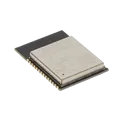
5 Uses0 StarsESP32-C6-WROOM-1-N8
802.15.4, Bluetooth, WiFi Bluetooth v5.0, Zigbee Transceiver Module 2.4GHz PCB Trace Surface Mount The ESP32-C6-WROOM-1-N8 integrates a 32-bit RISC-V single-core processor running up to 160 MHz, along with 8 MB of embedded SPI flash memory. It supports multiple wireless communication protocols, including: Wi-Fi 6 (802.11ax) in the 2.4 GHz band for improved efficiency and lower latency Bluetooth Low Energy (BLE 5) for short-range communication IEEE 802.15.4 for protocols such as Thread and Zigbee The module features a built-in PCB antenna, RF circuitry, crystal oscillator, and passive components, making it a complete solution that simplifies hardware design. It provides a wide range of GPIO pins and peripheral interfaces such as UART, SPI, I2C, PWM, ADC, and more, enabling flexible integration with sensors and external devices. Designed for low power consumption, it includes multiple power-saving modes, making it suitable for battery-powered applications. Typical Applications Smart home and IoT devices Wireless sensors and control systems Industrial automation Smart lighting and energy management Matter-compatible devices (via Thread support)
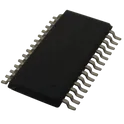
213 Uses0 StarsMCP3913A1T-E/SS
MCP3913 Series 3.6 V 4.5 mA SMT Six-Channel Analog Front End - SSOP-28 The MCP3913A1T-E/SS is a high-performance, multi-channel analog front-end (AFE) from Microchip Technology intended for precision measurement applications. It features six simultaneous sampling 24-bit delta-sigma ADCs with integrated programmable gain amplifiers, enabling accurate acquisition of low-level analog signals. Designed for energy monitoring and industrial sensing, the device provides low noise, high dynamic range, and flexible configuration. It supports SPI communication for efficient interfacing with microcontrollers and digital processing systems. Key Features Six simultaneous sampling 24-bit delta-sigma ADC channels Integrated programmable gain amplifiers per channel High signal-to-noise ratio and low distortion Programmable oversampling ratios for performance tuning Internal voltage reference with external reference option SPI-compatible digital interface Configurable data output formats and control registers Low power operation modes Electrical Characteristics Resolution: 24-bit Number of Channels: 6 Input Configuration: Differential Supply Voltage: 2.7V to 3.6V Operating Temperature Range: -40°C to +125°C Programmable Gain: Up to 32 V/V (typical) Reference Voltage: Internal or external selectable Functional Description The device integrates six high-resolution delta-sigma ADCs that sample input signals simultaneously, ensuring accurate phase and timing relationships across channels. Each input passes through a programmable gain stage, allowing optimization for different sensor levels. Analog signals are digitized using oversampling and digital filtering techniques to achieve high precision and noise reduction. Configuration is handled via internal registers, and data is transferred through an SPI interface. Package Information Package Type: SSOP Pin Count: 28 Mounting Type: Surface Mount Applications Energy metering Power monitoring systems Industrial automation Multi-channel data acquisition Sensor interfacing Smart grid systems Advantages High integration reduces external components Simultaneous sampling improves measurement accuracy High resolution supports precise signal analysis Flexible configuration for various system requirements #commonpartslibrary #integratedcircuit #powermanagement #energymetering
14 Uses0 StarsTSW-105-07-G-D
Connector Header Through Hole 10 position 0.100" (2.54mm) The TSW-105-07-G-D is part of the Samtec TSW series, which consists of 0.100″ (2.54 mm) pitch PCB header strips. It is a dual-row, 10-position (2×5) male pin header intended for through-hole mounting on printed circuit boards. This connector provides a simple and reliable way to connect PCBs or interface with cables and other connectors (e.g., female sockets or IDC connectors). Key Features Connector Type: Rectangular header (male pin) Mounting Type: Through-hole (THT) Pitch: 2.54 mm (0.100″ standard spacing) Number of Positions: 10 pins Rows: Dual-row (2×5 configuration) Contact Style: 0.025″ (0.635 mm) square posts Orientation: Vertical (straight header) Plating: Gold (indicated by “G”) for reliable contact Electrical & Mechanical Highlights Current Rating: up to ~6.3 A per contact (series typical) Voltage Rating: up to ~400–550 VAC Operating Temperature: approx. -55 °C to +125 °C High durability: supports multiple mating cycles (extended-life design) Typical Applications Microcontroller and development boards Board-to-board connections Prototyping systems (breadboard-compatible headers) Industrial and embedded electronics Cable-to-board interfaces #CommonPartsLibrary #Connector #Header #TSW
279 Uses0 StarsACM2012-900-2P-T002
2 Line Common Mode Choke Surface Mount 90 Ohms @ 100 MHz 400mA DCR 190mOhm The ACM2012-900-2P-T002, manufactured by TDK, is a 2-line common mode filter that helps reduce electromagnetic interference (EMI) and radio-frequency interference (RFI) in electronic systems. It is built using a wire-wound chip structure and optimized for high-speed differential signals while maintaining low impact on the desired signal. Key Characteristics Component Type: Common Mode Choke / EMI Filter Lines: 2-line (for differential signal pairs) Impedance: 90 Ω @ 100 MHz Current Rating: up to 400 mA DC Resistance: ~190 mΩ max Voltage Rating: up to 50 V Package Size: 0805 (2.0 × 1.2 mm) Mounting: Surface Mount (SMD) Function Suppresses common-mode noise on signal lines Maintains low differential impedance, so signal integrity is preserved Helps systems pass EMI/EMC compliance In simple terms: It filters out noise without affecting the actual data signal. Typical Applications USB, HDMI, Ethernet lines High-speed communication interfaces Embedded systems and IoT devices Consumer electronics and industrial equipment LVDS and display interfaces #CommonPartsLibrary #Filter #ACM
76 Uses0 StarsTC58NVG1S3HBAI6
NAND Flash 3.3V 2Gb 24nm SLC NAND (EEPROM) FLASH - NAND (SLC) Memory IC 2Gbit Parallel 25 ns 67-VFBGA (6.5x8) The TC58NVG1S3HBAI6 is a 2-Gbit (256M × 8) SLC NAND flash memory device originally developed by Toshiba (now Kioxia). It is a CMOS-based, electrically erasable and programmable read-only memory (EEPROM) used to store data even when power is removed. This device uses Single-Level Cell (SLC) NAND technology, which offers high reliability, fast access time, and long endurance, making it suitable for industrial and embedded systems. Key Characteristics Memory Type: NAND Flash (Non-volatile) Technology: SLC (Single-Level Cell) Density: 2 Gbit (256M × 8 organization) Interface: Parallel I/O Supply Voltage: 2.7 V – 3.6 V Access Time: ~25 ns Package: 67-ball VFBGA (compact surface-mount) Functional Overview Organized into pages and blocks (typical NAND structure) Supports operations such as: Read Page program (write) Block erase Copy-back operations Uses shared I/O pins for address, data, and command input/output Internally, data is transferred between the memory array and internal registers in page-sized chunks (~2176 bytes including spare area). Typical Applications Embedded systems storage Firmware and boot memory Industrial control systems Data logging devices Consumer electronics (e.g., cameras, audio storage) #CommonPartsLibrary #IntegratedCircuit #memory #TC58NVG1
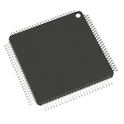
0 Uses0 StarsPIC32MZ2048EFM100-I/PT
MIPS32® M-Class PIC® 32MZ Microcontroller IC 32-Bit 200MHz 2MB (2M x 8) FLASH 100-TQFP (12x12) The PIC32MZ2048EFM100-I/PT is built around a MIPS32® M-Class core operating at up to 200 MHz, delivering high computational performance suitable for real-time control, signal processing, and communication-intensive systems. It integrates large on-chip memory, multiple communication interfaces, and rich peripheral support in a compact package. Key Features Core Architecture: 32-bit MIPS32® M-Class CPU Clock Speed: Up to 200 MHz Program Memory: 2 MB Flash RAM: 512 KB Package: 100-pin TQFP (12×12 mm), surface-mount Operating Voltage: 2.1 V to 3.6 V I/O Pins: Up to 78 programmable I/O Integrated Peripherals & Interfaces Communication Interfaces: CAN, Ethernet, USB OTG I²C, SPI, SQI, UART/USART Parallel Master Port (PMP) Analog Features: 40-channel, 12-bit ADC System Peripherals: DMA controller PWM modules Watchdog timer (WDT) Brown-out reset and power-on reset Advanced Features: Floating Point Unit (FPU) for fast math operations Hardware crypto engine (AES, SHA, etc., depending on variant) High-speed USB and Ethernet connectivity #CommonPartsLibrary #IntegratedCircuit #Microcontroller #PIC® 32MZ
5 Uses0 Stars