Top Organization Projects
Explore the top organization projects on Flux.ai, featuring noteworthy printed circuit board (PCB) designs from variousindustries. This collection includes PCB projects developed by businesses and institutions, highlighting practical and innovative approaches to design. The top organization projects offer insight into the standards and practices of professional PCB design. It's a useful resource for designers and organizations aiming to understand industry trends and solutions. By showcasing projects from diverse organizations, Flux.ai provides a platform for sharing knowledge and techniques within the electronics design community.
WiFi Door and Window Sensor
A compact battery-powered door/window sensor built around the ESP32-C3-MINI-1-N4 module. The design uses a single non-rechargeable AA cell with a TPS613221A 3.3 V boost regulator, reed switch magnetic contact sensing, low-power wake/report/sleep firmware strategy, RGB status LED for setup feedback, BOOT/EN controls, programming header, and input polarity protection. It is intended for smart-home security and automation applications, supporting WiFi or Bluetooth LE hub reporting with emphasis on low idle current, reliable RF burst power delivery, and field-replaceable battery operation. #ESP32-C3 #BLE #WiFi #DoorSensor #WindowSensor #ReedSwitch #LowPower #BatteryPowered #SmartHome #IoT
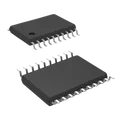
0 Uses1 StarsSTM32G030F6P6
Microcontroller – 32-bit ARM® Cortex®-M0+ microcontroller operating at up to 64 MHz, featuring 32 KB Flash memory, 8 KB SRAM, and 17 programmable I/O pins. Operates from a 2.0 V to 3.6 V supply and integrates a 13-channel 12-bit ADC, internal and external oscillator support, and communication interfaces including I²C, SPI, UART/USART, IrDA, LIN, and SmartCard. Includes DMA, I²S, PWM, power-on reset (POR), and watchdog timer (WDT) peripherals. Housed in a 20-pin TSSOP package. #STMicroelectronics #STM32 #STM32G030F6P6 #Microcontroller #ARMCortexM0Plus #32BitMCU #64MHz #32KBFlash #8KBSRAM #ADC #I2C #SPI #UART #LIN #SmartCard #TSSOP20 #EmbeddedSystems
74 Uses1 StarsNRF52840-QIAA-R
32-bit ARM® Cortex®-M4F wireless microcontroller with 2.4 GHz multi-protocol radio supporting Bluetooth® 5, Bluetooth mesh, Thread, Zigbee®, IEEE 802.15.4, ANT, and proprietary 2.4 GHz protocols. Features 1 MB Flash, 256 KB RAM, 48 GPIOs, and integrated USB 2.0 (Full-Speed), I²C, I²S, SPI, UART, and QSPI interfaces. Operates from a 1.7 V to 5.5 V supply, provides up to +8 dBm transmit power, −96 dBm receiver sensitivity, supports data rates up to 2 Mbps, and is housed in a 73-pin aQFN (7 × 7 mm) package. #NordicSemiconductor #nRF52840 #NRF52840QIAAR #WirelessMCU #Bluetooth5 #BluetoothMesh #Thread #Zigbee #IEEE802154 #ANT #ARMCortexM4F #2_4GHz #USB #SPI #I2C #UART #QSPI #EmbeddedSystems
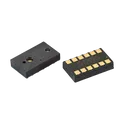
248 Uses1 StarsVL6180XV0NR/1
Optical Sensor 0 ~ 24.41" (0 ~ 62cm) I2C Output Optical Time-of-Flight (ToF) proximity sensor with an integrated infrared emitter, designed for absolute distance measurement, ambient light sensing, and gesture detection. Operates from a 2.6 V to 3.5 V supply, measures distances up to 100 mm, features an I²C interface (up to 400 kHz), and integrates an 850 nm VCSEL, ranging sensor, ambient light sensor (ALS), and signal processing. Housed in a compact 4.8 × 2.8 × 1.0 mm LGA-12 package. #TimeOfFlight #ToFSensor #ProximitySensor #AmbientLightSensor #GestureDetection #I2C #VCSEL #InfraredSensor #STMicroelectronics #LGA12 #commonpartslibrary #sensor
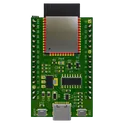
22 Uses1 StarsESP32-WROOM-32E Reference Design 0a6b
This project is a reference design for an ESP32-WROOM-32E based device. It features USB-C for power and data transfer, onboard voltage regulation, and multiple peripheral connections. It also includes a CH340C for USB to serial conversion #referenceDesign #project #ESP32 #ESP32WROOM #RF #WIFI #MCU #simpleEmbedded #espressif #template
0 Uses1 StarsNCP15XH103F03RC
NTC Thermistor 10k 0402 (1005 Metric) NTC thermistor designed for temperature sensing and compensation in electronic circuits. It provides a 10 kΩ nominal resistance at 25°C, ±1% resistance tolerance, and a B constant of 3380 K (25/50°C). The device is housed in a 0402 (1005 metric) SMD package with an operating temperature range of −40°C to +125°C. #TemperatureSensor #TemperatureCompensation #10kOhm #3380K #0402 #SMD #MurataElectronics #CommonPartsLibrary #Sensor #Transducer #NTC-Thermistor #NCP15XH
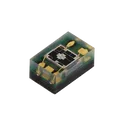
106 Uses1 StarsVEML6075
Optical Sensor Ultraviolet (UV) 330nm, 365nm I²C 4-TFLGA UV light sensor with integrated UVA and UVB photodiodes, designed to measure ultraviolet intensity and calculate a UV index through an I²C interface. It operates from a 1.7 V to 3.6 V supply, features a 16-bit ADC, programmable integration time and dynamic range, built-in signal processing with UV compensation, and is housed in a compact 4-pin OPLGA package suitable for space-constrained applications. #commonpartslibrary #sensor #opticalsensor
12 Uses1 StarsTS-1088-AR02016
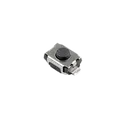
50mA 4mm 100MΩ 100,000 Times 12V 160gf 3mm 2mm Round Button Vertical welding SPST SMD Tactile Switches ROHS Tactile Switches TS-1088-AR02016 SW-SMD_L3.9-W3.0-P4.45 LCSC Part Number: C720477 JLCPCB Part Class: Extended Part Manufactured by XUNPU(讯普) momentary tactile switch, SMD 6 mm tactile push button, through-hole SPST on/off mechanical switch momentary pushbutton for BOOT / RESET / PTT
4.5k Uses1 StarsADS8688IDBTR
16 Bit Analog to Digital Converter 8 Input 1 SAR 38-TSSOP The ADS8688IDBTR specification defines the engineering requirements for a multi-channel analog-to-digital converter integrated circuit designed for precision data acquisition and signal measurement applications. This specification establishes the functional, electrical, mechanical, thermal, environmental, and quality requirements necessary to ensure accurate analog signal conversion, reliable digital communication, and long-term operational stability in embedded and industrial electronic systems. The device is intended for use in industrial automation, process control, instrumentation, medical equipment, test and measurement systems, energy monitoring, and embedded control applications requiring simultaneous access to multiple analog input channels. The integrated analog front end and high-resolution conversion architecture provide accurate signal acquisition while simplifying system design and reducing external component requirements. Engineering Requirements The analog-to-digital converter shall be manufactured using qualified semiconductor fabrication processes and high-quality materials to ensure consistent conversion accuracy, low noise performance, and dependable long-term reliability. The device shall maintain stable operation under specified voltage, temperature, and environmental operating conditions. Electrical characteristics shall provide high-resolution analog-to-digital conversion, excellent linearity, low offset error, and stable reference performance. The converter shall support reliable multi-channel signal acquisition while maintaining low distortion, repeatable sampling accuracy, and consistent digital output throughout continuous operation. The integrated acquisition architecture shall provide reliable channel selection, input signal conditioning, and high-speed serial communication with compatible host processors. The device shall maintain signal integrity during channel switching, startup, shutdown, and dynamic operating conditions while minimizing conversion errors and communication latency. Thermal performance shall support continuous operation within the specified junction temperature range while maintaining electrical characteristics and long-term reliability. The package shall be suitable for automated surface-mount assembly and compatible with standard solder reflow manufacturing processes. Mechanical construction shall withstand thermal cycling, vibration, mechanical handling, and environmental exposure without degradation of electrical or mechanical performance. Workmanship shall be free from defects including contamination, package cracking, bond failures, lead deformation, or structural inconsistencies that could adversely affect device functionality or reliability. Inspection, validation, and testing shall be performed using calibrated equipment and controlled quality procedures to verify compliance with engineering and manufacturing requirements. Any deviation from this specification shall require formal engineering evaluation, documented technical justification, and approval through the established engineering change control process before implementation. Documentation Supporting documentation shall include engineering drawings, electrical performance specifications, timing diagrams, application guidelines, qualification reports, inspection records, reliability data, material declarations, and revision-controlled manufacturing documentation. All documentation shall be maintained under formal configuration management and quality assurance systems to ensure complete product traceability. Revision Control Any modification to this specification shall be managed through the formal engineering change management process. All revisions shall undergo technical review, validation, and approval before release to ensure continued compliance with design intent and applicable engineering standards. #EngineeringSpecification #AnalogToDigitalConverter #ADC #DataAcquisition #SignalConditioning #IndustrialAutomation #EmbeddedSystems #Instrumentation #QualityAssurance #EngineeringDocumentation
13 Uses1 Stars
AvocAudio: A tinyML community board v3 Rev 1
AvocAudio is a compact tinyML community board designed for extensive audio data collection for various tinyML applications. It leverages the Raspberry Pi RP2040 and integrates a LoRa-E5 LoRaWAN Transceiver Module for connectivity. Equipped with an SD card slot for local data storage, the board ensures efficient data collection. The board operates on solar power or a lithium-ion battery, ensuring flexible and efficient energy use. #raspberryPi #rp2040 #lorawan #iot #solar
0 Uses1 Stars