ESP32-S3-WROOM-1-N8R2
WiFi 802.11a/b/g/n, Bluetooth v5.0 Transceiver Module 2.4GHz PCB Trace The ESP32-S3-WROOM-1-N8R2 is a compact, low-power Wi-Fi and Bluetooth® Low Energy (BLE) module developed by Espressif Systems. It is based on the ESP32-S3 system-on-chip (SoC), which integrates a dual-core Xtensa® LX7 processor optimized for high performance and edge AI processing. This module includes 8 MB of external SPI flash memory and 2 MB of PSRAM, enabling efficient handling of memory-intensive applications such as graphical interfaces, buffering, and embedded machine learning workloads. Designed for flexibility and scalability, the module integrates RF components, power management, and a wide range of peripherals into a surface-mount package suitable for IoT, industrial, and consumer electronics applications. Key Features Dual-core Xtensa® LX7 processor operating up to 240 MHz Integrated 2.4 GHz Wi-Fi (802.11 b/g/n) Bluetooth 5 Low Energy support Embedded 8 MB SPI flash memory Integrated 2 MB PSRAM AI acceleration through vector instruction support USB OTG (full-speed) capability Multiple low-power operating modes Built-in hardware security features Extensive peripheral interface support Functional Overview The module consists of several integrated subsystems, including a dual-core processing unit, memory subsystem (flash and PSRAM), RF subsystem for wireless communication, peripheral interface controllers, power management circuitry, and a hardware-based security engine. Electrical Characteristics Operating voltage range: 3.0 V to 3.6 V (typical 3.3 V) Operating temperature range: -40°C to +85°C RF operating frequency: 2.4 GHz Current consumption varies depending on operating mode, ranging from microamp levels in deep sleep to hundreds of milliamps during active transmission Processor and Memory The module features a dual-core Xtensa® LX7 CPU capable of running at frequencies up to 240 MHz. It includes approximately 512 KB of internal SRAM, supplemented by 8 MB of external flash memory and 2 MB of PSRAM for extended data storage and processing. Wireless Connectivity The ESP32-S3-WROOM-1-N8R2 supports Wi-Fi communication compliant with 802.11 b/g/n standards in the 2.4 GHz band. It also supports Bluetooth 5 Low Energy for short-range wireless communication. The module includes an integrated PCB antenna and supports RF output power up to approximately +20 dBm. Peripheral Interfaces The module provides a wide range of interfaces, including general-purpose input/output (GPIO) pins, SPI, I2C, UART, and I2S for audio applications. It also supports PWM for LED control, a 12-bit analog-to-digital converter (ADC), and USB OTG functionality. Pin functions are multiplexed to maximize flexibility. Power Management Power efficiency is achieved through multiple operating modes, including active mode, modem sleep, light sleep, and deep sleep. The module includes an RTC subsystem for low-power timekeeping and supports dynamic frequency scaling to optimize performance and energy consumption. Security Features The module incorporates several hardware-based security mechanisms, including secure boot, flash encryption, and digital signature verification. It also includes a hardware random number generator and cryptographic accelerators supporting AES, SHA, RSA, and ECC algorithms. Mechanical Characteristics The module is designed for surface-mount integration and measures approximately 18 mm by 25.5 mm. It includes an onboard PCB antenna and is suitable for compact embedded designs. Pin Configuration Overview GPIO pins are multiplexed to support various peripheral functions such as analog inputs, communication interfaces, and control signals. Dedicated pins are provided for power supply, module enable, and boot configuration. Typical Applications Internet of Things (IoT) devices Smart home systems Industrial automation and monitoring Edge AI and machine learning applications Wearable electronics Audio and multimedia systems USB-enabled embedded devices Compliance The module is designed to meet Wi-Fi and Bluetooth standards and is compliant with RoHS requirements. Certification such as FCC or CE may apply depending on the specific module variant and deployment. Ordering Information The ESP32-S3-WROOM-1-N8R2 variant includes 8 MB of flash memory and 2 MB of PSRAM. #commonpartslibrary #integratedcircuit #transceiver #wireless #rf... show more336 Uses
0 Stars
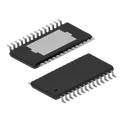
LM5176PWPR
DC-DC Controllers LM5176PWPR HTSSOP-28_L9.7-W4.4-P0.65-LS6.4-BL-EP LCSC Part Number: C442493 JLCPCB Part Class: Extended Part Manufactured by TI(德州仪器) Texas Instruments LM5176 synchronous 4-switch buck-boost DC/DC controller, regulates output voltage above, below or equal to input voltage, wide 4.2V to 55V input voltage range with 60V absolute maximum, adjustable 0.8V to 55V output voltage, single-inductor buck-boost architecture, current-mode control, high-efficiency buck-boost transition, adjustable switching frequency with optional synchronization and dithering, integrated 2A MOSFET gate drivers, cycle-by-cycle current limit, optional hiccup protection, input UVLO, soft-start, power-good output, output overvoltage protection, available in HTSSOP-28 and QFN-28 packages. Search Keywords: LM5176, Texas Instruments LM5176, TI LM5176, LM5176 buck boost controller, LM5176 4 switch buck boost, LM5176 synchronous buck boost controller, 55V buck boost controller, 4.2V to 55V DC DC controller, adjustable buck boost controller, single inductor buck boost controller, LM5176 HTSSOP-28, LM5176 QFN-28, LM5176 power supply controller, LM5176 USB power delivery, LM5176 battery powered systems, LM5176 LED lighting, LM5176 datasheet Hashtags: #LM5176 #TexasInstrumentsLM5176 #TIBuckBoostController #BuckBoostController #SynchronousBuckBoost #4SwitchBuckBoost #DCDCController #55VController #SingleInductorBuckBoost #CurrentModeController #MOSFETGateDriver #2AGateDriver #AdjustableFrequencyController #UVLOController #PowerGoodController #OutputOVP #HTSSOP28 #QFN28... show more50 Uses
0 Stars
LTR-559ALS-01
Optical Sensor Ambient I2C 8-SMD, No Lead The LTR-559ALS-01 is a combined ambient light sensor and proximity sensor module designed for low-power and space-constrained applications. It integrates a photodiode array for ambient light detection and an infrared emitter with a photodiode for proximity sensing. The device provides digital output via an I²C interface and includes programmable interrupt functionality for system-level event handling. It is commonly used in mobile devices, wearable electronics, and industrial applications requiring automatic brightness control and object detection. Key Features: Integrated ambient light and proximity sensing functions High sensitivity with wide dynamic range for light measurement Infrared LED driver for proximity detection I²C digital interface for communication Programmable interrupt output Low power consumption with multiple operating modes Built-in noise cancellation and sunlight rejection Compact surface-mount package Electrical Characteristics: Supply voltage range: compatible with typical low-voltage logic systems Low standby current for power-sensitive applications Programmable gain and integration time for ambient light sensing Adjustable LED drive current for proximity sensing Optical Characteristics: Ambient light sensing with human-eye spectral response approximation Proximity detection using infrared light with high immunity to ambient light interference Interface: Communication protocol: I²C-compatible interface Supports configurable registers for threshold, timing, and interrupt control Package Information: Small form factor surface-mount package suitable for compact PCB layouts Integrated optical window for both ALS and proximity sensing Applications: Display brightness control in smartphones and tablets Proximity detection for touchless interfaces Wearable devices and IoT sensors Industrial automation and control systems Environmental and Compliance: Designed for standard commercial temperature ranges RoHS compliant and suitable for lead-free assembly processes Notes for Design Integration: Requires proper optical isolation between emitter and receiver for accurate proximity sensing PCB layout should minimize interference from external light sources Calibration may be required depending on enclosure and application conditions #commonpartslibrary #sensor #ambient... show more5 Uses
0 Stars
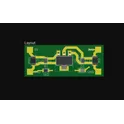
3V3 Regulator with LED
Low dropout linear voltage regulator board that can provide 3.3V with up to 1A output and could operate down to 1V input-to-output differential. #firstpcbFlux... show more70 Uses
10 Stars


Previous
Page 12 of 12