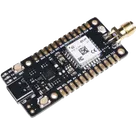
PCB Design for Hiker Locator
Thought for 1 min 7 sec
I’ll create a PCB from your KiCad schematic for a handheld hiker-to-hiker locator. Here’s the plan I’ve prepared:
- Import and validate the KiCad schematic; replace any generic parts with MPN-backed library parts and clear ERC.
- Define board outline/mounting, choose layer count, and set design rules/stackup.
- Place RF/MCU/power/connectors; add ESD on exposed I/O and battery safety (reverse polarity, overcharge, charge indicators).
- Set power/ground strategy, run Auto-Layout, then refine critical RF/high-current routes and clear DRC.
- Verify part availability; finalize markings and generate Gerbers, BOM, and pick-and-place.
Click Start on the plan bar to begin. Let me know if you’d like to change anything.

Limit the layers to 2 only.
Thought for 52 sec
Got it—your PCB will be limited to a 2-layer stackup. I’ve updated the plan accordingly:
- Configure a 2-layer stackup, then place and route with a ground-first strategy (solid bottom GND pour, stitching vias, short RF feeds).
- Keep the rest of the flow unchanged: import KiCad schematic, map parts, place, route, DRC, then generate Gerbers/BOM/PnP.
Click Start on the plan bar to begin, or tell me if you’d like any other constraints (board size, antenna type, min trace/clearance).
Set board size
Define fab rules
Antenna constraint
Power details
Flux UI question