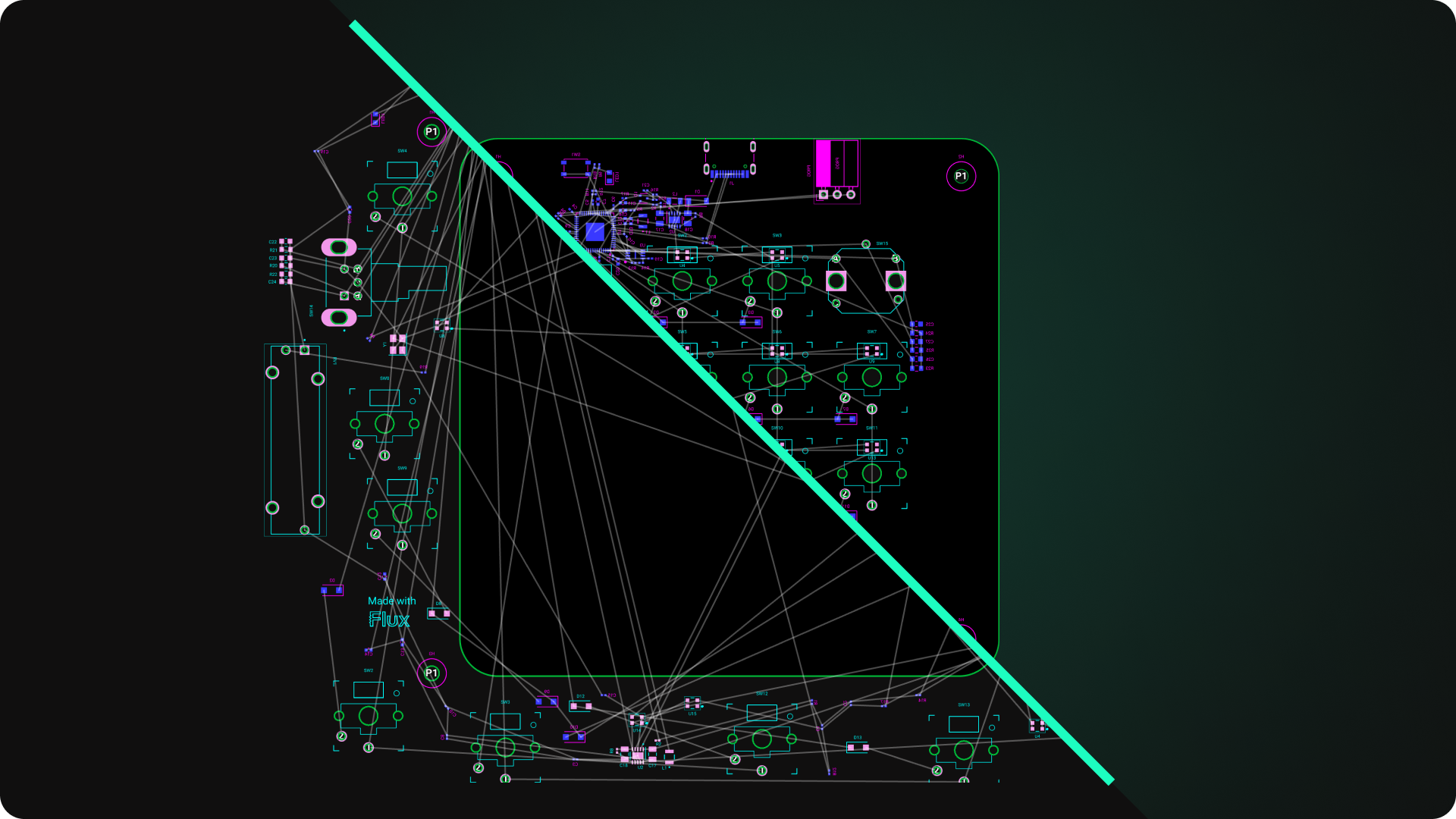
LED Blinker Circuit Design
Updated 7 nets
0:01
Connected GND:GND, BT1:N, U1:GND, C1:P2, C2:P2, C3:P2, LED1:K
Connected BT1:P to S1:COM
Connected S1:NO, U1:VCC, C2:P1, C3:P1, R1:P1, R3:P1
Connected U1:R to U1:VCC
Connected U1:TR, U1:THR, R2:P2, C1:P1
Connected U1:DIS, R1:P2, R2:P1
Connected U1:Q to LED1:A
87 days
Updated 4 nets
Connected U1:R to U1:VCC
Connected S1:NO to U1:VCC
Disconnected U1:R from U1:VCC
Disconnected S1:NO from U1:VCC
87 days
Updated project description
Updated to: "9V NE555 1 Hz LED Blinker (Through-Hole)"
87 days
0:00
Work done
- Added the full through-hole blinker schematic: U1 (NE555P), BT1 (9V snap), S1 (SPST toggle), LED1, timing parts R1, R2, C1, LED resistor R3, and decoupling/bulk caps C2, C3.
- Wired astable operation: U1
Rtied toVCC,TRtied toTHR,DISwith R1/R2, and C1 to GND. - Wired power + decoupling: BT1 -> S1 -> U1 VCC with C2 and C3 to GND.
- Wired LED output (high-side drive): U1
Q-> LED1 anode; R3 from switched +9V to the LED anode; LED1 cathode to GND.
Success criteria review
- ✅ Functional 9V battery powered NE555 astable LED blinker schematic is fully built and wired
- ✅ All parts are through-hole / hand-solderable footprints
- ✅ Includes decoupling (C2) and bulk (C3) capacitance, plus LED current limiting (R3 = 680Ω, about 10 mA nominal)
- ❌ Timing is currently ~0.58 Hz (with R1=47kΩ, R2=100kΩ, C1=10uF), not 1 Hz
87 days


Welcome 👋
Flux helps you build PCBs faster with an AI teammate!
Create your account to collaborate, stay updated, fork your own version, and get instant answers from our AI agent.