Chat
Welcome to Flux
Treat Flux like your intern. Tell it what you'd like to build and it'll get to work. You can also ask it questions, brainstorm ideas, and teach it your preferences. Learn More
Explain project
Write a project description
Find schematic issues
Create a test plan
Simulate a circuit
Prepare for Manufacturing
Component Selection Workflow
New Subsystem Wizard
Verify Part Details
Recommend similar parts
Ready.
J1
New Comment
Can you check if I am missing any connections to J1. The application is for USB ...

2y
From the netlist and components provided, it appears that the following pins on J1 are connected:
- GND1, GND2, GND3, GND4
- VBUS1, VBUS2, VBUS3, VBUS4
- D1+, D1-
- CC1, CC2
- SHIELD (all 4 instances)
The CH340G's application of USB to Serial typically requires the following connections:
- VBUS (to power)
- GND
- D+ and D- (for data transmission)
For a USB-C connector (like J1, with part number 1054500101), the following pins are typically used:
- VBUSx
- GNDx
- D1+, D1-
- SHIELD
- CC1, CC2
Since your current connections match these requirements, it seems like you're not missing any required connections for a basic USB to Serial application using the CH340G.
The remaining pins on this USB-C connector (RX1-, RX1+, RX2-, RX2+, SBU1, SBU2, TX1-, TX1+, TX2-, TX2+) are not typically used in a USB to Serial application and can be left unconnected or connected to No Connect for clarity.
Please note that this does not account for any specific requirements your design might have outside of a basic USB to Serial application.
Here's the connections to No Connect for the unused pins:
- Connect J1:RX1- to No Connect.
- Connect J1:RX1+ to No Connect.
- Connect J1:RX2- to No Connect.
- Connect J1:RX2+ to No Connect.
- Connect J1:SBU1 to No Connect.
- Connect J1:SBU2 to No Connect.
- Connect J1:TX1- to No Connect.
- Connect J1:TX1+ to No Connect.
- Connect J1:TX2- to No Connect.
- Connect J1:TX2+ to No Connect.
2y
Yeah please wire the unused pins of J1 to no connect for me
2y
Sure, here's how to wire the unused pins of J1 to No Connect:
- Connect J1:RX1- to the NC net.
- Connect J1:RX1+ to the NC net.
- Connect J1:RX2- to the NC net.
- Connect J1:RX2+ to the NC net.
- Connect J1:SBU1 to the NC net.
- Connect J1:SBU2 to the NC net.
- Connect J1:TX1- to the NC net.
- Connect J1:TX1+ to the NC net.
- Connect J1:TX2- to the NC net.
- Connect J1:TX2+ to the NC net.
This will ensure that these pins are explicitly marked as not connected in your design.
2y
2
How do I connect my USB-C port to the CH340G IC?
2y
Planning ...
2y
To connect your USB-C port to the CH340G IC, you first need the following components: a USB-C cable, a USB-C breakout board, the CH340G IC, and suitable connectors for your PCB (print -circuit board).
Here is one approach to make the connection:
-
Using the USB-C cable, connect one end to the USB-C port on your device.
-
Connect the other end of the USB-C cable to the USB-C breakout board. This board should convert the USB-C signals into signals compatible with the CH340G. Locate the D+ and D- signals on the breakout board.
-
Connect the D+ and D- signals from the breakout board to the corresponding D+ (pin 3) and D- (pin 2) inputs on the CH340G IC.
Please refer to the specific datasheet for your version of the CH340G IC for precise pin descriptions, as connections may vary depending on the specific chip version. For the USB-C breakout board, also, make sure to refer to its specific datasheet to properly identify the D+ and D- signals.
Remember that the CH340G needs proper voltage supply, ground connections and also crystal circuit connected to work correctly as a USB to serial converter. You should ensure that all these connections are correctly applied (according to the information given on the CH340G datasheet).
It's important to notice that USB-C cables and ports support higher power delivery than other USB types. Ensure any device that you connect to the USB-C port is capable of handling the power it delivers.
The information provided does not specify if there is any direct device-to-device compatibility provided by the USB-C port and the CH340G IC, and some kind of interface or driver would be necessary for the IC to effectively 'read' and deal with the signals coming from the USB-C.
2y
4
VCC
F1
Y1
C6
Capacitance
20p F
R7
Resistance
1k Ω
C7
Capacitance
0.01u F
D1
C8
Capacitance
10u F
FUSE
R2
Resistance
2.1k Ω
VCC
D1+
RXD
R8
Resistance
1k Ω
R1
Resistance
2.1k Ω
C9
Capacitance
100n F
D1+
R3
Resistance
1k Ω
IC2
D1-
C5
Capacitance
20p F
C10
Capacitance
100n F
D1-
Reviews

- Wirelessly connects nets on schematic. Used to organize schematics and separate functional blocks. To wirelessly connect net portals, give them same designator. #portaljharwinbarrozo43.0M
- Wirelessly connects power nets on schematic. Identical to the net portal, but with a power symbol. Used to organize schematics and separate functional blocks. To wirelessly connect power net portals, give them the same designator. #portal #powerjharwinbarrozo11.4M
- A generic fixed resistor for rapid developing circuit topology. Save precious design time by seamlessly add more information to this part (value, footprint, etc.) as it becomes available. Standard resistor values: 1.0Ω 10Ω 100Ω 1.0kΩ 10kΩ 100kΩ 1.0MΩ 1.1Ω 11Ω 110Ω 1.1kΩ 11kΩ 110kΩ 1.1MΩ 1.2Ω 12Ω 120Ω 1.2kΩ 12kΩ 120kΩ 1.2MΩ 1.3Ω 13Ω 130Ω 1.3kΩ 13kΩ 130kΩ 1.3MΩ 1.5Ω 15Ω 150Ω 1.5kΩ 15kΩ 150kΩ 1.5MΩ 1.6Ω 16Ω 160Ω 1.6kΩ 16kΩ 160kΩ 1.6MΩ 1.8Ω 18Ω 180Ω 1.8KΩ 18kΩ 180kΩ 1.8MΩ 2.0Ω 20Ω 200Ω 2.0kΩ 20kΩ 200kΩ 2.0MΩ 2.2Ω 22Ω 220Ω 2.2kΩ 22kΩ 220kΩ 2.2MΩ 2.4Ω 24Ω 240Ω 2.4kΩ 24kΩ 240kΩ 2.4MΩ 2.7Ω 27Ω 270Ω 2.7kΩ 27kΩ 270kΩ 2.7MΩ 3.0Ω 30Ω 300Ω 3.0KΩ 30KΩ 300KΩ 3.0MΩ 3.3Ω 33Ω 330Ω 3.3kΩ 33kΩ 330kΩ 3.3MΩ 3.6Ω 36Ω 360Ω 3.6kΩ 36kΩ 360kΩ 3.6MΩ 3.9Ω 39Ω 390Ω 3.9kΩ 39kΩ 390kΩ 3.9MΩ 4.3Ω 43Ω 430Ω 4.3kΩ 43KΩ 430KΩ 4.3MΩ 4.7Ω 47Ω 470Ω 4.7kΩ 47kΩ 470kΩ 4.7MΩ 5.1Ω 51Ω 510Ω 5.1kΩ 51kΩ 510kΩ 5.1MΩ 5.6Ω 56Ω 560Ω 5.6kΩ 56kΩ 560kΩ 5.6MΩ 6.2Ω 62Ω 620Ω 6.2kΩ 62KΩ 620KΩ 6.2MΩ 6.8Ω 68Ω 680Ω 6.8kΩ 68kΩ 680kΩ 6.8MΩ 7.5Ω 75Ω 750Ω 7.5kΩ 75kΩ 750kΩ 7.5MΩ 8.2Ω 82Ω 820Ω 8.2kΩ 82kΩ 820kΩ 8.2MΩ 9.1Ω 91Ω 910Ω 9.1kΩ 91kΩ 910kΩ 9.1MΩ #generics #CommonPartsLibraryjharwinbarrozo1.5M
- A generic fixed capacitor ideal for rapid circuit topology development. You can choose between polarized and non-polarized types, its symbol and the footprint will automatically adapt based on your selection. Supported options include standard SMD sizes for ceramic capacitors (e.g., 0402, 0603, 0805), SMD sizes for aluminum electrolytic capacitors, and through-hole footprints for polarized capacitors. Save precious design time by seamlessly add more information to this part (value, footprint, etc.) as it becomes available. Standard capacitor values: 1.0pF 10pF 100pF 1000pF 0.01uF 0.1uF 1.0uF 10uF 100uF 1000uF 10,000uF 1.1pF 11pF 110pF 1100pF 1.2pF 12pF 120pF 1200pF 1.3pF 13pF 130pF 1300pF 1.5pF 15pF 150pF 1500pF 0.015uF 0.15uF 1.5uF 15uF 150uF 1500uF 1.6pF 16pF 160pF 1600pF 1.8pF 18pF 180pF 1800pF 2.0pF 20pF 200pF 2000pF 2.2pF 22pF 20pF 2200pF 0.022uF 0.22uF 2.2uF 22uF 220uF 2200uF 2.4pF 24pF 240pF 2400pF 2.7pF 27pF 270pF 2700pF 3.0pF 30pF 300pF 3000pF 3.3pF 33pF 330pF 3300pF 0.033uF 0.33uF 3.3uF 33uF 330uF 3300uF 3.6pF 36pF 360pF 3600pF 3.9pF 39pF 390pF 3900pF 4.3pF 43pF 430pF 4300pF 4.7pF 47pF 470pF 4700pF 0.047uF 0.47uF 4.7uF 47uF 470uF 4700uF 5.1pF 51pF 510pF 5100pF 5.6pF 56pF 560pF 5600pF 6.2pF 62pF 620pF 6200pF 6.8pF 68pF 680pF 6800pF 0.068uF 0.68uF 6.8uF 68uF 680uF 6800uF 7.5pF 75pF 750pF 7500pF 8.2pF 82pF 820pF 8200pF 9.1pF 91pF 910pF 9100pF #generics #CommonPartsLibraryjharwinbarrozo1.5M
- A generic fixed inductor for rapid developing circuit topology. *You can now change the footprint and 3D model at the top level anytime you want. This is the power of #genericsjharwinbarrozo15.4k
- An electrical connector acting as reusable interface to a conductor and creating a point where external circuits can be connected.Terminal
- 47 kOhms ±5% 0.125W, 1/8W Chip Resistor 0805 (2012 Metric) Automotive AEC-Q200 Thick Film #forLedBlinkjharwinbarrozo1.2M
- 10uF Capacitor Aluminum Polymer 20% 16V SMD 5x5.3mm #forLedBlink #commonpartslibrary #capacitor #aluminumpolymer #radialcanjharwinbarrozo1.2M
- Yellow 595nm LED Indication - Discrete 1.7V 1206 (3216 Metric) #forLedBlinkjharwinbarrozo1.1M


Inspect
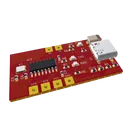
CH340G Breakout USB-C
Controls
Properties
Designator Prefix
SUBLAYOUT
Availability & Pricing
| Distributor | Qty 1 | |
|---|---|---|
| Digi-Key | $1.57–$3.57 | |
| LCSC | $1.20–$1.50 | |
| Mouser | $0.82–$0.90 | |
Assets
- ch340g-removebg-preview.png
id=ch340g-removebg-preview
Thumbnail

Welcome 👋
Flux accelerates your PCB design with AI.
Create your account to start using this component and bring your ideas to life.