Chat
Welcome to Flux
Treat Flux like your intern. Tell it what you'd like to build and it'll get to work. You can also ask it questions, brainstorm ideas, and teach it your preferences. Learn More
Explain this part
Write a part description
Describe each pin
Operating conditions
Electrical max ratings
Part Specifications
Application circuits
Verify Part Details
Recommend similar parts
Check availability & lifecycle
Ready.
necesito botones de emergencia que prendad leds individuales y a la ves encienda...

@copilot necesito botones de emergencia que prendad leds individuales y a la ves encienda una sirena
1y
¡Claro! Para diseñar un circuito que active LEDs individuales y una sirena con botones de emergencia, se usarán botones de pulsador (interruptores momentáneos), LEDs y una sirena. Aquí hay una propuesta del diseño básico:
Componentes Necesarios
- Botones de emergencia (interruptores momentáneos, normalmente abiertos)
- LEDs (por ejemplo, el modelo WP7113SRD/D)
- Resistores para limitar la corriente de los LEDs
- Sirena (o buzzer)
- Fuente de alimentación (voltage según especificaciones de LEDs y sirena)
- Conecta la alimentación positiva (+V) al terminal 1 de cada botón de emergencia (BTN).
- Conecta el terminal 2 del botón de emergencia (BTN) a una resistencia (R1) en serie con el ánodo del LED textLED:K.
- Conecta el cátodo del LED textLED:A a tierra (GND).
- Conecta el terminal 2 del botón de emergencia (BTN) también a la sirena textSIRENA:+.
- Conecta el otro terminal de la sirena textSIRENA:− a tierra (GND).
- Botón
- Conectar BTN1:1 a +V.
- Conectar BTN1:2 a R1:1 y textSIRENA:+.
- LED
- Conectar R1:2 a textLED1:K.
- Conectar textLED1:A a GND.
- Sirena
- Conectar textSIRENA:− a GND.
Para dos LEDs y dos botones sin incluir cómputo de resistencias específicas:
-
Botón 1
- Conectar BTN1:1 a +V.
- Conectar BTN1:2 a R1:1 y textSIRENA:+.
-
LED 1
- Conectar R1:2 a textLED1:K.
- Conectar textLED1:A a GND.
-
Botón 2
- Conectar BTN2:1 a +V.
- Conectar BTN2:2 a R2:1 y textSIRENA:+.
-
LED 2
- Conectar R2:2 a textLED2:K.
- Conectar textLED2:A a GND.
-
Sirena
- Conectar textSIRENA:− a GND.
Es importante calcular correctamente la resistencia para los LEDs y asegurarse de que la sirena pueda manejarse adecuadamente.
¿Te gustaría que dibujara el esquema para este proyecto en Flux?
1y
Genial, vamos a diseñar un esquema donde cada botón de emergencia enciende un LED individual y, al mismo tiempo, activa una sirena.
Componentes Necesarios
- Botones de emergencia (interruptores momentáneos, normalmente abiertos)
- LEDs (por ejemplo, el modelo WP7113SRD/D)
- Resistores para limitar la corriente de los LEDs
- Sirena (o buzzer)
- Fuente de alimentación (según las especificaciones de LEDs y sirena)
- Diodos para evitar la retroalimentación indebida entre LEDs y sirena
- Conecta la alimentación positiva (+V) al terminal 1 del botón de emergencia (BTN).
- Conecta el terminal 2 del botón de emergencia (BTN) a un extremo de una resistencia (R).
- Conecta el otro extremo de la resistencia al ánodo del LED (K).
- Conecta el cátodo del LED (A) a tierra (GND).
- Conecta el terminal 2 del botón de emergencia también a la entrada positiva de un diodo (D).
- Conecta la salida negativa del diodo a la entrada positiva de la sirena (SIRENA:+).
- Conecta la salida negativa de la sirena (SIRENA:-) a tierra (GND).
-
Botón y LED
- Conecta BTN1:1 a +V.
- Conecta BTN1:2 a R1:1.
- Conecta R1:2 a LED1:K.
- Conecta LED1:A a GND.
- Conecta BTN1:2 a D1:An (ánodo).
- Conecta D1:Ca (cátodo) a SIRENA:+.
-
Sirena
- Conecta SIRENA:- a GND.
Repite las conexiones de arriba para cada botón y LED adicionales, usando resistencias y diodos adicionales para cada uno.
Esquema en Flux:
Vamos a crear este esquema en Flux. Primero, crearé un archivo de proyecto en Flux antes de proceder.
Python Code to Export the Project
Primero, generaré el archivo JSON correcto para tu proyecto que podrás importar en Flux.
Code Interpreter
Python
import json # Definir los componentes y conexiones project = { "components": { "BTN1": {"type": "Button", "pins": {"1": "VCC", "2": "R1:1"}}, "R1": {"type": "Resistor", "pins": {"1": "BTN1:2", "2": "LED1:K"}}, "LED1": {"type": "LED", "pins": {"K": "R1:2", "A": "GND"}}, "D1": {"type": "Diode", "pins": {"An": "BTN1:2", "Ca": "SIRENA:+"}}, "SIRENA": {"type": "Buzzer", "pins": {"+": "D1:Ca", "-": "GND"}} }, "connections": [ {"from": "VCC", "to": ["BTN1:1"]}, {"from": "GND", "to": ["LED1:A", "SIRENA:-"]}, {"from": "BTN1:2", "to": ["R1:1", "D1:An"]}, {"from": "R1:2", "to": ["LED1:K"]}, {"from": "D1:Ca", "to": ["SIRENA:+"]} ] } # Agregar información adicional si se incluyen varios LEDs y botones for i in range(2, 4): project["components"][f"BTN$$i$$"] = {"type": "Button", "pins": {"1": "VCC", "2": f"R$$i$$:1"}} project["components"][f"R$$i$$"] = {"type": "Resistor", "pins": {"1": f"BTN$$i$$:2", "2": f"LED$$i$$:K"}} project["components"][f"LED$$i$$"] = {"type": "LED", "pins": {"K": f"R$$i$$:2", "A": "GND"}} project["components"][f"D$$i$$"] = {"type": "Diode", "pins": {"An": f"BTN$$i$$:2", "Ca": "SIRENA:+"}} project["connections"].extend([ {"from": "VCC", "to": [f"BTN$$i$$:1"]}, {"from": "GND", "to": [f"LED$$i$$:A"]}, {"from": f"BTN$$i$$:2", "to": [f"R$$i$$:1", f"D$$i$$:An"]}, {"from": f"R$$i$$:2", "to": [f"LED$$i$$:K"]}, {"from": f"D$$i$$:Ca", "to": ["SIRENA:+"]} ]) # Guardar el proyecto en un archivo JSON project_file_path = "/mnt/data/emergency_button_led_siren_project.json" with open(project_file_path, "w") as file: json.dump(project, file, indent=4) project_file_path
¡Perfecto! He generado un archivo JSON para tu proyecto que puedes importar en Flux. Aquí está el enlace para descargar el archivo:
- Descarga y guarda el archivo JSON en tu computadora.
- Abre Flux (https://flux.ai).
- Importa el archivo JSON en tu proyecto de Flux.
Esto configurará tu proyecto con los botones, LEDs y la sirena tal como describimos. Puedes ajustar las conexiones o componentes adicionales directamente en Flux según tus necesidades específicas.
¿Hay algo más con lo que pueda ayudarte?
1y
1y
Someone is typing...
5
explain this project.

1y
This project aims to design a simple circuit to drive a red LED. Let's break down the provided information:
Project Overview
- Goal: Drive a 640nm red LED.
- Forward Voltage: 1.85V (the voltage drop across the LED when it is forward biased and conducting current).
- Designator Prefixes:
- LED: This will be used to identify the LED component in the schematic.
- Red 640nm LED:
- Manufacturer: Kingbright
- Forward Voltage: 1.85V
- Pins:
- K: Cathode (Pin 1)
- A: Anode (Pin 2)
Although no physical connections have been made in the project yet, we can infer the basic connections to drive the LED.
Assumptions
- The power supply voltage and series resistor value have not been specified, so I will assume a common configuration using a 5V supply.
- A current-limiting resistor is needed to drive the LED without exceeding its maximum current rating (assuming 20mA as a typical value).
The series resistor can be calculated using Ohm's Law:
R=ILEDVsupply−Vforward
Where:
- $V_{supply} = 5V$
- $V_{forward} = 1.85V$
- $I_{LED} = 20mA = 0.02A$
So,
R=0.02A5V−1.85V=157.5Ω
Since resistor values are standardized, we can use a resistor value of 160Ω.
Suggested Connections
- Connect the power supply to the Anode of the LED.
- Connect the Cathode of the LED to one end of the resistor.
- Connect the other end of the resistor to the ground.
- Power Supply (+5V) to LED:A
- LED:K to R1:1
- R1:2 to Ground
- LED (Red 640nm, 1.85V forward voltage).
- R1, 160Ω resistor.
- Power Supply: +5V.
Feel free to correct any assumptions or provide additional information to refine the design further!
1y
Someone is typing...
6
how do I use Flux?

Connect the LED's
2y

@copilot how do I use Flux?
2y
To effectively use Flux.ai, you'll need to familiarize yourself with a few key areas:
-
Project Creation: To start a new project in Flux, you will need to click on the "New Project" button located on the main page and enter the required project details.
-
Schematic Editor: This is where you'll probably spend most of your time. It's where you create and edit your schematics. You can add new components from the library, make connections between components and nets, and change properties of elements.
-
PCB Layout Designer: After creating your schematic, you'll switch over to this tool to physically lay out your device on a PCB. Here, you can place your components and route tracks connecting them.
-
Design Rule Checking (DRC): Flux includes a DRC tool to warn you of any problems that would prevent your PCB from being manufactured correctly.
-
Exporting Your Design: Once your design is complete and error-free, you can export it in a variety of formats, for use in other CAD applications or for manufacturing.
To learn how to use each of these features in detail, you should check out the Flux documentation. It provides detailed instructions on every feature[1]. Tutorials on the platform are also available if needed, and these are especially useful for beginners learning the software[2].
Don't hesitate to ask for help when using Flux, either from the Flux team or its user community on Slack[3]. If you prefer to learn through video, Flux has a YouTube channel featuring tutorials and example projects[4]
Remember, you can always contact the live support via Flux’s home page if you have any problems[4].
Have fun exploring Flux, and let me know if you need help with specific features or tasks!
2y
Connect two led's one red and one blue
2y
Someone is typing...
3
please explain what A does.

@copilot please explain what A does.
2y
Based on the provided project information, the designator "A" represents a component with a single pin, labeled with the pin number 2. Since the project description specifically mentions a red LED (WP7113SRD/D) and does not detail the functions of the designators "K" and "A", we can infer the roles of these designators within the context of a typical LED setup. In conventional LED terminology, "A" usually stands for Anode, and "K" stands for Kathode (Cathode), following the standard naming conventions for diode terminals.
Therefore, for the WP7113SRD/D red LED, the designator "A" likely represents the Anode terminal. In a diode or LED, the Anode is the positively charged electrode by which the electrons leave a device (opposite in direction to conventional current flow). For the LED to emit light, current needs to flow into it through the Anode ("A") and out through the Cathode ("K").
In an electrical circuit, you would typically:
- Connect the Anode ("A": pin 2) of the LED to a positive voltage supply (higher potential).
- Connect the Cathode ("K": pin 1) to the ground or a lower potential, often through a current-limiting resistor to control the amount of current flowing through the LED.
Without specifying a resistor for current limiting, I'm assuming a typical setup where you might use a resistor in series with the LED to protect it. Given the LED's forward voltage of 1.85V mentioned in your project, you would calculate the required resistor value based on your voltage supply and desired current.
If you have any specific requirements or questions about how to connect other components or calculate the resistor value, feel free to ask!
2y
Someone is typing...
4
K
A
Reviews

- Wirelessly connects nets on schematic. Used to organize schematics and separate functional blocks. To wirelessly connect net portals, give them same designator. #portaljharwinbarrozo43.0M
- Wirelessly connects power nets on schematic. Identical to the net portal, but with a power symbol. Used to organize schematics and separate functional blocks. To wirelessly connect power net portals, give them the same designator. #portal #powerjharwinbarrozo11.4M
- A generic fixed resistor ideal for rapid circuit topology development. Its footprint automatically adapts based on the selected package case code—supporting 0402, 0603, 0805, 1203, and many other standard SMD packages, as well as axial horizontal and vertical configurations. Save precious design time by seamlessly add more information to this part (value, footprint, etc.) as it becomes available. Standard resistor values: 1.0 ohm, 10 ohm, 100 ohm, 1.0k ohm, 10k ohm, 100k ohm, 1.0M ohm 1.1 ohm, 11 ohm, 110 ohm, 1.1k ohm, 11k ohm, 110k ohm, 1.1M ohm 1.2 ohm, 12 ohm, 120 ohm, 1.2k ohm, 12k ohm, 120k ohm, 1.2M ohm 1.3 ohm, 13 ohm, 130 ohm, 1.3k ohm, 13k ohm, 130k ohm, 1.3M ohm 1.5 ohm, 15 ohm, 150 ohm, 1.5k ohm, 15k ohm, 150k ohm, 1.5M ohm 1.6 ohm, 16 ohm, 160 ohm, 1.6k ohm, 16k ohm, 160k ohm, 1.6M ohm 1.8 ohm, 18 ohm, 180 ohm, 1.8K ohm, 18k ohm, 180k ohm, 1.8M ohm 2.0 ohm, 20 ohm, 200 ohm, 2.0k ohm, 20k ohm, 200k ohm, 2.0M ohm 2.2 ohm, 22 ohm, 220 ohm, 2.2k ohm, 22k ohm, 220k ohm, 2.2M ohm 2.4 ohm, 24 ohm, 240 ohm, 2.4k ohm, 24k ohm, 240k ohm, 2.4M ohm 2.7 ohm, 27 ohm, 270 ohm, 2.7k ohm, 27k ohm, 270k ohm, 2.7M ohm 3.0 ohm, 30 ohm, 300 ohm, 3.0K ohm, 30K ohm, 300K ohm, 3.0M ohm 3.3 ohm, 33 ohm, 330 ohm, 3.3k ohm, 33k ohm, 330k ohm, 3.3M ohm 3.6 ohm, 36 ohm, 360 ohm, 3.6k ohm, 36k ohm, 360k ohm, 3.6M ohm 3.9 ohm, 39 ohm, 390 ohm, 3.9k ohm, 39k ohm, 390k ohm, 3.9M ohm 4.3 ohm, 43 ohm, 430 ohm, 4.3k ohm, 43K ohm, 430K ohm, 4.3M ohm 4.7 ohm, 47 ohm, 470 ohm, 4.7k ohm, 47k ohm, 470k ohm, 4.7M ohm 5.1 ohm, 51 ohm, 510 ohm, 5.1k ohm, 51k ohm, 510k ohm, 5.1M ohm 5.6 ohm, 56 ohm, 560 ohm, 5.6k ohm, 56k ohm, 560k ohm, 5.6M ohm 6.2 ohm, 62 ohm, 620 ohm, 6.2k ohm, 62K ohm, 620K ohm, 6.2M ohm 6.8 ohm, 68 ohm, 680 ohm, 6.8k ohm, 68k ohm, 680k ohm, 6.8M ohm 7.5 ohm, 75 ohm, 750 ohm, 7.5k ohm, 75k ohm, 750k ohm, 7.5M ohm 8.2 ohm, 82 ohm, 820 ohm, 8.2k ohm, 82k ohm, 820k ohm, 8.2M ohm 9.1 ohm, 91 ohm, 910 ohm, 9.1k ohm, 91k ohm, 910k ohm, 9.1M ohm #generics #CommonPartsLibraryjharwinbarrozo1.5M
- A generic fixed capacitor ideal for rapid circuit topology development. You can choose between polarized and non-polarized types, its symbol and the footprint will automatically adapt based on your selection. Supported options include standard SMD sizes for ceramic capacitors (e.g., 0402, 0603, 0805), SMD sizes for aluminum electrolytic capacitors, and through-hole footprints for polarized capacitors. Save precious design time by seamlessly add more information to this part (value, footprint, etc.) as it becomes available. Standard capacitor values: 1.0pF, 10pF, 100pF, 1000pF, 0.01uF, 0.1uF, 1.0uF, 10uF, 100uF, 1000uF, 10000uF 1.1pF, 11pF, 110pF, 1100pF 1.2pF, 12pF, 120pF, 1200pF 1.3pF, 13pF, 130pF, 1300pF 1.5pF, 15pF, 150pF, 1500pF, 0.015uF, 0.15uF, 1.5uF, 15uF, 150uF, 1500uF 1.6pF, 16pF, 160pF, 1600pF 1.8pF, 18pF, 180pF, 1800pF 2.0pF, 20pF, 200pF, 2000pF 2.2pF, 22pF, 220pF, 2200pF, 0.022uF, 0.22uF, 2.2uF, 22uF, 220uF, 2200uF 2.4pF, 24pF, 240pF, 2400pF 2.7pF, 27pF, 270pF, 2700pF 3.0pF, 30pF, 300pF, 3000pF 3.3pF, 33pF, 330pF, 3300pF, 0.033uF, 0.33uF, 3.3uF, 33uF, 330uF, 3300uF 3.6pF, 36pF, 360pF, 3600pF 3.9pF, 39pF, 390pF, 3900pF 4.3pF, 43pF, 430pF, 4300pF 4.7pF, 47pF, 470pF, 4700pF, 0.047uF, 0.47uF, 4.7uF, 47uF, 470uF, 4700uF 5.1pF, 51pF, 510pF, 5100pF 5.6pF, 56pF, 560pF, 5600pF 6.2pF, 62pF, 620pF, 6200pF 6.8pF, 68pF, 680pF, 6800pF, 0.068uF, 0.68uF, 6.8uF, 68uF, 680uF, 6800uF 7.5pF, 75pF, 750pF, 7500pF 8.2pF, 82pF, 820pF, 8200pF 9.1pF, 91pF, 910pF, 9100pF #generics #CommonPartsLibraryjharwinbarrozo1.5M
- A generic fixed inductor suitable for rapid circuit topology development. The footprint automatically adapts based on the selected package, supporting standard SMD sizes (e.g., 0402, 0603, 0805) as well as well-known inductor packages such as SDR1806, PA4320, SRN6028, and SRR1260. Standard inductor values: 1.0 nH, 10 nH, 100 nH, 1.0 µH, 10 µH, 100 µH, 1.0 mH 1.2 nH, 12 nH, 120 nH, 1.2 µH, 12 µH, 120 µH, 1.2 mH 1.5 nH, 15 nH, 150 nH, 1.5 µH, 15 µH, 150 µH, 1.5 mH 1.8 nH, 18 nH, 180 nH, 1.8 µH, 18 µH, 180 µH, 1.8 mH 2.2 nH, 22 nH, 220 nH, 2.2 µH, 22 µH, 220 µH, 2.2 mH 2.7 nH, 27 nH, 270 nH, 2.7 µH, 27 µH, 270 µH, 2.7 mH 3.3 nH, 33 nH, 330 nH, 3.3 µH, 33 µH, 330 µH, 3.3 mH 3.9 nH, 39 nH, 390 nH, 3.9 µH, 39 µH, 390 µH, 3.9 mH 4.7 nH, 47 nH, 470 nH, 4.7 µH, 47 µH, 470 µH, 4.7 mH 5.6 nH, 56 nH, 560 nH, 5.6 µH, 56 µH, 560 µH, 5.6 mH 6.8 nH, 68 nH, 680 nH, 6.8 µH, 68 µH, 680 µH, 6.8 mH 8.2 nH, 82 nH, 820 nH, 8.2 µH, 82 µH, 820 µH, 8.2 mH #generics #CommonPartsLibraryjharwinbarrozo15.7k
- An electrical connector acting as reusable interface to a conductor and creating a point where external circuits can be connected.Terminal
- 47 kOhms ±5% 0.125W, 1/8W Chip Resistor 0805 (2012 Metric) Automotive AEC-Q200 Thick Film #forLedBlinkjharwinbarrozo1.2M
- 10uF Capacitor Aluminum Polymer 20% 16V SMD 5x5.3mm #forLedBlink #commonpartslibrary #capacitor #aluminumpolymer #radialcanjharwinbarrozo1.2M
- Yellow 595nm LED Indication - Discrete 1.7V 1206 (3216 Metric) #forLedBlinkjharwinbarrozo1.1M


WP7113SRD/D
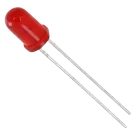
Red 640nm LED Indication - Discrete 1.85V Radial #CommonPartsLibrary #Optoelectronics #LEDIndication-Discrete #RED
Properties
1.85
V
LED
Kingbright
WP7113SRD/D
LED
Pricing & Availability
Distributor | Qty 1 |
|---|
Controls
Welcome 👋
Flux accelerates your PCB design with AI.
Create your account to start using this component and bring your ideas to life.
bladen
copilot