Chat
Welcome to Flux
Treat Flux like your intern. Tell it what you'd like to build and it'll get to work. You can also ask it questions, brainstorm ideas, and teach it your preferences. Learn More
Explain this part
Write a part description
Describe each pin
Operating conditions
Electrical max ratings
Part Specifications
Application circuits
Verify Part Details
Recommend similar parts
Check availability & lifecycle
explain this project.

@copilot explain this project.
2y
This project revolves around the HC-05 Bluetooth module, a popular choice for establishing Bluetooth Serial Port Protocol (SPP) connections. The HC-05 facilitates wireless serial communication by operating over Bluetooth V2.0+EDR (Enhanced Data Rate) at a 3Mbps modulation rate, within the 2.4GHz radio frequency band. It adopts the CSR Bluecore 04-External single-chip Bluetooth system with CMOS technology and includes the Adaptive Frequency Hopping (AFH) feature to enhance connection reliability and performance. The module's compact form factor (12.7mm x 27mm) makes it ideal for embedding into various electronic projects where space is a premium, and there is a need for Bluetooth connectivity.
The project details list numerous pins associated with the HC-05 module, each designated for specific functionalities, including both general-purpose input/output (GPIOs) designated as PIOpinnumber, programming and control pins such as UART-TX/RX for serial communication, and PCM-IN/OUT for handling PCM audio data. SPI pins for serial peripheral interface communication, and power management pins like 3.3VCC and GND (ground) are also present. Unique designation prefixes (e.g., U:, P:) and terminal types (e.g., INPUT, output, powerIn) provide clues about each pin's role and how they might be utilized in a design:
- UART: Universal Asynchronous Receiver-Transmitter. The HC-05's UART pins (UART-TX, UART-RX) enable serial communication with microcontrollers or other devices, allowing for data transmission and reception over Bluetooth.
- SPI: Serial Peripheral Interface. The SPI pins (SPI_CLK, SPI_MOSI, SPI_MISO) could be used for high-speed communication with other digital devices or for firmware updates, depending on the module's capabilities and user requirements.
- PCM: Pulse-code Modulation. PCM-IN and PCM-OUT pins are used for digital audio data transfer, enabling the module to handle voice communication duties in projects requiring audio functionality.
- PIO: Programmable Input/Output. These general-purpose pins (e.g., PIO0, PIO1, etc.) offer versatile I/O capabilities for custom functionalities like control signals or interfacing with sensors and actuators.
- Power Management: The module's power supply and grounding are handled through the designated 3.3VCC and GND pins, ensuring the proper operating voltage and a common ground reference for the circuit.
This schematic serves as a foundational start for designing a circuit involving the HC-05. However, no electrical connections have been made in this diagram yet. The next steps for turning this project into a functional design would involve establishing these critical connections based on the desired application (e.g., data communication between a microcontroller and a Bluetooth-enabled device), and considering any additional components required for the setup (e.g., resistors, capacitors, LEDs for status indication, etc.).
2y
Someone is typing...
5
make a project contains of arduino,Bluetooth Module (HC05) Relay Module Solenoid...

@copilot make a project contains of arduino,Bluetooth Module (HC05) Relay Module Solenoid Lock Buzzer LED Jumper Wires
2y
For your project that requires integrating an Arduino, HC-05 Bluetooth Module, Relay Module, Solenoid Lock, Buzzer, and LED along with Jumper Wires, let's outline a basic connection diagram to get you started. This schematic will help you control a solenoid lock via Bluetooth using Arduino as the main controller. When the command is received, the Arduino can activate the relay to control the solenoid lock, sound a buzzer, and light an LED as indicators.
Components
- Arduino Uno (or similar model): Acts as the central microcontroller unit.
- HC-05 Bluetooth Module: Enables Bluetooth communication.
- Relay Module: Interfaces the Arduino with the solenoid lock for safe operation.
- Solenoid Lock: The lock mechanism you want to control.
- Buzzer: Provides audible feedback when actions are performed.
- LED: Provides visual feedback.
- Jumper Wires: For connections between components.
- Resistors: For current limiting to the LED and potentially setting up the HC-05 depending upon your specific application.
-
Arduino to HC-05 Bluetooth Module
- Connect Arduino:5V to HC−05:VCC.
- Connect Arduino:GND to HC−05:GND.
- Connect Arduino:TX1 (D1) to HC−05:RXD.
- Connect Arduino:RX1 (D0) to HC−05:TXD.
- Optional: If your HC-05 module includes EN/KEY pin, you can control it via a digital pin on the Arduino for entering into AT command mode if needed.
-
Arduino to Relay Module
- Connect Arduino:5V and GND to the respective VCC and GND pins on the relay module.
- Connect a digital I/O pin, e.g., Arduino:D2, to the relay IN pin.
-
Relay Module to Solenoid Lock
- Connect the NormallyOpen(NO) terminal of the relay to one terminal of the solenoid lock.
- Connect the COM terminal of the relay to the + terminal of your power supply.
- Connect the − terminal of your power supply directly to the other terminal of the solenoid lock.
-
Arduino to Buzzer
- Connect the positive pin of the buzzer to a digital I/O pin, e.g., Arduino:D3.
- Connect the negative pin to Arduino:GND.
-
Arduino to LED
- Connect the anode (longer leg) of the LED to a digital I/O pin through a current-limiting resistor, e.g., 330 ohms, connected to Arduino:D4.
- Connect the cathode (shorter leg) directly to Arduino:GND.
- Use the Arduino IDE to program the Arduino.
- Implement serial communication to listen for commands from a Bluetooth-connected device.
- Based on the received command, you can control the relay (and thus the solenoid), the buzzer, and the LED.
This overview should help you get started on how to connect everything in your project. Remember to adjust the digital I/O pin numbers based on your design and incorporate necessary safety measures, especially when dealing with higher voltages for the solenoid lock.
2y
Someone is typing...
3
how do I use Flux?

i want ti create a circuit design using arduino,bluetooth modue,motor drivers and servo motors
2y
2y
Using Flux, the browser-based electronics CAD program, involves several key steps to design electronic circuits and PCB layouts efficiently. Here's a brief overview of how to get started:
-
First Project in Flux: To begin, simply open Flux in your browser and start a new project. This will give you access to a blank canvas where you can draw your circuit schematic.
-
Placing Components: Drag components from the library onto your schematic canvas. You can search for specific components using the search bar in the components library.
-
Wiring Components: Click on a component's pin and drag to another pin to create a wire connecting them. Make sure all necessary components are interconnected according to your circuit design.
-
Defining Netlists: As you wire components together, Flux automatically creates a netlist. This is a critical step in ensuring your PCB layout matches your schematic design.
-
Switching to PCB Layout: Once your schematic is complete, switch to the PCB layout view. Here, you'll place and organize the physical representations of your components onto a virtual PCB.
-
Routing: Connect the components on your PCB by routing traces between their respective pins, adhering to your schematic's connections. Pay attention to trace width and clearance for reliable circuit operation.
-
Design Rule Check (DRC): Use the DRC feature to catch common errors before manufacturing. It checks for issues like traces too close together or traces that aren't connected.
-
Exporting Your Design: Once your design is finalized, you can export the necessary files for manufacturing, including Gerber files for the PCB and a Bill of Materials (BOM) for component purchasing.
For more detailed instructions and tutorials, you can access various resources such as:
- Tutorials: In-depth tutorials about how to use each feature of Flux are available.
- YouTube: Flux has a library of video tutorials and crash courses.
- Slack Community: Join the Flux Slack community for direct support from the Flux team and to connect with other engineers and designers.
- Live Support: Contact Flux directly for personal support.
Remember, practice and experimentation are key to mastering Flux. Don't hesitate to try different features and tools within the program to see what works best for your specific project needs.
For further assistance and tutorials, explore the resources Flux provides.
2y
Someone is typing...
2
SPI_CLK
PIO[8]
PIO[10]
UART-RX
PIO[3]
PIO[11]
GND
PCM-CLK
PIO[1]
PIO[9]
PIO[2]
GND
GND
PIO[5]
PIO[6]
~SPI_CSB
PCN-SYNC
AIO[0]
SPI_MISO
PIO[4]
AIO[1]
USB_+
~UART-CTS
~UART-RTS
3.3_VCC
PIO[0]
PIO[7]
USB_-
UART-TX
PCM-IN
PCM-OUT
SPI_MOSI
~RESETB
Reviews

- Wirelessly connects nets on schematic. Used to organize schematics and separate functional blocks. To wirelessly connect net portals, give them same designator. #portaljharwinbarrozo43.0M
- Wirelessly connects power nets on schematic. Identical to the net portal, but with a power symbol. Used to organize schematics and separate functional blocks. To wirelessly connect power net portals, give them the same designator. #portal #powerjharwinbarrozo11.4M
- A generic fixed resistor ideal for rapid circuit topology development. Its footprint automatically adapts based on the selected package case code—supporting 0402, 0603, 0805, 1203, and many other standard SMD packages, as well as axial horizontal and vertical configurations. Save precious design time by seamlessly add more information to this part (value, footprint, etc.) as it becomes available. Standard resistor values: 1.0 ohm, 10 ohm, 100 ohm, 1.0k ohm, 10k ohm, 100k ohm, 1.0M ohm 1.1 ohm, 11 ohm, 110 ohm, 1.1k ohm, 11k ohm, 110k ohm, 1.1M ohm 1.2 ohm, 12 ohm, 120 ohm, 1.2k ohm, 12k ohm, 120k ohm, 1.2M ohm 1.3 ohm, 13 ohm, 130 ohm, 1.3k ohm, 13k ohm, 130k ohm, 1.3M ohm 1.5 ohm, 15 ohm, 150 ohm, 1.5k ohm, 15k ohm, 150k ohm, 1.5M ohm 1.6 ohm, 16 ohm, 160 ohm, 1.6k ohm, 16k ohm, 160k ohm, 1.6M ohm 1.8 ohm, 18 ohm, 180 ohm, 1.8K ohm, 18k ohm, 180k ohm, 1.8M ohm 2.0 ohm, 20 ohm, 200 ohm, 2.0k ohm, 20k ohm, 200k ohm, 2.0M ohm 2.2 ohm, 22 ohm, 220 ohm, 2.2k ohm, 22k ohm, 220k ohm, 2.2M ohm 2.4 ohm, 24 ohm, 240 ohm, 2.4k ohm, 24k ohm, 240k ohm, 2.4M ohm 2.7 ohm, 27 ohm, 270 ohm, 2.7k ohm, 27k ohm, 270k ohm, 2.7M ohm 3.0 ohm, 30 ohm, 300 ohm, 3.0K ohm, 30K ohm, 300K ohm, 3.0M ohm 3.3 ohm, 33 ohm, 330 ohm, 3.3k ohm, 33k ohm, 330k ohm, 3.3M ohm 3.6 ohm, 36 ohm, 360 ohm, 3.6k ohm, 36k ohm, 360k ohm, 3.6M ohm 3.9 ohm, 39 ohm, 390 ohm, 3.9k ohm, 39k ohm, 390k ohm, 3.9M ohm 4.3 ohm, 43 ohm, 430 ohm, 4.3k ohm, 43K ohm, 430K ohm, 4.3M ohm 4.7 ohm, 47 ohm, 470 ohm, 4.7k ohm, 47k ohm, 470k ohm, 4.7M ohm 5.1 ohm, 51 ohm, 510 ohm, 5.1k ohm, 51k ohm, 510k ohm, 5.1M ohm 5.6 ohm, 56 ohm, 560 ohm, 5.6k ohm, 56k ohm, 560k ohm, 5.6M ohm 6.2 ohm, 62 ohm, 620 ohm, 6.2k ohm, 62K ohm, 620K ohm, 6.2M ohm 6.8 ohm, 68 ohm, 680 ohm, 6.8k ohm, 68k ohm, 680k ohm, 6.8M ohm 7.5 ohm, 75 ohm, 750 ohm, 7.5k ohm, 75k ohm, 750k ohm, 7.5M ohm 8.2 ohm, 82 ohm, 820 ohm, 8.2k ohm, 82k ohm, 820k ohm, 8.2M ohm 9.1 ohm, 91 ohm, 910 ohm, 9.1k ohm, 91k ohm, 910k ohm, 9.1M ohm #generics #CommonPartsLibraryjharwinbarrozo1.5M
- A generic fixed capacitor ideal for rapid circuit topology development. You can choose between polarized and non-polarized types, its symbol and the footprint will automatically adapt based on your selection. Supported options include standard SMD sizes for ceramic capacitors (e.g., 0402, 0603, 0805), SMD sizes for aluminum electrolytic capacitors, and through-hole footprints for polarized capacitors. Save precious design time by seamlessly add more information to this part (value, footprint, etc.) as it becomes available. Standard capacitor values: 1.0pF, 10pF, 100pF, 1000pF, 0.01uF, 0.1uF, 1.0uF, 10uF, 100uF, 1000uF, 10000uF 1.1pF, 11pF, 110pF, 1100pF 1.2pF, 12pF, 120pF, 1200pF 1.3pF, 13pF, 130pF, 1300pF 1.5pF, 15pF, 150pF, 1500pF, 0.015uF, 0.15uF, 1.5uF, 15uF, 150uF, 1500uF 1.6pF, 16pF, 160pF, 1600pF 1.8pF, 18pF, 180pF, 1800pF 2.0pF, 20pF, 200pF, 2000pF 2.2pF, 22pF, 220pF, 2200pF, 0.022uF, 0.22uF, 2.2uF, 22uF, 220uF, 2200uF 2.4pF, 24pF, 240pF, 2400pF 2.7pF, 27pF, 270pF, 2700pF 3.0pF, 30pF, 300pF, 3000pF 3.3pF, 33pF, 330pF, 3300pF, 0.033uF, 0.33uF, 3.3uF, 33uF, 330uF, 3300uF 3.6pF, 36pF, 360pF, 3600pF 3.9pF, 39pF, 390pF, 3900pF 4.3pF, 43pF, 430pF, 4300pF 4.7pF, 47pF, 470pF, 4700pF, 0.047uF, 0.47uF, 4.7uF, 47uF, 470uF, 4700uF 5.1pF, 51pF, 510pF, 5100pF 5.6pF, 56pF, 560pF, 5600pF 6.2pF, 62pF, 620pF, 6200pF 6.8pF, 68pF, 680pF, 6800pF, 0.068uF, 0.68uF, 6.8uF, 68uF, 680uF, 6800uF 7.5pF, 75pF, 750pF, 7500pF 8.2pF, 82pF, 820pF, 8200pF 9.1pF, 91pF, 910pF, 9100pF #generics #CommonPartsLibraryjharwinbarrozo1.5M
- A generic fixed inductor suitable for rapid circuit topology development. The footprint automatically adapts based on the selected package, supporting standard SMD sizes (e.g., 0402, 0603, 0805) as well as well-known inductor packages such as SDR1806, PA4320, SRN6028, and SRR1260. Standard inductor values: 1.0 nH, 10 nH, 100 nH, 1.0 µH, 10 µH, 100 µH, 1.0 mH 1.2 nH, 12 nH, 120 nH, 1.2 µH, 12 µH, 120 µH, 1.2 mH 1.5 nH, 15 nH, 150 nH, 1.5 µH, 15 µH, 150 µH, 1.5 mH 1.8 nH, 18 nH, 180 nH, 1.8 µH, 18 µH, 180 µH, 1.8 mH 2.2 nH, 22 nH, 220 nH, 2.2 µH, 22 µH, 220 µH, 2.2 mH 2.7 nH, 27 nH, 270 nH, 2.7 µH, 27 µH, 270 µH, 2.7 mH 3.3 nH, 33 nH, 330 nH, 3.3 µH, 33 µH, 330 µH, 3.3 mH 3.9 nH, 39 nH, 390 nH, 3.9 µH, 39 µH, 390 µH, 3.9 mH 4.7 nH, 47 nH, 470 nH, 4.7 µH, 47 µH, 470 µH, 4.7 mH 5.6 nH, 56 nH, 560 nH, 5.6 µH, 56 µH, 560 µH, 5.6 mH 6.8 nH, 68 nH, 680 nH, 6.8 µH, 68 µH, 680 µH, 6.8 mH 8.2 nH, 82 nH, 820 nH, 8.2 µH, 82 µH, 820 µH, 8.2 mH #generics #CommonPartsLibraryjharwinbarrozo15.8k
- An electrical connector acting as reusable interface to a conductor and creating a point where external circuits can be connected.Terminal
- 47 kOhms ±5% 0.125W, 1/8W Chip Resistor 0805 (2012 Metric) Automotive AEC-Q200 Thick Film #forLedBlinkjharwinbarrozo1.2M
- 10uF Capacitor Aluminum Polymer 20% 16V SMD 5x5.3mm #forLedBlink #commonpartslibrary #capacitor #aluminumpolymer #radialcanjharwinbarrozo1.2M
- Yellow 595nm LED Indication - Discrete 1.7V 1206 (3216 Metric) #forLedBlinkjharwinbarrozo1.1M


HC-05
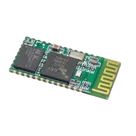
HC-05 module is an easy to use Bluetooth SPP (Serial Port Protocol) module, designed for
transparent wireless serial connection setup.
Serial port Bluetooth module is fully qualified Bluetooth V2.0+EDR (Enhanced Data Rate) 3Mbps
Modulation with complete 2.4GHz radio transceiver and baseband. It uses CSR Bluecore
04-External single chip Bluetooth system with CMOS technology and with AFH(Adaptive
Frequency Hopping Feature). It has the footprint as small as 12.7mmx27mm. Hope it will simplify
your overall design/development cycle #Module #Bluetooth #SPP
Properties
Module
Itead Studio
HC-05
U
Pricing & Availability
Distributor | Qty 1 |
|---|
Controls
Welcome 👋
Flux accelerates your PCB design with AI.
Create your account to start using this component and bring your ideas to life.
pranaykumar7525