Chat

Welcome to Flux

Treat Flux like your intern. Tell it what you'd like to build and it'll get to work. You can also ask it questions, brainstorm ideas, and teach it your preferences. Learn More

Explain this part
Write a part description
Describe each pin
Operating conditions
Electrical max ratings
Part Specifications
Application circuits
Verify Part Details
Recommend similar parts
Check availability & lifecycle

ramp wave circuit

@copilot ramp wave circuit
2y
A ramp wave or a ramp signal is generated by a circuit called a ramp generator, which is essentially an integration circuit. The most common way to generate a ramp signal is by charging and discharging a capacitor with a constant current.
Here's a simple ramp wave generator circuit using an op-amp integrator and a transistor:
  1. The op-amp integrator circuit which integrates the constant input voltage, and the output voltage gradually increases or decreases creating a ramp voltage output.
  2. The transistor is used to periodically discharge the capacitor, creating a recurring ramp signal.
To design this circuit using Flux.ai, you'd need a few more components:
  1. A single supply Op-Amp for the integrator circuit. (eg: LM358)
  2. A transistor to discharge the capacitor. A common NPN transistor like 2N2222 can be used.
  3. Resistors required for controlling the charging and discharging periods.
  4. Power supply to provide necessary biasing voltage to Op-Amp and transistor.
Let's start by placing these on our schematic:
  • Add the LM358 op-amp to the schematic (Designator U1).
  • Add the 2N2222 NPN transistor to the schematic (Designator Q1).
  • Add a resistor for current control (Designator R1). You can start with a resistor of around 10kΩ.
  • Then add a second resistor (Designator R2) with value around 1kΩ, between the output of the Op-Amp and the base of the transistor.
  • Add a 10μF ceramic capacitor (Designator C1), the one from your project inventory.
Connections would be as follows:
  • Connect pin 3 of LM358 (input + Non-inverting input) to Ground.
  • Connect pin 2 of LM358 (input - Inverting input) to one terminal of R1 and one terminal of C1.
  • Connect the other terminal of R1 to the supply voltage.
  • Connect the other terminal of C1 to ground.
  • Connect the base of the transistor Q1 to the output of LM358 (pin 1) via the resistor R2.
  • Connect the emitter of Q1 to ground.
  • Connect the collector of Q1 to the junction of R1 and C1 (on the side of R1),
  • The output of the circuit will be across the capacitor (C1) which is the output of LM358 (pin1).
Remember, the frequency of the ramp signal can be adjusted by changing the value of the capacitor (C1) and the resistor (R1). The transistor (Q1) periodically discharges the capacitor (C1) to create the ramp waveform.
Please adjust the component values according to your specific requirements, the values of R1 and C1 will impact the ramp period and amplitude. It's also worth noting that the LM358 is a single supply op-amp and it's recommended for low frequency applications. If you need higher frequency, you may need to use a different op-amp.
2y
To generate a ramp wave which is fully controllable, we can use an integrator circuit. An integrator circuit produces a constantly varying output voltage which is proportional to the integral of the input voltage.
The basic idea behind a ramp waveform generator is that we are charging a capacitor at a linear rate. A simple circuit to generate a ramp waveform using a capacitor, a resistor, and an operational amplifier (op-amp) is shown as follows:
Ramp Generating Circuit

Image

The output voltage of this circuit can be described by the equation:
[ V_{\text{out}}(t) = - \frac{1}{R C} \int V_{\text{in}}(t) , dt ]
where:
  • ( R ) is the resistance
  • ( C ) is the capacitance
  • ( V_{\text{in}}(t) ) is the input voltage
To generate a ramp waveform, you need to apply a step input to this circuit. However, the maximum voltage (Vpeak) can be controlled by resistor (R), the slope of the ramp (Slope) can be controlled by capacitor (C). The direction of the ramp (Up/Down) can be dictated by the input voltage (Vin).
As for the components you have in your project, according to the project properties, there are two unspecified pin components (P1 and P2), and a capacitor part number C1206X106J4RACAUTO which is a 10uF 16V Ceramic Capacitor X7R from KEMET.
If you need additional components in Flux to create this ramp waveform circuit, please specify what those are. If you need any further clarification or assistance based on the information I gave you, please don't hesitate to reach out.
2y
need ramp wave which is fully controllable
2y
Designing a ramp generator with the specifications you provided: a positive ramp that cycles from 2.5V to 4.5V with a time period of 40 microseconds, can be accomplished using an operational amplifier (op-amp) integrator circuit combined with a comparator.
Please consider the following design circuit to get a ramp from 2.5V to 4.5V in 40us:
  1. Operational Amplifier (op-amp) - for integrator.
  2. Comparator like LM311 - to generate a reset pulse when output exceeds 4.5V.
  3. NPN transistor like 2N2222 - serving as a switch to discharge the capacitor when the ramp reaches 4.5V.
  4. Resistors and capacitors for RC time constants and biasing.
  5. Voltage references (2.5V and 4.5V).
Let's start by adding these components to the Flux schematic:
  • Add an op-amp, such as the LM358 (Designator U1).
  • Add a comparator, like the LM311 (Designator U2).
  • Add an NPN Transistor, like the 2N2222 (Designator Q1).
Constructing the ramp generator will require some passive components:
  • Add four resistors (R1, R2, R3, R4). The values will be determined later.
  • Use the 10uF capacitor (C1) you have already added to the project.
Here's how to connect the components:
  1. Connect pin 3 (non-inverting input) of op-amp U1 to the 2.5V reference.
  2. Connect pin 2 (inverting input) of U1 to one leg of resistor R1 and one leg of capacitor C1.
  3. Connect the other leg of R1 to the gate of Q1, and the other leg of C1 to ground.
  4. Connect pin 1 (Output) of U1 to the base of Q1 through resistor R2 and to one leg of resistor R3.
  5. Connect the other leg of R3 to pin 3 (non-inverting input) of comparator U2.
  6. Connect the collector of Q1 to Pin 1 (output of U1), and the emitter to ground.
  7. Connect pin 2 (inverting input) of U2 to the 4.5V reference.
  8. Connect pin 7 (Output) of U2 to the base of Q1 through resistor R4.
  9. The output of the circuit will be taken from the output of the op-amp (pin 1 of U1) which gives us the required ramp.
The critical design parameters:
  • The ramp output voltage range is strictly based on the provided reference voltages and does not depend on the RC values.
  • The voltage references of 2.5V and 4.5V could be generated from a stable reference like a bandgap reference IC, or a resistor divider network from a stable supply.
  • The time period of the ramp is controlled by the R1, C1 components, and the transistor Q1 which acts as a reset switch. The RC time constant, τ = R1 * C1, must be adjusted to fit the desired ramp time. For a ramp period of 40 μs, the values for R1 = 1kΩ and C1 = 10 μF will be a fair starting point.
This configuration should generate the desired ramp waveform. Remember, because this ramp generator is based on an integrator circuit, it may be beneficial to use an op-amp which has a good frequency response over your desired operating frequency. Your circuit's performance may be limited by the maximum output swing or frequency response of your op-amp, make sure to check the op-amp's datasheet for these details.
Finally, test and refine your circuit in the Flux simulation environment. The components specifications here are suggested values, you'll likely need to adjust these values in your prototype or final design based on the exact behavior and performance you're looking for.
2y
could you design a ramp wave circuit with2.5volts to 4.5volts postive ramp with 40u seconds time period
2y
Certainly, we can design the circuit to generate a ramp wave as per your specifications: positive ramp from 2.5V to 4.5V with a time period of 40 microseconds.
For this, we can create an integrator circuit controlled by a comparator. This is how it works: the integrator will generate a ramp signal by integrating a constant voltage. When the ramp signal reaches 4.5V, the comparator will trigger and reset the voltage to 2.5V, from where it will start a new period.
Components Required:
  1. Op-Amp (Integrator): LM324 (it has four op-amps within a single IC, we'll use two here)
  2. Comparator: You can use another op-amp as a comparator from LM324
  3. NPN Transistor: 2N3904
  4. Resistors: R1 for Integrator circuit, R2 for Transistor Base resistor
  5. Capacitor: C1 for Integrator circuit
  6. Diode: D1 for Protection Diode (1N4148)
  7. Voltage Reference: 2.5V and 4.5V (You can use a Zener diode or precise voltage reference ICs to generate these).
Using the above components, the circuit's connections would be as follows:
  1. Connect the non-inverting input of the first op-amp (U1A) to the 2.5V reference.
  2. Connect one terminal of the resistor R1 to 4.5V reference and another to the inverting input of the op-amp (U1A). Connect this also to one terminal of the capacitor C1.
  3. Connect the output of the op-amp U1A to the inverting input of the second op-amp (U1B, used as comparator). Also, connect it to the base of the NPN transistor through the base resistor R2.
  4. Connect the other terminal of the capacitor C1 to the collector of the NPN transistor.
  5. Connect the emitter of the NPN transistor to the ground.
  6. Connect the non-inverting input of op-amp/comparator U1B to the 4.5V reference.
  7. Connect the output of the U1B to the cathode of the diode D1.
  8. Connect the anode of diode D1 to the inverting input of the op-amp U1A (where R1 and C1 meet).
Working Principle:
The first op-amp (U1A) along with R1 and C1 makes the integrator. The ramp signal will increase when the transistor is in cut-off mode, and it decreases when the transistor is in saturation mode, creating the ramp.
The second op-amp (U1B) works as a comparator to check if the output of the integrator reaches 4.5V. When the output of the integrator reaches 4.5V, the comparator switches its output from low to high which triggers the transistor, causing it to conduct.
When the transistor starts conducting, C1 discharges quickly through the transistor pulling the inverting input of U1A back down to 2.5V and the process restarts.
The diode D1 is used to protect the op-amp from any negative spike when the capacitor discharges.
The time period T ((T=1/f)) of the ramp signal can be adjusted by modifying the value of resistor R1 and capacitor C1 using the following formula: [ T = 2.2 \times {R1} \times C1 ]
The values for R1 and C1 can be calculated using this formula with your specifications.
Please note that this circuit design is basic and will provide the functionality you've specified, but depending on the specific application and environment, you may need to make modifications to improve performance or ensure stability.
2y
could you design the above mentioned circuit
2y
The LM324 op-amp can support a supply voltage from 3V to 32V when using a single-sided power supply, or from ±1.5V to ±16V when using a dual-supply configuration. The exact voltage you need to use depends on the requirements of your particular circuit, though, it's important to ensure the power supply voltage is substantial enough to accommodate the op-amp output voltage and operating conditions.
In your case, since the ramp waveform is between 2.5V and 4.5V, it is recommended to provide a Vcc of at least 5V to 7V for the LM324. This gives the op-amp enough operating voltage to accurately generate the waveform as desired, and leaves some overhead for fluctuations and non-ideal behavior.
Please remember, whenever choosing the supply voltage, it's necessary to consider the entire voltage range of the output signal and the op-amp's operational capabilities along with some buffer of higher voltage to ensure correct operation. Also, always ensure the power supply doesn't exceed the maximum supply voltage rating of the op-amp (32V for LM324). Overvoltage can cause permanent damage to the component.
2y
how much vcc should i give for lm324
2y
Someone is typing...
3
explain this project.

@copilot explain this project.
2y
This project appears to be a simple one with a ceramic capacitor C1206X106J4RACAUTO. This is a ±5% 10uF 16V Ceramic Capacitor from KEMET that adheres to X7R dielectric and comes in 1206 (3216 Metric) package.
Specifically, the project components are:
  1. C1206X106J4RACAUTO KEMET Capacitor with these specifications:
    • Tolerance: ±5%
    • Capacitance: 10uF
    • Voltage Rating: 16V
    • Dielectric: X7R
    • Package/Case: 1206 (3216 Metric)
    • Common tags: #CommonPartsLibrary, #Capacitor, #C1206X
    • License of design: https://creativecommons.org/licenses/by/4.0/
  2. Two unspecified pins designated P1 and P2. The details of these pins are not shared in the project description.
Please note that there are no nets defined in this project yet. Nets are used in PCB designs to represent electrical connections between different components (pads of the components to be precise).
Is there a specific part of the project you're interested in understanding or discussing further?
2y
Someone is typing...
5

2y
Hello! How can I assist you with your project today?
2y
Someone is typing...
4
ramp wave circuit

ramp wave circuit
2y
Someone is typing...
2
P1
P2


  • Ground
    A common return path for electric current. Commonly known as ground.
  • Net Portal
    Wirelessly connects nets on schematic. Used to organize schematics and separate functional blocks. To wirelessly connect net portals, give them same designator. #portal
  • Power Net Portal
    Wirelessly connects power nets on schematic. Identical to the net portal, but with a power symbol. Used to organize schematics and separate functional blocks. To wirelessly connect power net portals, give them the same designator. #portal #power
  • Generic Resistor
    A generic fixed resistor ideal for rapid circuit topology development. Its footprint automatically adapts based on the selected package case code—supporting 0402, 0603, 0805, 1203, and many other standard SMD packages, as well as axial horizontal and vertical configurations. Save precious design time by seamlessly add more information to this part (value, footprint, etc.) as it becomes available. Standard resistor values: 1.0 ohm, 10 ohm, 100 ohm, 1.0k ohm, 10k ohm, 100k ohm, 1.0M ohm 1.1 ohm, 11 ohm, 110 ohm, 1.1k ohm, 11k ohm, 110k ohm, 1.1M ohm 1.2 ohm, 12 ohm, 120 ohm, 1.2k ohm, 12k ohm, 120k ohm, 1.2M ohm 1.3 ohm, 13 ohm, 130 ohm, 1.3k ohm, 13k ohm, 130k ohm, 1.3M ohm 1.5 ohm, 15 ohm, 150 ohm, 1.5k ohm, 15k ohm, 150k ohm, 1.5M ohm 1.6 ohm, 16 ohm, 160 ohm, 1.6k ohm, 16k ohm, 160k ohm, 1.6M ohm 1.8 ohm, 18 ohm, 180 ohm, 1.8K ohm, 18k ohm, 180k ohm, 1.8M ohm 2.0 ohm, 20 ohm, 200 ohm, 2.0k ohm, 20k ohm, 200k ohm, 2.0M ohm 2.2 ohm, 22 ohm, 220 ohm, 2.2k ohm, 22k ohm, 220k ohm, 2.2M ohm 2.4 ohm, 24 ohm, 240 ohm, 2.4k ohm, 24k ohm, 240k ohm, 2.4M ohm 2.7 ohm, 27 ohm, 270 ohm, 2.7k ohm, 27k ohm, 270k ohm, 2.7M ohm 3.0 ohm, 30 ohm, 300 ohm, 3.0K ohm, 30K ohm, 300K ohm, 3.0M ohm 3.3 ohm, 33 ohm, 330 ohm, 3.3k ohm, 33k ohm, 330k ohm, 3.3M ohm 3.6 ohm, 36 ohm, 360 ohm, 3.6k ohm, 36k ohm, 360k ohm, 3.6M ohm 3.9 ohm, 39 ohm, 390 ohm, 3.9k ohm, 39k ohm, 390k ohm, 3.9M ohm 4.3 ohm, 43 ohm, 430 ohm, 4.3k ohm, 43K ohm, 430K ohm, 4.3M ohm 4.7 ohm, 47 ohm, 470 ohm, 4.7k ohm, 47k ohm, 470k ohm, 4.7M ohm 5.1 ohm, 51 ohm, 510 ohm, 5.1k ohm, 51k ohm, 510k ohm, 5.1M ohm 5.6 ohm, 56 ohm, 560 ohm, 5.6k ohm, 56k ohm, 560k ohm, 5.6M ohm 6.2 ohm, 62 ohm, 620 ohm, 6.2k ohm, 62K ohm, 620K ohm, 6.2M ohm 6.8 ohm, 68 ohm, 680 ohm, 6.8k ohm, 68k ohm, 680k ohm, 6.8M ohm 7.5 ohm, 75 ohm, 750 ohm, 7.5k ohm, 75k ohm, 750k ohm, 7.5M ohm 8.2 ohm, 82 ohm, 820 ohm, 8.2k ohm, 82k ohm, 820k ohm, 8.2M ohm 9.1 ohm, 91 ohm, 910 ohm, 9.1k ohm, 91k ohm, 910k ohm, 9.1M ohm #generics #CommonPartsLibrary
  • Generic Capacitor
    A generic fixed capacitor ideal for rapid circuit topology development. You can choose between polarized and non-polarized types, its symbol and the footprint will automatically adapt based on your selection. Supported options include standard SMD sizes for ceramic capacitors (e.g., 0402, 0603, 0805), SMD sizes for aluminum electrolytic capacitors, and through-hole footprints for polarized capacitors. Save precious design time by seamlessly add more information to this part (value, footprint, etc.) as it becomes available. Standard capacitor values: 1.0pF, 10pF, 100pF, 1000pF, 0.01uF, 0.1uF, 1.0uF, 10uF, 100uF, 1000uF, 10000uF 1.1pF, 11pF, 110pF, 1100pF 1.2pF, 12pF, 120pF, 1200pF 1.3pF, 13pF, 130pF, 1300pF 1.5pF, 15pF, 150pF, 1500pF, 0.015uF, 0.15uF, 1.5uF, 15uF, 150uF, 1500uF 1.6pF, 16pF, 160pF, 1600pF 1.8pF, 18pF, 180pF, 1800pF 2.0pF, 20pF, 200pF, 2000pF 2.2pF, 22pF, 220pF, 2200pF, 0.022uF, 0.22uF, 2.2uF, 22uF, 220uF, 2200uF 2.4pF, 24pF, 240pF, 2400pF 2.7pF, 27pF, 270pF, 2700pF 3.0pF, 30pF, 300pF, 3000pF 3.3pF, 33pF, 330pF, 3300pF, 0.033uF, 0.33uF, 3.3uF, 33uF, 330uF, 3300uF 3.6pF, 36pF, 360pF, 3600pF 3.9pF, 39pF, 390pF, 3900pF 4.3pF, 43pF, 430pF, 4300pF 4.7pF, 47pF, 470pF, 4700pF, 0.047uF, 0.47uF, 4.7uF, 47uF, 470uF, 4700uF 5.1pF, 51pF, 510pF, 5100pF 5.6pF, 56pF, 560pF, 5600pF 6.2pF, 62pF, 620pF, 6200pF 6.8pF, 68pF, 680pF, 6800pF, 0.068uF, 0.68uF, 6.8uF, 68uF, 680uF, 6800uF 7.5pF, 75pF, 750pF, 7500pF 8.2pF, 82pF, 820pF, 8200pF 9.1pF, 91pF, 910pF, 9100pF #generics #CommonPartsLibrary
  • Generic Inductor
    A generic fixed inductor suitable for rapid circuit topology development. The footprint automatically adapts based on the selected package, supporting standard SMD sizes (e.g., 0402, 0603, 0805) as well as well-known inductor packages such as SDR1806, PA4320, SRN6028, and SRR1260. Standard inductor values: 1.0 nH, 10 nH, 100 nH, 1.0 µH, 10 µH, 100 µH, 1.0 mH 1.2 nH, 12 nH, 120 nH, 1.2 µH, 12 µH, 120 µH, 1.2 mH 1.5 nH, 15 nH, 150 nH, 1.5 µH, 15 µH, 150 µH, 1.5 mH 1.8 nH, 18 nH, 180 nH, 1.8 µH, 18 µH, 180 µH, 1.8 mH 2.2 nH, 22 nH, 220 nH, 2.2 µH, 22 µH, 220 µH, 2.2 mH 2.7 nH, 27 nH, 270 nH, 2.7 µH, 27 µH, 270 µH, 2.7 mH 3.3 nH, 33 nH, 330 nH, 3.3 µH, 33 µH, 330 µH, 3.3 mH 3.9 nH, 39 nH, 390 nH, 3.9 µH, 39 µH, 390 µH, 3.9 mH 4.7 nH, 47 nH, 470 nH, 4.7 µH, 47 µH, 470 µH, 4.7 mH 5.6 nH, 56 nH, 560 nH, 5.6 µH, 56 µH, 560 µH, 5.6 mH 6.8 nH, 68 nH, 680 nH, 6.8 µH, 68 µH, 680 µH, 6.8 mH 8.2 nH, 82 nH, 820 nH, 8.2 µH, 82 µH, 820 µH, 8.2 mH #generics #CommonPartsLibrary
  • Terminal
    Terminal
    An electrical connector acting as reusable interface to a conductor and creating a point where external circuits can be connected.
  • RMCF0805JT47K0
    47 kOhms ±5% 0.125W, 1/8W Chip Resistor 0805 (2012 Metric) Automotive AEC-Q200 Thick Film #forLedBlink
  • 875105359001
    10uF Capacitor Aluminum Polymer 20% 16V SMD 5x5.3mm #forLedBlink #commonpartslibrary #capacitor #aluminumpolymer #radialcan
  • CTL1206FYW1T
    Yellow 595nm LED Indication - Discrete 1.7V 1206 (3216 Metric) #forLedBlink

C1206X106J4RACAUTO

C1206X106J4RACAUTO thumbnail
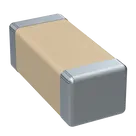
±5% 10uF 16V Ceramic Capacitor X7R 1206 (3216 Metric) #CommonPartsLibrary #Capacitor #C1206X

Properties

10u

F

Polarized Capacitor

KEMET

C1206X106J4RACAUTO

C

Pricing & Availability

Distributor

Qty 1

Controls