Chat
Welcome to Flux
Treat Flux like your intern. Tell it what you'd like to build and it'll get to work. You can also ask it questions, brainstorm ideas, and teach it your preferences. Learn More
Explain project
Write a project description
Find schematic issues
Create a test plan
Simulate a circuit
Prepare for Manufacturing
Component Selection Workflow
New Subsystem Wizard
Ready.
Q1
R1
Q2
J1
Q1_B
Pad_2
C2
Capacitance
100u F
R10 P2 - Q1 E
Q2_B
Pad_3
VCC
Pad_3
LED4
U1
R4
LED2
R7
R3
LED3
VCC
C1
Capacitance
100u F
R10 P2 - Q1 E
Pad_2
LED1
R10 P2 - Q1 E
VCC
J2
Q1_B
R10
Resistance
51 Ω
R2
Resistance
51 Ω
R9
Resistance
51 Ω
R8
Resistance
51 Ω
R5
Resistance
1k Ω
R6
Resistance
1k Ω
R11
Resistance
10 Ω
Reviews

- Wirelessly connects nets on schematic. Used to organize schematics and separate functional blocks. To wirelessly connect net portals, give them same designator. #portaljharwinbarrozo43.0M
- Wirelessly connects power nets on schematic. Identical to the net portal, but with a power symbol. Used to organize schematics and separate functional blocks. To wirelessly connect power net portals, give them the same designator. #portal #powerjharwinbarrozo11.4M
- A generic fixed resistor for rapid developing circuit topology. Save precious design time by seamlessly add more information to this part (value, footprint, etc.) as it becomes available. Standard resistor values: 1.0Ω 10Ω 100Ω 1.0kΩ 10kΩ 100kΩ 1.0MΩ 1.1Ω 11Ω 110Ω 1.1kΩ 11kΩ 110kΩ 1.1MΩ 1.2Ω 12Ω 120Ω 1.2kΩ 12kΩ 120kΩ 1.2MΩ 1.3Ω 13Ω 130Ω 1.3kΩ 13kΩ 130kΩ 1.3MΩ 1.5Ω 15Ω 150Ω 1.5kΩ 15kΩ 150kΩ 1.5MΩ 1.6Ω 16Ω 160Ω 1.6kΩ 16kΩ 160kΩ 1.6MΩ 1.8Ω 18Ω 180Ω 1.8KΩ 18kΩ 180kΩ 1.8MΩ 2.0Ω 20Ω 200Ω 2.0kΩ 20kΩ 200kΩ 2.0MΩ 2.2Ω 22Ω 220Ω 2.2kΩ 22kΩ 220kΩ 2.2MΩ 2.4Ω 24Ω 240Ω 2.4kΩ 24kΩ 240kΩ 2.4MΩ 2.7Ω 27Ω 270Ω 2.7kΩ 27kΩ 270kΩ 2.7MΩ 3.0Ω 30Ω 300Ω 3.0KΩ 30KΩ 300KΩ 3.0MΩ 3.3Ω 33Ω 330Ω 3.3kΩ 33kΩ 330kΩ 3.3MΩ 3.6Ω 36Ω 360Ω 3.6kΩ 36kΩ 360kΩ 3.6MΩ 3.9Ω 39Ω 390Ω 3.9kΩ 39kΩ 390kΩ 3.9MΩ 4.3Ω 43Ω 430Ω 4.3kΩ 43KΩ 430KΩ 4.3MΩ 4.7Ω 47Ω 470Ω 4.7kΩ 47kΩ 470kΩ 4.7MΩ 5.1Ω 51Ω 510Ω 5.1kΩ 51kΩ 510kΩ 5.1MΩ 5.6Ω 56Ω 560Ω 5.6kΩ 56kΩ 560kΩ 5.6MΩ 6.2Ω 62Ω 620Ω 6.2kΩ 62KΩ 620KΩ 6.2MΩ 6.8Ω 68Ω 680Ω 6.8kΩ 68kΩ 680kΩ 6.8MΩ 7.5Ω 75Ω 750Ω 7.5kΩ 75kΩ 750kΩ 7.5MΩ 8.2Ω 82Ω 820Ω 8.2kΩ 82kΩ 820kΩ 8.2MΩ 9.1Ω 91Ω 910Ω 9.1kΩ 91kΩ 910kΩ 9.1MΩ #generics #CommonPartsLibraryjharwinbarrozo1.5M
- A generic fixed capacitor ideal for rapid circuit topology development. You can choose between polarized and non-polarized types, its symbol and the footprint will automatically adapt based on your selection. Supported options include standard SMD sizes for ceramic capacitors (e.g., 0402, 0603, 0805), SMD sizes for aluminum electrolytic capacitors, and through-hole footprints for polarized capacitors. Save precious design time by seamlessly add more information to this part (value, footprint, etc.) as it becomes available. Standard capacitor values: 1.0pF 10pF 100pF 1000pF 0.01uF 0.1uF 1.0uF 10uF 100uF 1000uF 10,000uF 1.1pF 11pF 110pF 1100pF 1.2pF 12pF 120pF 1200pF 1.3pF 13pF 130pF 1300pF 1.5pF 15pF 150pF 1500pF 0.015uF 0.15uF 1.5uF 15uF 150uF 1500uF 1.6pF 16pF 160pF 1600pF 1.8pF 18pF 180pF 1800pF 2.0pF 20pF 200pF 2000pF 2.2pF 22pF 20pF 2200pF 0.022uF 0.22uF 2.2uF 22uF 220uF 2200uF 2.4pF 24pF 240pF 2400pF 2.7pF 27pF 270pF 2700pF 3.0pF 30pF 300pF 3000pF 3.3pF 33pF 330pF 3300pF 0.033uF 0.33uF 3.3uF 33uF 330uF 3300uF 3.6pF 36pF 360pF 3600pF 3.9pF 39pF 390pF 3900pF 4.3pF 43pF 430pF 4300pF 4.7pF 47pF 470pF 4700pF 0.047uF 0.47uF 4.7uF 47uF 470uF 4700uF 5.1pF 51pF 510pF 5100pF 5.6pF 56pF 560pF 5600pF 6.2pF 62pF 620pF 6200pF 6.8pF 68pF 680pF 6800pF 0.068uF 0.68uF 6.8uF 68uF 680uF 6800uF 7.5pF 75pF 750pF 7500pF 8.2pF 82pF 820pF 8200pF 9.1pF 91pF 910pF 9100pF #generics #CommonPartsLibraryjharwinbarrozo1.5M
- A generic fixed inductor for rapid developing circuit topology. *You can now change the footprint and 3D model at the top level anytime you want. This is the power of #genericsjharwinbarrozo15.5k
- An electrical connector acting as reusable interface to a conductor and creating a point where external circuits can be connected.Terminal
- 47 kOhms ±5% 0.125W, 1/8W Chip Resistor 0805 (2012 Metric) Automotive AEC-Q200 Thick Film #forLedBlinkjharwinbarrozo1.2M
- 10uF Capacitor Aluminum Polymer 20% 16V SMD 5x5.3mm #forLedBlink #commonpartslibrary #capacitor #aluminumpolymer #radialcanjharwinbarrozo1.2M
- Yellow 595nm LED Indication - Discrete 1.7V 1206 (3216 Metric) #forLedBlinkjharwinbarrozo1.1M


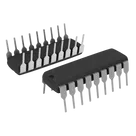
PIC PIC® 16F Microcontroller IC 8-Bit 20MHz 3.5KB (2K x 14) FLASH 18-PDIP #commonpartslibrary
#integratedcircuit
#microcontroller
#pic16f
Pricing & Availability
Distributor | Qty 1 |
|---|---|
Arrow | $13.61–$16.07 |
Digi-Key | $17.12–$20.89 |
LCSC | $3.84–$7.94 |
Mouser | $17.22 |
Verical | $13.51–$17.53 |
Assets
kicad_mod
DIP254P762X533-18.kicad_mod
FP_DIP254P762X533-18FootprintDIP-18_W7.62mm.step
3D_DIP-18_W7.62mm3D Model
PIC16F628A-I/P
PIC16F628A-I/P Symbol.svgDefault
image-removebg-preview.png
image-removebg-previewThumbnailControls
Welcome 👋
Flux helps you build PCBs faster with an AI teammate!
Create your account to collaborate, stay updated, fork your own version, and get instant answers from our AI agent.
feeeer
copilot
- Microcontrolador PIC16F628A-I/P (U2): Este es el cerebro del circuito.
- Transistores 2N3904 (Q1, Q2, Q3, Q4): Se utilizan comúnmente como interruptores o amplificadores.
- Resistencias: Hay varias resistencias en el circuito.
- Condensadores: Dos condensadores, C1 y C2.
- LEDs: Varios LEDs, incluyendo LED1, LED2, LED3, LED4, LED5, LED6.
- Puerta Lógica L293D (U1): Este parece ser un controlador de motores.
- Puertos J (J1, J2, J3, J4): Conectores generales.
Conexiones Específicas-
Alimentación:
- Conectar U2:5 a GND.
- Conectar U2:14 a VCC.
-
Oscilador:
- Conectar un cristal o resonador entre U2:15 (CLKOUT) y U2:16 (CLKIN) y agregar dos capacitores de desacoplamiento (típicamente 22pF) a GND.
Transistores (Q1, Q2, Q3, Q4)- Q1:
- Conectar Q1:1 (C) a VCC.
- Conectar Q1:3 (E) a un nodo Net 12 para activar LED3.
- Q2:
- Conectar Q2:1 (C) a VCC.
- Conectar Q2:3 (E) a un nodo Net 10 para activar LED2.
- Q3:
- Conectar Q3:1 (C) a VCC.
- Conectar Q3:3 (E) a Net 20 para activar J3.
- Q4:
- Conectar Q4:1 (C) a VCC.
- Conectar Q4:3 (E) a Net 18 para activar J4.
Uniendo Explícitamente las Conexionesfeeeer
copilot