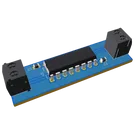
Project Overview and Optimization

3:39

Responding in consult mode.

Analyzing user request intents.

Explaining component specs.

Describing L293D functionality.

Verifying design and components.

Accessing knowledge base.

Reviewing the bill of materials.

Looking for "Pin function VCC1 logic supply description" in en.CD00000059.pdf

Looking for "Pin function VCC2 supply description" in en.CD00000059.pdf

Looking for "Pin function EN1,2 and EN3,4 description" in en.CD00000059.pdf

Looking for "Pin function 1A 2A 3A 4A input description" in en.CD00000059.pdf

Looking for "Pin function 1Y 2Y 3Y 4Y output description" in en.CD00000059.pdf

Looking for "Internal clamp diodes or flyback diodes presence description" in en.CD00000059.pdf

Looking for "Truth table for inputs A, enable EN, outputs Y for each channel" in en.CD00000059.pdf

Looking for "Recommended decoupling capacitors or supply bypass guidance" in en.CD00000059.pdf

Looking for "Pin function VCC1 logic supply description" in en.CD00000059.pdf

Looking for "Pin function VCC2 supply description" in en.CD00000059.pdf

Looking for "Pin function EN1,2 and EN3,4 description" in en.CD00000059.pdf

Looking for "Pin function 1A 2A 3A 4A input description" in en.CD00000059.pdf

Looking for "Pin function 1Y 2Y 3Y 4Y output description" in en.CD00000059.pdf

Looking for "Internal clamp diodes or flyback diodes presence description" in en.CD00000059.pdf

Looking for "Truth table for inputs A, enable EN, outputs Y for each channel" in en.CD00000059.pdf

Looking for "Recommended decoupling capacitors or supply bypass guidance" in en.CD00000059.pdf

Searching web for: "L293D datasheet pin functions VCC1 VCC2 EN1,2 EN3,4 truth table diode clamp"

Found 1 results.

Querying pin functions and design.

Here’s a concise technical walkthrough of your “L293D Motor driver Module” project based on the current schematic/netlist.
What it is and purpose
  • A dual DC motor driver module built around U1, intended to independently drive two brushed DC motors with separate logic and motor supplies. Typical uses: small robots, rovers, pan/tilt mechanisms, and general two-motor control.
Core components and roles
  • Driver IC: U1 (L293D) – Dual H-bridge driver. Two channels (1/2) form one H-bridge; channels (3/4) form the second.
  • Motor outputs:
    • Motor A: M1 (2-pin terminal block) intended to connect to U1 outputs 1Y/2Y.
    • Motor B: M2 (2-pin terminal block) connected to U1 outputs 3Y/4Y.
  • Control inputs:
  • Power:
    • Logic supply: VCC1 -> U1:VCC1 via C1 decoupling.
    • Motor supply: VCC2 -> U1:VCC2 via C2 decoupling.
    • Grounds: multiple ground terminals (GND1, GND2, GND3, GND4, GND5, GND6) with U1:GND tied to the GND net.
  • Reference motor symbol: M3 (generic DC motor) appears illustrative.
How it works (signal interaction)
  • Per the L293D datasheet (TI/ST):
    • VCC1 is the logic/inputs supply; VCC2 is the motor/output supply. Drivers are enabled in pairs (EN1,2 for channels 1/2; EN3,4 for 3/4).
    • Truth table (per channel): Enable=H, A=H -> Y=H; Enable=H, A=L -> Y=L; Enable=L -> Y=Z (high-Z). Using two channels as an H-bridge, one side driven high and the other low sets motor direction. Swapping the inputs reverses direction.
Current design state and connectivity observations
  • Power nets:
    • C1 and C2 are correctly tied as decouplers: C1 -> U1:VCC1; C2 -> U1:VCC2; both return to GND.
    • However, external terminals VCC1 and VCC2 do not appear on the same nets as U1:VCC1 and U1:VCC2 in the current netlist, meaning external power may not actually feed the IC pins yet.
  • Inputs/enable:
  • Motor outputs:
    • Motor B is correctly split: M2 P1 -> U1:3Y and P2 -> U1:4Y (separate nets).
    • Motor A appears shorted: Net "Net (M1 - P2)" includes M1 P1 and P2 plus U1:1Y and U1:2Y on the same net. That ties both H-bridge outputs together and both motor terminals together, which prevents differential drive and risks the driver. This needs to be split into two distinct nets: one for 1Y->M1:A and another for 2Y->M1:B.
Design choices, trade-offs, and optimizations
  • Two-supply architecture: Separate logic (VCC1) and motor (VCC2) rails is a good practice to isolate noisy load currents from logic.
  • Internal clamp diodes: L293D includes output clamp (flyback) diodes for inductive loads. This simplifies the BOM, though diode current/thermal limits still apply.
  • Decoupling:
    • Place a small-value decoupler at each supply pin and a nearby bulk cap. Knowledge-base guidance: position the smallest value directly at the IC power pin and the larger capacitor nearby (e.g., 0.1uF at the pin and 10uF adjacent). Ensure capacitors operate at no more than 60% of their maximum rated voltage.
  • Technology trade-off: L293D uses a bipolar transistor output stage. Versus modern MOSFET H-bridges, this typically incurs higher conduction loss and more heat for the same load. It’s robust and simple, but less efficient.
Potential challenges and performance considerations
  • Incorrect net for Motor A: The shorted outputs/net must be corrected before layout or testing.
  • Missing external connectivity: Logic/motor supply terminals and control/enable terminals need to be tied to the same nets as the IC pins and portals.
  • Supply integrity:
    • Motor current creates large transients. Without adequate bulk capacitance and tight decoupling at VCC2, you can see resets/noise on logic. Keep loop areas small; return high di/dt currents directly to the GND node near U1.
  • Thermal headroom: H-bridge loss manifests as heat in U1; ensure operating current and ambient allow safe junction temperature, and provide copper for heat spreading.
  • Inductive kickback: While the L293D includes internal diodes, validate they meet worst-case energy for your motors; consider external suppression (TVS on VCC2, RC snubbers, or ferrite) if needed.
  • Grounding: Use a solid ground reference and avoid sharing high-current motor returns with sensitive logic return paths to reduce ground bounce.
Real-world applications
  • Differential drive robots (two wheels), conveyor belts, small positioners, and any system needing two DC motors with direction control and optional speed control (via PWM on INx or ENx).
Areas for improvement and future enhancements
  • Electrical fixes:
    • Split M1 into two nets (1Y->M1:P1, 2Y->M1:P2).
    • Tie VCC1 to U1:VCC1 net and VCC2 to U1:VCC2 net. Connect IN1IN4 and EN12/EN34 terminals to their respective portal nets.
  • Power robustness:
    • Add clearly specified bulk capacitance on VCC2 near U1 and the motor terminals; follow the placement guidance above and capacitor derating rule (operate at no more than 60% of rated voltage).
    • Consider a TVS diode on the VCC2 input and reverse-polarity protection on the motor supply terminal.
  • Control interface:
    • Document intended logic level for VCC1 and add labels/pinout notes on IN1IN4, EN12, EN34.
  • Layout guidance (next stage):
    • Keep C1 (logic) and C2 (motor) as close to U1 pins as possible (0.1uF at the pin, bulk adjacent); route high-current paths short and wide; maintain a continuous ground reference; separate motor return from logic return where possible before they meet at a solid plane.
  • Scalability and alternatives:
    • For higher efficiency or current, consider modern MOSFET H-bridges such as TB6612FNG or DRV8833. They generally run cooler and waste less voltage at the outputs.
Would you like me to fix the Motor A net, connect the terminals to the correct nets, and add finalized decoupling in this project? If yes, tell me your logic voltage for VCC1 and the motor supply range for VCC2, and I can proceed.
Check motor A nets
Verify power connectivity
Pick better driver option
Decoupling recommendation
63 days

para que sirve esto

@copilot para que sirve esto
1y
Este proyecto se centra en un módulo controlador de motores dual basado en el circuito integrado $L293D$. El L293D es un driver para motores de corriente continua que permite controlar la dirección y velocidad de los motores. Es útil para proyectos que incluyen robótica y automatización.
Aquí están algunas de sus aplicaciones principales:
  • Control de motores DC: Puede manejar dos motores de corriente continua de forma independiente, permitiendo el control de avance y retroceso.
  • Proyectos de robótica: Ideal para robots pequeños que requieren control de movimiento.
  • Automatización: Usado en sistemas automatizados que necesitan mover partes mecánicas.
  • Prototipos de vehículos: Útil para controlar motores en prototipos de coches o robots móviles.
  • Proyectos de educación e investigación: A menudo se utiliza en entornos educativos para enseñar control de motores y conceptos relacionados.
El módulo está diseñado para ser integrado en esquemas y PCB de proyectos electrónicos, siendo fácil de conectar con otros componentes y sistemas de control, como microcontroladores.
1y
1
IN4_1
IN4_1
VCC1
M3
IN2_1
GND1
IN1_1
IN2_1
EN12
VCC2
GND2
GND6
IN3_1
EN34
GND4
U1
EN12_1
IN3
EN34_1
IN1_1
IN3_1
GND5
EN34_1
IN4
C2
Capacitance
0.1uF
C1
Capacitance
0.1uF
IN1
GND3
IN2
EN12_1


  • Ground
    A common return path for electric current. Commonly known as ground.
  • Net Portal
    Wirelessly connects nets on schematic. Used to organize schematics and separate functional blocks. To wirelessly connect net portals, give them same designator. #portal
  • Power Net Portal
    Wirelessly connects power nets on schematic. Identical to the net portal, but with a power symbol. Used to organize schematics and separate functional blocks. To wirelessly connect power net portals, give them the same designator. #portal #power
  • Generic Resistor
    A generic fixed resistor ideal for rapid circuit topology development. Its footprint automatically adapts based on the selected package case code—supporting 0402, 0603, 0805, 1203, and many other standard SMD packages, as well as axial horizontal and vertical configurations. Save precious design time by seamlessly add more information to this part (value, footprint, etc.) as it becomes available. Standard resistor values: 1.0 ohm, 10 ohm, 100 ohm, 1.0k ohm, 10k ohm, 100k ohm, 1.0M ohm 1.1 ohm, 11 ohm, 110 ohm, 1.1k ohm, 11k ohm, 110k ohm, 1.1M ohm 1.2 ohm, 12 ohm, 120 ohm, 1.2k ohm, 12k ohm, 120k ohm, 1.2M ohm 1.3 ohm, 13 ohm, 130 ohm, 1.3k ohm, 13k ohm, 130k ohm, 1.3M ohm 1.5 ohm, 15 ohm, 150 ohm, 1.5k ohm, 15k ohm, 150k ohm, 1.5M ohm 1.6 ohm, 16 ohm, 160 ohm, 1.6k ohm, 16k ohm, 160k ohm, 1.6M ohm 1.8 ohm, 18 ohm, 180 ohm, 1.8K ohm, 18k ohm, 180k ohm, 1.8M ohm 2.0 ohm, 20 ohm, 200 ohm, 2.0k ohm, 20k ohm, 200k ohm, 2.0M ohm 2.2 ohm, 22 ohm, 220 ohm, 2.2k ohm, 22k ohm, 220k ohm, 2.2M ohm 2.4 ohm, 24 ohm, 240 ohm, 2.4k ohm, 24k ohm, 240k ohm, 2.4M ohm 2.7 ohm, 27 ohm, 270 ohm, 2.7k ohm, 27k ohm, 270k ohm, 2.7M ohm 3.0 ohm, 30 ohm, 300 ohm, 3.0K ohm, 30K ohm, 300K ohm, 3.0M ohm 3.3 ohm, 33 ohm, 330 ohm, 3.3k ohm, 33k ohm, 330k ohm, 3.3M ohm 3.6 ohm, 36 ohm, 360 ohm, 3.6k ohm, 36k ohm, 360k ohm, 3.6M ohm 3.9 ohm, 39 ohm, 390 ohm, 3.9k ohm, 39k ohm, 390k ohm, 3.9M ohm 4.3 ohm, 43 ohm, 430 ohm, 4.3k ohm, 43K ohm, 430K ohm, 4.3M ohm 4.7 ohm, 47 ohm, 470 ohm, 4.7k ohm, 47k ohm, 470k ohm, 4.7M ohm 5.1 ohm, 51 ohm, 510 ohm, 5.1k ohm, 51k ohm, 510k ohm, 5.1M ohm 5.6 ohm, 56 ohm, 560 ohm, 5.6k ohm, 56k ohm, 560k ohm, 5.6M ohm 6.2 ohm, 62 ohm, 620 ohm, 6.2k ohm, 62K ohm, 620K ohm, 6.2M ohm 6.8 ohm, 68 ohm, 680 ohm, 6.8k ohm, 68k ohm, 680k ohm, 6.8M ohm 7.5 ohm, 75 ohm, 750 ohm, 7.5k ohm, 75k ohm, 750k ohm, 7.5M ohm 8.2 ohm, 82 ohm, 820 ohm, 8.2k ohm, 82k ohm, 820k ohm, 8.2M ohm 9.1 ohm, 91 ohm, 910 ohm, 9.1k ohm, 91k ohm, 910k ohm, 9.1M ohm #generics #CommonPartsLibrary
  • Generic Capacitor
    A generic fixed capacitor ideal for rapid circuit topology development. You can choose between polarized and non-polarized types, its symbol and the footprint will automatically adapt based on your selection. Supported options include standard SMD sizes for ceramic capacitors (e.g., 0402, 0603, 0805), SMD sizes for aluminum electrolytic capacitors, and through-hole footprints for polarized capacitors. Save precious design time by seamlessly add more information to this part (value, footprint, etc.) as it becomes available. Standard capacitor values: 1.0pF, 10pF, 100pF, 1000pF, 0.01uF, 0.1uF, 1.0uF, 10uF, 100uF, 1000uF, 10000uF 1.1pF, 11pF, 110pF, 1100pF 1.2pF, 12pF, 120pF, 1200pF 1.3pF, 13pF, 130pF, 1300pF 1.5pF, 15pF, 150pF, 1500pF, 0.015uF, 0.15uF, 1.5uF, 15uF, 150uF, 1500uF 1.6pF, 16pF, 160pF, 1600pF 1.8pF, 18pF, 180pF, 1800pF 2.0pF, 20pF, 200pF, 2000pF 2.2pF, 22pF, 220pF, 2200pF, 0.022uF, 0.22uF, 2.2uF, 22uF, 220uF, 2200uF 2.4pF, 24pF, 240pF, 2400pF 2.7pF, 27pF, 270pF, 2700pF 3.0pF, 30pF, 300pF, 3000pF 3.3pF, 33pF, 330pF, 3300pF, 0.033uF, 0.33uF, 3.3uF, 33uF, 330uF, 3300uF 3.6pF, 36pF, 360pF, 3600pF 3.9pF, 39pF, 390pF, 3900pF 4.3pF, 43pF, 430pF, 4300pF 4.7pF, 47pF, 470pF, 4700pF, 0.047uF, 0.47uF, 4.7uF, 47uF, 470uF, 4700uF 5.1pF, 51pF, 510pF, 5100pF 5.6pF, 56pF, 560pF, 5600pF 6.2pF, 62pF, 620pF, 6200pF 6.8pF, 68pF, 680pF, 6800pF, 0.068uF, 0.68uF, 6.8uF, 68uF, 680uF, 6800uF 7.5pF, 75pF, 750pF, 7500pF 8.2pF, 82pF, 820pF, 8200pF 9.1pF, 91pF, 910pF, 9100pF #generics #CommonPartsLibrary
  • Generic Inductor
    A generic fixed inductor suitable for rapid circuit topology development. The footprint automatically adapts based on the selected package, supporting standard SMD sizes (e.g., 0402, 0603, 0805) as well as well-known inductor packages such as SDR1806, PA4320, SRN6028, and SRR1260. Standard inductor values: 1.0 nH, 10 nH, 100 nH, 1.0 µH, 10 µH, 100 µH, 1.0 mH 1.2 nH, 12 nH, 120 nH, 1.2 µH, 12 µH, 120 µH, 1.2 mH 1.5 nH, 15 nH, 150 nH, 1.5 µH, 15 µH, 150 µH, 1.5 mH 1.8 nH, 18 nH, 180 nH, 1.8 µH, 18 µH, 180 µH, 1.8 mH 2.2 nH, 22 nH, 220 nH, 2.2 µH, 22 µH, 220 µH, 2.2 mH 2.7 nH, 27 nH, 270 nH, 2.7 µH, 27 µH, 270 µH, 2.7 mH 3.3 nH, 33 nH, 330 nH, 3.3 µH, 33 µH, 330 µH, 3.3 mH 3.9 nH, 39 nH, 390 nH, 3.9 µH, 39 µH, 390 µH, 3.9 mH 4.7 nH, 47 nH, 470 nH, 4.7 µH, 47 µH, 470 µH, 4.7 mH 5.6 nH, 56 nH, 560 nH, 5.6 µH, 56 µH, 560 µH, 5.6 mH 6.8 nH, 68 nH, 680 nH, 6.8 µH, 68 µH, 680 µH, 6.8 mH 8.2 nH, 82 nH, 820 nH, 8.2 µH, 82 µH, 820 µH, 8.2 mH #generics #CommonPartsLibrary
  • Terminal
    Terminal
    An electrical connector acting as reusable interface to a conductor and creating a point where external circuits can be connected.
  • RMCF0805JT47K0
    47 kOhms ±5% 0.125W, 1/8W Chip Resistor 0805 (2012 Metric) Automotive AEC-Q200 Thick Film #forLedBlink
  • 875105359001
    10uF Capacitor Aluminum Polymer 20% 16V SMD 5x5.3mm #forLedBlink #commonpartslibrary #capacitor #aluminumpolymer #radialcan
  • CTL1206FYW1T
    Yellow 595nm LED Indication - Discrete 1.7V 1206 (3216 Metric) #forLedBlink

L293D Motor driver Module

L293D Motor driver Module thumbnail
Dual motor driver based on L293D IC #Sublayout #Module #template #project-template #motor #L293D #driver #motordriver

Pricing & Availability

Distributor

Qty 1

Arrow

$7.21–$7.33

Digi-Key

$7.85

LCSC

$0.28–$4.12

Mouser

$7.41

Verical

$5.93–$7.31

Controls