Part Information Review and Cross-Check
Thought for 6 sec
I’ll inspect the part metadata, look for an official datasheet if needed, update the Datasheet property when missing, then compare symbol/footprint/pins against the datasheet and report mismatches.
Worked for 1 min 39 sec
The project already has a Datasheet URL set, so I’m using that source for the cross-check and preparing a concise mismatch report.
Worked for 41 sec
Completed the part review and created the detailed report:
TAA3020IRTER Part Review.Key findings:
- Datasheet URL was already set, so I did not replace it.
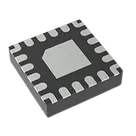
- Datasheet says RTE WQFN-20, 3 × 3 mm, 0.5 mm pitch, with one exposed VSS thermal pad.
- Current part has 25 terminals/pads and package property TO, which mismatches the datasheet.
- Extra
VSS_5–VSS_9pins/pads appear to incorrectly model pins 21–25; they should likely be a single exposed thermal pad tied to VSS. - Pin names 1–20 otherwise match the datasheet, but pin types/descriptions are still unspecified.
Fix part issues
Correct footprint only
Update pin metadata
Run validation
Check sourcing data
Refine this doc
Ask about this doc
TAA3020IRTER Part Review
Project metadata reviewed
- MPN: TAA3020IRTER
- Manufacturer: Texas Instruments
- Project description: Audio A/D Converter ICs Stereo-channel 768kHz Burr-Brown audio analog-to-digital converter (ADC) with 104dB SNR
- Project pin/pad count: 25 terminals/pads present in the Flux part project
- Project package property:
TO - Datasheet URL property: already set to a stored PDF URL, so no web-search update was required by the user instruction.
Datasheet source used
Texas Instruments TAA3020 datasheet Rev. A, document SBASB79A, November 2024 revised February 2026, extracted from the existing project Datasheet URL.
Key datasheet specs
- Device: TAA3020 stereo audio ADC
- Function: high-performance audio ADC supporting simultaneous sampling of up to two analog channels or four digital PDM microphone channels
- Audio formats: TDM, I2S, left-justified
- Control interface: I2C
- Maximum sample rate: 768 kHz
- Typical SNR / dynamic range: 104 dB typical at AVDD = 3.3 V, 0 dB gain, differential input
- Supply operation: single-supply 1.8 V or 3.3 V
- AVDD operating range: 1.7–1.9 V for 1.8 V operation, or 3.0–3.6 V for 3.3 V operation
- IOVDD operating range: 1.65–1.95 V for 1.8 V operation, or 3.0–3.6 V for 3.3 V operation
- Temperature range: –40°C to +105°C ambient
- Package: RTE, 20-pin WQFN with exposed thermal pad, 3.0 mm × 3.0 mm, 0.5 mm pitch
- Orderable: TAA3020IRTER, active production, large tape-and-reel, package quantity 3000, part marking AD3120
Datasheet pinout
Table
| Pin | Name | Function summary |
|---|---|---|
| 1 | IN1P | Analog input 1P |
| 2 | IN1M | Analog input 1M |
| 3 | IN2P_GPI1 | Analog input 2P / digital input |
| 4 | IN2M_GPO1 | Analog input 2M / digital output |
| 5 | VSS | Ground |
| 6 | SDOUT | Audio serial data output |
| 7 | BCLK | Audio serial bit clock digital I/O |
| 8 | FSYNC | Audio serial frame sync digital I/O |
| 9 | IOVDD | Digital I/O supply |
| 10 | VSS | Ground |
| 11 | GPIO1 | General-purpose digital I/O |
| 12 | SDA | I2C data digital I/O |
| 13 | SCL | I2C clock digital input |
| 14 | DREG | Digital regulator output, 1.5 V nominal; requires 10 µF + 0.1 µF to VSS |
| 15 | VSS | Ground |
| 16 | AVDD | Analog power supply |
| 17 | AREG | Analog regulator output / external analog power; requires 10 µF + 0.1 µF to analog ground |
| 18 | VREF | Analog reference filter output; requires 1 µF to analog ground |
| 19 | MICBIAS_GPI2 | MICBIAS output / digital input; 1 µF to analog ground if used as MICBIAS |
| 20 | VSS | Ground |
| Thermal pad | VSS | Exposed pad; short directly to board ground plane |
Symbol check
The project symbol includes terminals named:
- IN1P pin 1
- IN1M pin 2
- IN2P_GPI1 pin 3
- IN2M_GPO1 pin 4
- VSS_1 pin 5
- SDOUT pin 6
- BCLK pin 7
- FSYNC pin 8
- IOVDD pin 9
- VSS_2 pin 10
- GPIO1 pin 11
- SDA pin 12
- SCL pin 13
- DREG pin 14
- VSS_3 pin 15
- AVDD pin 16
- AREG pin 17
- VREF pin 18
- MICBIAS_GPI2 pin 19
- VSS_4 pin 20
- VSS_5 pin 21
- VSS_6 pin 22
- VSS_7 pin 23
- VSS_8 pin 24
- VSS_9 pin 25
Symbol mismatches / issues
- Pin count mismatch: Datasheet package is 20 pins plus one exposed thermal pad. The Flux part has 25 terminals/pads.
- Extra schematic pins: VSS_5 through VSS_9 are assigned pin numbers 21–25, but the datasheet has no perimeter pins 21–25. Only the exposed thermal pad remains after pin 20.
- Thermal pad representation likely incorrect: If VSS_5–VSS_9 were intended to model the exposed pad, they should not be represented as five separate datasheet pins numbered 21–25 unless the footprint intentionally splits the thermal pad into multiple paste/land sub-pads while mapping them to the same exposed-pad function. The datasheet identifies one thermal pad tied to VSS.
- Pin type metadata is incomplete: All terminals currently show
Pin Type: Unspecified. Datasheet-derived pin types should be assigned, especially power, ground, analog input/output, digital input/output, and regulator/reference outputs. - Ground naming could be improved: Pins 5, 10, 15, and 20 match datasheet VSS pins, but the symbol uses VSS_1–VSS_4. That can be acceptable for unique terminal names, but the displayed pin descriptions should clearly state they are VSS ground pins.
Footprint check
- Project layout shows pad nodes for all 25 symbol terminals, including VSS_5 through VSS_9.
- Datasheet expects a 20-pin RTE WQFN, 3.0 mm × 3.0 mm, 0.5 mm pitch, with one exposed thermal pad.
Footprint mismatches / issues
- Pad count mismatch: The footprint appears to have 25 pad nodes, but the datasheet package is 20 pins plus one exposed thermal pad.
- Package property mismatch: Project property
Package or Case Codeis set toTO, but the datasheet package is RTE WQFN-20.TOis incorrect. - Thermal pad modeling needs correction or clarification: A WQFN footprint may split the exposed pad solder paste opening, but the electrical/land pad should still correspond to the exposed thermal pad tied to VSS, not separate package pins 21–25.
Recommended fixes
- Update
Package or Case CodefromTOtoRTE WQFN-20or equivalent package naming used by Flux. - Replace or correct the footprint to Texas Instruments RTE 20-pin WQFN, 3.0 mm × 3.0 mm, 0.5 mm pitch, with one exposed thermal pad tied to VSS.
- Remove extra schematic terminals VSS_5–VSS_9 as package pins, or remap them explicitly as thermal-pad sub-pads only if Flux footprint modeling requires split pad geometry.
- Populate pin descriptions and pin types from the datasheet for all terminals.
- Prefer one exposed pad terminal named EP, THERMAL_PAD, or VSS_EP with the pin function/description indicating it is the VSS thermal pad.
Project metadata reviewed
Datasheet source used
Key datasheet specs
Datasheet pinout
Symbol check
Symbol mismatches / issues
Footprint check
Footprint mismatches / issues
Recommended fixes