Pin Function Grouping

Yes — grouped by shared function, with each pin listed only once.
STUSB4500 pin groups by function

Table


Functional GroupPins
USB Type-C CC / dead-batteryCC1DB pin 1, CC1 pin 2, CC2 pin 4, CC2DB pin 5
I2C / control interfaceSCL pin 7, SDA pin 8, ALERT pin 19
Address selectionADDR0 pin 12, ADDR1 pin 13
VBUS / discharge / sink-path controlDISCH pin 9, VBUS_EN_SNK pin 16, VBUS_VS_DISCH pin 18
Status / orientation / GPIO outputsATTACH pin 11, POWER_OK3 pin 14, GPIO pin 15, A_B_SIDE pin 17, POWER_OK2 pin 20
ResetRESET pin 6
Power inputsVSYS pin 22, VDD pin 24
Internal regulator outputsVREG_1V2 pin 21, VREG_2V7 pin 23
GroundGND pin 10, EP pin 25
No connectNC pin 3
If you want a more compact grouping for symbol organization
I’d recommend these top-level buckets:

Table


Symbol GroupPins
PowerVSYS, VDD, VREG_1V2, VREG_2V7, GND, EP
USB-C / CCCC1DB, CC1, CC2, CC2DB
I2C / ConfigSCL, SDA, ALERT, ADDR0, ADDR1, RESET
Power Path / StatusDISCH, VBUS_EN_SNK, VBUS_VS_DISCH, ATTACH, POWER_OK3, POWER_OK2, A_B_SIDE, GPIO
NCNC
If you want, I can next turn this into a recommended Flux pin-group / section mapping for the terminal properties.
Group pins by function
Use common function names
Exclude duplicate pins

To get started, talk to Flux or create a New Document.

Documents

    Documents are markdown text files which describe project goals, capture details, or even simulation outputs.

    Assets

    STUSB4500QTR

    STUSB4500QTR

    STUSB4500QTR Symbol.svgDefault
    image-removebg-preview.png

    image-removebg-preview.png

    image-removebg-previewThumbnail
    stp

    STUSB4500QTR.stp

    3D_STUSB4500QTR3D Model
    kicad_mod

    QFN50P400X400X100-25N-D.kicad_mod

    QFN50P400X400X100-25N-DFootprint

    STUSB4500QTR

    STUSB4500QTR thumbnail
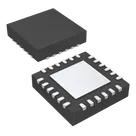
    USB Controller USB 2.0 I2C Interface 24-QFN (4x4) The STUSB4500QTR is a standalone USB Type-C Power Delivery (PD) controller from STMicroelectronics designed for power sink applications (devices that receive power, like chargers, IoT devices, or battery-powered systems).
    It enables automatic negotiation of USB Power Delivery contracts (up to 100 W: 20 V / 5 A) without requiring an external microcontroller, thanks to its built-in auto-run algorithm. Power profiles (PDOs) can be pre-configured and stored in internal non-volatile memory, simplifying system design and reducing component count.
    The device is optimized for modern USB-C designs, offering robust protection, high-voltage tolerance, and support for operation even from a dead battery state. Key Features Power Delivery & Control Standalone USB Type-C™ and USB PD sink controller Supports up to 100 W (20 V, 5 A) power negotiation Auto-run mode (no MCU required) for PD negotiation Up to 3 configurable sink PDO profiles stored in NVM Power Management Dead battery mode support (can start with no battery power) Dual power supply inputs: VSYS: 3.0 V – 5.5 V VDD: 4.1 V – 22 V Integrated VBUS monitoring and control Integrated Functions Built-in VBUS switch gate drivers (PMOS) Internal/external VBUS discharge paths I²C interface for configuration and monitoring Protection & Reliability Short-to-VBUS protection on CC pins (up to 22 V) High-voltage tolerance: Up to 28 V on VBUS pins ESD protection: 3 kV HBM / 1.5 kV CDM Physical & Environmental Package: QFN-24 (4×4 mm) Operating temperature: –40°C to +105°C Industrial-grade reliability Compliance & Compatibility Certified for: USB Type-C Rev 1.2 USB PD Rev 2.0 Interoperable with USB PD 3.0 #commonpartslibrary #integratedcircuit #usbcontroller

    Properties

    STUSB4500QTR

    STMicroelectronics

    IC

    Integrated Circuit

    parametric-v1

    Pricing & Availability

    Distributor

    Qty 1

    Controls