ESP32 PoE+ W5500 Integration
1:27
Planning for components.
Clarifying power design intent.
Preparing for the plan.
Formulating the plan inquiry.
Using Knowledge Base Tool.
Creating the plan steps.
- PoE PD: Implement 802.3af Class 3, bridge/EMI/TVS, isolated flyback to 5 V with TL431+opto and snubber.
- RJ45/Magnetics: Place MagJack; wire PoE pairs; route Ethernet pairs; add data-line ESD/CM choke.
- Secondary power: Filter 5 V; add buck 5 V→3.3 V; decouple and bead rails for ESP32/W5500.
- Integration: Place ESP32 + W5500; wire SPI/reset/clock/LEDs/straps; add decoupling and test points; mark isolation boundaries; compile BOM; run ERC/DRC.
- Target 3.3 V max current (for sizing the buck)?
- ESP32 as a module (e.g., module form factor) or bare SoC?

1:26
Planning response for user.
Understanding component-linking rules.
Preparing to execute the plan.
Following tool priorities.
Using Knowledge Base Tool.
Navigating tool priorities and component linking.
- PoE PD and isolation: add 802.3af PD controller + bridge/classification, EMI/TVS; design isolated flyback to regulated 5 V/1.5 A with TL431+opto and snubber.
- 3.3 V rail: add a 5 V→3.3 V buck rated ≥0.8 A with inductor and IO caps; per knowledge base guidance, place 100 nF at each VDD and a 10 µF bulk on the rail, and account for ESP32 transient peaks.
- Ethernet: place RJ45 with integrated magnetics; add data-line ESD and CM choke; connect W5500 MDI to magnetics.
- Integration and docs: wire ESP32↔W5500 (SPI/reset/strap/clock), add programming test points, compile the BOM, and run ERC/DRC.
Started implementing a plan
#Goal
- Design and add an IEEE 802.3af isolated PoE PD front-end that produces a regulated 5 V/1.5 A power supply, derive a local 3.3 V/0.8 A rail, and integrate an RJ45 connector with integrated magnetics to power and interface an ESP32 and W5500. Complete the design with a full schematic and BOM.
#Implementation plan
1. PoE PD and Isolation Front-End
1. Select and add an IEEE 802.3af PD controller and associated circuitry including classification and bridge functions.
2. Integrate EMI filtering components and TVS protection at the PoE input.
3. Design and add an isolated flyback converter using a transformer, optocoupler, TL431 feedback loop, snubber network, and secondary rectification to generate a regulated 5 V output at 1.5 A.
2. Secondary Rail (3.3 V) Derivation
1. Add filtering on the 5 V rail with bulk and decoupling capacitors as per design guidelines.
2. Select and integrate a 5 V to 3.3 V buck regulator capable of supplying at least 0.8 A peak current with appropriately sized inductors and input/output capacitors.
3. Place additional decoupling (100 nF per VDD and 10 µF bulk capacitor) for ESP32 and W5500 power stability.
3. Ethernet Interface with Integrated Magnetics
1. Place and configure an RJ45 connector with integrated magnetics.
2. Connect the PoE pairs to the PD front-end and route the data lines.
3. Add ESD protection and common-mode chokes on Ethernet signal lines.
4. MCU and Ethernet Controller Integration
1. Select and add an ESP32 (module form or bare chip based on project requirements) and a W5500 Ethernet controller.
2. Connect the ESP32 and W5500 using SPI and other necessary control signals; include reset, strap, and clock connections.
3. Integrate programming and test points for the ESP32 as per guidelines.
5. Documentation and Verification
1. Assign and verify designators for all components.
2. Compile a complete BOM with selected part numbers and manufacturers.
3. Run schematic ERC and layout DRC checks to ensure compliance with design requirements.
#Success criteria
- Achieve a stable 5 V/1.5 A output from the PoE PD front-end with proper isolation and safety features.
- Derive a stable 3.3 V/0.8 A rail that meets transient requirements for the ESP32 and W5500.
- Integrate a fully functional RJ45 with integrated magnetics ensuring proper PoE harvesting and Ethernet connectivity.
- A complete schematic and BOM that passes design rule checks and is ready for layout and fabrication.
Working...
Show Plan
Reviews

- Wirelessly connects nets on schematic. Used to organize schematics and separate functional blocks. To wirelessly connect net portals, give them same designator. #portaljharwinbarrozo43.0M
- Wirelessly connects power nets on schematic. Identical to the net portal, but with a power symbol. Used to organize schematics and separate functional blocks. To wirelessly connect power net portals, give them the same designator. #portal #powerjharwinbarrozo11.4M
- A generic fixed resistor for rapid developing circuit topology. Save precious design time by seamlessly add more information to this part (value, footprint, etc.) as it becomes available. Standard resistor values: 1.0Ω 10Ω 100Ω 1.0kΩ 10kΩ 100kΩ 1.0MΩ 1.1Ω 11Ω 110Ω 1.1kΩ 11kΩ 110kΩ 1.1MΩ 1.2Ω 12Ω 120Ω 1.2kΩ 12kΩ 120kΩ 1.2MΩ 1.3Ω 13Ω 130Ω 1.3kΩ 13kΩ 130kΩ 1.3MΩ 1.5Ω 15Ω 150Ω 1.5kΩ 15kΩ 150kΩ 1.5MΩ 1.6Ω 16Ω 160Ω 1.6kΩ 16kΩ 160kΩ 1.6MΩ 1.8Ω 18Ω 180Ω 1.8KΩ 18kΩ 180kΩ 1.8MΩ 2.0Ω 20Ω 200Ω 2.0kΩ 20kΩ 200kΩ 2.0MΩ 2.2Ω 22Ω 220Ω 2.2kΩ 22kΩ 220kΩ 2.2MΩ 2.4Ω 24Ω 240Ω 2.4kΩ 24kΩ 240kΩ 2.4MΩ 2.7Ω 27Ω 270Ω 2.7kΩ 27kΩ 270kΩ 2.7MΩ 3.0Ω 30Ω 300Ω 3.0KΩ 30KΩ 300KΩ 3.0MΩ 3.3Ω 33Ω 330Ω 3.3kΩ 33kΩ 330kΩ 3.3MΩ 3.6Ω 36Ω 360Ω 3.6kΩ 36kΩ 360kΩ 3.6MΩ 3.9Ω 39Ω 390Ω 3.9kΩ 39kΩ 390kΩ 3.9MΩ 4.3Ω 43Ω 430Ω 4.3kΩ 43KΩ 430KΩ 4.3MΩ 4.7Ω 47Ω 470Ω 4.7kΩ 47kΩ 470kΩ 4.7MΩ 5.1Ω 51Ω 510Ω 5.1kΩ 51kΩ 510kΩ 5.1MΩ 5.6Ω 56Ω 560Ω 5.6kΩ 56kΩ 560kΩ 5.6MΩ 6.2Ω 62Ω 620Ω 6.2kΩ 62KΩ 620KΩ 6.2MΩ 6.8Ω 68Ω 680Ω 6.8kΩ 68kΩ 680kΩ 6.8MΩ 7.5Ω 75Ω 750Ω 7.5kΩ 75kΩ 750kΩ 7.5MΩ 8.2Ω 82Ω 820Ω 8.2kΩ 82kΩ 820kΩ 8.2MΩ 9.1Ω 91Ω 910Ω 9.1kΩ 91kΩ 910kΩ 9.1MΩ #generics #CommonPartsLibraryjharwinbarrozo1.5M
- A generic fixed capacitor ideal for rapid circuit topology development. You can choose between polarized and non-polarized types, its symbol and the footprint will automatically adapt based on your selection. Supported options include standard SMD sizes for ceramic capacitors (e.g., 0402, 0603, 0805), SMD sizes for aluminum electrolytic capacitors, and through-hole footprints for polarized capacitors. Save precious design time by seamlessly add more information to this part (value, footprint, etc.) as it becomes available. Standard capacitor values: 1.0pF 10pF 100pF 1000pF 0.01uF 0.1uF 1.0uF 10uF 100uF 1000uF 10,000uF 1.1pF 11pF 110pF 1100pF 1.2pF 12pF 120pF 1200pF 1.3pF 13pF 130pF 1300pF 1.5pF 15pF 150pF 1500pF 0.015uF 0.15uF 1.5uF 15uF 150uF 1500uF 1.6pF 16pF 160pF 1600pF 1.8pF 18pF 180pF 1800pF 2.0pF 20pF 200pF 2000pF 2.2pF 22pF 20pF 2200pF 0.022uF 0.22uF 2.2uF 22uF 220uF 2200uF 2.4pF 24pF 240pF 2400pF 2.7pF 27pF 270pF 2700pF 3.0pF 30pF 300pF 3000pF 3.3pF 33pF 330pF 3300pF 0.033uF 0.33uF 3.3uF 33uF 330uF 3300uF 3.6pF 36pF 360pF 3600pF 3.9pF 39pF 390pF 3900pF 4.3pF 43pF 430pF 4300pF 4.7pF 47pF 470pF 4700pF 0.047uF 0.47uF 4.7uF 47uF 470uF 4700uF 5.1pF 51pF 510pF 5100pF 5.6pF 56pF 560pF 5600pF 6.2pF 62pF 620pF 6200pF 6.8pF 68pF 680pF 6800pF 0.068uF 0.68uF 6.8uF 68uF 680uF 6800uF 7.5pF 75pF 750pF 7500pF 8.2pF 82pF 820pF 8200pF 9.1pF 91pF 910pF 9100pF #generics #CommonPartsLibraryjharwinbarrozo1.5M
- A generic fixed inductor for rapid developing circuit topology. *You can now change the footprint and 3D model at the top level anytime you want. This is the power of #genericsjharwinbarrozo15.5k
- An electrical connector acting as reusable interface to a conductor and creating a point where external circuits can be connected.Terminal
- 47 kOhms ±5% 0.125W, 1/8W Chip Resistor 0805 (2012 Metric) Automotive AEC-Q200 Thick Film #forLedBlinkjharwinbarrozo1.2M
- 10uF Capacitor Aluminum Polymer 20% 16V SMD 5x5.3mm #forLedBlink #commonpartslibrary #capacitor #aluminumpolymer #radialcanjharwinbarrozo1.2M
- Yellow 595nm LED Indication - Discrete 1.7V 1206 (3216 Metric) #forLedBlinkjharwinbarrozo1.1M


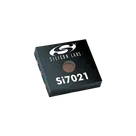
Pricing & Availability
See prices from popular manufacturers for your project.
Assets

image-removebg-preview.png
image-removebg-previewThumbnailSi7021-A20-IM1R.stp
3D_Si7021-A20-IM1R3D Model
Si7021-A20-IM1R
Si7021-A20-IM1R Symbol.svgDefaultSON100P300X300X121-7N-D.kicad_mod
SON100P300X300X121-7N-DFootprintControls
Welcome 👋
Flux accelerates your PCB design with AI.
Create your account to start using this component and bring your ideas to life.