IoT Board Design for Monitoring
1:40
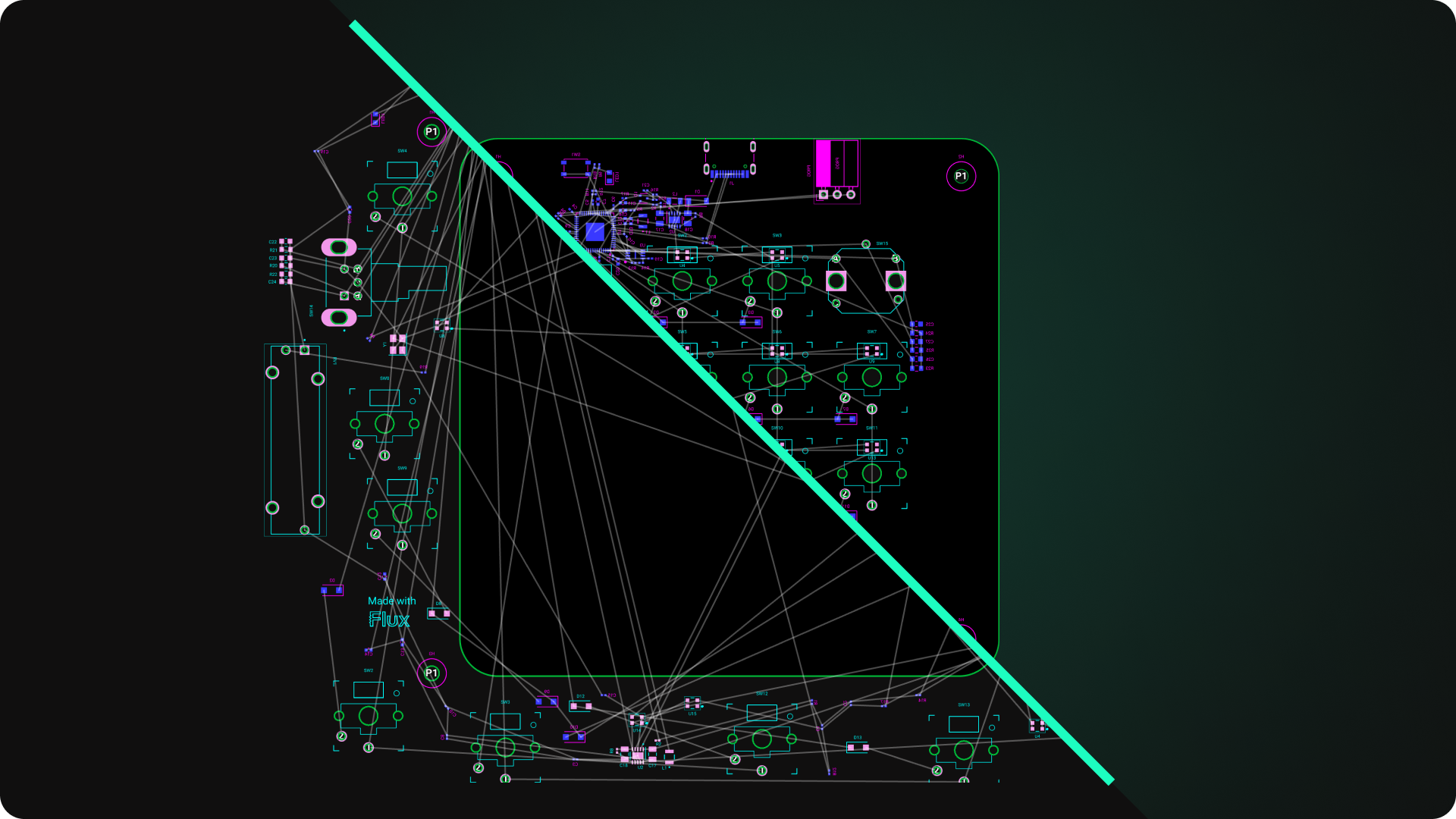
Below is a summary of how the schematic connections would be made for your design:
Table
| From Component | To Component | Connection Details |
|---|---|---|
| USB-C (J1) – VBUS | • Input of the MCP73123T-22SI/MF (battery charger) • Branch via a switch network (for programming data routing) to Wio-E5-LE Wireless Module power/data pins | Place a 100nF decoupling capacitor (at the USB-C’s VBUS line) near the charger to filter high-frequency noise and a 10µF capacitor to help with voltage stability. Use a resistor network (or series resistors) in the data branch to maintain signal integrity and to keep the charging power path isolated from the programming data path. |
| USB-C (J1) – D+ and D- | • Routed through a dedicated programming switch circuit toward the MCU’s programming data pins | Incorporate series resistors (e.g. 10kΩ or 330Ω as needed by signal specifications) and small decoupling/filter capacitors along these lines to ensure that the USB data signals are not affected by noise on the power lines. |
| USB-C (J1) – GND | • Common ground for all components | Connect the ground from the USB-C connector to the dedicated GND symbol. This ground node should be tied to the ground pins of the battery charger IC, the Wio-E5-LE module, the solar harvesting circuit (AEM10941 and KXOB25-02X8F-TR), and any measurement circuits. |
| MCP73123T-22SI/MF Output | • LiPo Battery connecting pads (and battery protection circuitry) | The charger’s output should be connected to the LiPo battery connector. In this branch, add a polyfuse (for overcurrent protection) and a resistor divider network to monitor battery voltage. Decoupling capacitors (both 100nF for high frequency and 10µF for bulk stability) should be placed close to the charger’s output. |
| Solar Harvesting (AEM10941) | • Multiple KXOB25-02X8F-TR panels | Connect several solar panels in parallel (or as defined by your design criteria) to the input of the solar harvesting manager. Include filtering networks (small value resistors and capacitors) to ensure that the generated voltage is properly conditioned before being directed to the charger’s battery-management path. |
| Programming & Boot Switches | • Switch circuits that selectively connect the USB-C data branch to the Wio-E5-LE Wireless Module | One of the switches is dedicated for placing the MCU in programming/boot mode. When pressed, it activates the data connection from the USB-C D+ and D– (passed through series resistors and filters) to the MCU’s specific programming pins. A separate reset switch can be integrated to trigger a hardware reset when needed. |
| All Component GND Pins | • Connected to the common GND node | Ensure that every component (USB-C connector, MCP73123, Wio-E5-LE, AEM10941, solar panels and even the passive networks) includes a ground connection that ties back to a common GND node. This prevents ground loops and ensures all voltage levels are referenced against the same potential. |
- Signal Isolation: The USB-C power line used for charging is separated from the data/programmable path by utilizing a switch network with passives (series resistor dividers and decoupling capacitors) to prevent any interference between power and data signals.
- Decoupling: Each IC power input (including the Wio-E5-LE and MCP73123) should have a 100nF capacitor for high-frequency decoupling adjacent to its power pin and an additional 10µF capacitor for bulk stabilization.
- Battery Protection & Monitoring: Incorporate a polyfuse in the battery branch as well as a resistor divider network for voltage sensing.
- Grounding: Add GND symbols near each component’s ground pin to ensure a robust, common reference.
If you would like additional detail on any specific net connection or component value adjustments, let me know!
Component specification
Add and specify passive components
Solar harvesting optimization
416 days
To get started, talk to Flux or create a New Document.

Welcome 👋
Flux helps you build PCBs faster with an AI teammate!
Create your account to collaborate, stay updated, fork your own version, and get instant answers from our AI agent.