Downloading Model Assistance


Image
Thought
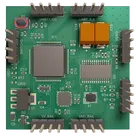
I’ll add this provided board photo as a stable project asset and update the README image section to use it.
Worked
Done — I added the provided board photo as a project asset and updated the README to reference the stable local asset path.
Can you fix the formatting on page Betaflight Firmware?
Thought
I’ll clean up the Betaflight Firmware document formatting while preserving its content, then verify the result.
Worked
Done — I cleaned up the Betaflight Firmware page with proper Markdown headings, bullet lists, numbered setup steps, a fenced CLI code block, and a safety/bring-up checklist.
Review firmware mapping
Fix README images
Run project review
Check BOM accuracy
Export manufacturing files
Refine this doc
Ask about this doc
Why the STM32F405RGT6

Image
I chose the STM32F405RGT6 because it solved more problems than it caused during the build — and that’s what you want in a late‑night prototype.
At first it was about raw capability: the Cortex‑M4 with FPU meant I could finally move Kalman/complementary filters and PID math from slow, hacked fixes into reliable, floating‑point code that ran smoothly in flight. That reduced tuning time and gave noticeably cleaner stabilization. The chip’s real‑time peripherals (multiple timers, PWM channels, DMA) made generating jitter‑free motor outputs and synchronized sensor sampling straightforward — crucial once I started testing DShot and tight control loops.
The Perfect Filters for FC on the F405Image

Practical constraints drove the choice too. The RGT6 package provided enough GPIO and flexible remapping so I could add OSD, VTX, extra UARTs and several SPI/I2C devices without endless board re-routes. When the OSD ended up on “slow” pins I could either lower an SPI clock in software or remap resources — options the STM32 toolchain and HAL made easy to try. On the hardware side, built‑in ADCs let me monitor battery voltage and shunt current without adding another MCU, which simplified the ESC integration and telemetry.
Development velocity mattered: CubeMX, STM32CubeIDE, a mature HAL and a huge community meant I spent less time on boilerplate and more time on flight logic, debugging motor sync issues, and improving ESC timing. The chip’s cost and availability kept the project realistic for small prototype runs (JLCPCB + small batches of boards).
In short — it was a pragmatic pick: enough compute for advanced control, the peripherals and I/O flexibility to integrate sensors and video/telemetry, and tooling that let me iterate fast. That combination turned late‑night sketches into a flying, extensible platform.